Stronger mitochondria & everyday stamina: Understanding Urolithin A+
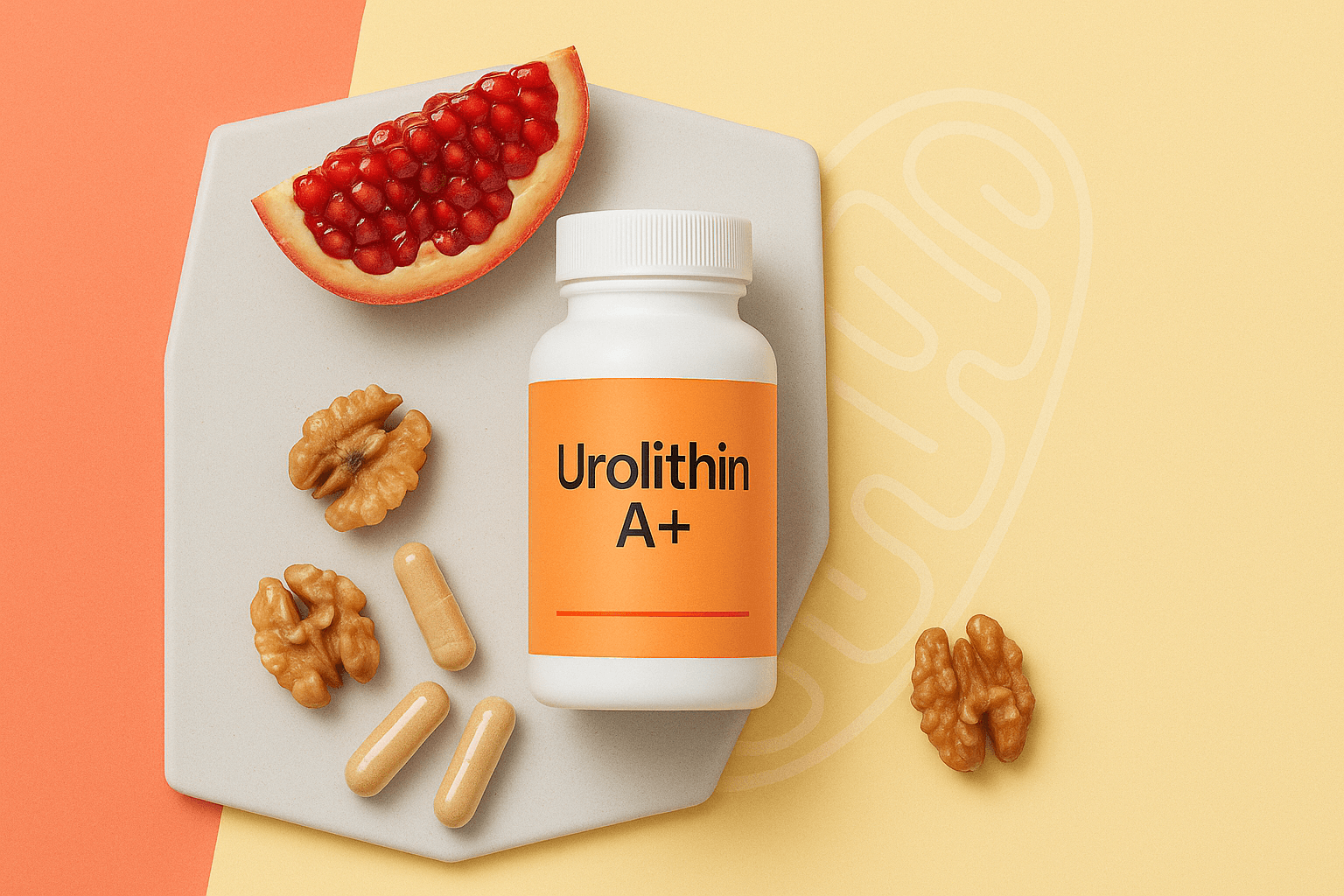
Urolithin A (UA) is a postbiotic—an active compound made by gut bacteria from ellagitannins found in foods like pomegranate, walnuts, and some berries. Because not everyone’s microbiome makes UA efficiently, supplements provide direct UA (often branded or “food-grade” purified forms) so you don’t rely on conversion. UA’s headline mechanism is mitophagy—the selective cleanup and recycling of dysfunctional mitochondria. By nudging cells to replace tired mitochondria with fresh ones, UA can improve cellular energy efficiency, which in real life may feel like better muscle endurance, steadier daytime energy, and smoother recovery from activity.
UA also supports mitochondrial biogenesis signals and dampens low-grade inflammation in muscle. Early human trials show improved leg-muscle endurance, better mitochondrial biomarkers in skeletal muscle, and favorable shifts in plasma acylcarnitines (a readout of mitochondrial lipid metabolism). Effects are gradual and build with consistent use.
Wellness takeaway: Urolithin A+ is a practical, food-derived way to support mitochondrial renewal. Trial 500–1000 mg/day for 8–16 weeks, pair with protein and resistance training, then reassess.
Key Benefits
Muscle endurance: Improves localized muscle endurance (more repetitions before fatigue) and everyday walking capacity in deconditioned adults.
Mitochondrial renewal: Promotes mitophagy and healthier mitochondrial turnover, reflected in muscle biopsy and circulating metabolic markers.
Healthy aging & recovery: Supports physical performance during midlife and older adulthood when combined with training and adequate nutrition.
Reality check: UA isn’t a stimulant; benefits accrue over weeks to months, and are bigger when you also exercise and eat enough protein.
Research Findings
Time to benefit: Measurable changes appear by 4–8 weeks for metabolic markers; 12–16 weeks for performance outcomes (endurance tests, walking distance).
Muscle endurance (middle-aged/older adults): Double-blind RCTs using 500–1000 mg/day UA for 4–6 months improved leg-press endurance (more contractions before fatigue) versus placebo. Some studies also reported gains in 6-minute walk distance and peak ATP production signals in muscle.
Mitochondrial biomarkers: Supplementation increased markers of mitophagy and shifted plasma acylcarnitines toward a profile consistent with more efficient mitochondrial fat metabolism; muscle biopsy data support improved mitochondrial quality control.
Recovery & inflammation: Exploratory outcomes show small reductions in CRP/hs-CRP in those with higher baseline inflammation and modest improvements in perceived fatigue.
Tolerability: UA is well tolerated in trials up to 1000 mg/day for 6 months. Occasional GI upset (nausea, loose stool) may occur, usually transient and improved by taking with food.
Best Sources & Dosage
What to buy:
Form: Purified Urolithin A (not just pomegranate extract). Look for products stating exact UA milligrams (e.g., 250, 500, 1000 mg).
Quality: Select COA-verified brands with identity/purity testing and low contaminants (heavy metals, microbes, residual solvents).
Standardization: If using a branded “food-grade UA,” check the label for dose equivalence; avoid vague “ellagitannin complex” products that don’t specify actual UA content.
Evidence-aligned ranges (by use case):
Mitochondrial/healthy-aging support: 500 mg once daily with food for 12–16 weeks; continue if benefits persist.
Performance & endurance focus: 500–1000 mg/day (once daily) for 12–24 weeks, alongside 2–3×/week resistance training and daily steps.
Low conversion from diet (non-producers): 500 mg/day is a practical “postbiotic replacement” when pomegranate/walnut intake doesn’t translate to UA production.
Timing & tips:
- Take with a meal (better GI comfort, consistent habit).
- Training stack: Pair with protein (≥1.0–1.2 g/kg/day), creatine monohydrate (3–5 g/day), and Vitamin D sufficiency; add one change at a time to see what helps.
- Self-tracking: Weekly leg-endurance test (e.g., body-weight sit-to-stands in 60 s), 6-minute walk distance, daily energy (0–10). Reassess at 12–16 weeks.
Safety, interactions & exclusions:
General: Excellent safety in healthy adults at standard doses.
Medications: No well-documented drug–drug issues; if you’re on complex regimens (e.g., cancer therapy, immunosuppression), involve your clinician.
GI conditions: If you’re prone to reflux or sensitive stomach, start at 250–500 mg/day with your main meal and titrate.
Pregnancy/lactation: Human data are limited—avoid unless your clinician recommends.
Allergies: UA supplements are synthesized/purified; still review excipients if you have fruit or nut allergies.
Safety flag: Don’t use UA to replace exercise—mitochondrial adaptations are strongest when training + UA are combined.
Dosage Quick-Reference
Mitochondrial support: UA 500 mg/day, 12–16 wks → ↑mitophagy markers / ↑energy efficiency (↑).
Endurance performance: UA 500–1000 mg/day, 12–24 wks + training → ↑reps-to-fatigue / ↑walk distance (↑).
Maintenance after response: UA 500 mg/day, ongoing → sustained mitochondrial support (→/↑).
Safety note: Choose COA-verified, pure UA (not generic pomegranate powder). Take with food; monitor energy and walking tests; avoid use in pregnancy/lactation unless supervised.