Deeper Sleep, Brighter Mood: Understanding L-Tryptophan
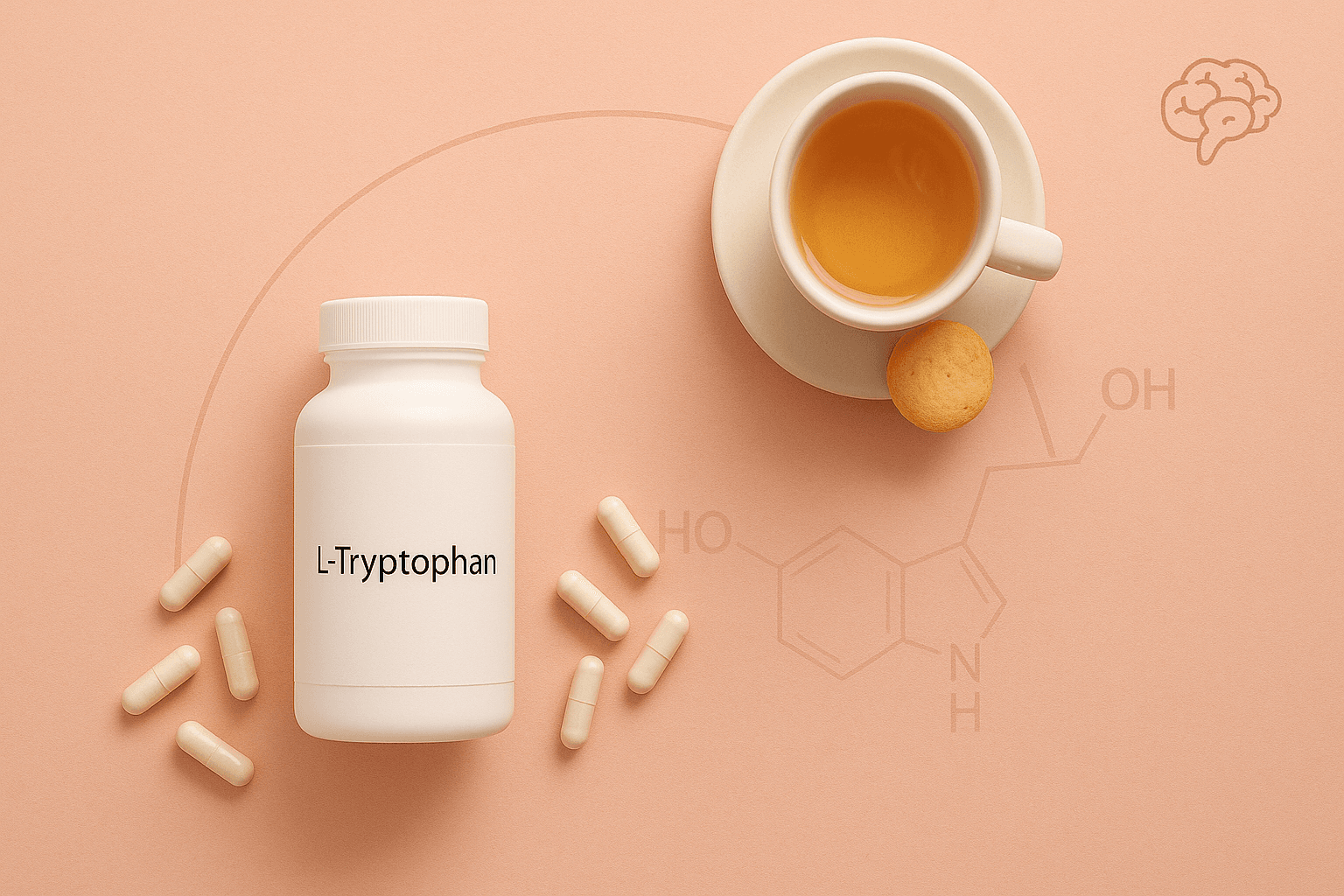
L-tryptophan is an essential amino acid—your body can’t make it—that serves as the raw material for serotonin and melatonin. After absorption, a portion of tryptophan crosses the blood–brain barrier via the LNAA transporter and is converted to 5-hydroxytryptophan (5-HTP) and then serotonin; at night, serotonin can be turned into melatonin, the hormone that helps set sleep timing. Another portion of tryptophan enters the kynurenine pathway, which influences cellular energy and immune tone. Because diet, stress, inflammation, and competing amino acids can limit how much tryptophan reaches the brain, carefully timed supplementation can support sleep onset/quality, calmer mood, and healthier appetite regulation.
Why not just eat “turkey for sleep”? While poultry, eggs, dairy, and soy are good sources, protein-rich meals also deliver competing amino acids that share the same transporter into the brain. A targeted capsule (often taken with a small carbohydrate snack to nudge insulin and improve brain uptake) offers predictable, study-like dosing and timing you can’t always control with meals.
How L-tryptophan may help—kept practical:
Serotonin & melatonin supply: gives the rate-limiting building block for the serotonin–melatonin pathway, supporting sleep onset, sleep depth, and mood stability.
Appetite & cravings: by supporting serotonin signaling, tryptophan can help reduce late-evening snacking and improve dietary control when stress runs high.
Stress resilience: adequate serotonin can smooth reactivity and rumination, making sleep hygiene and daylight routines work better.
Key Benefits
Sleep onset and quality. Bedtime tryptophan shortens sleep latency and improves perceived sleep quality, especially in people with high presleep cognitive arousal.
Mood steadiness (mild to moderate stress). Daily dosing can support calmer mood and emotional balance, with additive benefits when you normalize light exposure, exercise, and protein intake.
Cravings and appetite control. By supporting serotonin, tryptophan helps tame evening carb cravings and supports adherence to a balanced, protein-forward diet.
Reality check: Expect subtle, steady improvements by week 1–2 that build through week 4–8—more “smooth edges” than a knockout sedative. Foundations (sleep routine, morning light, movement) do most of the heavy lifting.
Research Findings
Time to benefit: First changes commonly appear within 1–2 weeks for sleep onset and cravings; clearer gains emerge by 4–8 weeks with consistent routines.
Sleep quality & latency (adults with mild insomnia): Randomized, controlled studies using 1 g at bedtime showed shorter sleep latency and better global sleep ratings versus placebo, particularly in people with presleep overthinking. Designs were double-blind and ran 2–4 weeks with good tolerability.
Mood and stress (subclinical symptoms): 2–4-week, randomized trials using 0.5–3 g/day found modest improvements in mood and calmness versus placebo; benefits were stronger when participants also optimized daylight exposure and exercise.
Appetite/cravings: In crossover meal studies and short 2–3-week trials using 0.5–1 g before the evening meal or bedtime, tryptophan reduced carbohydrate cravings and late-night snacking, aligning with its role in serotonin synthesis.
(Most modern trials use pharmaceutical-grade tryptophan, bedtime-focused; effects scale with routine quality and dose timing.)
Best Sources & Dosage
What to buy (and what to avoid)
Choose L-tryptophan capsules with clear mg per serving (e.g., 500 mg) and third-party testing (identity, potency, contaminants).
Prefer single-ingredient products so you can titrate dose. If a blend includes B6 or magnesium, keep amounts modest; excess B6 can cause neuropathy at high chronic doses.
Avoid proprietary blends that hide the milligrams—you can’t match research-style dosing or time it cleanly without numbers.
Evidence-aligned adult ranges
Sleep support (primary): 500–1000 mg 30–60 minutes before bed. If sensitive, start at 250–500 mg for 3–5 nights and increase by 250–500 mg as needed.
Mood steadiness (day + night): 500 mg 2×/day (late afternoon and bedtime) or 1000–1500 mg/day split AM/PM for 4–8 weeks, then reassess.
Craving control (evening): 500–1000 mg 30–60 minutes before the evening meal or bedtime, optionally with a small carb (e.g., a few crackers) to aid brain uptake.
Timing & tips
Anchor your largest dose at bedtime; if adding a daytime dose, keep it late afternoon rather than morning to avoid sleep-wake drift.
Pair with morning light, caffeine curfew, and a screen-down hour.
Consider a small carb alongside bedtime tryptophan to ease brain entry (avoid large, sugary snacks).
If you also use melatonin, keep it low (0.3–1 mg) and only if needed; often tryptophan alone is sufficient.
Safety, interactions & who should avoid it
Generally well tolerated; most common are mild drowsiness, GI upset, or headache early on.
Medication interactions (critical): Do not combine with SSRIs, SNRIs, MAOIs, linezolid, St. John’s wort, MDMA, or triptans without clinician supervision due to serotonin syndrome risk (agitation, sweating, tremor, diarrhea, fever—seek care if these occur).
Psychiatric conditions: use caution in bipolar spectrum or when on complex psychotropic regimens—coordinate with your prescriber.
Pregnancy/lactation: limited targeted data—avoid routine supplemental dosing unless your clinician advises otherwise.
Historical safety note (EMS, 1989): a contaminated batch (not inherent to tryptophan) caused eosinophilia-myalgia syndrome; modern GMP and third-party testing minimize this risk—another reason to buy from vetted brands.
Driving/machinery: avoid right after the first few bedtime doses until you know your response.
Label literacy—fast checks
- “L-tryptophan” clearly labeled; mg per capsule disclosed (500 mg units make titration easy).
- Third-party tested; clean excipients; lot/COA access.
- Sensible capsule count for a 4–8-week plan (e.g., 60–120 caps).
Dosage Quick-Reference
Sleep onset/quality: 500–1000 mg L-tryptophan • 30–60 min pre-bed • Outcome: sleep latency ↓, sleep quality ↑.
Mood steadiness: 500 mg 2×/day (PM + bedtime) • 4–8 weeks • Outcome: calmness ↑, reactivity ↓ (modest).
Evening cravings: 500–1000 mg pre-dinner or pre-bed • 2–4 weeks • Outcome: late-night snacking ↓, appetite control ↑.
Safety note: Avoid combining with SSRIs/SNRIs/MAOIs/triptans without clinician oversight; monitor for serotonin-syndrome signs.