Calmer Evenings, Steadier Nerves: Understanding Kava Kava
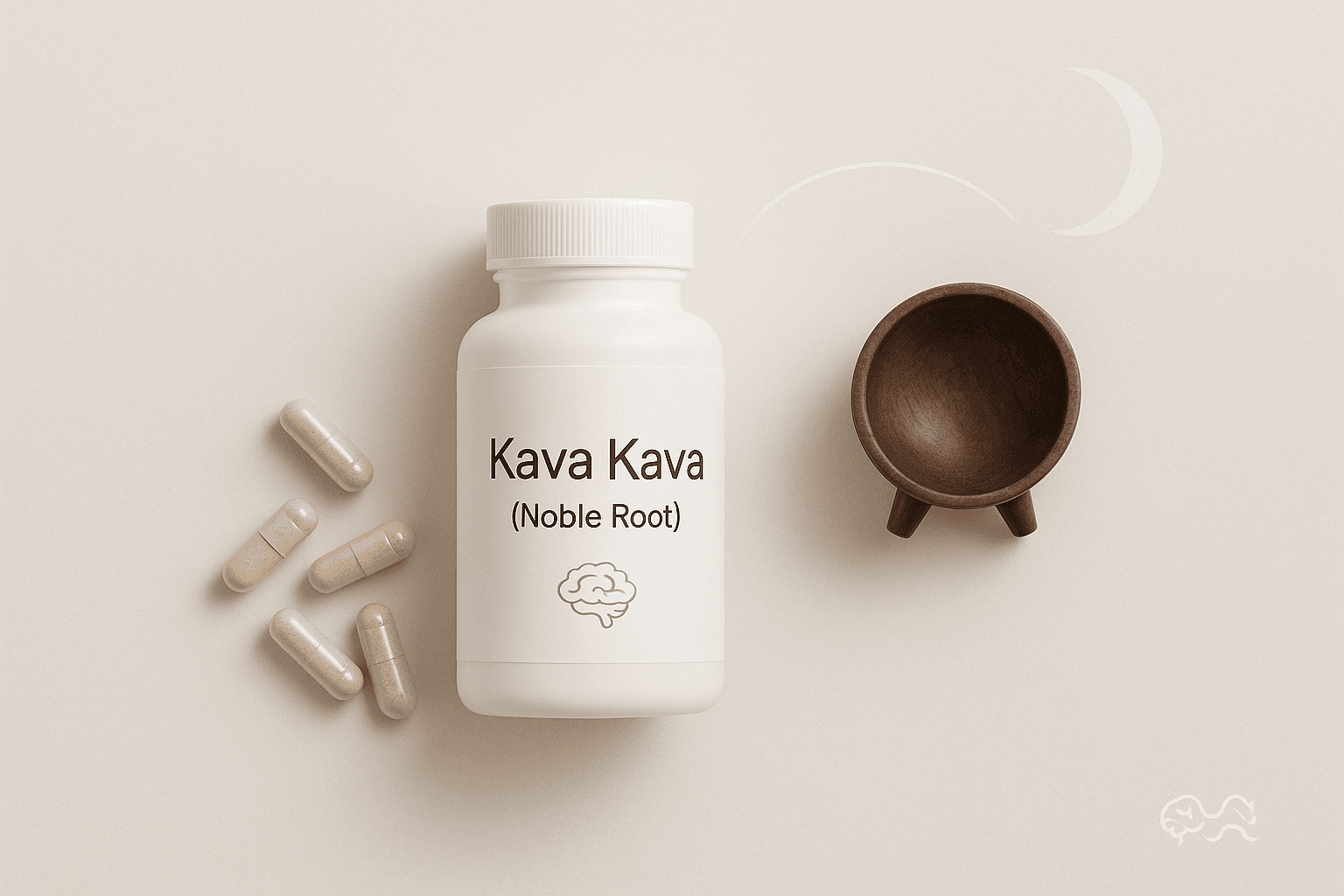
Kava kava (Piper methysticum) is a South Pacific shrub whose peeled root has been used ceremonially for centuries to promote social ease and restful calm. Modern supplements concentrate kavalactones—chiefly kavain, dihydrokavain, methysticin, dihydromethysticin, yangonin, and desmethoxyyangonin—because they appear to modulate neural excitability in a way that takes the edge off stress without the stimulatory feel of caffeine or the heavy sedation of certain sleep drugs.
How it works (plain-English version):
- Kavalactones nudge GABA-A receptors and dampen voltage-gated sodium/calcium channel activity, easing the brain’s “alarm” signals tied to anxious arousal.
- They appear to reduce stress-related muscle tension (central muscle-relaxant actions), which many people notice in the jaw, shoulders, and neck.
- At higher bedtime-focused doses, kava can shorten sleep latency (time to fall asleep) by quieting presleep overthinking.
Why supplement? Diet won’t deliver relevant amounts of kavalactones, and traditional beverages vary widely in potency. Standardized noble, root-only extracts give predictable kavalactone mg per dose, making it easier to match research-style protocols for anxiety or sleep support while avoiding plant parts and varieties linked to side-effect concerns.
Wellness takeaway: If your goals are quieter nerves, easier bedtime wind-down, and less stressy muscle tightness, a short, structured trial of noble, root-only, standardized kava can be a clean, non-stimulant option—used thoughtfully and with liver awareness.
Key Benefits
Anxiety relief. Consistent kava use reduces validated anxiety scores versus placebo in several randomized trials, with best signals in generalized anxiety patterns.
Sleep support. Evening dosing helps some people fall asleep faster and rate sleep quality higher—especially when paired with steady sleep hygiene.
Stress-related muscle tension. Kava’s central muscle-relaxant properties can soften jaw/shoulder tightness that often rides along with anxious days.
Reality check: Expect calm clarity, not a knockout. Benefits are gentler than prescription sedatives; the plan works best alongside basics (light exposure, movement, caffeine timing, wind-down routine).
Research Findings
Time to benefit: Some calming is felt within 30–60 minutes of a dose; clearer questionnaire improvements typically show by 2–4 weeks, with steady gains over 4–8 weeks of consistent use.
Generalized anxiety (adults): 6–8-week, randomized, double-blind, placebo-controlled trials (n≈60–150) using standardized kava extracts delivering ~120–280 mg/day kavalactones showed significant reductions in Hamilton Anxiety ratings versus placebo, with similar or fewer reports of daytime sedation.
Short-term situational anxiety: 3–4-week, double-blind studies (n≈40–80) using single or twice-daily doses (60–150 mg kavalactones per dose) reported improved state-anxiety scores and subjective tension without cognitive slowing compared with placebo.
Sleep quality (mild insomnia/anxious sleepers): 4-week randomized trials (n≈50–100) found shorter sleep latency and better global sleep scores with evening kava (typically 60–120 mg kavalactones in the PM), particularly in participants with high presleep cognitive arousal.
Tolerability across trials was generally good; the most common complaints were GI upset, headache, or daytime sleepiness if dosing ran too late.
Best Sources & Dosage
What to buy (and what to avoid)
Choose noble cultivar, root-only kava that is standardized for total kavalactones (e.g., “30% kavalactones”) and clearly lists mg kavalactones per serving.
Prefer water/CO₂ extracts from peeled root; avoid products that include stems/leaves or do not specify plant part or cultivar.
Look for third-party testing (identity, potency, contaminants) and batch COAs.
Evidence-aligned adult ranges
Daytime calm / generalized anxiety: 120–250 mg/day kavalactones, divided 1–2 doses (e.g., 60–125 mg AM + late afternoon) for 4–8 weeks, then reassess.
Bedtime wind-down / sleep latency: 60–120 mg kavalactones 30–90 minutes before bed; some use a small daytime dose (30–60 mg) if anxious tension is high.
Acute, situational stress: 60–120 mg kavalactones 30–60 minutes before the event (public speaking, travel), ensuring you’re not driving and have tested your response beforehand.
Timing & tips
- Start low for 3–5 nights (e.g., 60 mg PM) to gauge your response, then titrate by 30–60 mg steps.
- Anchor the largest dose in the evening if sleep is a goal; avoid late-night stacking if you notice morning grogginess.
- Pair with light morning movement, caffeine curfew, and a screen-down hour for compounding benefits.
- If you drink traditional kava beverages, mind the unknown kavalactone load; standardized capsules are easier to track.
Safety, interactions & who should avoid it
Liver caution: Rare but serious hepatotoxicity has been reported with certain preparations and misuse. Avoid if you have liver disease, a history of hepatitis, or heavy alcohol use; stop and seek care for jaundice, dark urine, unusual fatigue, or upper-right abdominal pain.
CNS depressants: Do not combine with alcohol, benzodiazepines, barbiturates, opioids, or sedating antihistamines—additive sedation and impairment can occur.
Driving/operating machinery: avoid for at least 6–8 hours after dosing until you know your response.
Pregnancy/lactation: avoid (insufficient safety data).
Dermopathy with high intake: prolonged high dosing can cause dry, scaly skin (“kava dermopathy”)—taper and replete with essential fatty acids if this occurs.
Allergy: rare; discontinue if rash or itching develops.
Medications: use caution with drugs affecting the liver (CYP enzymes) or those with narrow therapeutic windows; consult your clinician.
Label literacy—fast checks
- “Noble, root-only” stated; peeled root; kavalactone % and mg per serving clear.
- Transparent extraction method (water/CO₂) and third-party testing.
- Realistic serving sizes (e.g., one to two capsules to reach 60–120 mg kavalactones).
Dosage Quick-Reference
Anxiety relief (daily): 120–250 mg/day kavalactones • Split 1–2 doses, 4–8 weeks • Outcome: anxiety scores ↓, calm ↑.
Sleep latency (evening): 60–120 mg kavalactones • 30–90 min pre-bed • Outcome: time-to-sleep ↓, sleep quality ↑.
Situational stress (tested beforehand): 60–120 mg kavalactones • 30–60 min pre-event • Outcome: tension ↓, composure ↑.
Safety note: Avoid alcohol/sedatives; stop and seek care if liver-warning symptoms appear.