Calmer Nights, Steadier Nerves: Understanding Apigenin
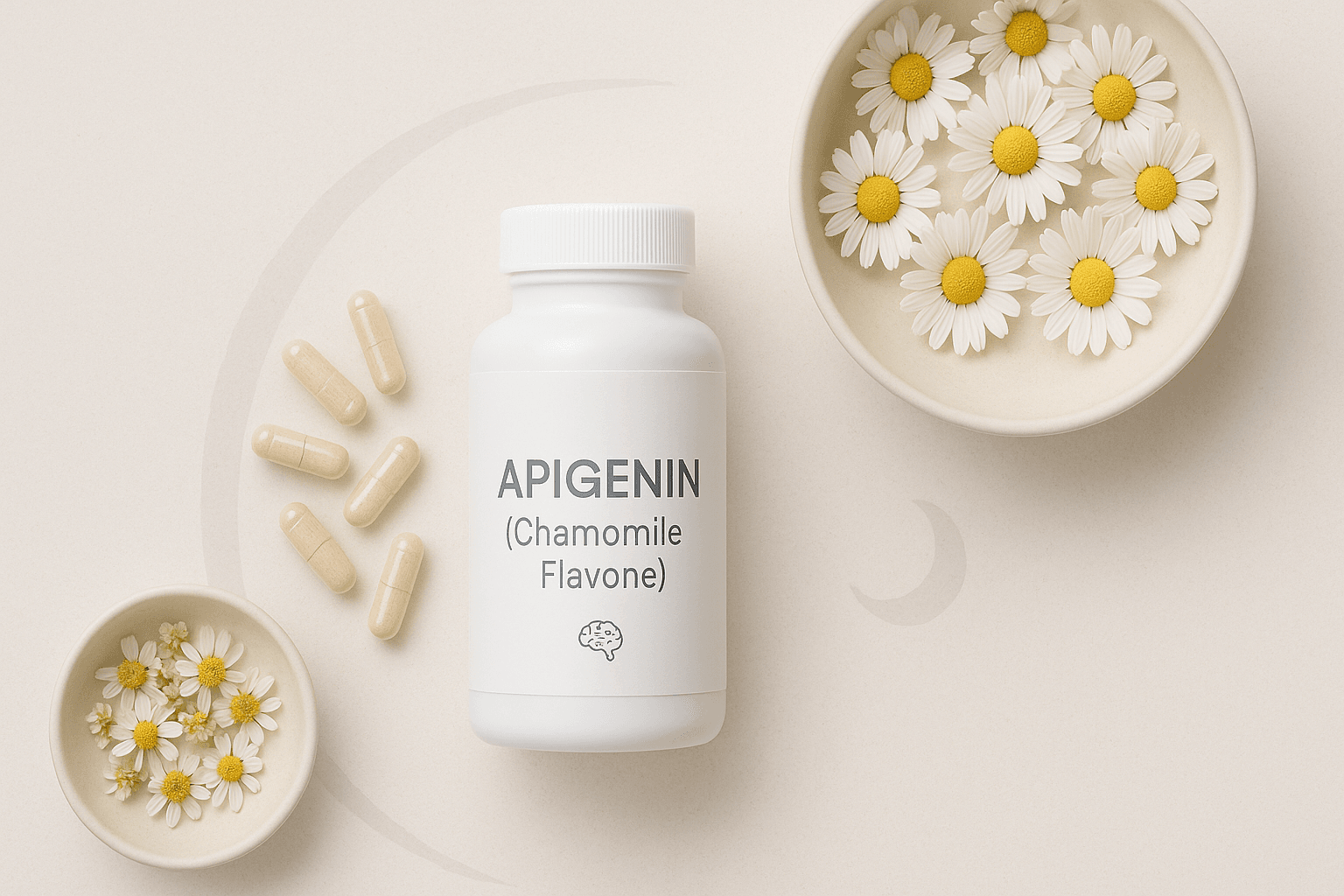
Apigenin is a plant flavone found most richly in chamomile, parsley, celery, and oregano. In the body, it’s best known for gently nudging the GABA-A system—the same calming pathway targeted by certain prescription sleep and anxiety medicines—by binding to the benzodiazepine site with much lower potency. It also shows antioxidant and anti-inflammatory activity, influences cellular stress switches (AMPK, NRF2), and may modulate estrogen and serotonin signaling at a low level. For everyday use, that translates into a supplement people reach for to support sleep quality, daytime calm, and cellular resilience.
Why supplement if it’s in food and chamomile tea? Diet delivers milligram-scale apigenin, and tea potency is highly variable. Standardized capsules (and some high-strength teas/extracts) provide predictable, trial-like dosing and are easier to time around bedtime or high-stress windows. Modern products typically supply apigenin as a purified flavone, sometimes paired with chamomile extract or liposomal delivery to improve absorption.
How apigenin may help—kept practical:
Calming the “alarm system”: gentle, positive modulation of GABA-A receptors can take the edge off pre-sleep arousal and situational anxiety without heavy sedation.
Smoothing inflammatory “noise”: antioxidant/anti-inflammatory signals (e.g., NRF2, COX-2 downshift) help reduce background stress biology that can disturb sleep and mood.
Cellular housekeeping: mild activation of pathways like AMPK supports mitochondrial and metabolic housekeeping—wellness-level, not drug-level, effects.
Key Benefits
Sleep support. Evening apigenin can help ease sleep onset and improve perceived sleep quality, especially when layered onto good sleep hygiene.
Anxiety relief (gentle). Apigenin-rich chamomile extracts have reduced anxiety scores in randomized trials; purified apigenin is used as a calmer, non-sedating daytime aid.
Cellular resilience. As a dietary flavone, apigenin provides antioxidant support and nudges stress-response pathways that help maintain healthy cellular signaling.
Reality check: Expect subtle, steady gains (falling asleep a bit easier, feeling a touch calmer)—not knockout sedation. Pair with consistent sleep habits and daytime stress practices for best results.
Research Findings
Time to benefit: Expect first changes in 1–2 weeks, with clearer gains by 4–8 weeks when used consistently.
Generalized anxiety (chamomile extract, adults): Randomized, double-blind, placebo-controlled trials (6–8 weeks; n≈57–179) using pharmaceutical-grade chamomile extract standardized to apigenin glycosides demonstrated greater reductions in Hamilton Anxiety scores versus placebo. Effects were modest to moderate; sedation was similar to placebo, supporting daytime use.
Relapse prevention in GAD (chamomile extract): A long-term extension in responders (26–38 weeks total; n>100) found lower relapse risk with continued chamomile compared to placebo, suggesting durability when used as a maintenance adjunct under clinician guidance.
Sleep quality (postpartum/older adults; chamomile tea/extract): Small RCTs (2–4 weeks; n≈40–80) reported improved Pittsburgh Sleep Quality Index (PSQI) scores and shorter sleep latency with evening chamomile vs usual care/placebo. Benefits were most noticeable in those with mild insomnia and when paired with consistent sleep routines.
Note: Most human data use chamomile (an apigenin-rich source) rather than isolated apigenin. Purified apigenin supplements are extrapolated from this literature plus mechanistic studies; real-world users often report similar, gentle effects when dosing is bedtime-focused.
Best Sources & Dosage
What to buy (and avoid)
Choose purified apigenin or chamomile extract that discloses mg per serving and, for chamomile, the flavone/apigenin content. Products using liposomal or phytosome tech can improve consistency.
For tea lovers, use pharmaceutical-grade chamomile tea bags and steep covered for 5–10 minutes to retain volatile compounds—but know dosing varies.
Avoid blends that bury apigenin under proprietary names with no mg disclosure—you can’t titrate or match research timing without numbers.
Evidence-aligned adult ranges
Sleep support (primary use): 50–200 mg apigenin 30–60 minutes before bed. If sensitive, start at 50 mg for 3–5 nights, then increase by 50 mg steps as needed.
Daytime calm/anxiety support: 25–100 mg apigenin 1–2× daily, with the larger portion in the evening. For chamomile extracts, follow labels providing an apigenin-rich equivalent typically 220–1,100 mg extract/day in divided doses.
Cellular/antioxidant wellness: 50–100 mg/day apigenin with a meal, or one strong chamomile serving daily; treat as an adjunct to a plant-forward diet.
Timing & tips
Anchor the biggest dose at bedtime; many notice smoother sleep onset when paired with a consistent pre-sleep routine (screens down, dim lights, cool room).
If you drink evening chamomile, brew covered and finish 30–60 minutes before bed; consider a bathroom break buffer to avoid waking.
Track a simple sleep log (bedtime, latency, awakenings, morning energy) for 2–4 weeks to see your trend.
Stacking ideas (gentle, non-additive): magnesium glycinate at dinner, light exposure in the morning, and post-meal walks to support circadian rhythm.
Safety, interactions & who should avoid it
Generally well tolerated; most common are mild drowsiness, GI upset, or headache early on—often dose-related and transient.
Medication interactions (theoretical/precautionary): apigenin can inhibit CYP2C9/3A4 and P-glycoprotein in vitro. Use caution if you take drugs with narrow therapeutic windows (e.g., warfarin, certain antiarrhythmics, tacrolimus, cyclosporine, some benzodiazepines). Discuss with your prescriber before starting.
Additive sedation: use care if combining with alcohol, benzodiazepines, opioids, or sedating antihistamines.
Allergy: chamomile belongs to the Asteraceae family (ragweed). If you’re ragweed-sensitive, trial cautiously or favor purified apigenin over whole chamomile.
Hormone-sensitive conditions: apigenin shows mixed estrogen-receptor activity in preclinical work. If you have estrogen-sensitive conditions or take hormonal therapy, consult your clinician.
Pregnancy/lactation: safety data are limited—avoid regular supplemental dosing unless your clinician advises otherwise.
Surgery: stop 1–2 weeks prior due to potential interactions with anesthesia or sedatives.
Label literacy—fast checks
Clear mg apigenin per serving, not just “chamomile complex.”
Evening-friendly serving size (1–2 caps) and third-party testing.
If using tea, look for standardized/pharmaceutical-grade tea bags and consistent steeping instructions.
Dosage Quick-Reference
Sleep support: 50–200 mg apigenin 30–60 min pre-bed • 2–4 weeks, then reassess • Outcome: sleep onset ↓; sleep quality ↑.
Daytime calm (gentle): 25–100 mg apigenin 1–2×/day (larger in PM) • 2–8 weeks • Outcome: anxiety scores ↓ (modest); daytime sedation →/low.
Chamomile-based approach: 220–1,100 mg standardized chamomile extract/day (apigenin-rich), divided • 4–8 weeks • Outcome: anxiety ↓, sleep ↑ (modest).
Safety note: use caution with CYP2C9/3A4-sensitive medications and other sedatives; ragweed allergy—trial carefully.