1. Understanding 5-HTP – What It Is and How It Works
What is 5-HTP?
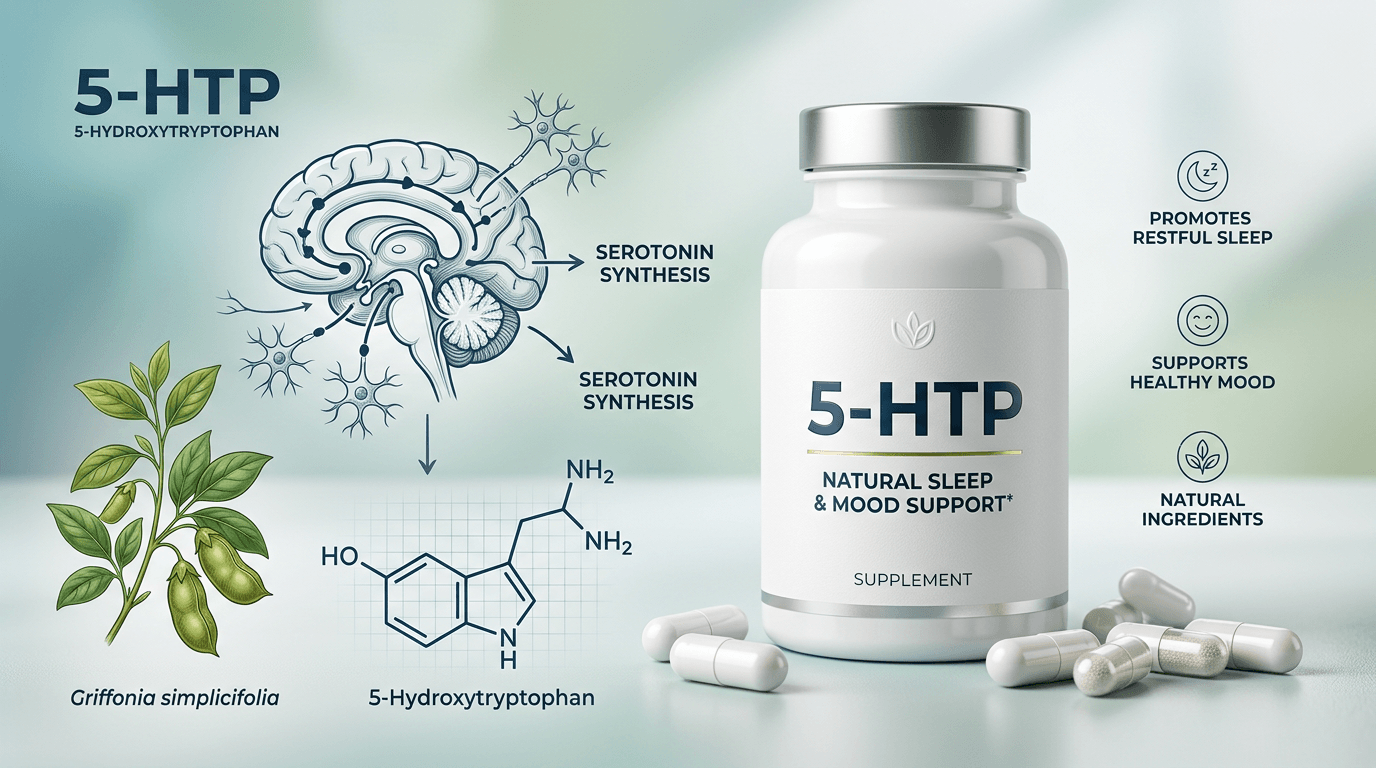
5-Hydroxytryptophan (5-HTP) is an amino acid naturally produced in the body as an intermediate step in the synthesis of serotonin, a key neurotransmitter involved in mood, appetite, pain perception, and sleep.
Most supplemental 5-HTP is extracted from the seeds of the African plant Griffonia simplicifolia. Unlike serotonin itself, which does not cross the blood–brain barrier, 5-HTP can enter the brain and is then converted to serotonin.
How 5-HTP Works in the Body
5-HTP sits in the middle of the serotonin production pathway:
- Tryptophan → 5-HTP via the enzyme tryptophan hydroxylase
- 5-HTP → Serotonin (5-HT) via the enzyme aromatic L-amino acid decarboxylase (AADC)
Key points about its mechanism:
- Serotonin precursor: 5-HTP bypasses the rate-limiting step (tryptophan hydroxylase), so it can more directly increase serotonin synthesis.
- Crosses the blood–brain barrier: 5-HTP is transported into the brain, where it can be converted to serotonin in neurons.
- Peripheral vs central effects: 5-HTP is also converted to serotonin outside the brain (gut, blood platelets). Peripheral serotonin does not cross into the brain but can cause gastrointestinal side effects and affect vascular tone.
- Downstream melatonin production: In the pineal gland, serotonin is further converted to melatonin, influencing sleep–wake cycles.
Because of this, 5-HTP is often used as a dietary supplement to support:
- Mood and emotional balance
- Sleep quality
- Appetite control and weight management
- Migraine prevention
However, its effects are not identical to prescription antidepressants, and evidence is mixed or preliminary in several areas.
2. Key Benefits of 5-HTP (Evidence-Based)
1. Mood Support and Depressive Symptoms
By increasing serotonin availability, 5-HTP may help improve mood and reduce depressive symptoms in some individuals. Several clinical trials suggest antidepressant-like effects, particularly at higher doses and often in combination with other treatments. However, the evidence base is smaller and less rigorous than for standard antidepressants.
2. Sleep Quality and Insomnia
Serotonin is a precursor to melatonin, a hormone that regulates circadian rhythms. 5-HTP may support:
- Sleep onset (falling asleep)
- Sleep depth and REM sleep
- Overall sleep quality
Most data come from small trials or combination products (e.g., 5-HTP plus GABA or other herbs), so it is difficult to isolate 5-HTP’s effect.
3. Appetite Control and Weight Management
Serotonin plays a role in satiety and carbohydrate cravings. 5-HTP has been studied as a tool for:
- Reducing calorie intake
- Decreasing carbohydrate cravings
- Supporting modest weight loss when combined with diet
Effects tend to be moderate and are best seen when combined with dietary changes.
4. Migraine and Headache Prevention
Some research suggests 5-HTP may reduce migraine frequency and intensity, likely via modulation of serotonin pathways involved in pain and blood vessel tone. Results are mixed and often based on older, small-scale studies.
3. Research Findings – What the Studies Show
3.1 5-HTP and Depression
Early comparative trial vs. fluvoxamine
- Design: Randomized, double-blind study
- Participants: 63 adults with depression
- Intervention: 5-HTP 100 mg three times daily (300 mg/day) vs. fluvoxamine 50 mg three times daily, for 6 weeks
- Findings: Both groups showed significant improvement in depressive symptoms; 5-HTP’s effect was reported as comparable to fluvoxamine in this small study.
- Limitations: Small sample size, older diagnostic criteria, limited modern replication.
Systematic review (older data)
- A 2002 review in Cochrane Database assessed tryptophan and 5-HTP for depression and identified 2 small, reasonably well-conducted trials (total n≈64) suggesting benefit over placebo.
- Conclusion: Evidence suggested possible efficacy, but data were insufficient and of limited quality to support routine use as an antidepressant. Modern, large RCTs are lacking.
Key takeaway: 5-HTP may improve depressive symptoms, especially at 150–300 mg/day, but it should not replace evidence-based treatments without medical supervision. Data are promising but not definitive.
3.2 5-HTP and Sleep
5-HTP + GABA combination study
- Design: Randomized, double-blind, placebo-controlled
- Participants: 18 adults with mild insomnia
- Intervention: 5-HTP (100 mg) plus GABA (100 mg) vs. placebo, 1 hour before bedtime, for 4 weeks
- Findings: The combination improved sleep latency (time to fall asleep), increased sleep duration, and improved subjective sleep quality compared with placebo.
- Limitation: Combination product; cannot attribute effects solely to 5-HTP.
Older polysomnography data (small studies, n<20) suggest that 5-HTP (100–200 mg at night) can:
- Increase REM sleep
- Modify sleep architecture
However, these studies are small and dated, and not all show consistent benefits.
Key takeaway: 5-HTP may support sleep, particularly when combined with other sleep-promoting agents, but high-quality modern trials of 5-HTP alone are limited.
3.3 5-HTP, Appetite, and Weight Management
Calorie intake and weight loss in overweight women
- Design: Double-blind, placebo-controlled
- Participants: 19 overweight women
- Intervention: 5-HTP 300 mg/day vs. placebo, for 5 weeks
- Findings:
- 5-HTP group had a significant reduction in daily calorie intake compared with placebo.
- Participants in the 5-HTP group experienced moderate weight loss without an explicit diet prescribed.
- Mechanism: Likely increased satiety and reduced carbohydrate cravings.
Another trial in obese subjects
- Design: Double-blind, placebo-controlled
- Participants: 20 obese adults
- Intervention: 5-HTP 900 mg/day (divided doses) vs. placebo for 6 weeks
- Findings:
- Reduced carbohydrate intake and total calories in the 5-HTP group.
- Greater weight loss compared with placebo.
- Limitations: Small sample; short duration.
Key takeaway: Doses of 300–900 mg/day may reduce calorie intake and support modest weight loss when combined with diet, but long-term safety and efficacy data are limited.
3.4 5-HTP and Migraine
Comparative study vs. methysergide
- Design: Randomized trial
- Participants: 124 adults with recurrent migraines
- Intervention: 5-HTP 600 mg/day vs. methysergide (a serotonin antagonist used for migraine prophylaxis) for 6 months
- Findings:
- Both groups showed reduced migraine frequency and intensity.
- Methysergide produced somewhat stronger effects overall, but 5-HTP was beneficial for a subset of patients.
- Limitations: Older study; migraine diagnostic criteria and standards have evolved.
Other smaller studies (n≈40–60) have reported reductions in migraine frequency and severity with daily 5-HTP (typically 400–600 mg/day) over several months, but results are inconsistent and not replicated in large modern trials.
Key takeaway: There is some evidence that 5-HTP may help prevent migraines, but it is not considered a first-line therapy. More robust modern trials are needed.
4. Best Sources & Dosage – Forms, Dosing, Timing, Safety
4.1 Forms and Quality Considerations
- Common forms:
- Capsules or tablets containing 50–200 mg 5-HTP
- Standalone 5-HTP or combinations (e.g., with GABA, magnesium, herbs)
- Source: Typically extracted from Griffonia simplicifolia seeds.
- Quality checks:
- Choose products from reputable brands with third-party testing (e.g., USP, NSF, Informed Choice).
- Verify standardized 5-HTP content.
- Avoid products with undisclosed "proprietary blends" where 5-HTP dose is unclear.
4.2 General Dosage Guidelines
These are typical supplemental ranges used in studies, not medical prescriptions. Individual needs and tolerability vary, and medical supervision is strongly recommended, especially if you take medications.
For Mood Support / Depressive Symptoms
- Typical range: 150–300 mg per day, divided into 2–3 doses.
- Example: 50–100 mg, 2–3 times daily, with or without food (some people tolerate it better with food).
- Onset: Effects may develop over 2–6 weeks.
For Sleep Support
- Typical range: 50–200 mg, 30–60 minutes before bedtime.
- Often used as part of a combination formula (e.g., with GABA, magnesium, or herbs).
- Start at the low end (50 mg) to assess tolerance.
For Appetite Control / Weight Management
- Typical range: 300–900 mg per day, divided into 2–3 doses.
- Often taken 30 minutes before meals to enhance satiety.
- Trials commonly used 300 mg/day or 900 mg/day; higher doses increase risk of side effects.
For Migraine Prevention
- Typical range in studies: 400–600 mg per day, divided doses.
- Duration in trials: often 3–6 months.
- This use should be supervised by a clinician, especially if you are on other migraine or serotonin-active medications.
4.3 Titration and Practical Use
- Start low: Begin with 50 mg once daily (even at bedtime) to assess tolerance.
- Increase gradually: If tolerated, increase by 50–100 mg every 3–7 days, up to the target dose.
- Divide doses: For mood or appetite, splitting the dose (e.g., morning and late afternoon) may help maintain more stable serotonin levels.
- Take with food if nauseated: GI upset is common and may be reduced by taking with a small snack.
4.4 Safety, Side Effects, and Drug Interactions
Common Side Effects
Most side effects are dose-related and more frequent at ≥300 mg/day:
- Nausea, vomiting
- Diarrhea or abdominal discomfort
- Heartburn
- Headache
- Drowsiness or fatigue
- Vivid dreams or sleep disturbances (especially at higher doses or when taken late)
These often improve when the dose is reduced or titrated more slowly.
Serious Risks
Serotonin Syndrome (potentially life-threatening)
- Caused by excess serotonin in the central nervous system.
- Risk increases substantially when 5-HTP is combined with serotonergic medications or other serotonergic supplements.
Symptoms can include:
- Agitation, restlessness, confusion
- Rapid heart rate, high blood pressure
- Sweating, shivering, fever
- Muscle rigidity, tremor, clonus
- Diarrhea
- In severe cases: seizures, irregular heartbeat, loss of consciousness
Immediate medical attention is required if serotonin syndrome is suspected.
Eosinophilia–Myalgia Syndrome (EMS)
- EMS was previously associated with contaminated L-tryptophan supplements in the late 1980s.
- A few case reports have raised concerns about 5-HTP contamination, but clear causal links are not established.
- This underscores the importance of high-quality, tested products.
Potential Cardiovascular Effects
- Peripheral serotonin can affect blood vessel tone and platelet function.
- High doses over long periods could theoretically influence cardiovascular risk, though robust human data are limited.
Major Drug Interactions
Avoid combining 5-HTP with any serotonergic drug unless under direct medical supervision. This includes, but is not limited to:
Antidepressants:
- SSRIs (e.g., fluoxetine, sertraline, citalopram, escitalopram, paroxetine)
- SNRIs (e.g., venlafaxine, duloxetine, desvenlafaxine)
- Tricyclic antidepressants (e.g., amitriptyline, clomipramine)
- MAOIs (e.g., phenelzine, tranylcypromine, selegiline)
- Atypicals with serotonergic activity (e.g., trazodone, vilazodone, vortioxetine)
Other serotonergic medications:
- Triptans for migraine (e.g., sumatriptan, rizatriptan)
- Certain pain medications (e.g., tramadol, meperidine)
- Some anti-nausea drugs (e.g., ondansetron)
- Linezolid (antibiotic with MAOI-like effects)
- Dextromethorphan (high doses, often in cough syrups)
Other serotonergic supplements:
- St. John’s wort
- SAMe
- High-dose L-tryptophan
- Possibly rhodiola and others with serotonergic actions
Because of the risk of serotonin syndrome, self-combining 5-HTP with any of these is not recommended.
Other Precautions
Pregnancy and breastfeeding: Safety data are insufficient.
- 5-HTP is generally not recommended during pregnancy or lactation unless specifically advised by a physician.
Children and adolescents: Limited safety data.
- Use only under pediatric specialist supervision for specific indications.
Liver or kidney disease: Metabolism and clearance may be altered.
- Use with caution and medical supervision, if at all.
Bleeding risk: Serotonin in platelets influences clotting.
- Caution if you are on anticoagulants/antiplatelets (e.g., warfarin, clopidogrel, aspirin) or have bleeding disorders.
- Evidence is limited but theoretical risk exists.
Autoimmune or eosinophilic disorders: Given historical concerns about EMS with tryptophan, those with eosinophilic or autoimmune conditions should use 5-HTP cautiously and under medical guidance.
5. Who Should and Shouldn’t Use 5-HTP
5.1 Who Might Consider 5-HTP (With Professional Guidance)
5-HTP may be considered as an adjunctive or alternative approach in the following situations, ideally under the guidance of a healthcare professional:
Adults with mild depressive symptoms who:
- Prefer a nutraceutical approach
- Are not currently taking serotonergic medications
- Are being monitored for mood and safety
Individuals with sleep difficulties (trouble falling asleep or fragmented sleep), especially when:
- Standard sleep hygiene measures are in place (light exposure, caffeine timing, etc.)
- They are not on sedative or serotonergic drugs
Overweight individuals seeking appetite control and craving reduction, who:
- Are following a structured diet and lifestyle plan
- Have no contraindicated medications or conditions
Patients with recurrent migraines who:
- Cannot tolerate or do not respond to standard prophylactics
- Are under the care of a neurologist or headache specialist
- Are not on serotonergic migraine drugs (e.g., triptans) or are being carefully monitored if they are.
In all cases, 5-HTP should be one component of a broader plan that includes lifestyle, nutrition, and, when needed, psychological or medical treatment.
5.2 Who Should Avoid 5-HTP
You should not use 5-HTP (unless clearly directed and closely monitored by a clinician) if:
You are taking any serotonergic medication, including:
- SSRIs, SNRIs, tricyclics, MAOIs
- Triptans for migraine
- Tramadol or other serotonergic pain medications
- Other drugs known to significantly increase serotonin
You are taking multiple supplements or herbs that affect serotonin (e.g., St. John’s wort, SAMe, high-dose tryptophan).
You are pregnant or breastfeeding (due to insufficient safety data).
You have a history of serotonin syndrome.
You have significant liver or kidney disease, unless your specialist approves and monitors use.
You have a known eosinophilic disorder or a history of Eosinophilia–Myalgia Syndrome.
You have a complex psychiatric history (e.g., bipolar disorder, psychosis) where altering serotonin may destabilize mood, unless managed by a psychiatrist.
5.3 Practical Safety Tips
- Discuss 5-HTP with your primary care provider, psychiatrist, or neurologist before starting, especially if you take any prescription medications.
- Start at the lowest effective dose and titrate slowly.
- Monitor for mood changes, agitation, GI symptoms, headaches, or unusual sleep changes.
- Stop use and seek medical advice if you experience symptoms suggestive of serotonin syndrome or any severe adverse event.
- Reassess the need for continued use periodically; long-term, high-dose use should be supervised.
Summary
5-HTP is a serotonin precursor derived mainly from Griffonia simplicifolia seeds. By bypassing the rate-limiting step in serotonin synthesis and crossing the blood–brain barrier, it can increase central serotonin levels and downstream melatonin production.
Evidence from small clinical trials suggests that 5-HTP may:
- Improve mood and depressive symptoms at 150–300 mg/day
- Support sleep quality and REM sleep at 50–200 mg at bedtime
- Reduce appetite and support modest weight loss at 300–900 mg/day
- Help prevent migraines at 400–600 mg/day
However, most studies are small, older, and sometimes use combination products, so 5-HTP should not be considered a replacement for well-established medical therapies.
The main safety concern is serotonin syndrome, particularly when 5-HTP is combined with antidepressants or other serotonergic drugs or supplements. Gastrointestinal side effects are common, especially at higher doses. Pregnant or breastfeeding individuals, children, and those with serious medical conditions should avoid 5-HTP unless under specialist care.
Used thoughtfully, at appropriate doses, and with medical oversight when needed, 5-HTP can be a useful adjunctive supplement for select individuals. The decision to use it should always consider existing medications, health conditions, and the availability of better-studied treatments.