1. Understanding Sulforaphane – What It Is and How It Works
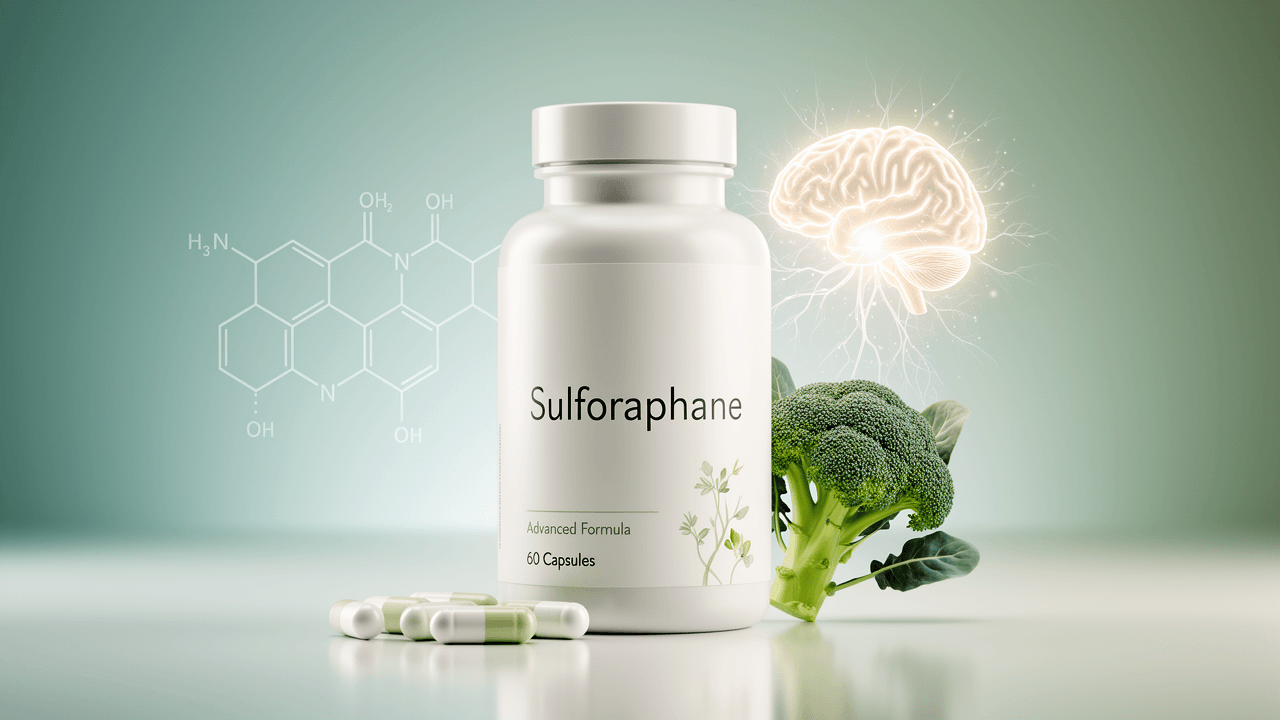
Sulforaphane is a bioactive isothiocyanate compound formed when we chew or process cruciferous vegetables, especially broccoli and broccoli sprouts. It is not present in its active form in the plant; instead, plants store it as glucoraphanin, an inactive precursor. When the plant tissue is damaged (chewing, chopping, blending), the enzyme myrosinase converts glucoraphanin into sulforaphane.
Sulforaphane has attracted interest as both a general health-promoting compound and a potential nootropic because of its effects on cellular defense systems, inflammation, and brain function.
1.1 Mechanisms of Action
Sulforaphane acts mainly by modulating gene expression through several pathways:
Nrf2 Activation (Primary Mechanism)
- Nrf2 (nuclear factor erythroid 2–related factor 2) is a transcription factor that regulates over 200 genes involved in antioxidant defense, detoxification, and cellular stress responses.
- Sulforaphane modifies Keap1, a protein that normally keeps Nrf2 inactive. This releases Nrf2, allowing it to move into the nucleus and switch on genes such as HO-1, NQO1, GCLC, and various glutathione-related enzymes.
Anti-inflammatory Effects (NF-κB Modulation)
- Sulforaphane can inhibit NF-κB, a key transcription factor that promotes inflammatory cytokines (e.g., TNF-α, IL-6, IL-1β).
- By dampening NF-κB activity, sulforaphane may reduce chronic low-grade inflammation implicated in metabolic syndrome, neurodegeneration, and mood disorders.
Epigenetic Modulation (Histone Deacetylase Inhibition)
- Sulforaphane acts as a mild histone deacetylase (HDAC) inhibitor, altering how DNA is packaged and which genes are expressed.
- This epigenetic effect is one reason sulforaphane has been studied in cancer prevention and neurodevelopmental conditions.
Mitochondrial and Cellular Protection
- By boosting endogenous antioxidant systems (particularly glutathione), sulforaphane helps protect mitochondria and cellular structures from oxidative damage.
- It may also improve cellular detoxification via phase II detox enzymes, potentially enhancing clearance of reactive metabolites and some environmental toxins.
Neuroprotective and Synaptic Effects
- In preclinical models, sulforaphane increases BDNF (brain-derived neurotrophic factor), supports synaptic plasticity, and reduces neuroinflammation.
- These effects underpin its investigation as a nootropic and in conditions like autism spectrum disorder (ASD), schizophrenia, and neurodegenerative diseases.
2. Key Benefits of Sulforaphane
2.1 Antioxidant and Cellular Defense Support
Sulforaphane is best known for upregulating the body’s own antioxidant systems rather than acting as a direct antioxidant. By activating Nrf2, it increases levels of glutathione and several detoxification enzymes, potentially helping the body cope with oxidative stress from aging, pollution, poor diet, or intense exercise.
2.2 Anti-inflammatory and Metabolic Health Effects
Sulforaphane’s inhibition of NF-κB and modulation of inflammatory cytokines may support:
- Reduced systemic inflammation (e.g., lower CRP and inflammatory cytokines in some trials)
- Improved insulin sensitivity and markers of metabolic health in individuals with obesity or type 2 diabetes
2.3 Brain Health and Potential Nootropic Effects
Emerging human and animal research suggests sulforaphane may:
- Reduce neuroinflammation and oxidative stress in the brain
- Support cognitive function and behavioral symptoms in some neurodevelopmental disorders (e.g., ASD)
- Potentially aid in stress resilience and mood via anti-inflammatory and antioxidant pathways
While data are still preliminary, sulforaphane is one of the few dietary compounds with human trials in ASD and schizophrenia.
2.4 Detoxification and Environmental Toxin Clearance
Sulforaphane enhances phase II detoxification enzymes such as glutathione S-transferases (GSTs) and NQO1, which help conjugate and eliminate reactive compounds. Clinical trials have shown increased excretion of certain airborne pollutants and tobacco-related toxins with sulforaphane-rich broccoli sprout preparations.
3. Research Findings
Below are key human studies that illustrate the potential benefits and limitations of sulforaphane.
3.1 Sulforaphane and Autism Spectrum Disorder (ASD)
Study 1: Randomized, Double-Blind, Placebo-Controlled Trial
- Population: 40 young men (13–27 years) with moderate to severe ASD
- Intervention: Sulforaphane-rich broccoli sprout extract vs placebo for 18 weeks
- Dose: Approximately 50–150 µmol sulforaphane/day (dose adjusted by body weight)
- Results:
- On the Aberrant Behavior Checklist (ABC), sulforaphane group showed a 34% improvement vs 3% in placebo.
- On the Social Responsiveness Scale (SRS), there was a 17% improvement vs 4% in placebo.
- Improvements were observed in social interaction, aberrant behaviors, and verbal communication.
- Benefits tended to diminish after discontinuation.
- Reference: Singh et al., PNAS, 2014.
Takeaway: Sulforaphane may improve certain behavioral and social symptoms in ASD, but replication in larger, more diverse samples is needed.
3.2 Sulforaphane and Schizophrenia / Cognitive Function
Study 2: Pilot RCT in Schizophrenia (Cognition)
- Population: 60 patients with schizophrenia (stable on antipsychotic medication)
- Intervention: Sulforaphane (as glucoraphanin-rich broccoli sprout extract) vs placebo for 12 weeks
- Dose: ~30 mg/day glucoraphanin (yielding lower levels of sulforaphane than many ASD trials)
- Results:
- Some improvement in cognitive performance (particularly processing speed) was noted in the sulforaphane group.
- Effects were modest and not uniform across all cognitive domains.
- Reference: Shiina et al., Clinical Psychopharmacology and Neuroscience, 2015 (and related mechanistic work).
Takeaway: Sulforaphane may offer small cognitive benefits in schizophrenia, but evidence is preliminary and dosing/formulation issues complicate interpretation.
3.3 Sulforaphane and Metabolic Health / Diabetes
Study 3: Type 2 Diabetes and Obesity
- Population: 97 adults with obesity and dysregulated type 2 diabetes
- Intervention: Broccoli sprout extract (standardized to sulforaphane) vs placebo for 12 weeks
- Dose: Equivalent to ~150 µmol sulforaphane/day
- Results:
- Significant reduction in fasting blood glucose (~10% decrease) in a subgroup with higher baseline dysregulation.
- Improved HbA1c and markers of oxidative stress in certain participants.
- Reference: Axelsson et al., Science Translational Medicine, 2017.
Takeaway: Sulforaphane may improve glycemic control and oxidative stress in individuals with poorly controlled type 2 diabetes, but it is not a replacement for standard therapy.
3.4 Sulforaphane and Detoxification of Air Pollutants
Study 4: Air Pollution Exposure in China
- Population: 291 adults in a highly polluted region in China
- Intervention: Daily broccoli sprout beverage providing glucoraphanin + myrosinase vs placebo for 12 weeks
- Dose: ~600 µmol glucoraphanin/day (converted in vivo to sulforaphane)
- Results:
- Increased urinary excretion of benzene (61% increase) and acrolein (23% increase) metabolites in the sulforaphane group.
- Suggests enhanced detoxification and elimination of airborne pollutants.
- Reference: Egner et al., Cancer Prevention Research, 2014.
Takeaway: Sulforaphane-rich broccoli sprout beverages can enhance detoxification of certain environmental pollutants in humans.
3.5 Sulforaphane and General Oxidative/Inflammatory Markers
Several small human studies (sample sizes typically 20–80 participants, durations 4–12 weeks) have reported:
- Increased activity of phase II detoxification enzymes (e.g., NQO1, GSTs)
- Higher blood or tissue glutathione levels
- Reductions in inflammatory markers like CRP, IL-6, or TNF-α in some, but not all, populations
Evidence is promising but heterogeneous due to differences in dose, formulation, and whether active sulforaphane vs glucoraphanin is used.
4. Best Sources & Dosage – Forms, Dosing, Timing, Safety
4.1 Dietary Sources of Sulforaphane
Sulforaphane is not taken directly from food; instead, we ingest glucoraphanin, which is then converted:
- Highest natural sources:
- Broccoli sprouts (3–5-day-old sprouts) – among the richest sources of glucoraphanin
- Broccoli (especially young florets)
- Other crucifers: Brussels sprouts, kale, cabbage, cauliflower, watercress (lower but still meaningful levels)
Key point: Cooking can inactivate myrosinase, the enzyme needed to convert glucoraphanin to sulforaphane. Light steaming preserves more myrosinase than boiling or microwaving for long periods.
Practical tips to maximize sulforaphane from food:
- Lightly steam broccoli (3–4 minutes) rather than boiling.
- Add a source of myrosinase (e.g., raw mustard seeds, daikon radish, horseradish, wasabi, or a bit of raw crucifer) to cooked crucifers to enhance conversion.
- Consume broccoli sprouts raw or lightly warmed.
4.2 Supplement Forms
Sulforaphane supplements come primarily in two categories:
Active Sulforaphane Supplements
- Provide sulforaphane directly (often stabilized with cyclodextrins or other carriers).
- May offer more predictable bioavailability but can be more expensive and sensitive to storage.
Glucoraphanin (Broccoli Seed/Sprout Extract) Supplements
- Provide glucoraphanin, relying on myrosinase from the product or gut microbiota to convert it to sulforaphane.
- Some products add myrosinase to improve conversion.
- Bioavailability can vary widely between individuals depending on gut flora and product quality.
Quality considerations:
- Look for products that specify standardized glucoraphanin content (e.g., 10–20% glucoraphanin) or quantified sulforaphane yield.
- Third-party testing (e.g., NSF, USP, Informed-Choice) is helpful where available.
- Avoid products that do not clearly state active components or standardization.
4.3 Dosage Recommendations
There is no official RDA for sulforaphane. Human trials use a wide range of doses, generally expressed in micromoles (µmol) of sulforaphane or glucoraphanin.
Approximate conversions (very rough):
- 1 mg sulforaphane ≈ 5.7 µmol
- 10 mg sulforaphane ≈ 57 µmol
Below are typical supplemental ranges based on clinical and experimental data. These are not medical prescriptions but general informational guidelines.
4.3.1 General Health / Antioxidant Support
- Common supplemental range:
- ~10–30 mg/day sulforaphane (≈ 60–170 µmol)
- Or doses of glucoraphanin expected to yield similar sulforaphane (often 50–200 mg glucoraphanin, depending on conversion).
- Frequency: Once daily or divided into 1–2 doses.
- Goal: Support Nrf2 activation, antioxidant enzymes, and mild detoxification.
4.3.2 Metabolic Health / Insulin Resistance (Adjunctive Use)
- Research like the Axelsson et al. trial used ~150 µmol/day sulforaphane (≈ 25–30 mg).
- Informational range: 20–40 mg sulforaphane/day (≈ 115–230 µmol), under medical supervision in people with metabolic disease.
4.3.3 Cognitive / Nootropic and Neuroprotective Use
Human data are less standardized, but ASD and schizophrenia studies often fall in this zone:
- ASD trials: ~50–150 µmol/day sulforaphane, adjusted by body weight.
- Informational adult range: 15–30 mg/day (≈ 85–170 µmol) of sulforaphane, or equivalent glucoraphanin with myrosinase.
Given the limited long-term safety data at higher doses, many clinicians favor starting at the lower end and titrating up if well tolerated.
4.3.4 Detoxification / Environmental Exposure
- The Chinese air pollution study used ~600 µmol glucoraphanin/day (which produced significant sulforaphane levels). This is relatively high and was administered under research supervision.
- For general use, lower doses (e.g., 20–40 mg sulforaphane/day) are more common in supplements.
Important: Individual response varies, especially with glucoraphanin-only products. Some people convert much more or less sulforaphane depending on gut microbiota and presence of myrosinase.
4.4 Timing and Administration
With or without food?
- Many studies administer sulforaphane with food, often as part of a beverage or capsule taken with a meal.
- Taking with a light meal may improve tolerance and mimic real-world dietary intake.
Once vs divided dosing:
- Most trials use once-daily dosing.
- Because Nrf2 activation effects persist beyond plasma half-life, once daily is usually sufficient.
Stacking with other supplements:
- Often combined with general antioxidant support (vitamin C, vitamin E) or omega-3s.
- Avoid combining with very high-dose direct antioxidants specifically to “supercharge” Nrf2 without medical guidance; theoretical concerns exist about over-suppressing necessary ROS signaling.
5. Safety, Side Effects, and Drug Interactions
5.1 General Safety Profile
Sulforaphane from food (cruciferous vegetables, broccoli sprouts) is generally considered safe for most people as part of a normal diet. Clinical trials using sulforaphane-rich extracts for weeks to months have reported good overall tolerability, but higher-dose, long-term data are still limited.
Typical side effects (usually mild and dose-dependent):
- Gastrointestinal discomfort: gas, bloating, loose stools, mild abdominal cramps
- Changes in stool odor (due to sulfur compounds)
- Occasional nausea or decreased appetite at higher doses
These effects are more common with high-dose broccoli sprout extracts or when quickly escalating doses.
5.2 Potential Risks and Theoretical Concerns
Excessive Nrf2 Activation
- Nrf2 activation is beneficial in moderation, but chronic, high-level activation could theoretically support survival of pre-cancerous cells or interfere with normal cell signaling.
- Most human data suggest benefits at physiological doses, but megadosing for prolonged periods is not well studied.
Thyroid Function (Goitrogenic Concerns)
- Cruciferous vegetables contain goitrogenic compounds that may interfere with iodine uptake in the thyroid, especially when consumed raw in very large amounts and in the context of iodine deficiency.
- Sulforaphane itself is not the primary goitrogen, but heavy intake of raw broccoli sprouts or concentrated extracts may warrant caution in people with hypothyroidism or marginal iodine status.
- Light cooking and ensuring adequate iodine intake (e.g., iodized salt, seafood) may mitigate risk.
Oxidative Stress Balance
- Sulforaphane induces endogenous antioxidant systems, which is generally protective. However, in certain conditions, abrupt changes in redox status could theoretically influence medication response or cellular signaling.
5.3 Drug Interactions
Evidence in humans is limited, but several potential interactions are worth noting:
Drugs Metabolized by Phase II Enzymes
- Sulforaphane upregulates phase II detoxification enzymes (e.g., glutathione S-transferases).
- This might alter the metabolism and clearance of some drugs, potentially reducing or increasing drug levels.
- Examples could include certain chemotherapeutic agents, acetaminophen, and other drugs that rely heavily on conjugation pathways.
- Anyone on critical medications (especially chemotherapy) should consult their oncologist or prescribing physician before using sulforaphane supplements.
Anticoagulant / Antiplatelet Drugs
- Cruciferous vegetables are not major vitamin K sources compared to leafy greens, but any supplement that significantly changes diet or liver enzyme activity could theoretically affect coagulation.
- People on warfarin or other anticoagulants should monitor INR closely when making major dietary or supplement changes.
Thyroid Medications (Levothyroxine)
- Heavy intake of raw crucifers might theoretically impact thyroid hormone requirements in susceptible individuals.
- If you have hypothyroidism and take levothyroxine, maintain consistent intake of crucifers and discuss any large increase in sulforaphane-rich foods or supplements with your clinician.
CNS-Active Medications (ASD, Schizophrenia)
- In ASD and schizophrenia, sulforaphane has been studied as an adjunct to standard medications.
- While no major pharmacokinetic interactions have been clearly documented, any change in neuroinflammation or oxidative status could influence symptoms and medication response.
- Use only under the guidance of a psychiatrist or neurologist.
5.4 Special Populations
Pregnancy and Breastfeeding:
- Normal dietary intake of cruciferous vegetables is considered safe.
- There is insufficient data on high-dose sulforaphane supplements in pregnancy or lactation. Avoid high-dose supplements unless specifically recommended by a healthcare provider.
Children:
- ASD studies have used sulforaphane in adolescents and young adults; data in younger children are limited.
- Dietary sources (broccoli, sprouts) are generally safe; supplements in children should only be used under pediatric supervision.
Kidney or Liver Disease:
- Because sulforaphane and its metabolites are processed through liver detoxification pathways and excreted via the kidneys, patients with significant hepatic or renal impairment should be cautious and seek medical advice before use.
6. Who Should and Shouldn’t Use Sulforaphane
6.1 Who Might Consider Sulforaphane (with Medical Guidance)
Individuals Seeking General Health and Longevity Support
- Those interested in supporting antioxidant defenses, detoxification, and healthy aging may benefit from including cruciferous vegetables and, if appropriate, moderate-dose sulforaphane supplements.
People with High Environmental or Urban Pollution Exposure
- Based on trials showing increased excretion of airborne pollutants, individuals living in heavily polluted areas might consider sulforaphane-rich foods or supervised supplementation.
Those with Metabolic Syndrome or Type 2 Diabetes (Adjunct Only)
- Under medical supervision, sulforaphane may complement lifestyle changes and standard medications by improving oxidative stress and glycemic control.
Neurocognitive / Neurodevelopmental Conditions (Experimental/Adjunct)
- Families and clinicians working with ASD or schizophrenia may explore sulforaphane as an adjunctive therapy given the existing pilot RCTs.
- This should be done carefully, with close monitoring and realistic expectations.
Athletes or Individuals Under High Oxidative Stress
- Those exposed to high levels of physical or environmental stress might consider sulforaphane to support endogenous antioxidant systems, though direct performance data are limited.
6.2 Who Should Use Caution or Avoid Sulforaphane Supplements
People on Chemotherapy or Complex Drug Regimens
- Because sulforaphane affects detoxification enzymes, it could interfere with the metabolism of certain chemotherapy drugs or other critical medications.
- Always consult an oncologist or specialist before starting any sulforaphane supplement.
Individuals with Significant Thyroid Disease (Especially Hypothyroidism) and Low Iodine Intake
- Large amounts of raw cruciferous vegetables or high-dose broccoli sprout extracts may not be appropriate without careful thyroid and iodine status monitoring.
Pregnant or Breastfeeding Women (High-Dose Supplements)
- Stick to dietary sources unless a clinician specifically recommends supplementation and monitors use.
People with Severe Gastrointestinal Sensitivity
- Those prone to IBS-like symptoms, gas, or bloating may find high-dose sulforaphane or broccoli sprout extracts uncomfortable. Start low and go slow, or rely more on moderate food-based intake.
Children Without Medical Supervision
- While broccoli and crucifers are safe foods, concentrated sulforaphane supplements should not be given to children without pediatric guidance.
7. Practical Summary
- What it is: Sulforaphane is a bioactive compound derived from glucoraphanin in cruciferous vegetables, especially broccoli sprouts, with strong effects on Nrf2, antioxidant defenses, and detoxification pathways.
- Core benefits: Supports endogenous antioxidant systems, may reduce inflammation, enhances detoxification of some environmental toxins, and shows early promise in metabolic health and certain neurodevelopmental conditions.
- Evidence: Human RCTs support benefits in ASD symptoms, pollutant detoxification, and metabolic markers in type 2 diabetes, but many findings are preliminary and not yet standard of care.
- Dosing: Common supplemental ranges are about 10–30 mg/day of sulforaphane (≈ 60–170 µmol) for general health, with higher doses used in specific clinical trials under supervision.
- Safety: Generally well tolerated at moderate doses; main issues are GI upset and theoretical concerns about thyroid function and drug metabolism at high doses or in vulnerable populations.
- Who it suits: Adults seeking cellular defense support, those in polluted environments, and patients with certain conditions (ASD, metabolic syndrome) under professional care.
- Who should avoid or be cautious: Pregnant/breastfeeding women at high doses, individuals on chemotherapy or complex drug regimens, people with uncontrolled thyroid disease, and young children without medical oversight.
As with any potent bioactive compound, sulforaphane is best used thoughtfully: prioritize whole-food cruciferous intake, consider moderate, well-formulated supplements when appropriate, and involve a healthcare professional if you have medical conditions or take prescription medications.