1. Understanding Valerian Root – What It Is and How It Works
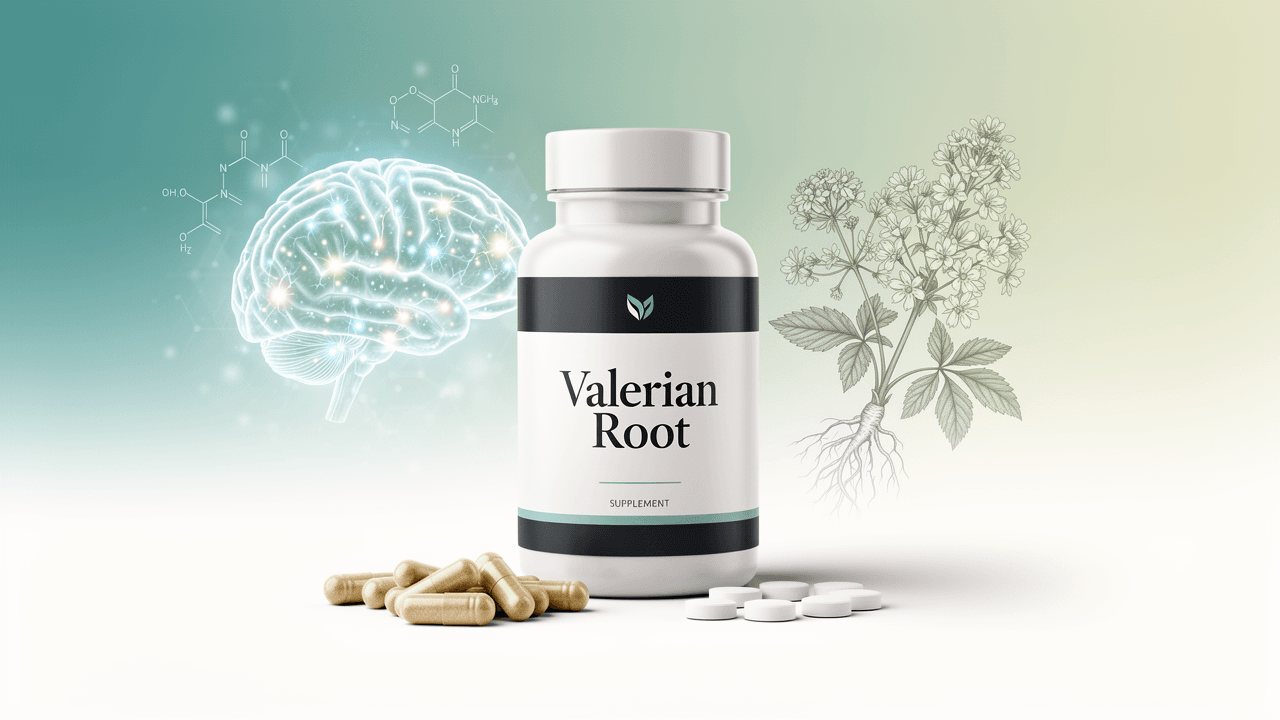
Valerian (Valeriana officinalis) is a perennial plant native to Europe and parts of Asia, long used in traditional medicine as a calming herb and sleep aid. The root and rhizome are used in dietary supplements, typically as:
- Dried root (capsules, tablets)
- Liquid extracts/tinctures
- Teas
- Standardized extracts (often expressed as % valerenic acids)
Valerian is not a classic "nootropic" in the sense of boosting memory or focus directly. Instead, it is best described as a calming, sleep-supportive supplement that may indirectly support cognition by improving sleep quality and reducing anxiety.
1.1 Key Active Compounds
Valerian root contains multiple bioactive constituents:
- Valerenic acids (valerenic acid, hydroxyvalerenic acid, acetoxyvalerenic acid)
- Valepotriates (iridoid esters – relatively unstable, more abundant in fresh root)
- Lignans (e.g., 8-prenylnaringenin-like compounds)
- Volatile oils (including bornyl acetate, camphene, and others)
No single compound fully explains valerian’s effects; rather, a synergistic combination appears responsible.
1.2 How Valerian Works in the Body
Valerian’s primary actions are on the central nervous system (CNS), particularly neurotransmitter systems involved in sleep and anxiety.
Key proposed mechanisms:
GABAergic modulation
- GABA (gamma-aminobutyric acid) is the main inhibitory neurotransmitter in the brain, promoting relaxation and reducing neuronal excitability.
- In vitro and animal studies suggest valerian:
- Inhibits GABA breakdown and reuptake, increasing GABA availability.
- Binds to GABA_A receptors at or near the benzodiazepine site (valerenic acid is a partial modulator), producing mild sedative and anxiolytic effects without the same potency as prescription sedatives.
Adenosine and serotonin effects
- Some data suggest interactions with adenosine receptors, which regulate sleep pressure and sedation.
- Possible mild modulation of serotonin (5-HT) receptors, which may contribute to mood and anxiety effects, though evidence is less robust than for GABA.
Modulation of neuronal excitability
- Animal studies show valerian extracts can reduce spontaneous motor activity and prolong sleep time induced by other sedatives, indicating a general CNS-depressant, calming effect.
Overall, valerian appears to act as a mild herbal sedative and anxiolytic, enhancing the brain’s natural inhibitory systems rather than forcing sleep like stronger hypnotic drugs.
2. Key Benefits of Valerian Root
2.1 Improved Sleep Onset (Falling Asleep Faster)
Valerian is most commonly used to shorten the time it takes to fall asleep, particularly in people with mild to moderate insomnia or situational sleep difficulties.
- Multiple trials report modest reductions in sleep latency (time to fall asleep), especially when taken for several weeks rather than as a single dose.
2.2 Better Subjective Sleep Quality
Many users report that sleep feels deeper, more restorative, and less fragmented.
- While objective sleep-lab (polysomnography) findings are mixed, several studies show improvements in self-rated sleep quality, fewer nighttime awakenings, and less morning grogginess compared with baseline.
2.3 Reduced Anxiety and Nervousness
Valerian may help with mild anxiety, nervous tension, and stress-related symptoms.
- Its GABAergic and sedative properties can produce a calming effect without strong cognitive impairment in most people at typical doses.
- It is sometimes combined with other calming herbs (e.g., lemon balm, passionflower) in multi-ingredient formulas for anxiety and sleep.
2.4 Menopausal and PMS-Related Sleep and Mood Symptoms
Some evidence suggests valerian can help menopausal women and those with premenstrual syndrome (PMS) by improving sleep and reducing associated emotional symptoms such as irritability and mood swings.
3. Research Findings on Valerian Root
Valerian has been studied in dozens of clinical trials, though many are small and vary in quality. Results are mixed but generally supportive of a modest sleep and anxiety benefit.
3.1 Sleep Quality and Insomnia
Meta-analyses and systematic reviews
- A 2010 systematic review and meta-analysis of 18 randomized controlled trials (RCTs) involving 1,386 participants found that valerian was more likely than placebo to improve sleep quality, but results were inconsistent and many studies had methodological limitations. The authors concluded valerian may improve sleep quality without significant side effects, but stronger trials are needed.
Representative individual trials
Chronic insomnia (older adults)
- Design: Double-blind RCT with 16 patients (mean age ~61) with chronic insomnia.
- Intervention: 400 mg valerian extract vs placebo nightly for 2 weeks.
- Findings: Modest improvements in sleep latency and sleep continuity were noted but did not reach strong statistical significance due to the very small sample size. Subjective sleep quality tended to improve.
Self-perceived poor sleepers (non-clinical)
- Design: Double-blind crossover trial in 128 adults who identified as poor sleepers.
- Intervention: Single dose of 400 mg standardized valerian extract vs placebo on two separate nights.
- Findings: Valerian was associated with subjective improvement in sleep quality in a higher proportion of participants compared with placebo. Effects were more notable in participants with more severe baseline sleep complaints.
Valerian + hops combination
- Design: RCT with 184 adults with mild insomnia.
- Intervention: Combination of valerian extract (500–600 mg) and hops vs placebo for 2 weeks.
- Findings: The herbal combination significantly improved sleep latency and sleep quality scores compared with placebo. Because this was a combination product, the specific contribution of valerian is unclear.
3.2 Anxiety and Stress
Generalized anxiety symptoms
- Design: Small RCT with 36 participants experiencing generalized anxiety symptoms.
- Intervention: Valerian extract (about 600 mg/day) vs placebo for 4 weeks.
- Findings: Participants receiving valerian showed greater reductions in self-rated anxiety compared with placebo, though the study was underpowered and results should be interpreted cautiously.
Test anxiety (students)
- Design: RCT in 39 students with exam-related anxiety.
- Intervention: Single dose or short-term use (a few days) of valerian extract vs placebo before exams.
- Findings: Valerian modestly reduced subjective anxiety and improved calmness in some measures, but not all endpoints were statistically significant.
3.3 Menopause and PMS
Menopausal sleep disturbances
- Design: RCT in 100 postmenopausal women with sleep problems.
- Intervention: 530 mg valerian extract twice daily vs placebo for 4 weeks.
- Findings: The valerian group reported significant improvements in sleep quality scores compared with placebo. Some participants also reported reduced hot-flash–related sleep disruptions.
Premenstrual syndrome (PMS)
- Design: RCT with 100 women with PMS.
- Intervention: Valerian capsules (e.g., 255 mg, 3 times daily) vs placebo during the luteal phase of the menstrual cycle for 3 cycles.
- Findings: Valerian significantly reduced physical and emotional PMS symptoms, including irritability, anxiety, and sleep disturbance.
3.4 Cognitive Effects
Valerian is not strongly associated with direct cognitive enhancement. However:
- Some studies report no significant impairment of reaction time or attention at typical doses, suggesting that valerian’s sedative effect is milder than many pharmaceuticals.
- Any indirect nootropic benefit would likely come from better sleep and reduced anxiety, which can support daytime cognitive performance.
4. Best Sources & Dosage – Forms, Dosing, Timing, Safety
4.1 Common Supplemental Forms
Standardized extracts
- Typically standardized to 0.4–0.8% valerenic acids.
- Most clinical trials use standardized extracts rather than simple powders.
Dried root powder (capsules/tablets)
- May be less consistent in potency and valerenic acid content.
- Often requires higher mg doses than standardized extracts.
Tinctures/liquid extracts
- Expressed as ratios (e.g., 1:5 in 45% alcohol).
- Useful for flexible dosing but exact valerenic acid content may be less clear.
Teas
- 2–3 g dried root steeped in hot water.
- Gentler effect; can be part of a bedtime ritual.
4.2 Evidence-Based Dosage Ranges
Note: Doses vary between products due to different extract strengths. Always follow the specific product label and consult a healthcare professional.
4.2.1 For Sleep Onset and Sleep Quality
Standardized extract: 300–600 mg taken 30–120 minutes before bedtime.
- Many trials use 400–600 mg nightly.
- Some evidence suggests daily use for 2–4 weeks provides more consistent benefit than a single dose.
Dried root: 2–3 g (2000–3000 mg) of dried root 30–60 minutes before bed.
Tea: 1–2 teaspoons (~2–3 g) of dried root steeped for 10–15 minutes; drink 30–60 minutes before bed.
4.2.2 For Mild Anxiety or Nervousness (Daytime)
Valerian is more sedating at higher doses, so lower and/or divided doses are typically used for daytime anxiety.
Standardized extract: 120–200 mg, up to 3 times daily.
- Start with the lowest effective dose to minimize daytime drowsiness.
Avoid driving or operating machinery until you know how valerian affects you.
4.2.3 For Menopausal or PMS Symptoms
Based on clinical trials:
- Menopausal sleep issues: ~500–600 mg standardized extract twice daily (e.g., morning and 1–2 hours before bed) for 4–8 weeks.
- PMS: 250–300 mg standardized extract 2–3 times daily during the luteal phase (about 7–10 days before menstruation) for several cycles.
4.3 Onset of Effects and Duration
- Some people notice acute calming or sleep-promoting effects within the first night or few doses.
- Many clinical trials suggest full benefits may take 1–2 weeks of consistent use.
- Valerian is commonly used for short to medium term (a few weeks to a few months). Long-term safety data beyond several months are limited.
4.4 Safety, Side Effects, and Drug Interactions
Valerian is generally considered low-risk for most healthy adults when used short-term at recommended doses. However, it is still a psychoactive herb and should be treated with caution.
4.4.1 Common Side Effects
Usually mild and often dose-related:
- Drowsiness (especially next-morning if taken late or at high doses)
- Headache
- Dizziness or lightheadedness
- Gastrointestinal upset (nausea, stomach discomfort)
- Vivid dreams or changes in dream patterns
If you experience persistent or severe side effects, discontinue use and consult a healthcare professional.
4.4.2 Potential Liver Concerns
- There are rare case reports of liver injury in people taking multi-herb products that included valerian, but causality is unclear.
- Pure valerian alone has not been strongly linked to clinically significant liver toxicity in controlled trials.
- As a precaution:
- Avoid using valerian in combination with other hepatotoxic drugs or herbs.
- People with pre-existing liver disease should avoid valerian or use only under medical supervision.
4.4.3 Tolerance, Dependence, and Withdrawal
- Unlike benzodiazepines or Z-drugs, valerian has not been clearly associated with physical dependence or severe withdrawal in human studies.
- Some anecdotal reports describe mild rebound insomnia or agitation after abrupt discontinuation following long-term use, but evidence is limited.
- To be cautious, if using valerian regularly for several months, consider tapering gradually rather than stopping suddenly.
4.5 Drug and Supplement Interactions
Valerian can enhance the effects of other CNS depressants and may interact with drugs metabolized by certain liver enzymes.
Use with caution or avoid combining with:
Sedative medications
- Benzodiazepines (e.g., diazepam, lorazepam)
- Non-benzodiazepine hypnotics (e.g., zolpidem, eszopiclone)
- Barbiturates
- Sedating antihistamines (e.g., diphenhydramine, doxylamine)
- Some antipsychotics and mood stabilizers with sedative effects
- Opioid pain medications
Risk: Excessive sedation, impaired coordination, slowed breathing at high doses or in sensitive individuals.
Alcohol
- Both alcohol and valerian are CNS depressants.
- Combining them can increase drowsiness, impaired judgment, and motor coordination.
Other calming herbs and supplements
- Kava, passionflower, hops, lemon balm, chamomile, L-theanine, magnesium, etc.
- These combinations are common in sleep formulas, but additive sedation is possible. Start with lower doses if using combinations.
Liver-metabolized drugs (CYP interactions)
- In vitro data suggest valerian may affect certain cytochrome P450 enzymes (e.g., CYP3A4, CYP2D6), but human data are inconsistent.
- If you are on narrow-therapeutic-index medications (e.g., some anti-epileptics, immunosuppressants, antiarrhythmics), consult your prescriber before using valerian.
Always inform your healthcare providers (physician, pharmacist) if you are using valerian, especially before surgery or anesthesia, as it may interact with anesthetic agents. Many guidelines recommend stopping valerian 1–2 weeks before surgery.
4.6 Who Should and Should Not Use Valerian
4.6.1 Who May Consider Using Valerian
Under guidance from a healthcare professional, valerian may be reasonable for:
- Adults with mild to moderate insomnia or difficulty falling asleep.
- Adults with situational anxiety or stress (e.g., exam stress, travel-related sleep issues).
- Peri- and postmenopausal women with sleep disturbances who prefer herbal options.
- Individuals seeking a gentler alternative to prescription sleep medications, understanding that effects are milder and not guaranteed.
In all cases, valerian should complement—not replace—good sleep hygiene (regular schedule, limiting screens before bed, managing caffeine, etc.).
4.6.2 Who Should Avoid Valerian or Use Only Under Medical Supervision
Pregnant or breastfeeding individuals
- Human safety data are insufficient.
- Most guidelines recommend avoiding valerian during pregnancy and lactation.
Children and adolescents
- Limited data on safety and dosing.
- Should only be used in minors under the direction of a qualified pediatric or integrative healthcare professional.
People with liver disease or significant hepatic impairment
- Due to rare reports of liver issues and potential interactions with hepatically metabolized drugs, avoid use or proceed only under specialist supervision.
People with severe psychiatric or neurological conditions
- Major depression, bipolar disorder, psychotic disorders, epilepsy, or other serious neurological diseases should not be self-treated with valerian.
- Valerian may interact with psychiatric medications or anti-epileptics.
Individuals taking sedative or CNS-depressant medications
- Including benzodiazepines, Z-drugs, barbiturates, certain antipsychotics, opioids, and sedating antihistamines.
- Combining valerian can increase sedation and risk of accidents.
People who must maintain high alertness
- Pilots, heavy machinery operators, professional drivers, or anyone whose work requires unimpaired reaction time should be very cautious.
- If valerian is used, start at low doses, test on non-working days, and avoid use close to working hours.
Before surgery or procedures with anesthesia
- Discontinue valerian 1–2 weeks before planned surgery due to potential interactions with anesthetics and sedatives.
5. Practical Takeaways
- Valerian root is a traditional herbal sedative with the strongest evidence for modestly improving sleep onset and subjective sleep quality, particularly in mild insomnia.
- Benefits for anxiety, menopause-related sleep issues, and PMS symptoms are supported by small-to-moderate RCTs but need more robust confirmation.
- Typical doses for sleep are 300–600 mg standardized extract taken 30–120 minutes before bed, often for 2–4 weeks. For daytime anxiety, 120–200 mg up to 3 times daily may be used, with caution about drowsiness.
- Side effects are usually mild (drowsiness, headache, GI upset), but interactions with alcohol and sedative drugs are important considerations.
- Not recommended for pregnancy, breastfeeding, children, people with liver disease, or those on significant CNS depressants without medical supervision.
As with any psychoactive supplement, it is wise to start low, go slow, and monitor your response, ideally in consultation with a healthcare professional who knows your medical history and medications.