1. Understanding St. John’s Wort – What It Is and How It Works
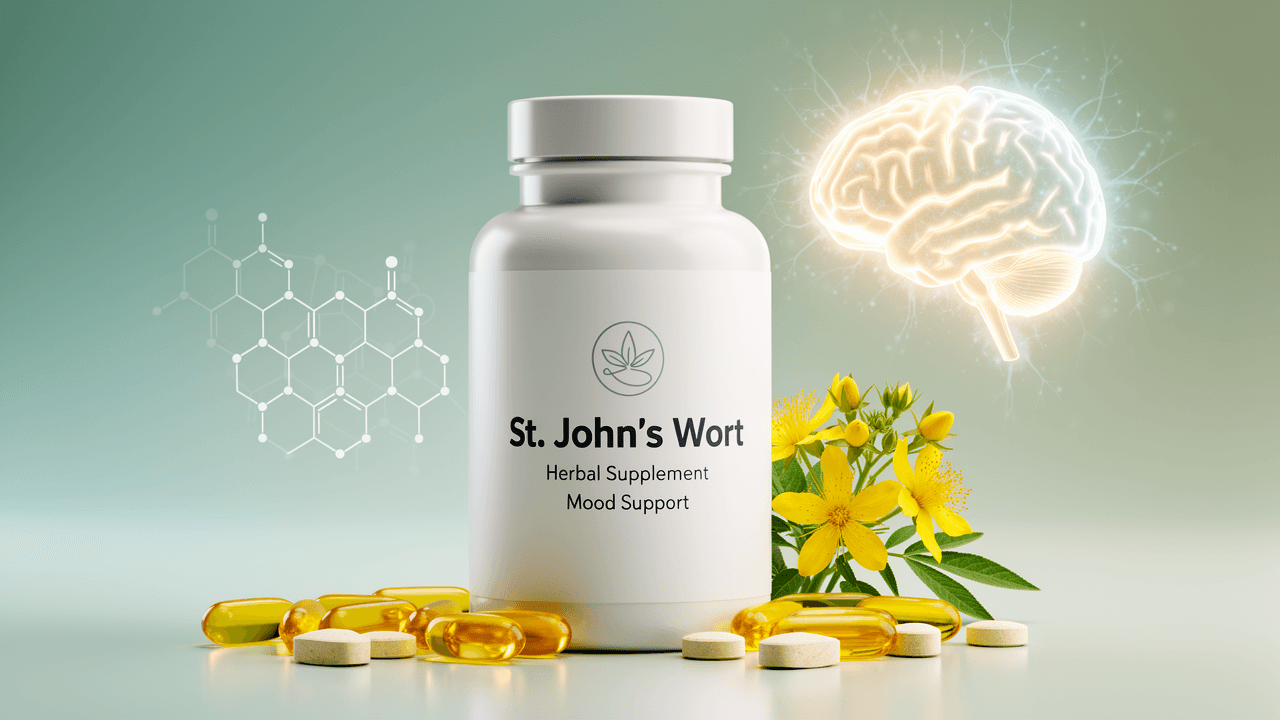
St. John’s Wort (Hypericum perforatum) is a flowering plant traditionally used in European herbal medicine for mood support and wound healing. Today, it is widely sold as an over-the-counter dietary supplement, primarily for mild to moderate depression and general mood support.
The main bioactive compounds include:
- Hypericin
- Pseudohypericin
- Hyperforin
- Various flavonoids and phenolic compounds
Standardized supplements are usually labeled by hypericin content (e.g., 0.3% hypericin), though hyperforin is now believed to be a key contributor to antidepressant effects.
How St. John’s Wort Works in the Body
St. John’s Wort appears to act on multiple neurotransmitter systems and cellular pathways rather than a single target. Proposed mechanisms include:
Monoamine reuptake inhibition
Hyperforin and related constituents inhibit the reuptake of several neurotransmitters:- Serotonin (5-HT)
- Norepinephrine (NE)
- Dopamine (DA)
- GABA
- Glutamate
This is somewhat analogous to conventional antidepressants (e.g., SSRIs and SNRIs), but broader and generally weaker on any single transporter.
Modulation of receptor sensitivity and signaling
Animal and in vitro studies suggest St. John’s Wort can:- Downregulate β-adrenergic receptors
- Upregulate 5-HT1A receptors
- Influence HPA-axis activity (stress response)
Anti-inflammatory and antioxidant effects
Extracts show antioxidant activity and may reduce pro‑inflammatory cytokines (e.g., TNF‑α, IL‑6) in preclinical models. Low‑grade inflammation has been linked to depression in some patients.Modulation of circadian and hormonal pathways (preclinical)
Animal research suggests potential effects on melatonin and corticosterone rhythms, which may relate to sleep and stress regulation, though human data are limited.Potent induction of drug‑metabolizing enzymes
Clinically crucial: St. John’s Wort strongly induces:- CYP3A4 (and to a lesser degree CYP2C9, CYP2C19)
- P‑glycoprotein (P‑gp)
This does not contribute to mood benefits but causes major drug interactions, reducing blood levels of many medications (e.g., oral contraceptives, immunosuppressants, HIV drugs, some anticoagulants, some antidepressants, and more).
St. John’s Wort is sometimes described as a nootropic because mood stabilization and reduced depressive symptoms can indirectly improve cognition, motivation, and productivity. However, it is primarily an antidepressant/herbal psychotropic, not a classic cognitive enhancer.
2. Key Benefits of St. John’s Wort
2.1 Mild to Moderate Depression
The strongest evidence for St. John’s Wort is in mild to moderate major depressive disorder (MDD). Multiple randomized controlled trials (RCTs) and meta‑analyses show:
- Symptom reduction comparable to some conventional antidepressants
- Generally fewer side effects than many SSRIs and tricyclic antidepressants (TCAs)
However, quality and standardization of preparations vary widely, and efficacy is best established for standardized extracts used in clinical trials (e.g., LI 160, WS 5570).
2.2 Anxiety and Adjustment Disorders (Limited Evidence)
Some trials and observational studies suggest benefits for:
- General anxiety symptoms co‑occurring with depression
- Adjustment disorders with depressed or anxious mood
The evidence is less robust than for depression, and St. John’s Wort is not a first‑line treatment for primary anxiety disorders.
2.3 Menopausal Mood Symptoms and PMS (Preliminary)
Small studies and open‑label trials indicate potential benefits for:
- Perimenopausal/menopausal mood disturbances
- Premenstrual syndrome (PMS) and premenstrual dysphoric disorder (PMDD) when combined with other interventions (e.g., chasteberry in some formulations)
Findings are promising but not definitive. Effects may stem from general antidepressant and anxiolytic properties rather than hormonal modulation per se.
2.4 Quality of Life and Functional Outcomes
By improving mood, St. John’s Wort may indirectly enhance:
- Energy and motivation
- Social and occupational functioning
- Sleep quality (in some individuals)
However, direct cognitive enhancement (memory, attention) in healthy individuals is not well supported by current evidence.
3. Research Findings – What the Studies Show
Below are key representative studies and meta‑analyses. Note that most research used standardized extracts at specific doses under medical supervision.
3.1 Meta‑Analyses of St. John’s Wort for Depression
Linde et al., 2008, BMJ (Systematic Review & Meta‑analysis)
- Design: 29 randomized clinical trials (N ≈ 5,489) on major depression
- Duration: 4–12 weeks (most 6–8 weeks)
- Interventions: St. John’s Wort extracts vs placebo or standard antidepressants
- Findings:
- For mild to moderate depression, St. John’s Wort was more effective than placebo and similarly effective to standard antidepressants.
- Adverse events were fewer with St. John’s Wort than with standard antidepressants.
- Marked heterogeneity due to differing extract types and study quality.
Ng et al., 2017, Journal of Affective Disorders (Meta‑analysis)
- Design: 27 RCTs (N ≈ 3,800) comparing St. John’s Wort with placebo or antidepressants
- Findings:
- Comparable efficacy to SSRIs for mild to moderate depression.
- Better tolerability profile, with fewer participants discontinuing due to side effects.
- Data for severe depression were limited and less favorable.
3.2 Representative RCTs
Hypericum extract vs sertraline (an SSRI)
- Study: Davidson et al., 2002, JAMA
- Participants: 340 adults with major depressive disorder (moderate to severe)
- Duration: 8 weeks
- Groups:
- St. John’s Wort extract (900–1,500 mg/day)
- Sertraline 50–100 mg/day
- Placebo
- Results:
- No significant difference in response rates between St. John’s Wort and placebo.
- Sertraline also did not significantly outperform placebo (trial considered “failed” for efficacy).
- Suggests that in more severe depression, benefits may be smaller and harder to detect.
Hypericum extract WS 5570 vs paroxetine (SSRI)
- Study: Szegedi et al., 2005, BMJ
- Participants: 251 patients with moderate to severe depression
- Duration: 6 weeks
- Intervention:
- WS 5570 (St. John’s Wort extract) 900 mg/day, with possible increase to 1,800 mg/day
- Paroxetine 20–40 mg/day
- Results:
- WS 5570 was non‑inferior to paroxetine in reducing Hamilton Depression Rating Scale (HAM‑D) scores.
- Response rates: 71% (WS 5570) vs 61% (paroxetine).
- Fewer adverse events with WS 5570.
Hypericum extract LI 160 vs placebo
- Study: Harrer et al., 1999, Pharmacopsychiatry
- Participants: 151 patients with mild to moderate depression
- Duration: 6 weeks
- Intervention:
- LI 160 (St. John’s Wort) 900 mg/day
- Placebo
- Results:
- Significant improvement in depression scores vs placebo.
- Response rate ~56% vs 15% (placebo).
- Well tolerated.
3.3 Anxiety and Adjustment Disorders
St. John’s Wort for somatoform disorders
- Study: Volz et al., 2000, Pharmacopsychiatry
- Participants: 263 patients with somatoform disorders (often with anxiety/depressive features)
- Duration: 6 weeks
- Intervention:
- St. John’s Wort extract LI 160, 600–900 mg/day vs placebo
- Results:
- Significant improvement in overall symptom scores, including mood and anxiety-related symptoms, vs placebo.
- Good tolerability.
Evidence specifically for primary generalized anxiety disorder or panic disorder remains limited; more robust trials are needed.
3.4 Menopausal Symptoms and PMS
Menopausal symptoms
- Several small RCTs (sample sizes ~40–100) have evaluated St. John’s Wort alone or in combination with black cohosh or isoflavones.
- Results commonly show improvements in mood, sleep, and psychological symptoms, but effects on hot flashes are inconsistent.
- Study heterogeneity and small sample sizes limit firm conclusions.
PMS and PMDD
- A few small trials (N ~34–70) using St. John’s Wort 900–1,800 mg/day for 2–3 cycles report:
- Reduced mood-related PMS symptoms (irritability, low mood, emotional lability).
- Less clear impact on physical symptoms (bloating, breast tenderness).
Overall, evidence for PMS/PMDD is promising but preliminary.
4. Best Sources & Dosage – Forms, Dosing, Timing, Safety
4.1 Supplement Forms
Common forms include:
Standardized extracts (most studied)
- Typically standardized to 0.3% hypericin (sometimes 3–5% hyperforin).
- Sold as capsules or tablets, usually 300 mg per dose.
Tinctures and liquid extracts
- Less standardized; quality and potency can vary widely.
Teas and dried herb
- Contain some active compounds but at much lower and inconsistent doses compared with standardized extracts.
- Generally not sufficient for clinically meaningful antidepressant effects.
For evidence-based mood effects, standardized extracts used in clinical studies are preferred.
4.2 Typical Dosage Ranges
Important: Individual response varies. These ranges are based on clinical trials in adults. Always consult a healthcare professional before starting.
4.2.1 Mild to Moderate Depression
Common clinical dose:
- 900 mg/day of standardized extract (usually 0.3% hypericin), divided as:
- 300 mg three times daily (TID), or
- 450 mg twice daily (BID).
- 900 mg/day of standardized extract (usually 0.3% hypericin), divided as:
Dose range in studies:
- 600–1,800 mg/day.
- Many trials start at 600–900 mg/day and may increase to 1,200–1,800 mg/day if response is inadequate and tolerability is good.
Onset of effect:
- Partial improvement often seen within 2–4 weeks.
- Full assessment typically at 6–8 weeks.
4.2.2 Anxiety/Adjustment Symptoms (Off‑Label)
Studies have generally used similar doses to depression trials:
- 600–900 mg/day of standardized extract, in 2–3 divided doses.
Evidence is weaker; this is considered off‑label use and should be supervised by a clinician, especially if other medications are involved.
4.2.3 Menopausal Mood Symptoms and PMS
Trials have commonly used:
- 600–900 mg/day of standardized extract, often combined with other herbs in some studies.
Duration:
- PMS/PMDD: at least 2–3 menstrual cycles.
- Menopausal symptoms: 8–12 weeks or longer.
4.2.4 General Mood Support or Subclinical Low Mood
- Some practitioners use 300–600 mg/day for milder, subclinical mood issues.
- Evidence is extrapolated from depression studies; robust trials in otherwise healthy individuals are limited.
4.3 Timing and Administration
- Take with food to reduce GI discomfort.
- Divided dosing (2–3 times per day) helps maintain steady plasma levels.
- Avoid taking late at night if you experience insomnia or restlessness.
4.4 Duration of Use and Discontinuation
- For depression, many studies last 6–12 weeks; some extend to 6–12 months.
- If effective and well tolerated, some individuals use it longer-term under supervision.
Discontinuation:
- Tapering is recommended, especially after prolonged use, to reduce risk of withdrawal-like symptoms (e.g., irritability, sleep disturbance).
- Example taper (not medical advice, for illustration): reduce daily dose by 300 mg every 1–2 weeks, monitoring mood and side effects.
5. Safety, Side Effects, and Drug Interactions
St. John’s Wort is often perceived as “natural and safe,” but it has serious interaction potential and can cause side effects. Medical supervision is strongly advised, especially if you take other medications.
5.1 Common Side Effects
Generally mild and less frequent than with many conventional antidepressants, but may include:
- Gastrointestinal: nausea, stomach upset, diarrhea
- Central nervous system: headache, dizziness, fatigue, restlessness
- Sleep: insomnia or vivid dreams (in some users)
- Skin: photosensitivity (increased sensitivity to sunlight), rash
Photosensitivity is usually mild at typical oral doses but can be more pronounced at high doses or in fair‑skinned individuals with high sun exposure.
5.2 Serious Risks and Rare Adverse Events
Serotonin Syndrome (when combined with other serotonergic agents)
St. John’s Wort has serotonergic activity. Combining it with other serotonergic drugs can lead to serotonin syndrome, a potentially life‑threatening condition.Symptoms may include:
- Agitation, confusion
- Rapid heart rate, high blood pressure
- Tremor, muscle rigidity, clonus
- Sweating, fever
High‑risk combinations include:
- SSRIs, SNRIs, TCAs, MAOIs
- Triptans (for migraines)
- Tramadol, meperidine
- Linezolid, dextromethorphan (in large doses)
Severe photosensitivity (high doses)
Rare at typical supplement doses, more common in livestock grazing on large amounts of the plant. Human case reports exist, so caution with prolonged sun exposure or tanning beds.Mania or hypomania
In individuals with bipolar disorder or predisposition, antidepressant‑like agents (including St. John’s Wort) can precipitate manic or hypomanic episodes.Pregnancy and lactation concerns
Human data are limited and mixed. Some small studies suggest low risk in breastfeeding, but due to potential effects on neurotransmitters and drug metabolism in the infant, use is not generally recommended without specialist advice.
5.3 Major Drug Interactions
St. John’s Wort is one of the most interaction‑prone herbal supplements due to induction of CYP3A4 and P‑glycoprotein.
Key mechanisms:
- CYP3A4 induction: speeds up metabolism of many drugs, lowering their blood levels and efficacy.
- P‑glycoprotein induction: increases drug efflux from cells, further reducing effective concentrations.
Medications with clinically significant interactions (non‑exhaustive):
Oral contraceptives (birth control pills)
- Can reduce contraceptive effectiveness and lead to breakthrough bleeding or unintended pregnancy.
- Alternative contraception is recommended if St. John’s Wort is used.
Immunosuppressants (e.g., cyclosporine, tacrolimus, sirolimus)
- Can dramatically lower drug levels, risking organ rejection in transplant patients.
- Several case reports document transplant rejection linked to concurrent St. John’s Wort use.
HIV antiretrovirals (e.g., indinavir, nevirapine, others)
- Reduced plasma levels and loss of virologic control have been reported.
Anticoagulants and antiplatelets
- Warfarin: St. John’s Wort can lower warfarin levels, reducing INR and increasing clot risk.
- Some DOACs (e.g., rivaroxaban, apixaban) and clopidogrel may also be affected.
Chemotherapy agents
- Several anticancer drugs (e.g., imatinib, irinotecan) are metabolized by CYP3A4 and P‑gp; St. John’s Wort may lower therapeutic levels.
Cardiovascular medications
- Some calcium channel blockers (e.g., verapamil, nifedipine) and statins (e.g., simvastatin, atorvastatin) may have reduced efficacy.
Psychiatric medications
- SSRIs, SNRIs, MAOIs, TCAs, atypical antidepressants: risk of serotonin syndrome and unpredictable blood levels.
- Benzodiazepines: possible reduced levels via increased metabolism.
Because of this extensive interaction profile, anyone on prescription medications should consult a physician or pharmacist before using St. John’s Wort.
5.4 Laboratory Tests and Surgery
- St. John’s Wort may alter drug levels measured in therapeutic drug monitoring (e.g., cyclosporine, warfarin).
- It is often recommended to stop St. John’s Wort at least 1–2 weeks before surgery, especially if anesthetics, opioids, or anticoagulants will be used, though exact timing should be determined by the medical team.
6. Who Should and Shouldn’t Use St. John’s Wort
6.1 Who Might Consider St. John’s Wort (With Medical Guidance)
St. John’s Wort may be considered for:
Adults with mild to moderate depression
- Who prefer a herbal option and
- Are not taking medications that interact significantly and
- Are able to be monitored by a healthcare professional.
Adults with subclinical low mood or adjustment‑related mood symptoms
- After evaluation to rule out major psychiatric or medical conditions.
- As part of a broader plan that includes psychotherapy, lifestyle changes, and social support.
Perimenopausal or menopausal women with mood symptoms
- Who are not on interacting medications and
- Have discussed options (including hormone therapy and antidepressants) with a clinician.
In all cases, St. John’s Wort should not be used as a substitute for appropriate evaluation and treatment of serious depression or other mental health conditions.
6.2 Who Should Avoid St. John’s Wort
St. John’s Wort is not appropriate for:
People taking interacting medications, including (not exhaustive):
- Oral contraceptives
- Immunosuppressants (cyclosporine, tacrolimus, sirolimus)
- HIV antiretrovirals
- Warfarin and some other anticoagulants/antiplatelets
- Many chemotherapy agents
- Certain cardiovascular drugs (e.g., some statins, calcium channel blockers)
- Other antidepressants or serotonergic agents (SSRIs, SNRIs, MAOIs, TCAs, tramadol, triptans)
Individuals with bipolar disorder or a history of mania/hypomania
- St. John’s Wort can trigger manic episodes similar to other antidepressants.
People with severe depression, suicidality, or psychotic features
- These conditions require urgent, specialist care; self‑treating with herbal supplements is unsafe.
Pregnant women
- Due to limited human data and potential effects on fetal development, most guidelines recommend avoiding St. John’s Wort during pregnancy unless specifically advised by a specialist.
Breastfeeding women
- Some active compounds may pass into breast milk. While small studies have not shown major adverse effects, data are insufficient for routine use. Use only under specialist supervision.
Children and adolescents
- Safety data are limited. Some European clinicians use St. John’s Wort in adolescents under specialist care, but self‑medication is not recommended.
Individuals with known allergy to Hypericum species
- Risk of allergic reactions.
6.3 Practical Screening Questions Before Use
Anyone considering St. John’s Wort should discuss with a clinician and review:
- Current medications (prescription, OTC, and supplements) for interaction risk.
- Mental health history, including bipolar disorder, psychosis, or severe depression.
- Pregnancy or breastfeeding status.
- Sun exposure patterns and photosensitivity risk.
7. Practical Takeaways
- St. John’s Wort is a well‑studied herbal antidepressant with evidence supporting its use for mild to moderate depression, with efficacy similar to some SSRIs and generally better tolerability.
- Benefits for anxiety, menopausal mood symptoms, and PMS are plausible but less firmly established.
- Standardized extracts (often 0.3% hypericin) at 600–900 mg/day, sometimes up to 1,800 mg/day, are most often used in studies.
- It is not a classic nootropic, but mood improvements can indirectly enhance cognitive performance and quality of life.
- The major limitation is its extensive drug interaction profile, especially via CYP3A4 and P‑gp induction, and the risk of serotonin syndrome with other serotonergic agents.
- St. John’s Wort should not be used by individuals on key interacting medications, those with bipolar disorder, or those with severe depression or suicidality without specialist care.
- Anyone considering St. John’s Wort should consult a qualified healthcare professional to assess appropriateness, screen for interactions, and monitor response and side effects.