1. Understanding Resveratrol – What It Is and How It Works
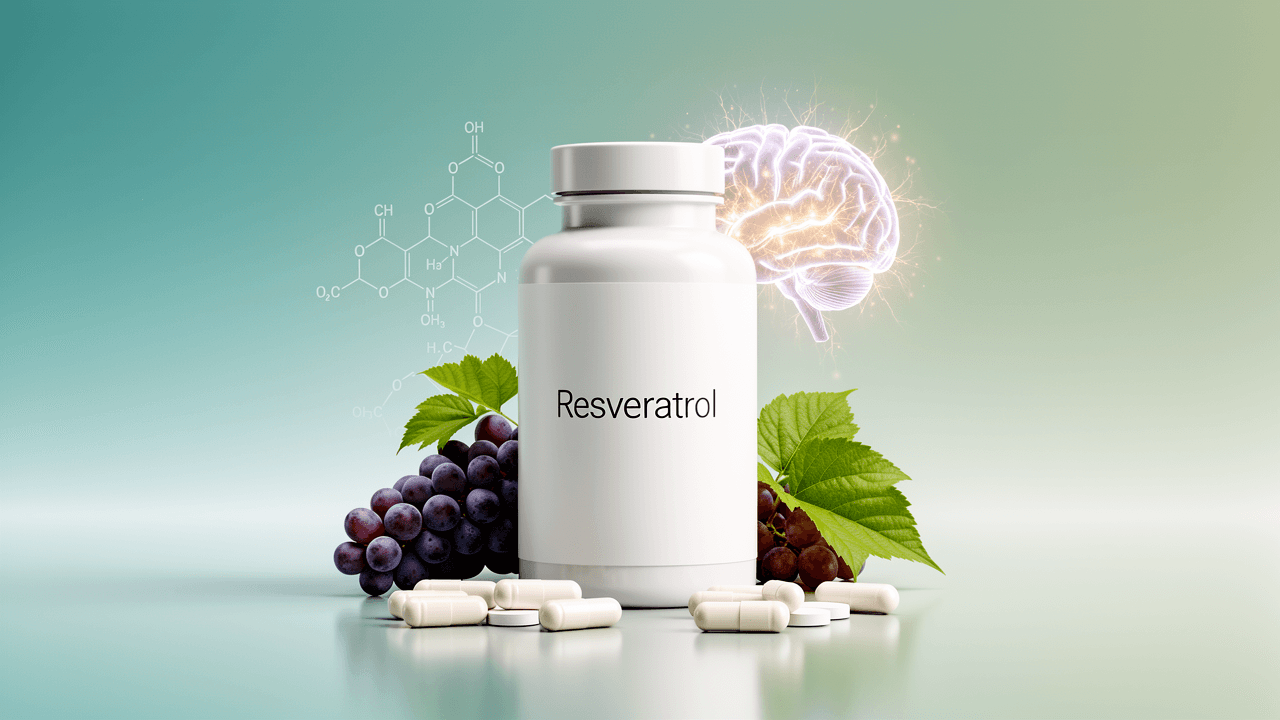
Resveratrol is a polyphenolic compound (specifically a stilbene) found in grapes, red wine, peanuts, berries, and Japanese knotweed (Polygonum cuspidatum). It is widely marketed as an anti-aging and cardioprotective supplement, and is sometimes promoted as a nootropic due to its potential effects on brain health.
Resveratrol exists in two main forms:
- Trans-resveratrol – the biologically active form used in most supplements
- Cis-resveratrol – less stable, less studied
How Resveratrol Works in the Body
Resveratrol is considered a pleiotropic compound, meaning it acts on many targets. Key mechanisms include:
Activation of SIRT1 and Sirtuins
- Resveratrol has been shown to activate SIRT1, a NAD⁺-dependent deacetylase associated with longevity pathways in preclinical models.
- Through SIRT1 and related pathways, it may influence mitochondrial biogenesis, cellular stress resistance, and metabolic regulation.
AMPK Activation and Metabolic Effects
- Resveratrol activates AMP-activated protein kinase (AMPK) in animal and cell studies, a key energy-sensing enzyme.
- AMPK activation can improve glucose uptake, fatty acid oxidation, and insulin sensitivity.
Antioxidant and Anti-Inflammatory Actions
- Directly scavenges reactive oxygen species (ROS) and upregulates endogenous antioxidant enzymes (e.g., superoxide dismutase, catalase, glutathione peroxidase) in preclinical models.
- Modulates inflammatory pathways, including NF-κB and pro-inflammatory cytokines (e.g., TNF-α, IL‑6).
Vascular and Endothelial Effects
- Enhances nitric oxide (NO) production and endothelial function in some human trials.
- May inhibit platelet aggregation and improve microcirculation.
Neuroprotective Mechanisms
- In animal and cell models, resveratrol can reduce β-amyloid toxicity, improve mitochondrial function, and reduce neuroinflammation.
- It may affect BDNF (brain-derived neurotrophic factor) and synaptic plasticity pathways, which are relevant to cognition.
Bioavailability Considerations
Resveratrol is rapidly absorbed but also rapidly metabolized, resulting in low plasma levels of free (unconjugated) resveratrol:
- Oral doses lead to high levels of glucuronidated and sulfated metabolites.
- Despite low free resveratrol, metabolites may have biological activity or be converted back to free resveratrol in tissues.
This limited bioavailability is a major reason why human results are often less dramatic than animal studies, which frequently use higher doses and different delivery routes.
2. Key Benefits of Resveratrol
1. Cardiovascular and Metabolic Support
Resveratrol is most strongly supported for cardiometabolic health:
- May improve endothelial function and arterial stiffness.
- Can modestly improve insulin sensitivity and some lipid parameters in specific populations (e.g., type 2 diabetes, metabolic syndrome).
- Potential to reduce oxidative stress and inflammation, both central to cardiovascular disease.
2. Potential Neuroprotective and Nootropic Effects
While not a classic stimulant nootropic, resveratrol may support brain health over the long term:
- Some trials show improved cerebral blood flow and memory performance in older adults.
- Mechanisms include antioxidant, anti-inflammatory, and vascular effects, plus potential modulation of amyloid processing and mitochondrial function.
Effects on acute cognition in healthy young adults are modest and inconsistent; its role is more neuroprotective and preventative than performance-enhancing.
3. Anti-Aging and Longevity Pathways (Experimental)
Resveratrol gained attention for extending lifespan in yeast, worms, and some mice under specific conditions. In humans:
- It appears to mimic some effects of caloric restriction on metabolic and inflammatory markers.
- It influences pathways linked to cellular aging, mitochondrial function, and genomic stability.
However, no human study has demonstrated lifespan extension. Benefits are better viewed as supporting healthy aging markers, not as a proven life-extension compound.
4. Possible Support in Metabolic Syndrome and Type 2 Diabetes
In people with insulin resistance or type 2 diabetes, resveratrol may:
- Improve insulin sensitivity and HbA1c in some studies.
- Reduce fasting blood glucose and inflammatory markers.
- Support vascular function, an important concern in diabetes.
Results are heterogeneous—benefits are more likely at moderate to higher doses and in individuals with metabolic dysfunction, rather than healthy, lean individuals.
3. Research Findings – What the Studies Show
Below is a summary of key human studies and meta-analyses. Note that findings are mixed and often depend on dose, health status, and study duration.
3.1 Cardiovascular and Vascular Health
Endothelial function and arterial stiffness
- Randomized, double-blind, placebo-controlled trial (n=28): Overweight/obese adults received 75 mg/day trans-resveratrol or placebo for 6 weeks. Flow-mediated dilation (FMD), a measure of endothelial function, improved significantly in the resveratrol group vs placebo (Wong et al., 2011).
- Crossover study (n=19, healthy older adults): Single doses of 250 mg and 500 mg resveratrol increased cerebral blood flow measured by transcranial Doppler; effects were dose-related (Kennedy et al., 2010).
Lipid profile and blood pressure
- Systematic review and meta-analysis (2015, 10 RCTs, ~500 participants): Resveratrol supplementation (10–1000 mg/day, 4–48 weeks) showed no consistent effect on LDL or HDL cholesterol, but some trials reported small reductions in systolic blood pressure, particularly at higher doses and in those with cardiometabolic risk (Liu et al., 2015).
3.2 Metabolic Health and Type 2 Diabetes
Insulin sensitivity and glycemic control
- RCT in type 2 diabetes (n=62): 1 g/day resveratrol vs placebo for 45 days. Resveratrol significantly reduced fasting blood glucose, HbA1c, and insulin resistance (HOMA-IR) compared with placebo (Bhatt et al., 2012).
- RCT in obese men (n=11, crossover): 150 mg/day resveratrol for 30 days improved insulin sensitivity, reduced hepatic lipid content, and lowered inflammatory markers, mimicking some effects of caloric restriction (Timmers et al., 2011).
Meta-analysis
- Meta-analysis of RCTs in type 2 diabetes (2014, 11 trials, ~388 patients): Resveratrol (10–1000 mg/day, 4–52 weeks) produced modest but significant reductions in fasting glucose and insulin, with more pronounced benefits at doses ≥100 mg/day and in short to medium-term trials (Hausenblas et al., 2015).
3.3 Brain Health and Cognitive Function
Cerebral blood flow and cognitive performance
- Double-blind, placebo-controlled crossover trial (n=22, healthy older adults, 65–80 years): Participants received resveratrol (250 mg) + 20 mg quercetin or placebo for 6 months. The resveratrol group showed improved retention of verbal memory and increased functional connectivity of the hippocampus on fMRI, along with reduced HbA1c (Witte et al., 2014).
- Acute study (n=24, healthy adults): Single doses of 250 mg and 500 mg resveratrol increased cerebral blood flow but did not consistently enhance cognitive task performance (Kennedy et al., 2010).
Overall, human data suggest potential benefits for older adults or those with metabolic risk, rather than clear acute nootropic effects in young, healthy individuals.
3.4 Anti-Aging and Longevity Markers
Caloric restriction mimetic effects
- RCT in obese but otherwise healthy men (n=24): 150 mg/day resveratrol for 30 days improved mitochondrial function in skeletal muscle, reduced intrahepatic lipid content, and decreased inflammatory markers—changes similar to those seen with caloric restriction (Timmers et al., 2011).
Sirtuin and mitochondrial markers in humans
- Several small human trials report increased SIRT1 expression and improved mitochondrial markers in muscle or blood cells with doses between 150–500 mg/day for 4–12 weeks, but clinical relevance (e.g., on morbidity or mortality) remains uncertain.
3.5 Other Areas (Cancer, Neurodegeneration)
- Cancer: Numerous in vitro and animal studies show anti-proliferative and pro-apoptotic effects in cancer cells. Human data are limited and largely exploratory; no strong evidence supports resveratrol as a cancer treatment.
- Neurodegenerative diseases: Early-stage trials in Alzheimer’s disease have used high doses (e.g., up to 1–2 g/day) and shown effects on biomarkers (e.g., CSF Aβ40 levels) but not robust clinical improvements. Tolerability at these doses is an issue (gastrointestinal side effects).
4. Best Sources & Dosage – Forms, Dosing, Timing, and Safety
4.1 Dietary Sources vs Supplements
Dietary sources (approximate resveratrol content):
- Red wine: ~1–7 mg/L (varies widely by grape and fermentation). A typical glass (150 mL) provides <1 mg.
- Red grapes (with skin): ~0.2–1.5 mg per 100 g.
- Peanuts: ~0.02–0.1 mg per 100 g.
- Berries (e.g., blueberries, mulberries): small amounts.
Dietary intake is typically <2 mg/day, far below the doses used in most clinical trials (often ≥75–150 mg/day), so supplements are needed for pharmacological effects.
4.2 Supplement Forms
Common supplemental forms:
- Trans-resveratrol (most common): Usually derived from Japanese knotweed (Polygonum cuspidatum) or grape skin.
- Micronized or liposomal resveratrol: Designed to improve absorption and bioavailability.
- Combination products: Resveratrol with quercetin, piperine, grape seed extract, or other polyphenols to potentially enhance absorption or synergistic effects.
Look for products that:
- Specify trans-resveratrol content.
- Are standardized (e.g., 98% trans-resveratrol).
- Provide third-party testing for purity and contaminants (especially important with knotweed-derived products, which can be contaminated with heavy metals or adulterants if poorly sourced).
4.3 Evidence-Based Dosage Recommendations
Below are general ranges based on human studies. Individual needs vary; medical supervision is recommended, especially if you have medical conditions or take medications.
1. General Health / Healthy Aging Support
- Typical range: 100–250 mg/day of trans-resveratrol.
- Rationale: Doses in this range have been used in multiple trials on vascular function, metabolic markers, and cognitive aging with reasonable tolerability.
2. Metabolic Syndrome / Insulin Resistance (Adjunctive)
- Common research range: 150–500 mg/day, sometimes up to 1 g/day in type 2 diabetes studies.
- Lower end (150–250 mg/day) may be reasonable for overweight individuals with mild insulin resistance; higher doses (500–1000 mg/day) have been used in type 2 diabetes under medical supervision.
Important: Resveratrol is not a replacement for standard diabetes care (diet, exercise, medications). It is an adjunctive option.
3. Cognitive Aging / Brain Health (Preventive Focus)
- Research-informed range: 150–300 mg/day.
- Example: 250 mg/day (often with 20 mg quercetin) for 6 months improved hippocampal connectivity and memory in older adults.
4. High-Dose Experimental Use (e.g., in clinical trials for Alzheimer’s, cancer)
- Doses of 1–2 g/day have been used in some experimental settings.
- These high doses are associated with frequent gastrointestinal side effects and should not be self-administered without physician oversight.
4.4 Timing and Administration
With or without food?
- Resveratrol is lipophilic; taking it with a meal containing fat may enhance absorption.
- Some people prefer splitting the dose (e.g., 100–150 mg twice daily) to maintain more stable levels.
Morning vs evening
- No strong evidence favors one time.
- Because of potential mild stimulant-like effects in some people (via mitochondrial/AMPK activation), many take it earlier in the day.
4.5 Safety, Side Effects, and Drug Interactions
General Safety Profile
Resveratrol is generally well tolerated at low to moderate doses (up to ~500 mg/day) in human trials lasting up to 6–12 months.
Common side effects (usually dose-related):
- Gastrointestinal issues: nausea, diarrhea, abdominal discomfort, flatulence.
- Headache or mild dizziness in some users.
- At high doses (≥1 g/day): GI symptoms become more common and can be limiting.
Potential Drug Interactions
Anticoagulants and Antiplatelet Drugs
- Resveratrol has antiplatelet effects and may mildly increase bleeding risk.
- Use caution with:
- Warfarin
- Direct oral anticoagulants (apixaban, rivaroxaban, dabigatran)
- Antiplatelets (aspirin, clopidogrel)
- High-dose omega‑3 or other blood-thinning supplements
- If you are on any blood thinner, consult your physician before using resveratrol.
CYP450 Enzymes and Drug Metabolism
- In vitro and animal data suggest resveratrol can inhibit or modulate CYP3A4, CYP2C9, CYP2D6, and CYP1A2.
- Potentially affected medications (theoretical/limited human data):
- Certain statins (e.g., simvastatin, atorvastatin)
- Some antidepressants and antipsychotics
- Some immunosuppressants (e.g., tacrolimus, cyclosporine)
- Clinical significance at typical supplement doses is not fully established, but caution is warranted.
Estrogenic/Anti-Estrogenic Effects
- Resveratrol is a phytoestrogen with mixed estrogen receptor agonist/antagonist activity depending on tissue and context.
- Theoretical interactions with hormone therapies (e.g., estrogen replacement, selective estrogen receptor modulators) are possible.
Special Populations and Contraindications
1. Pregnancy and Breastfeeding
- Safety data are insufficient.
- High-dose resveratrol in pregnant animals has shown adverse effects on fetal development in some studies.
- Recommendation: Avoid supplemental resveratrol in pregnancy and lactation unless specifically prescribed in a research or medical context.
2. Children and Adolescents
- Very limited safety data.
- Recommendation: Avoid routine use in minors unless under medical supervision for a specific indication.
3. Bleeding Disorders or Pre-Surgical Patients
- Due to potential antiplatelet effects, resveratrol may increase bleeding risk.
- Recommendation: Avoid resveratrol or discontinue at least 1–2 weeks before surgery (coordinate with your physician).
4. Hormone-Sensitive Cancers (Breast, Endometrial, Ovarian)
- Resveratrol’s phytoestrogenic actions are complex and context-dependent; some preclinical work suggests anti-cancer properties, but human data are limited and mixed.
- Recommendation: Individuals with current or past estrogen-sensitive cancers should use resveratrol only under oncologist guidance.
5. Liver or Kidney Disease
- Most resveratrol metabolism occurs in the liver, and excretion involves the kidneys.
- High-dose use in significant hepatic or renal impairment has not been well studied.
- Recommendation: If you have chronic liver or kidney disease, consult your specialist before use; avoid high doses.
4.6 Who Should Consider Resveratrol – and Who Shouldn’t
May Consider (with professional guidance):
- Adults interested in cardiometabolic and vascular support, especially those with:
- Metabolic syndrome or insulin resistance
- Type 2 diabetes (as an adjunct, not a replacement for standard care)
- Overweight/obesity with cardiometabolic risk factors
- Middle-aged and older adults aiming to support healthy aging and brain health, particularly if at risk for cardiovascular disease.
- Individuals unable to consume alcohol but seeking some of the polyphenol-related benefits associated with red wine (without the risks of alcohol).
Should Use With Caution or Avoid (unless supervised):
- Pregnant or breastfeeding women.
- Children and adolescents.
- People on anticoagulant or antiplatelet therapy.
- Individuals with bleeding disorders or scheduled for surgery.
- Those with hormone-sensitive cancers or on hormone therapies, unless cleared by their oncologist or endocrinologist.
- Patients with advanced liver or kidney disease, unless under specialist supervision.
Summary
Resveratrol is a well-studied polyphenol with promising but not miraculous effects on:
- Cardiometabolic health (endothelial function, insulin sensitivity, some inflammatory markers).
- Brain health and cognitive aging (cerebral blood flow, hippocampal connectivity in older adults).
- Cellular pathways linked to aging (SIRT1, AMPK, mitochondrial function).
However:
- Human evidence is modest and variable, and benefits are more apparent in individuals with metabolic or vascular risk than in young, healthy subjects.
- It should be viewed as a supportive adjunct, not a replacement for foundational lifestyle measures (diet, exercise, sleep) or standard medical care.
- Doses of 100–250 mg/day appear reasonable for general health support, while 150–500 mg/day may be considered for specific metabolic or aging-related goals under professional guidance.
As with all supplements, especially those that interact with vascular, metabolic, and hormonal pathways, a personalized risk–benefit discussion with a healthcare professional is recommended before starting resveratrol, particularly if you take medications or have chronic health conditions.