1. Understanding Reishi – What It Is and How It Works
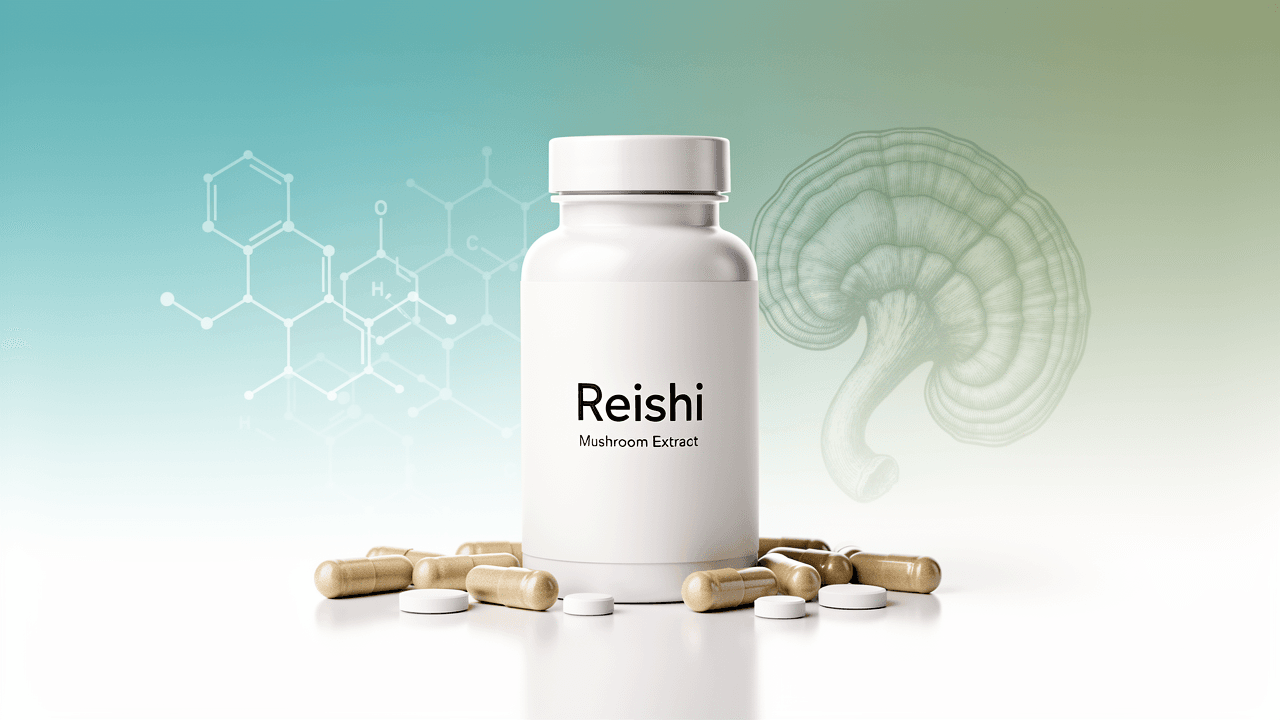
Reishi (Ganoderma lucidum), also known as Lingzhi, is a medicinal mushroom long used in Traditional Chinese Medicine (TCM) as a “shen” (spirit) tonic for vitality, longevity, and calmness. Today it is marketed as an adaptogen and immune-supportive dietary supplement.
What Reishi Contains
Reishi’s main bioactive compounds include:
- Polysaccharides (especially β-glucans) – immune-modulating fibers
- Triterpenes (ganoderic acids, lucidenic acids) – bitter compounds with anti-inflammatory and antioxidant effects
- Sterols and peptides – may contribute to lipid and blood-pressure effects
- Phenolic compounds – antioxidant activity
Different extracts emphasize different components:
- Hot-water extracts → richer in polysaccharides
- Alcohol (ethanolic) extracts → richer in triterpenes
- Dual extracts → aim to capture both.
How Reishi Works in the Body
Current evidence suggests several key mechanisms:
Immune modulation
- Reishi β-glucans interact with immune cell receptors such as Dectin-1 and toll-like receptors (TLRs) on macrophages, dendritic cells, and natural killer (NK) cells.
- This can increase cytokine production (e.g., interleukins, interferon-γ) and enhance NK cell activity, potentially improving immune surveillance.
Anti-inflammatory and antioxidant effects
- Triterpenes (e.g., ganoderic acids) appear to inhibit NF-κB activation and reduce pro-inflammatory mediators such as TNF-α and IL‑6 in preclinical models.
- Reishi extracts can increase antioxidant enzymes (superoxide dismutase, catalase) and reduce markers of oxidative stress.
Stress and neuroendocrine modulation
- As an adaptogen, Reishi may help normalize stress responses via effects on the HPA axis (hypothalamic–pituitary–adrenal axis), though human data are limited.
- Some small trials suggest improvements in fatigue, mood, and sleep quality, likely through indirect effects on inflammation, immune function, and autonomic balance.
Metabolic and cardiovascular support
- Animal and human studies suggest possible modest benefits on blood glucose, lipids, and blood pressure, likely via improved insulin sensitivity, reduced oxidative stress, and mild ACE-inhibitory and vasodilatory effects from triterpenes.
Reishi should not be considered a fast-acting stimulant-type nootropic. Its potential cognitive and mood-related benefits appear to be gradual and indirect, often emerging over weeks through improved sleep, stress resilience, and systemic health.
2. Key Benefits of Reishi
2.1 Immune System Support
Reishi is best known for its immune-modulating (not simply “boosting”) effects:
- May enhance activity of NK cells, macrophages, and T cells
- May support immune function in people under stress or with chronic conditions
- May influence cytokine balance (Th1/Th2), potentially relevant to allergies and autoimmunity (though evidence is mixed and caution is warranted in autoimmune disease)
2.2 Stress, Fatigue, and Sleep
Reishi is traditionally regarded as a calming adaptogen:
- Some evidence for reduced fatigue and improved quality of life in people with neurasthenia or cancer-related fatigue
- May improve sleep quality and subjective well-being in small trials
- Effects are typically subtle and cumulative over several weeks
2.3 Metabolic and Cardiovascular Health
Reishi may have modest supportive effects on:
- Blood glucose control in type 2 diabetes (T2D) and impaired glucose tolerance
- Cholesterol and triglycerides, particularly total cholesterol and LDL
- Blood pressure and endothelial function (mostly preliminary)
These effects are generally small to moderate and should be viewed as adjunctive to diet, exercise, and prescribed medications—not a replacement.
2.4 Potential Anti-Cancer Adjunct (Not a Cure)
Reishi is frequently used as a complementary therapy in oncology settings, particularly in East Asia. Research suggests:
- Possible improvements in immune parameters (e.g., NK cell activity) in cancer patients
- Possible improvements in quality of life, appetite, and fatigue
However:
- Evidence for direct anti-tumor effects in humans is weak and inconsistent.
- Reishi must not be used as an alternative to standard cancer treatment.
3. Research Findings on Reishi
Below are representative human studies; many have small sample sizes and varying extract quality.
3.1 Immune Function and Cancer-Related Outcomes
Meta-analysis (5 RCTs, 373 patients)
- A 2012 Cochrane-style review of randomized controlled trials of Ganoderma lucidum as an adjunct in cancer treatment found:
- Improved immune parameters (increased CD3, CD4, CD8 T cells; increased NK cell activity) compared with control.
- Some trials reported better quality of life and tumor response rates when Reishi was added to chemo/radiotherapy.
- Limitations: small trials, variable extracts/doses, risk of bias; no strong evidence of improved overall survival.
Colorectal adenomas (Polysaccharide extract)
- Design: Double-blind RCT, 96 patients with colorectal adenomas, 12 months.
- Intervention: 1.5 g/day Reishi polysaccharide extract vs placebo.
- Findings: Reduced number and size of adenomas in the Reishi group; improved immune markers (e.g., NK cell activity).
- Caveats: Single study; not yet standard-of-care.
3.2 Fatigue, Mood, and Quality of Life
Neurasthenia (Ganopoly® extract)
- Design: Double-blind RCT, 132 patients with neurasthenia, 8 weeks.
- Dose: 5.4 g/day Ganoderma lucidum polysaccharide extract (in divided doses) vs placebo.
- Findings: Significant improvements in fatigue, irritability, and well-being scores vs placebo after 8 weeks.
- Limitations: Diagnosis of neurasthenia is somewhat vague; results may not generalize to all fatigue conditions.
Breast cancer survivors with fatigue
- Design: RCT, ~48 women with breast cancer-related fatigue, 4 weeks.
- Dose: 1.0–1.5 g/day Reishi spore powder vs placebo.
- Findings: Improved fatigue scores, anxiety, and depression measures in the Reishi group.
- Limitations: Small sample; short duration.
3.3 Sleep and Well-Being
Human data on sleep are limited but suggestive.
- Small open-label and pilot trials in individuals with insomnia or poor sleep quality report subjective improvements in sleep onset and maintenance with Reishi extracts over 4–8 weeks.
- Mechanisms may involve reduced inflammation, mild GABAergic modulation (based on animal data), and improved autonomic balance.
- Lack of large, high-quality RCTs means these findings are preliminary.
3.4 Blood Glucose and Lipids
Type 2 Diabetes (Ganoderma lucidum polysaccharide)
- Design: RCT, 71 patients with T2D, 12 weeks.
- Dose: 1,800 mg/day polysaccharide-rich extract vs placebo, added to usual care.
- Findings: Modest but significant reductions in HbA1c and postprandial glucose in the Reishi group; no major change in fasting glucose.
- Limitations: Small, single-center; not all trials show consistent benefit.
Dyslipidemia
- Several small RCTs (sample sizes ~40–90; duration 8–12 weeks) using 1.5–3 g/day Reishi extract report:
- Reductions in total cholesterol and LDL (often 10–20 mg/dL)
- Modest increases in HDL in some studies
- Results are inconsistent; diet and lifestyle factors often not tightly controlled.
3.5 Blood Pressure and Vascular Health
- Small studies and animal models suggest Reishi triterpenes may have mild antihypertensive effects, possibly via ACE inhibition and improved endothelial nitric oxide.
- Human evidence is limited and mixed; any blood pressure reduction is typically modest.
3.6 Cognitive Function and Nootropic Potential
Human data on direct cognitive enhancement are scarce:
- No large RCTs in healthy adults demonstrating robust improvements in memory or executive function.
- Some studies in patients with chronic conditions (e.g., cancer, neurasthenia) report better mental clarity, mood, or quality of life, which may indirectly support cognitive performance.
- Animal studies show neuroprotective effects in models of neurodegeneration (reduced oxidative stress, improved synaptic markers), but translation to humans is unproven.
Overall, Reishi is better viewed as a systemic health and stress-support supplement with possible indirect cognitive benefits, rather than a classic, acute nootropic.
4. Best Sources & Dosage
4.1 Forms of Reishi Supplements
Fruit body extracts
- Made from the visible mushroom cap/stem.
- Often standardized for polysaccharides (10–50%) and/or triterpenes (1–10%).
- Usually extracted via hot water, alcohol, or dual extraction.
Mycelium-based products
- Grown on grain (e.g., rice, oats).
- Can contain more starch and fewer triterpenes than fruit body, depending on manufacturing.
- Quality and potency can be highly variable.
Spore powder / spore oil
- Spores are the reproductive cells of Reishi; spore products may be “cracked” to improve digestibility.
- Often marketed as more potent, especially for immune and anti-fatigue effects, but high-quality comparative research is limited.
Teas and decoctions
- Traditional preparation by simmering dried Reishi slices in water for 20–60 minutes.
- Delivers mainly polysaccharides and water-soluble compounds; triterpene content depends on preparation.
4.2 General Dosage Guidelines
Dosing depends on the extract type and standardization. Always follow product-specific instructions and consult a healthcare professional, especially if you have medical conditions or take medications.
Typical Daily Doses in Human Studies
Standardized fruit body extract (polysaccharide-rich):
- 1,000–3,000 mg/day (1–3 g), often divided into 2–3 doses.
Triterpene-rich or dual extracts:
- Often in the range of 500–1,500 mg/day, depending on standardization.
Reishi spore powder:
- Commonly 1,000–3,000 mg/day in studies on fatigue and quality of life.
Traditional dried mushroom (tea/decoction):
- Rough equivalent of 3–9 g/day dried Reishi boiled in water.
Use-Case–Specific Dosage Ranges (for adults)
These are general ranges derived from clinical and traditional use; they are not personalized medical advice.
General wellness & immune support
- 1,000–2,000 mg/day of standardized extract (e.g., 10–30% polysaccharides).
- Often taken continuously for several weeks to months, then cycled (e.g., 5 days on, 2 days off; or 3 months on, 1 month off).
Stress, sleep, and fatigue
- 1,000–3,000 mg/day standardized extract, split morning and evening.
- For sleep support, many users take a portion of the dose in the evening (with food) and monitor for individual response.
Metabolic and cardiovascular support (as adjunct to medical care)
- 1,500–3,000 mg/day standardized polysaccharide-rich extract used in many trials, often for 8–12 weeks.
- Must be monitored by a clinician if you have diabetes, dyslipidemia, or hypertension.
Adjunct in cancer care (under oncologist supervision only)
- Clinical studies often use 1,500–5,400 mg/day of polysaccharide-rich extract.
- Dosing must be individualized by the oncology team due to potential interactions and surgery/bleeding concerns.
4.3 Timing and Administration
- With food: Reishi is often better tolerated with food, especially at higher doses.
- Divided doses: 2–3 smaller doses across the day can reduce GI discomfort.
- Duration: Many benefits (immune modulation, fatigue reduction) appear over 4–8 weeks, not acutely.
4.4 Quality Considerations
- Look for products that:
- Specify Ganoderma lucidum (or closely related, e.g., G. lingzhi) and part used (fruit body vs mycelium vs spores).
- State extraction method (hot water, alcohol, dual).
- Provide standardization (e.g., ≥20% polysaccharides, ≥2–4% triterpenes).
- Are tested by third parties for heavy metals, pesticides, and microbial contamination.
- Be cautious with unverified claims of extremely high polysaccharide content; sometimes this reflects grain starch rather than mushroom β-glucans.
5. Safety, Side Effects, and Drug Interactions
Reishi is generally considered moderately safe for short- to medium-term use (up to 6–12 months) in healthy adults when used at typical doses. However, side effects and interactions are possible, especially at higher doses or with long-term use.
5.1 Common Side Effects
Usually mild and dose-dependent:
- Digestive issues: nausea, stomach discomfort, diarrhea, constipation
- Dry mouth, throat, or nasal passages
- Skin rash or itching (possible allergic reaction)
- Dizziness or headache in some individuals
These often improve with dose reduction or taking Reishi with food.
5.2 Less Common but Reported Concerns
Bleeding risk
- Reishi has been associated with increased bleeding tendency in some case reports, particularly at high doses or when combined with anticoagulant/antiplatelet drugs.
- Mechanisms may involve platelet function modulation and mild anticoagulant activity.
Liver toxicity (rare, mostly case reports)
- A few case reports describe elevated liver enzymes or hepatitis-like symptoms in people taking high-dose Reishi products for prolonged periods.
- Causality is uncertain due to potential product contamination and co-supplements, but caution is warranted, especially in those with pre-existing liver disease.
Allergic reactions
- Respiratory or skin reactions can occur in people allergic to mushrooms or mold.
- Symptoms: rash, itching, swelling, difficulty breathing; discontinue immediately and seek care if these occur.
5.3 Drug Interactions
Discuss Reishi with your healthcare provider if you take any medications. Key potential interactions include:
Anticoagulants and antiplatelet drugs
- Examples: warfarin, heparin, DOACs (apixaban, rivaroxaban), aspirin, clopidogrel.
- Reishi may increase bleeding risk; avoid or use with close monitoring.
Antihypertensive medications
- Reishi may have modest blood pressure–lowering effects.
- Combined with antihypertensives (ACE inhibitors, ARBs, beta-blockers, calcium-channel blockers, diuretics), there is a theoretical risk of excessive blood pressure reduction.
Antidiabetic medications and insulin
- Reishi may modestly lower blood glucose.
- Combined with insulin or oral hypoglycemics (metformin, sulfonylureas, GLP‑1 agonists, etc.), there is a risk of hypoglycemia, especially if diet/medication is not adjusted.
Immunosuppressants
- Examples: corticosteroids, tacrolimus, cyclosporine, biologic agents.
- Because Reishi can modulate immune function, it may counteract immunosuppressive therapy or alter immune balance; use only under specialist guidance.
Perioperative medications
- Due to potential effects on coagulation and blood pressure, most guidelines recommend stopping Reishi at least 2 weeks before surgery.
5.4 Long-Term Use
- Long-term safety data (beyond 6–12 months) at supplemental doses are limited.
- Traditional use suggests relative safety, but modern extracts can be more concentrated than historical preparations.
- For long-term users, periodic monitoring of liver function, kidney function, and coagulation parameters may be prudent.
6. Who Should and Shouldn’t Use Reishi
6.1 Who May Consider Reishi (With Professional Guidance)
Reishi may be considered as part of a broader health plan by:
- Adults seeking general immune and stress support without major medical conditions or complex medication regimens.
- Individuals with chronic stress, mild fatigue, or sleep issues, as a complementary strategy alongside sleep hygiene, stress management, and lifestyle changes.
- People with metabolic risk factors (e.g., borderline high cholesterol or blood sugar), as an adjunct to diet, exercise, and medical therapy—not a replacement.
- Cancer patients interested in complementary therapies, only under the supervision of an oncologist and integrative medicine team.
6.2 Who Should Avoid Reishi or Use Extreme Caution
Pregnant or breastfeeding individuals
- Human safety data are insufficient.
- Avoid unless specifically recommended and monitored by a knowledgeable clinician.
Children and adolescents
- Limited pediatric data; use only under pediatric specialist supervision, if at all.
People with bleeding disorders or on blood thinners
- Conditions: hemophilia, thrombocytopenia, von Willebrand disease, etc.
- Medications: warfarin, DOACs, heparin, aspirin, clopidogrel, NSAIDs at high doses.
- Reishi may increase bleeding risk; generally avoid.
Individuals with upcoming surgery or invasive procedures
- Discontinue Reishi at least 2 weeks before surgery or dental procedures involving significant bleeding, unless your surgeon advises otherwise.
People with autoimmune diseases
- Conditions: rheumatoid arthritis, lupus, multiple sclerosis, Hashimoto’s thyroiditis, etc.
- Because Reishi modulates immune activity, there is a theoretical risk of exacerbating autoimmune flares.
- Use only with a rheumatologist/immunologist’s guidance.
Individuals on immunosuppressive therapy (e.g., transplant patients)
- Reishi may interfere with immunosuppressive medications or alter immune balance.
- Generally not recommended unless explicitly approved by the transplant or specialty team.
People with known mushroom allergy
- Avoid Reishi due to risk of allergic reactions.
Individuals with significant liver disease
- Given rare case reports of liver injury and metabolism through the liver, use only with hepatologist approval and monitoring.
7. Practical Takeaways
- Reishi (Ganoderma lucidum) is a traditional medicinal mushroom with modern evidence supporting roles in immune modulation, fatigue reduction, and general well-being, with more tentative support for metabolic and cardiovascular benefits.
- As a nootropic, its effects are indirect and gradual—primarily via better sleep, stress resilience, and systemic health, not acute cognitive enhancement.
- Typical doses for adults range from 1,000–3,000 mg/day of standardized extract, taken with food for at least 4–8 weeks to assess effects.
- Safety is generally good in healthy adults at standard doses, but bleeding risk, potential liver effects, and drug interactions (especially with anticoagulants, antidiabetics, antihypertensives, and immunosuppressants) must be considered.
- Reishi is not a replacement for medical treatment of serious conditions such as cancer, diabetes, or cardiovascular disease.
- Consultation with a healthcare professional is essential, particularly for those with chronic illness, on multiple medications, or considering Reishi as an adjunct in cancer care.