1. Understanding Reishi – What It Is and How It Works
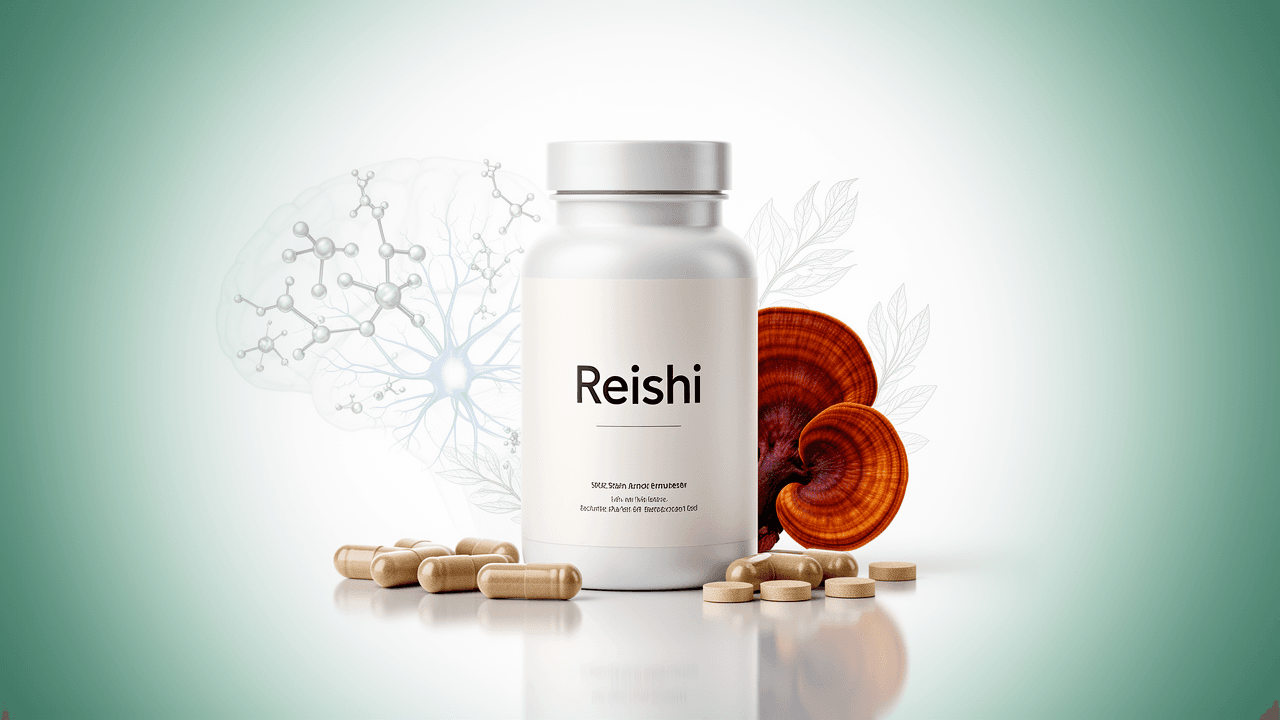
Reishi (Ganoderma lucidum, also G. lingzhi) is a medicinal mushroom long used in East Asian traditional medicine as a “tonic” for longevity, immunity, and resilience to stress. It is often called the “mushroom of immortality.”
As a modern dietary supplement, reishi is usually taken as:
- Hot-water extracts (polysaccharide-rich)
- Alcohol or dual extracts (triterpenoid-rich)
- Powdered fruiting body or mycelium in capsules or tablets
- Teas and tinctures
1.1 Key Active Compounds
Reishi contains several bioactive groups:
Polysaccharides (especially β-glucans)
- Large carbohydrate molecules with immunomodulatory effects
- Thought to influence innate and adaptive immune cells (macrophages, NK cells, T cells)
Triterpenoids (ganoderic acids and related compounds)
- Bitter, lipid-soluble molecules
- Show anti-inflammatory, antioxidant, and potential anti-tumor actions in preclinical studies
Sterols, peptides, and phenolic compounds
- Contribute to antioxidant and possible neuroprotective effects in cell and animal models
1.2 How Reishi Works in the Body (Mechanisms)
Most proposed mechanisms come from cell and animal studies, with limited but growing human data.
Immune modulation
- β-glucans bind to pattern-recognition receptors (e.g., Dectin-1, CR3) on immune cells
- May enhance activity of macrophages, natural killer (NK) cells, and T lymphocytes
- Can modulate cytokine production (e.g., IL-2, IFN-γ, TNF-α), sometimes up- or down-regulating depending on context
Anti-inflammatory and antioxidant effects
- Triterpenoids and phenolics can inhibit NF-κB and COX-2 pathways in vitro, reducing pro-inflammatory signaling
- Increase antioxidant enzymes (e.g., SOD, catalase) and reduce markers of oxidative stress in animal models
Metabolic and cardiovascular effects
- Animal studies show improved insulin sensitivity and reduced blood glucose and lipids
- May affect hepatic enzymes involved in lipid and glucose metabolism
Stress, mood, and sleep
- Classified as an adaptogen in herbal medicine (supports stress resilience)
- Limited human data suggest improvements in fatigue, well-being, and some aspects of sleep
- Mechanisms may involve modulation of inflammatory pathways, HPA-axis signaling, and possibly GABAergic activity (shown mainly in animal/bench research)
Potential neuroprotective effects
- Preclinical models show protection against neurotoxicity and oxidative damage
- May promote neurite outgrowth and support mitochondrial function in neurons (in vitro and animal data)
- Human evidence is still very limited
Overall, reishi is best characterized as an immunomodulatory and adaptogenic mushroom with possible benefits for fatigue, sleep quality, and metabolic health, rather than a classic fast-acting “nootropic.”
2. Key Benefits of Reishi
2.1 Immune Support and Modulation
Reishi is most strongly associated with immune effects:
- May enhance innate immune activity (NK cells, macrophages)
- May support immune balance (Th1/Th2 modulation) rather than simply “boosting” immunity
- Used as an adjunct in some oncology settings in Asia (mostly as a complementary, not primary, therapy)
2.2 Fatigue, Quality of Life, and Stress Support
Several small trials suggest reishi can:
- Reduce feelings of fatigue in certain populations (e.g., neurasthenia, breast cancer survivors)
- Improve general well-being and some mental health markers (e.g., irritability, anxiety scores)
- Potentially support better stress resilience over weeks of use
2.3 Sleep Quality
Evidence is preliminary but suggests reishi may:
- Improve subjective sleep quality and latency in some individuals
- Reduce daytime tiredness associated with poor sleep
2.4 Metabolic and Cardiovascular Markers
Some human and animal data indicate reishi may:
- Lower fasting blood glucose and HbA1c in type 2 diabetes (results are mixed)
- Modestly improve lipid profiles (total cholesterol, LDL) in some studies
- Support endothelial function and reduce oxidative stress (mostly preclinical data)
2.5 Potential Cognitive and Neuroprotective Effects (Early-Stage)
While reishi is sometimes marketed as a nootropic, human cognitive data are sparse:
- Animal studies show improved learning and memory in models of neurodegeneration
- In vitro work suggests protection against β-amyloid toxicity and oxidative injury
- Human trials on cognition are limited and not yet conclusive
For now, reishi should be considered indirectly supportive of brain health (via sleep, inflammation, and metabolic pathways) rather than a primary cognitive enhancer like caffeine or certain cholinergics.
3. Research Findings – What Studies Show
Below are representative human studies. Note that many are small, short-term, or use varying extracts.
3.1 Fatigue and Quality of Life
Neurasthenia / chronic fatigue-like symptoms
- Design: Randomized, double-blind, placebo-controlled
- Sample: 132 patients with neurasthenia (China)
- Intervention: Ganoderma lucidum extract (polysaccharide-rich) vs placebo for 8 weeks
- Findings: The reishi group showed significant improvement in fatigue and well-being scores compared with placebo. Benefits appeared after several weeks of continuous use.
- Limitations: Diagnostic criteria differ from modern chronic fatigue definitions; single extract and manufacturer; modest sample size.
Breast cancer survivors with cancer-related fatigue
- Design: Randomized, double-blind, placebo-controlled pilot trial
- Sample: ~48 breast cancer survivors with persistent fatigue
- Intervention: Reishi spore powder 1,000 mg three times daily (3,000 mg/day) vs placebo for 4 weeks
- Findings: The reishi group had improved fatigue scores and quality of life indices, and some immune parameters (e.g., increased IL-2, decreased IL-6) compared with placebo.
- Limitations: Short duration; specific to post-treatment cancer fatigue; not generalizable to healthy people.
3.2 Immune Function and Oncology Adjunct Use
Cancer patients – immune modulation and quality of life
Multiple small RCTs and open-label studies (sample sizes often 30–100 participants) have used reishi extracts (1.5–5.4 g/day) as adjuncts to chemotherapy or radiotherapy.
Common findings:
- Increased NK cell activity and certain T-cell subsets
- Some improvements in quality of life scores (e.g., appetite, sleep, fatigue)
- No consistent evidence of improved survival or tumor shrinkage when used alone
A Cochrane-style review of Ganoderma lucidum in cancer (including several RCTs) concluded:
- Reishi may improve immune parameters and quality of life when combined with conventional therapy
- Evidence is insufficient to recommend reishi as a stand-alone cancer treatment
- Methodological quality of many trials is low to moderate
3.3 Metabolic Health – Diabetes and Lipids
Type 2 diabetes – glucose control
- Design: Randomized, double-blind, placebo-controlled
- Sample: 71 patients with type 2 diabetes
- Intervention: Ganoderma lucidum polysaccharide extract 1,800 mg/day vs placebo for 12 weeks
- Findings: No significant improvement in HbA1c or fasting blood glucose vs placebo.
- Implication: This well-designed trial suggests reishi alone may not meaningfully improve glycemic control in established type 2 diabetes.
Type 2 diabetes and metabolic syndrome – combined extracts
- Other small studies (often <100 participants) using different reishi preparations sometimes report:
- Modest reductions in fasting glucose and triglycerides
- Slight improvements in HDL/LDL ratios
- However, these trials often:
- Lack adequate blinding or control groups
- Use multi-herb formulas, making it hard to isolate reishi’s effect
Overall, evidence for reishi in metabolic disease is mixed and not strong enough to replace standard treatments.
3.4 Sleep and Mood
Human data are limited but suggestive:
- Small open-label and pilot studies in people with insomnia or anxiety-related complaints have used reishi extracts (~1.5–3 g/day) for 4–8 weeks.
- Reported outcomes include improved subjective sleep quality, reduced sleep latency, and reduced irritability or anxiety scores.
- These studies often lack rigorous controls and have small sample sizes, so findings are preliminary.
3.5 Safety Data from Trials
Across multiple human trials (often 4–12 weeks), reishi has generally been well tolerated:
- Common mild side effects: gastrointestinal upset (nausea, loose stools), dry mouth, nosebleeds, skin rash, or dizziness
- Serious adverse events are rare in controlled settings, but case reports exist (see Safety section)
Long-term safety data beyond a few months are limited.
4. Best Sources & Dosage
4.1 Forms of Reishi Supplements
Hot-water extracts (polysaccharide-rich)
- Focus on β-glucans and other water-soluble polysaccharides
- Typically standardized to a % of polysaccharides or β-glucans
- Common for immune and general wellness purposes
Alcohol or dual extracts (triterpenoid-rich)
- Use alcohol (or dual extraction) to pull out ganoderic acids and related triterpenoids
- Often marketed for liver support, inflammation modulation, or more robust adaptogenic effects
Whole fruiting body powder
- Ground dried mushroom; lower concentration of actives per gram vs extracts
- May contain a broader spectrum of compounds but requires higher doses
Mycelium-based products
- Grown on grain or other substrate; composition differs from fruiting body
- Quality can be variable; may contain more starch from substrate
- Look for transparency on mycelium vs fruiting body and β-glucan content
4.2 Typical Dosage Ranges
There is no universally accepted clinical dose. The following are general ranges based on human studies and traditional use. Always follow product-specific instructions and consult a clinician.
For General Health & Immune Support (Adults)
- Extract (polysaccharide-rich, 10:1 or similar):
- ~500–1,500 mg/day of extract, often standardized to ≥20% polysaccharides or ≥15–25% β-glucans
- Whole fruiting body powder:
- ~2–6 g/day, divided into 1–3 doses
Often taken for 6–12 weeks, then reassessed or cycled.
For Fatigue, Stress, and Sleep Support
Based on trial doses and common practice:
- 1,000–3,000 mg/day of standardized extract, divided 1–3 times daily
- For sleep: some users take the larger portion in the evening, though reishi is not strongly sedating; effects are typically cumulative over weeks, not immediate
For Adjunct Use in Chronic Conditions (e.g., oncology, metabolic support)
Doses in studies often range:
- 1.5–5.4 g/day of extract (standardized) in divided doses
These higher doses should be supervised by a healthcare professional, especially in people on multiple medications.
4.3 Timing and Administration
- Can be taken with or without food, but taking with food may reduce GI discomfort.
- For stress/sleep support, many people prefer late afternoon or evening dosing, though data on optimal timing are sparse.
- Consistency matters: many benefits appear after 2–4 weeks of continuous use.
4.4 Quality Considerations
When choosing a reishi supplement:
- Prefer products that specify:
- Fruiting body vs mycelium
- Extraction method (hot water, alcohol, dual)
- Standardization (e.g., ≥20% polysaccharides, ≥15% β-glucans; or quantified ganoderic acids)
- Look for third-party testing (e.g., NSF, USP, or independent lab certificates) to verify:
- Identity and potency
- Absence of heavy metals, pesticides, and microbial contamination
- Be cautious of extremely high “polysaccharide” claims without mentioning β-glucans; some of this may just reflect added starch.
5. Safety, Side Effects, and Drug Interactions
5.1 Common Side Effects
Most reported side effects are mild and dose-related:
- Gastrointestinal: upset stomach, nausea, diarrhea, constipation
- Skin: rash or itching in sensitive individuals
- Others: dry mouth, nosebleeds, dizziness, headache
Reducing the dose or taking with food often helps.
5.2 Serious or Rare Adverse Events
Although uncommon, case reports and observational data have raised concerns about:
Liver injury (hepatotoxicity)
- Rare case reports of liver damage in people taking reishi powder or extracts for weeks to months
- Causality is not always clear (other herbs, medications, or pre-existing liver disease may contribute)
- Nonetheless, individuals with liver disease should use reishi only under medical supervision and monitor liver enzymes.
Allergic reactions
- Hypersensitivity reactions (e.g., rash, itching, shortness of breath) are possible
- Discontinue immediately and seek care if signs of allergy occur.
5.3 Drug Interactions
Anticoagulants and antiplatelet drugs
- Reishi may have mild blood-thinning or antiplatelet effects in vitro and in animals.
- Potential to increase bleeding risk when combined with:
- Warfarin, heparin, DOACs (e.g., apixaban, rivaroxaban)
- Aspirin, clopidogrel, NSAIDs
- People on these medications should avoid reishi or use it only with medical supervision, especially before surgery.
Antihypertensive medications
- Reishi may modestly lower blood pressure in some individuals.
- Combined use with blood pressure medications could, in theory, contribute to excessive hypotension in sensitive people.
Hypoglycemic agents (diabetes medications)
- Animal data suggest glucose-lowering effects; human data are mixed.
- In people on insulin or oral hypoglycemics, there is a theoretical risk of additive hypoglycemia, especially at higher reishi doses.
Immunosuppressants
- Because reishi modulates immune function, it may counteract immunosuppressive drugs used after organ transplantation or for autoimmune diseases.
- People on drugs like cyclosporine, tacrolimus, or biologic immunosuppressants should avoid reishi unless their specialist approves.
Chemotherapy and radiotherapy
- Reishi is sometimes used as an adjunct in oncology, but interactions with specific chemotherapeutic agents are not fully characterized.
- Always discuss with an oncologist before using reishi during cancer treatment.
5.4 Special Populations
Pregnancy and breastfeeding:
- Human safety data are insufficient.
- Traditional use does not guarantee safety; avoid unless specifically recommended by a clinician experienced in herbal medicine.
Children and adolescents:
- Very limited research.
- If used, it should be under pediatric medical guidance and typically for specific indications, not general supplementation.
People with liver or kidney disease:
- Use cautiously and under medical supervision; monitor liver and kidney function if taken regularly.
6. Who Should and Shouldn’t Use Reishi
6.1 Who Might Consider Reishi
With medical guidance where appropriate, reishi may be considered by:
Adults seeking general immune and wellness support
- Particularly during periods of high stress or seasonal immune challenges
Individuals with fatigue and stress-related complaints
- Those experiencing non-specific fatigue, low resilience, or mild sleep disturbances
- Expect gradual effects over weeks, not acute stimulation
People interested in complementary approaches for chronic conditions
- For example, as an adjunct (not replacement) to conventional treatment in certain metabolic or oncology contexts
- Always coordinated with a healthcare provider
Those building a broader adaptogen stack
- Reishi is often combined with other mushrooms (e.g., lion’s mane, cordyceps) or adaptogenic herbs (e.g., ashwagandha, rhodiola)
- Stacking increases complexity and potential interactions; professional guidance is recommended.
6.2 Who Should Avoid or Use Extreme Caution
You should avoid reishi or use it only under close medical supervision if you:
Take anticoagulant or antiplatelet medications
- Warfarin, heparin, DOACs, aspirin, clopidogrel, or high-dose NSAIDs
Have a bleeding disorder or upcoming surgery
- Stop reishi at least 1–2 weeks before scheduled surgery unless your surgeon advises otherwise.
Are on immunosuppressive therapy
- Post-transplant, autoimmune diseases treated with strong immunosuppressants
Have significant liver disease or unexplained liver enzyme elevations
- Due to rare reports of hepatotoxicity
Are pregnant or breastfeeding
- Lack of robust safety data
Have a known mushroom allergy or prior reaction to reishi
- Any history of hypersensitivity is a contraindication
6.3 Practical Guidance for Safe Use
- Start low, go slow: Begin at the lower end of the dose range (e.g., 300–500 mg/day of extract) and increase gradually if tolerated.
- Monitor for side effects: GI upset, rash, dizziness, or unusual bruising/bleeding should prompt dose reduction or discontinuation.
- Check medications: Review all prescription and over-the-counter drugs and supplements with a healthcare provider before starting reishi.
- Limit duration without review: For ongoing daily use, reassess with your clinician every 2–3 months.
7. Summary
- Reishi (Ganoderma lucidum) is a medicinal mushroom with immunomodulatory and adaptogenic properties, used traditionally for longevity and resilience.
- Evidence supports modest benefits for immune parameters, fatigue, quality of life, and possibly sleep, with mixed and limited data for metabolic and cognitive outcomes.
- Typical doses for healthy adults range from 500–1,500 mg/day of standardized extract or 2–6 g/day of whole mushroom powder, usually taken for several weeks to months.
- Reishi is generally well tolerated but can cause GI upset, rare allergic reactions, and has potential interactions with blood thinners, immunosuppressants, and metabolic drugs.
- It is not a replacement for conventional treatment of serious conditions (e.g., cancer, diabetes) but may serve as a complementary option under professional guidance.
As with any potent botanical, individualized assessment with a knowledgeable healthcare provider is crucial before incorporating reishi into your supplement or nootropic regimen.