Smoother Labs, Smarter Aging: Understanding Pterostilbene
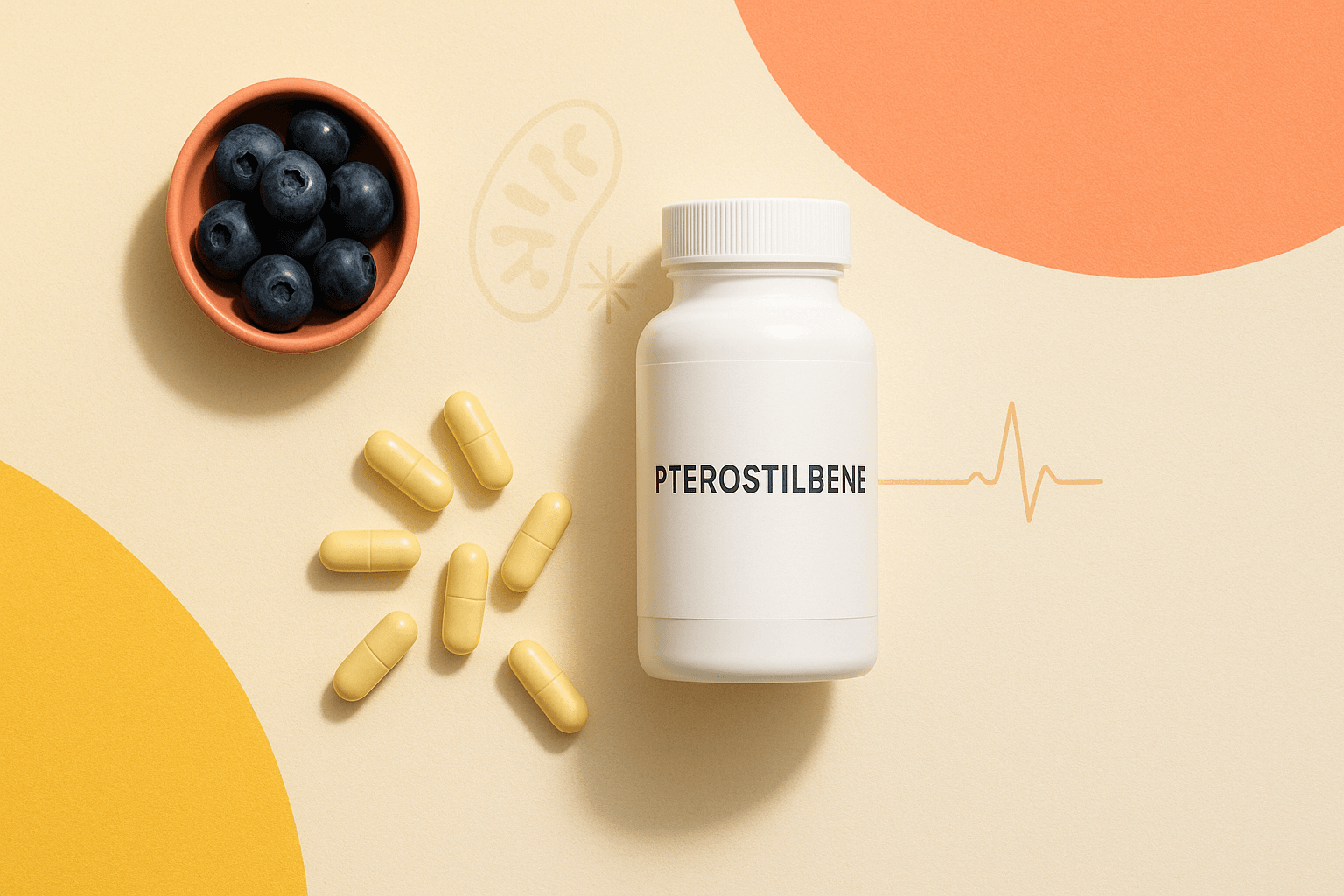
Pterostilbene is a polyphenol in the stilbenoid family—chemically similar to resveratrol—found naturally in blueberries, grapes, and certain heartwood species. Compared with resveratrol, pterostilbene is more lipophilic and shows higher oral bioavailability and tissue penetration in preclinical work, which is why wellness formulas often choose it for metabolic and healthy-aging programs. In cells, pterostilbene nudges antioxidant defenses (e.g., NRF2 pathways), supports mitochondrial function and autophagy, and modulates inflammatory signaling—mechanisms that can translate into calmer lipid and blood-pressure numbers alongside a plant-forward diet and regular activity.
Diet alone delivers milligram-scale amounts that swing wildly with food variety and storage. Standardized supplements provide predictable mg per day and allow clean timing around meals and training. You’ll typically see:
- Pterostilbene (pure) in 50–100 mg capsules.
- Blends pairing pterostilbene with grape seed extract (GSE) or resveratrol to round out polyphenol activity.
- Liposomal/phytosome forms that aim to further improve consistency (helpful but not essential when doses are split with meals).
How it likely helps—kept practical:
Antioxidant & mitochondrial support: upshifts cellular defense pathways and helps maintain efficient energy signaling—felt as steadier day-to-day stamina rather than stimulation.
Lipid & vascular tone: small, program-dependent nudges toward friendlier triglycerides, non-HDL cholesterol, and systolic BP when diet/movement are in place.
Cellular housekeeping: encourages autophagy signals that support healthy aging across tissues (foundational, not instant).
Wellness takeaway: If your goals are tidier lipids, calmer blood pressure, and cellular resilience, a standardized pterostilbene stacked with fiber-rich meals, daily walks, and sleep regularity is a clean, time-boxed add-on.
Key Benefits
Lipid support (context-dependent). Pterostilbene can help nudge triglycerides and non-HDL cholesterol in a favorable direction in structured programs; combining with grape seed extract appears to support LDL patterns in some trials.
Blood-pressure ease. Modest systolic BP reductions have been observed over 6–8 weeks—think a few mmHg—when paired with diet and movement.
Cellular antioxidant defense. As a bioavailable stilbenoid, pterostilbene supports NRF2-driven antioxidant responses and mitochondrial housekeeping relevant to healthy aging.
Reality check: Expect steady, incremental lab changes over 8–12 weeks, not a drug-level drop. Keep diet quality, steps after meals, and sleep basics in place—those do the heavy lifting.
Research Findings
Time to benefit: Early shifts may appear by 4 weeks, with clearer lipid/BP trends by 8–12 weeks on consistent dosing.
Dyslipidemia & BP (adults): An 8-week, randomized, double-blind, placebo-controlled trial in adults with elevated cholesterol evaluated pterostilbene 100–250 mg/day, with/without grape seed extract (GSE). Results showed modest reductions in systolic BP, while LDL cholesterol increased at higher-dose pterostilbene alone; the pterostilbene + GSE arm reduced LDL versus baseline. Tolerability was good; most adverse events were mild GI or headache.
Cardiometabolic markers (overweight/insulin-resistant adults): Short trials and pilot programs (6–12 weeks; typical dosing 50–150 mg/day) report small improvements in triglycerides and insulin indices when pterostilbene is used with diet guidance and activity; effects are modest and program-dependent.
Overall: human evidence supports modest BP/lipid nudges, with the important caveat that pterostilbene monotherapy may raise LDL in some individuals—pairing with GSE or focusing on non-HDL/triglycerides can be more reliable. Use labs to personalize.
Best Sources & Dosage
What to buy (and what to avoid)
Choose pterostilbene with clear mg per capsule (50 or 100 mg units) and third-party testing (identity, potency, contaminants).
If LDL is your main target, consider a combo that includes grape seed extract (GSE); research suggests a more favorable LDL pattern versus pterostilbene alone.
Avoid proprietary blends that hide the milligrams—you can’t align to study-style dosing or titrate response without numbers.
Evidence-aligned adult ranges
General cardiometabolic support (most common): 50–150 mg/day, once daily with a meal or split 50 mg twice daily for 8–12 weeks, then reassess lipids and BP.
LDL-sensitive approach: 50–100 mg/day pterostilbene + GSE (e.g., 100–300 mg/day) for 8–12 weeks; re-check LDL and non-HDL specifically.
Cellular/healthy-aging focus: 50 mg/day with a meal as a foundational polyphenol, paired with a Mediterranean-style pattern and regular activity.
Timing & tips
Take with meals to reduce GI upset and help consistency.
Track a simple metric set: LDL, non-HDL, triglycerides, HDL, and home BP at baseline and ~12 weeks.
Pair with 20–30 g/day fiber (oats, legumes, chia/psyllium) and 10–15-minute walks after meals; these amplify lipid and BP benefits.
Safety, interactions & who should avoid it
Generally well tolerated; most common are mild GI symptoms, headache, or flushing.
LDL caution: LDL may rise with pterostilbene monotherapy in some individuals—monitor labs; consider adding GSE or switching strategies if LDL climbs.
Medications: use caution with anticoagulants/antiplatelets (polyphenols can have mild antiplatelet effects) and with CYP/P-gp-sensitive drugs; coordinate with your clinician if you’re on narrow-therapeutic-window meds.
Pregnancy/lactation: insufficient targeted data—avoid unless advised.
Surgery: consider pausing 1–2 weeks prior due to theoretical bleeding-risk synergy with antiplatelets.
Label literacy—fast checks
- “Pterostilbene” clearly listed with mg per serving (50–100 mg).
- If combined, the label also lists exact GSE mg and proanthocyanidin standardization.
- Third-party testing/COA available; realistic capsule count for an 8–12-week plan.
Dosage Quick-Reference
Cardiometabolic support: 50–150 mg/day pterostilbene • With meals, 8–12 weeks • Outcome: triglycerides/non-HDL ↓; systolic BP ↓ (modest).
LDL-aware plan: 50–100 mg pterostilbene + 100–300 mg GSE/day • 8–12 weeks • Outcome: LDL pattern →/↓ vs monotherapy.
Healthy-aging base: 50 mg/day • Daily with a meal • Outcome: cellular antioxidant/mitochondrial support ↑ (foundational).
Safety note: monitor LDL; consider GSE if LDL rises; coordinate if on anticoagulants/antiplatelets.