Calmer Glucose, Leaner Metabolism: Understanding Berberine HCl
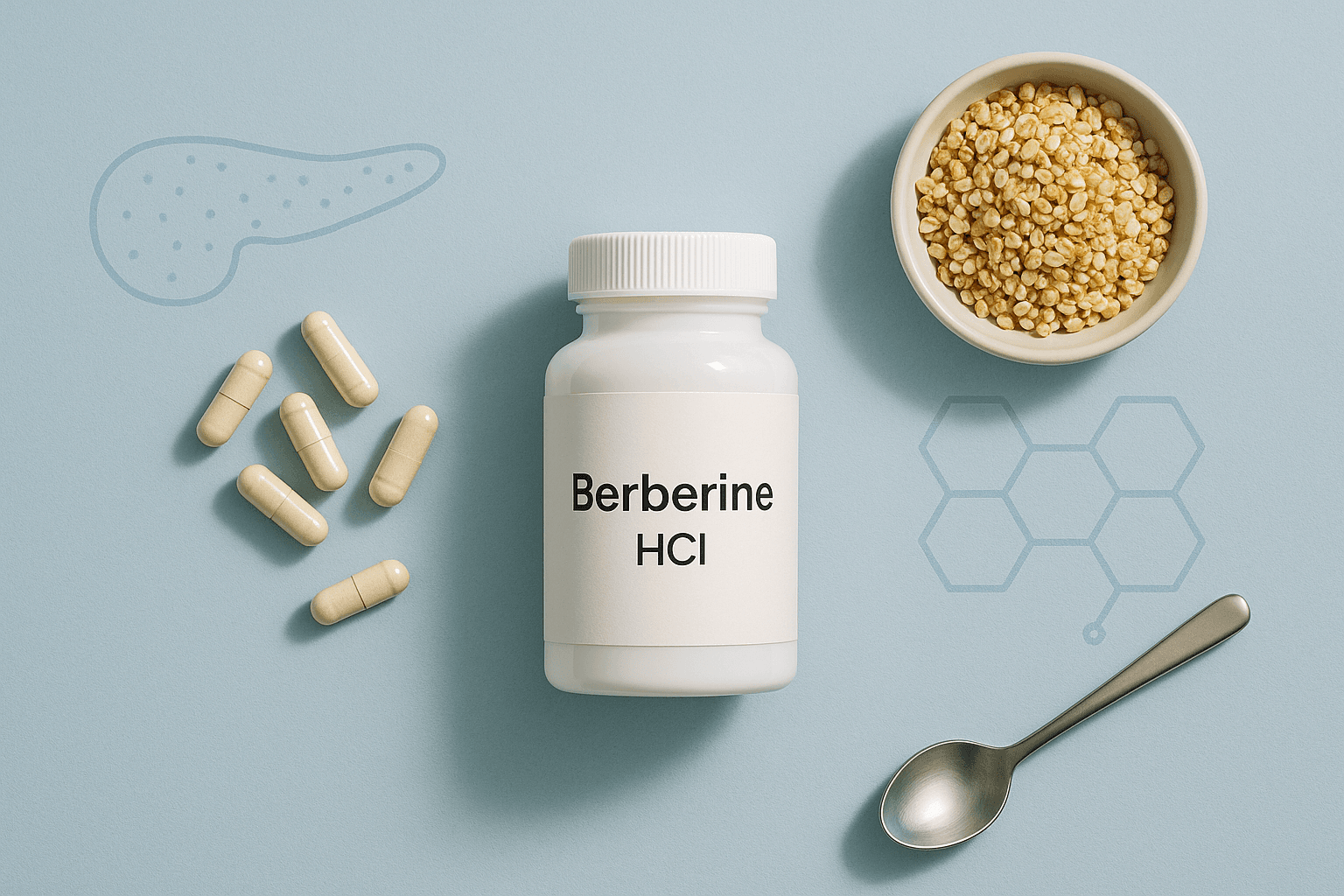
Berberine HCl is a bright-yellow botanical alkaloid derived from plants such as Berberis (barberry), Coptis, and Phellodendron. In wellness programs, it’s best known for steadying post-meal and fasting glucose, nudging lipids in a favorable direction, and providing small assists for weight management—especially when paired with diet and movement. Mechanistically, berberine activates AMP-activated protein kinase (AMPK), a cellular “metabolic switch” that improves insulin signaling, supports fatty-acid oxidation, and dampens de novo lipogenesis. It also influences the gut microbiome and bile-acid signaling (FXR/TGR5), which further shapes glucose and lipid handling.
Why supplement instead of relying on food? Berberine is not a dietary nutrient; therapeutic amounts don’t come from meals. Standardized capsules of berberine hydrochloride offer predictable dosing and are the form used most often in clinical research. Because plain berberine has modest oral absorption, many products use strategies like dividing doses with meals, pairing with soluble fiber, or using delivery systems to keep levels steady.
How berberine helps—kept practical:
- Steadier glucose: AMPK activation increases glucose uptake in muscle and reduces hepatic glucose output, smoothing both fasting and post-meal numbers.
- Friendlier lipids: Berberine can reduce PCSK9 expression and support LDL-receptor activity, often lowering LDL-C and triglycerides modestly.
- Weight signalers: By improving insulin efficiency and bile-acid signaling, berberine can make caloric control and activity “count for more,” translating to small weight and waist reductions over weeks.
Wellness takeaway: If your goals are calmer blood sugar, tidier lipids, and a small nudge on weight, berberine fits best as a structured, time-boxed add-on to a high-fiber, protein-forward diet, daily walks, and sleep regularity.
Key Benefits
Glycemic control. Consistent berberine use lowers fasting/post-meal glucose and trims HbA1c—especially in insulin-resistant or prediabetic patterns.
Lipid support. Expect modest LDL-C and triglyceride improvements that complement diet and exercise.
Weight management assist. Over 8–12 weeks, small but meaningful weight and waist reductions are common when paired with nutrition and movement.
Reality check: Think steady, incremental improvements measured on your meter or lipid panel—not a dramatic, drug-like drop. The plan works best when meals (fiber/protein), walking, and sleep are in place.
Research Findings
Time to benefit: First changes in fasting glucose often appear by 2–4 weeks; HbA1c and lipids show clearer gains by 8–12 weeks with consistent use.
Type 2 diabetes / insulin resistance (adults): Randomized, controlled trials using 1,000–1,500 mg/day lowered HbA1c by ~0.5–1.0%, with parallel drops in fasting glucose and 2-hour post-prandials versus placebo or as an add-on to standard care. Tolerability was good; GI effects were the main limitation.
Dyslipidemia / metabolic syndrome: 8–12-week trials reported LDL-C reductions (~10–25 mg/dL on average), triglycerides down, and small increases in HDL-C, especially when baseline lipids were elevated and diet counseling was provided.
Weight and waist circumference: In overweight adults with insulin resistance, 12-week berberine courses produced modest weight loss (≈1–3 kg) and waist reductions, aligning with improved insulin indices and better post-meal curves.
NAFLD (early data): Small studies (8–16 weeks) noted improved ALT and imaging markers of liver fat when berberine was combined with calorie control and activity, consistent with its AMPK-lipid effects.
Tolerability across studies was generally favorable; the most common issues were GI—constipation or softer stools, cramping, and occasional nausea—often dose-related and improved by splitting doses with meals.
Best Sources & Dosage
What to buy (and avoid)
- Choose berberine HCl that clearly lists mg per capsule and uses third-party testing (identity, potency, contaminants).
- Delivery extras (e.g., lipid matrices, phytosomes) can help some users, but simple split dosing with meals is effective for most.
- Avoid proprietary blends that obscure the berberine mg—you can’t match research protocols without numbers.
Evidence-aligned adult ranges
- Glycemic & lipid support (most common): 1,000–1,500 mg/day, split 500 mg with 2–3 meals for 8–12 weeks, then reassess with labs or meter data.
- Prediabetes/metabolic syndrome (gentle start): 500 mg with the largest carb meal for 1 week, then 500 mg twice daily; increase to 3×/day if needed and tolerated.
- Weight-management assist: The same 1,000–1,500 mg/day plan, combined with a protein-forward, high-fiber diet and 10–15 minutes of walking after meals.
Timing & tips
- Take with meals (especially higher-carb meals) to support post-prandial control and reduce GI upset.
- If you experience constipation, increase fluids, add soluble fiber (e.g., psyllium or partially hydrolyzed guar), and consider titrating more gradually.
- Many practitioners use 8–12 weeks on, 2–4 weeks off to reassess need and check metrics (glucose log, lipids, waist).
Safety, interactions & who should avoid it
- Common, usually mild: constipation/diarrhea, cramping, nausea, bitter taste. Urine or stools may appear yellow from the natural pigment.
- Hypoglycemia risk: when stacking with insulin or insulin secretagogues (e.g., sulfonylureas), monitor closely; dosage adjustments may be needed with your prescriber.
- Drug metabolism: berberine can inhibit CYP3A4, CYP2D6, and P-glycoprotein—this may raise levels of certain drugs (e.g., cyclosporine, tacrolimus, some antiarrhythmics, calcium-channel blockers, macrolide antibiotics, certain psychiatric meds). If you’re on narrow-therapeutic-window drugs, do not start without clinician guidance.
- Blood pressure: mild BP-lowering can occur—monitor if you’re on antihypertensives.
- Pregnancy/lactation & infants: avoid—berberine can displace bilirubin (theoretical kernicterus risk) and lacks robust safety data.
- Surgery: consider stopping 1–2 weeks prior due to glucose and drug-interaction considerations.
- GI conditions: if you have active IBD flares or significant IBS, titrate gently and prioritize fiber quality.
Label literacy—fast checks
- “Berberine HCl” named explicitly with 500 mg per capsule (common unit).
- Servings/day align with your target (2–3 caps/day).
- Third-party testing and lot traceability; clear storage directions to prevent capsule staining or clumping.
Dosage Quick-Reference
Glycemic control: 500 mg berberine HCl with meals 2–3×/day • 8–12 weeks • Outcome: fasting/post-meal glucose ↓, HbA1c ↓ (modest).
Lipid support: 1,000–1,500 mg/day (split doses) • 8–12 weeks • Outcome: LDL-C ↓, triglycerides ↓ (modest).
Weight assist: 1,000–1,500 mg/day + diet/walking • 8–12 weeks • Outcome: weight/waist ↓ (small).
Safety note: monitor if on insulin/secretagogues; use caution with CYP3A4/P-gp-sensitive medications.