Phosphatidylserine
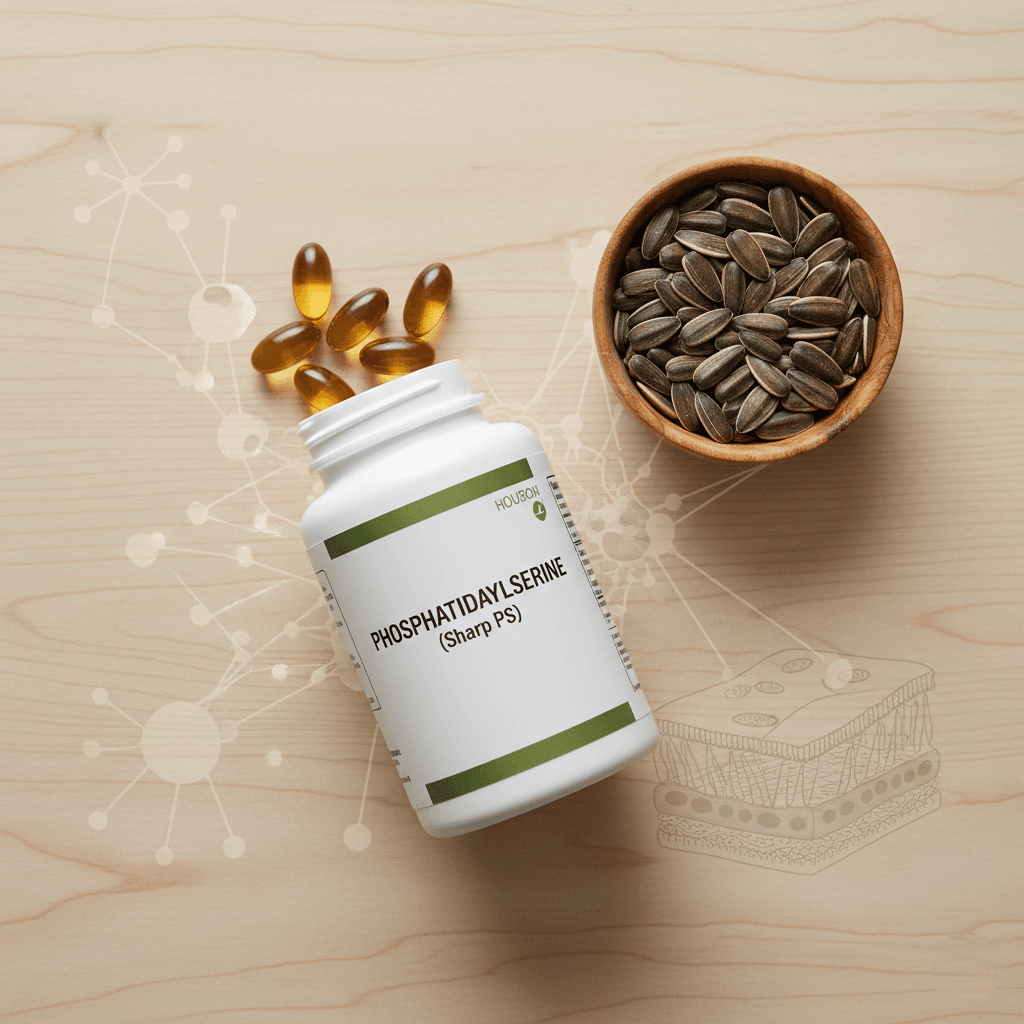
Phosphatidylserine (PS) is a key anionic phospholipid that is highly concentrated in the cell membranes of the brain (up to 10-20% of the total lipid pool), where it plays a critical role in cell signaling and membrane fluidity. While the body can synthesize PS, the majority is obtained through the diet (primarily from meat and fish) or through supplementation. Commercial supplements were originally derived from bovine cortex (BC-PS), but due to concerns about pathogen transmission, most modern supplements use soy-derived or sunflower-derived (non-GMO) PS. Mechanistically, PS is vital for maintaining the electrical potential across membranes and is directly involved in the release of neurotransmitters (like acetylcholine, dopamine, and norepinephrine) and the activation of various signaling cascades, which supports memory, learning, and mood. Its role in regulating the Hypothalamic-Pituitary-Adrenal (HPA) axis makes it a potent modulator of the stress response, particularly by blunting the rise in cortisol following physical or psychological stressors. PS is also essential for apoptosis (programmed cell death), where its exposure on the outer cell leaflet signals macrophages to clear dying cells, a process critical for maintaining tissue health and managing cellular debris.
Wellness takeaway: If your main aims are improved memory and cognitive function (especially age-related decline), better stress resilience (lowering cortisol spikes), and enhanced athletic recovery, PS is a well-researched, foundational supplement. Use consistently, especially during periods of high mental or physical demand, and track your response in terms of subjective focus and stress levels.
Key Benefits
Cognitive Enhancement & Memory: Supports membrane integrity and neurotransmitter release, directly impacting the speed and efficiency of signal transmission, which is associated with improved recall, learning, and executive function.
Stress Response Modulation: Helps dampen the physiological response to stress by attenuating the acute rise in the stress hormone cortisol following exercise, high-intensity work, or mental tasks.
Exercise Recovery & Soreness: May help reduce muscle damage markers (like creatine kinase) and perceived muscle soreness post-exercise, potentially through its impact on the inflammatory response and cellular repair.
Cellular Aging & Brain Health: As a structural component of brain cell membranes, consistent intake supports the health of neurons and may counteract age-related declines in membrane fluidity and signaling capacity.
Reality check: PS is a cell-membrane fuel, not a fast-acting stimulant. Its most noticeable benefits are often seen over weeks or months as it integrates into neuronal structures. It is best viewed as nutritional support for baseline function, not a 'cure' for disease.
Research Findings
Time to benefit:
Acute Stress Response (Cortisol): Within 30–60 minutes of ingestion before a stressor (like a standardized cognitive test or high-volume exercise); blunting effects are clearest with 400–800 mg doses.
Cognitive Function & Memory: Noticeable subjective and objective improvements in domains like verbal recall and numerical task performance typically appear by 6–12 weeks of routine daily use.
Exercise Recovery: Measurable reduction in perceived soreness and serum markers of muscle damage (e.g., CK) are usually seen after 1–2 weeks of daily use concurrent with a training regimen.
Human study highlights (succinct):
Age-Related Cognitive Decline: Multiple placebo-controlled trials, primarily using 300 mg/day (100 mg 3x/day) of PS for 6 to 12 weeks, show significant improvements in memory, attention, and mood in older adults with mild cognitive impairment or age-associated memory impairment.
Acute Stress & Cortisol: Studies involving healthy, highly stressed adults or athletes show that doses of 400–800 mg of PS taken 30 minutes before a physical or mental stressor can significantly attenuate the rise in serum cortisol without affecting other key hormones. This suggests a direct regulatory role on the HPA axis.
Athletic Performance & Recovery: In trained cyclists and weightlifters, 400–600 mg/day of PS for 10–14 days before and during intense training has been linked to reduced post-exercise creatine kinase (CK) levels (a marker of muscle damage) and slightly faster perceived recovery compared to placebo.
Mood & Sleep: PS's ability to modulate the HPA axis may have secondary effects on mood. Some trials in elderly subjects report minor, positive shifts in depressive symptoms and sleep quality, often considered secondary to reduced stress and improved cognitive vitality.
Tolerability: PS is generally extremely well tolerated at recommended doses (up to 600 mg/day). Occasional reports include mild stomach upset or nausea at very high doses, insomnia (if taken too close to bedtime due to increased neurotransmitter activity), or a feeling of mild restlessness. These side effects are rare and usually dose-dependent.
Best Sources & Dosage
What to buy:
Forms:
Softgel capsules or powders containing Soy-Derived PS or, preferably, Sunflower-Derived PS (to avoid common soy allergens/concerns). The "Sharp PS" brand is a common, high-quality, and non-GMO source.
PS should be the primary ingredient and not a small component of a large, proprietary blend.
Quality: Select brands that provide third-party testing or a Certificate of Analysis (COA) to verify the actual content of Phosphatidylserine (often listed as a percentage of total phospholipids) and confirm the absence of heavy metals or contaminants.
Avoid: Vague blends with low, undisclosed amounts of PS (e.g., less than 100 mg per serving); BC-PS (bovine cortex-derived) unless explicitly verified as pathogen-free, though it is now rare.
Evidence-aligned ranges (by use case):
General Cognitive Support & Maintenance (Age-Related):
- Dose: 100 mg, taken 3 times per day (total 300 mg/day), split across morning, midday, and early evening meals.
- Use daily for 8–12 weeks to assess full effect.
Acute Stress Response & Cortisol Blunting (before high stress/exercise):
- Dose: 400–800 mg taken as a single dose approximately 30 minutes before the anticipated stressor (e.g., a major exam, public speaking, or intense physical training session).
- Use acutely as needed, or daily at the lower end of the range during periods of chronic high stress.
Sports Recovery & Reduced Muscle Soreness:
- Dose: 400–600 mg per day, ideally split into two doses (e.g., morning and afternoon), taken consistently on training days for 1–2 weeks and throughout the recovery phase.
Timing & tips:
Consistency is key for cognitive benefits; take it daily at the same time(s).
Take with food to enhance absorption, as PS is a fat-soluble lipid.
Avoid taking after 6 PM if you are sensitive to its potential to increase alertness and cause restlessness or insomnia.
Pair with Omega-3s (DHA/EPA): PS works synergistically with DHA (Docosahexaenoic Acid), a key Omega-3 fatty acid, as both are crucial components of healthy neuronal membranes.
Safety, interactions & exclusions:
Anticoagulants/Blood Thinners: PS has been theoretically linked to mild anti-coagulant effects at very high doses. While evidence is weak, caution is advised. Consult a clinician if you are taking Warfarin, Heparin, or other blood thinners before starting high-dose PS.
Anticholinergics: PS increases acetylcholine levels in the brain, so it may counteract the effects of anticholinergic drugs (used for conditions like overactive bladder or motion sickness).
Pregnancy/Lactation: Human data are insufficient—avoid unless specifically advised by your obstetrician.
Autoimmune Conditions: While PS is involved in clearing cellular debris, its use in active autoimmune diseases (where cell clearance may be dysregulated) is not well-studied. Use with caution.
Allergies: If using Soy-Derived PS, avoid if you have a severe soy allergy. The Sunflower-Derived PS is generally considered safe for those with soy sensitivity.
Driving/Operating Machinery: Due to rare reports of initial restlessness, assess your individual response before driving or operating heavy equipment.
Bold safety flag: If you experience significant insomnia, gastrointestinal distress, or headaches, reduce the dose or discontinue use, and try to take it earlier in the day.
Dosage Quick-Reference
Cognitive Maintenance/Memory: 100 mg 3×/day (300 mg total), daily 8–12 wks → ↑verbal recall, focus (↑).
Acute Stress/Cortisol Control: 400–800 mg (single dose), 30 min pre-stressor → ↓cortisol response (↑).
Exercise Recovery: 400–600 mg/day (split), daily on training days 1–2 wks → ↓muscle soreness/CK (↑).
Safety note: Avoid high doses if on blood thinners; take earlier in the day to prevent insomnia; choose Sunflower-derived PS if concerned about soy; continue consistent use for best results.