1. Understanding Phenylpiracetam – What It Is and How It Works
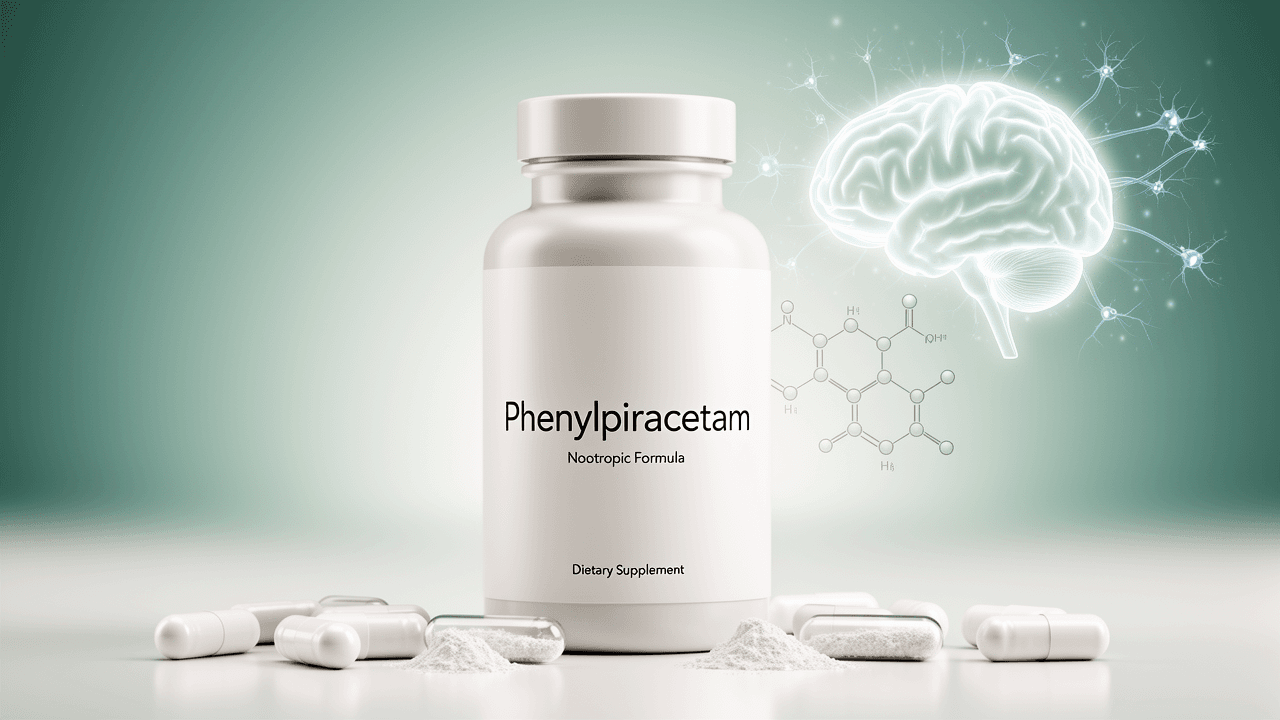
Phenylpiracetam (also known as fonturacetam, Phenotropil, or Carphedon) is a synthetic nootropic compound derived from piracetam, first developed in Russia in the 1980s. Chemically, it is piracetam with an added phenyl group, which increases its lipophilicity and allows better penetration into the brain.
Phenylpiracetam has been used in Russia as a prescription drug for cognitive impairment, stroke recovery, and certain neurological conditions. In Western countries, it is sold primarily as a research chemical or gray-market nootropic, not as an approved dietary supplement or medication. Importantly, phenylpiracetam is listed as a banned stimulant by the World Anti-Doping Agency (WADA), so competitive athletes must avoid it.
How Phenylpiracetam Works in the Body
The exact mechanisms are not fully established, but several pathways are supported by preclinical and limited clinical data:
Modulation of glutamate and acetylcholine
- Like other racetams, phenylpiracetam appears to modulate AMPA and NMDA glutamate receptors, which are central to learning and memory.
- It may enhance cholinergic transmission, possibly by increasing the efficiency of acetylcholine signaling, which is crucial for attention and memory.
Effects on dopamine and norepinephrine
- Animal studies suggest phenylpiracetam can influence dopamine and norepinephrine systems, which may underlie its stimulant-like effects (increased motivation, wakefulness, and resistance to fatigue).
- This dopaminergic/noradrenergic activity is also why it is considered performance-enhancing and banned in sports.
Neuroprotective and membrane-modulating effects
- Phenylpiracetam seems to improve neuronal membrane fluidity and mitochondrial function, similar to piracetam.
- In animal models of ischemia (reduced blood flow) and hypoxia (low oxygen), it has shown neuroprotective effects, reducing cognitive deficits and neuronal damage.
Increased stress tolerance and psychostimulant-like actions
- Russian clinical and preclinical work indicates increased resistance to cold, stress, and fatigue, which may be due to both central (brain) and peripheral (muscle, cardiovascular) mechanisms.
Because of these combined actions, users often report:
- Enhanced mental energy and alertness
- Improved focus and working memory
- Greater physical stamina and tolerance to fatigue
However, these subjective reports are more abundant than high-quality, modern, placebo-controlled trials, especially in healthy adults.
2. Key Benefits of Phenylpiracetam
Based on available human and animal data, as well as clinical use in Russia, the main potential benefits are:
2.1 Cognitive Enhancement in Impairment States
Phenylpiracetam has been studied primarily in people with cognitive deficits due to stroke, brain injury, or neurological disease. Reported benefits include:
- Improved memory and learning
- Better attention and mental processing speed
- Enhanced daily functioning and mood
These effects are more robust in impaired populations than in healthy individuals, where evidence is limited.
2.2 Physical Performance and Fatigue Resistance
Phenylpiracetam appears to:
- Increase resistance to cold and physical stress
- Improve exercise tolerance and reduce fatigue in some clinical and animal models
This is a major reason it is banned in professional sports.
2.3 Mood, Motivation, and Anxiety
Some Russian studies and user reports suggest:
- Mild antidepressant and anxiolytic (anti-anxiety) effects
- Increased motivation and drive
- Reduced apathy and improved initiative in patients with organic brain lesions or neurodegenerative conditions
These effects likely relate to modulation of dopaminergic and noradrenergic systems, as well as improved cognitive function.
2.4 Neuroprotection and Recovery After Brain Injury
In clinical and preclinical studies, phenylpiracetam has shown:
- Improved functional and cognitive recovery after stroke or traumatic brain injury
- Protection against cognitive decline in models of chronic cerebral ischemia and hypoxia
These benefits are most relevant in medical contexts under physician supervision, not self-experimentation.
Limitations:
- Most positive data are from Russian-language studies with varying methodological quality.
- Few high-quality, large, placebo-controlled trials exist in healthy adults.
- Regulatory status is unclear or unfavorable in many countries; it is not an FDA-approved drug or dietary supplement in the U.S.
3. Research Findings on Phenylpiracetam
3.1 Post-Stroke Cognitive and Functional Recovery
Study 1 – Ischemic stroke rehabilitation
- Design: Randomized, double-blind, placebo-controlled trial (Russian)
- Participants: 99 patients (approximate; reports vary) with ischemic stroke and cognitive deficits
- Intervention: Phenylpiracetam 400 mg/day vs placebo for 1–3 months (varied by report)
- Outcomes: Cognitive tests (memory, attention), neurological scales, daily functioning
Findings:
- Significant improvements in memory, attention, and psychomotor speed in the phenylpiracetam group vs placebo.
- Better functional recovery and reduced neurological deficit scores.
- Tolerability was generally good, with mild insomnia or agitation in some patients.
Limitations:
- Conducted in a single country; detailed methodology not always fully accessible in English.
- Sample size moderate, not large-scale.
3.2 Organic Brain Lesions and Cognitive Dysfunction
Study 2 – Organic brain lesions (encephalopathy)
- Design: Randomized, controlled (often open-label or partially blinded)
- Participants: ~100 adults with organic brain lesions (traumatic brain injury, vascular encephalopathy)
- Intervention: Phenylpiracetam 200–400 mg/day for 30–60 days
- Outcomes: Cognitive performance, mood scales, clinical global impression
Findings:
- Improvements in memory, attention, and executive function compared with baseline and control groups.
- Reported reductions in anxiety, apathy, and fatigue.
- Some patients experienced mild overstimulation or insomnia when taken late in the day.
Limitations:
- Some trials lacked full blinding or had small control groups.
- Outcomes often based on clinician-rated scales and not always standardized neuropsychological batteries.
3.3 Cold Tolerance and Physical Performance
Study 3 – Cold stress resistance in healthy volunteers
- Design: Controlled human study (Russian, small sample)
- Participants: Healthy adults (n ≈ 20–30)
- Intervention: Single or short-term dosing of phenylpiracetam vs control, exposure to cold conditions
- Outcomes: Time to cold intolerance, subjective fatigue, physiological stress markers
Findings:
- Increased resistance to cold exposure and delayed onset of fatigue in the phenylpiracetam group.
- Participants reported higher alertness and better tolerance of stress.
Limitations:
- Small sample size.
- Short-term study; no long-term safety or adaptation data.
3.4 Animal Studies: Learning, Memory, and Neuroprotection
Multiple rodent studies have examined phenylpiracetam’s effects:
Learning and memory:
- In rat models of scopolamine-induced amnesia, phenylpiracetam improved performance in maze tasks and passive avoidance tests, indicating pro-cognitive effects.
Neuroprotection:
- In models of cerebral ischemia and hypoxia, phenylpiracetam reduced neuronal damage and preserved cognitive function compared with controls.
Psychostimulant-like activity:
- Rodent behavioral tests show increased locomotor activity, reduced immobility in forced swim tests, and enhanced resistance to stress, consistent with mild stimulant and antidepressant-like properties.
While these animal data support the mechanistic plausibility of cognitive and neuroprotective effects, translation to healthy human users remains uncertain.
4. Best Sources & Dosage – Forms, Dosing, Timing, Safety
4.1 Legal and Regulatory Status
- United States & many Western countries:
- Phenylpiracetam is not approved as a drug or dietary supplement by the FDA.
- It is often sold online as a research chemical or nootropic, with variable quality control.
- Russia and some Eastern European countries:
- Used as a prescription medication under brand names like Phenotropil or Carphedon.
- Sports:
- Phenylpiracetam is on the WADA Prohibited List as a stimulant. Competitive athletes should not use it.
Always check local laws and regulations before purchasing or using phenylpiracetam.
4.2 Available Forms and Quality Considerations
Common forms:
- Bulk powder (often as phenylpiracetam or phenotropil)
- Capsules (typically 50–100 mg per capsule)
Quality considerations:
- Because it is not formally regulated as a supplement or drug in many countries, product purity and dosing accuracy can vary widely.
- Prefer vendors that:
- Provide third-party lab testing (COA) for purity and identity
- Clearly list dosage per capsule/serving
- Have consistent batch testing and transparent sourcing
4.3 Dosage Recommendations
There is no universally accepted "optimal" dose, and clinical dosing in Russia is typically medical-supervised. The following ranges are based on clinical use patterns and common nootropic practice, not formal guidelines.
General Cognitive Support (Healthy Adults)
- Common oral dose: 100–200 mg per day
- Typical regimen:
- 100 mg once in the morning, or
- 100 mg twice daily (morning and early afternoon)
- Cycle length:
- 2–4 weeks of use, followed by at least 1–2 weeks off, to reduce risk of tolerance.
Some users report noticeable stimulation at 100 mg; sensitive individuals may start at 50 mg.
Cognitive Impairment / Post-Stroke (Clinical Context)
- Clinical studies and Russian prescribing information often use 200–400 mg/day, divided into 2 doses, for 30–60 days.
- These higher doses should be considered medical doses, appropriate only under physician supervision.
Physical Performance / Fatigue Resistance
- Anecdotal and limited human data suggest:
- 100–200 mg, 30–60 minutes before demanding physical or mental tasks.
- Because of WADA rules, competitive athletes should avoid any use.
Timing
- Take earlier in the day (morning, early afternoon) to reduce insomnia risk.
- Avoid dosing within 6–8 hours of bedtime.
- Can be taken with or without food; some users prefer taking with a light meal to minimize any potential GI discomfort.
Stacking with Other Nootropics
Common (but not clinically validated) practices include:
- Choline sources (e.g., CDP-choline, alpha-GPC) to support acetylcholine systems and reduce potential headaches.
- Non-stimulant nootropics (e.g., L-theanine, bacopa) to balance stimulation.
Because of overlapping stimulant effects, avoid combining phenylpiracetam with other strong stimulants (see safety section).
5. Safety, Side Effects, and Drug Interactions
5.1 General Safety Profile
In Russian clinical practice, phenylpiracetam is generally considered well tolerated when used at therapeutic doses (100–400 mg/day) for several weeks. However, long-term safety data (months to years of continuous use) in healthy individuals are lacking.
5.2 Common Side Effects
Side effects are often dose-dependent and more likely at higher doses or in sensitive individuals. Reported effects include:
- Insomnia or difficulty sleeping (especially if taken late in the day)
- Nervousness, agitation, or anxiety
- Headache (sometimes mitigated by adequate choline intake and hydration)
- Irritability or emotional lability
- Nausea or mild gastrointestinal discomfort
- Increased heart rate or palpitations (less common, but possible due to stimulant-like effects)
Most side effects tend to resolve with dose reduction or discontinuation.
5.3 Serious or Less Common Concerns
- Cardiovascular strain: In individuals with underlying heart disease, uncontrolled hypertension, or arrhythmias, phenylpiracetam’s stimulant-like activity may pose additional risk.
- Seizure threshold: Racetams have been studied in epilepsy and sometimes used adjunctively, but any compound that modulates glutamate and GABA systems could, in theory, affect seizure threshold. People with seizure disorders should use only under specialist guidance.
- Psychiatric symptoms: In susceptible individuals (e.g., bipolar disorder, psychosis), dopaminergic and noradrenergic stimulation can potentially worsen agitation, mania, or psychosis.
5.4 Tolerance and Dependence
- Tolerance: Many users report that phenylpiracetam’s stimulating and performance-enhancing effects diminish with continuous daily use over 1–2 weeks.
- Cycling (e.g., 2–3 days on, 2–3 days off, or 2–4 weeks on, 1–2 weeks off) is commonly used to mitigate tolerance, though this is based on practice rather than clinical trials.
- Dependence and withdrawal: There is limited evidence of classical physical dependence, but psychological reliance on the stimulated state is possible.
- Abrupt discontinuation may lead to fatigue, reduced motivation, or low mood in some users.
5.5 Drug and Supplement Interactions
Because phenylpiracetam can influence multiple neurotransmitter systems, caution is warranted when combining with other substances.
Use with caution or avoid with:
Stimulants
- Examples: amphetamine salts (Adderall), methylphenidate (Ritalin, Concerta), modafinil/armodafinil, high-dose caffeine, ephedrine, many pre-workout formulas.
- Risk: excessive stimulation, anxiety, tachycardia, hypertension, insomnia.
Antidepressants and psychiatric medications
- SSRIs, SNRIs, MAOIs, tricyclics, atypical antipsychotics, mood stabilizers.
- Risk: unpredictable changes in mood, anxiety, or agitation; theoretical risk of interaction via monoamine systems.
- Anyone on psychiatric medications should consult a psychiatrist before considering phenylpiracetam.
Blood pressure or heart medications
- Beta-blockers, antihypertensives, antiarrhythmics.
- Risk: phenylpiracetam’s stimulant-like effects may counteract or complicate cardiovascular management.
Alcohol and sedatives
- Benzodiazepines, Z-drugs (zolpidem), barbiturates.
- Combined use may blunt the subjective effects of sedatives or lead to unpredictable CNS effects.
Because robust interaction studies are lacking, the safest approach is not to combine phenylpiracetam with prescription medications without physician oversight.
5.6 Special Populations
Pregnancy and breastfeeding:
- No adequate human data. Given potential CNS effects and lack of safety research, avoid use.
Children and adolescents:
- Not studied adequately for safety in healthy youth. Use only in formal medical contexts if ever indicated, and under specialist supervision.
Elderly individuals:
- Some clinical use has occurred in older adults with cognitive impairment, but they are also more vulnerable to cardiovascular and psychiatric side effects. Medical supervision is essential.
6. Who Should and Shouldn’t Use Phenylpiracetam
6.1 Who Might Consider Phenylpiracetam (With Caution)
- Adults (18+) in jurisdictions where it is legal, who:
- Are not competitive athletes subject to WADA rules.
- Are not taking interacting prescription medications.
- Want to experiment cautiously with a short-term cognitive or performance enhancer.
Even in this group, it is wise to:
- Start at the lowest effective dose (e.g., 50–100 mg).
- Limit use to short cycles.
- Monitor for side effects (sleep, mood, blood pressure, heart rate).
- Discontinue if adverse effects or mood changes occur.
6.2 Who Should Avoid Phenylpiracetam
Competitive athletes
- Phenylpiracetam is on the WADA Prohibited List as a stimulant; use could result in disqualification and sanctions.
People with cardiovascular disease
- History of heart attack, angina, arrhythmias, uncontrolled hypertension, or other serious heart conditions.
- Stimulant-like effects may increase risk.
Individuals with serious psychiatric disorders
- Bipolar disorder, psychotic disorders, severe anxiety, or unstable depression.
- Stimulant-like and dopaminergic effects may worsen symptoms or destabilize mood.
People with seizure disorders (epilepsy)
- Use only under neurologist supervision, if at all, given theoretical effects on seizure threshold.
Pregnant or breastfeeding women
- Lack of safety data; potential risk to fetus or infant.
Children and adolescents
- Insufficient safety and efficacy data; developing brains may be more vulnerable to pharmacological modulation.
Anyone on complex medication regimens
- Especially those involving stimulants, antidepressants, antipsychotics, mood stabilizers, or cardiovascular drugs.
- Interaction risk and difficulty attributing side effects.
Practical Takeaways
- Phenylpiracetam is a potent racetam derivative with stimulant-like and cognitive-enhancing properties, primarily studied in Russia.
- Evidence supports benefits for post-stroke recovery and cognitive impairment, with modest data for stress and fatigue resistance. High-quality trials in healthy adults are limited.
- Typical nootropic doses are 100–200 mg/day, taken in the morning or early afternoon, often cycled to reduce tolerance.
- Side effects can include insomnia, anxiety, headaches, and irritability; cardiovascular and psychiatric risks warrant caution.
- It is banned in competitive sports and should be avoided by individuals with heart disease, serious psychiatric conditions, seizure disorders, pregnant or breastfeeding women, and those on interacting medications.
Because phenylpiracetam is not widely regulated or approved in many countries, and long-term safety data are limited, it is best approached—if at all—with medical guidance, conservative dosing, and careful self-monitoring.