1. Understanding Phenylpiracetam
What Is Phenylpiracetam?
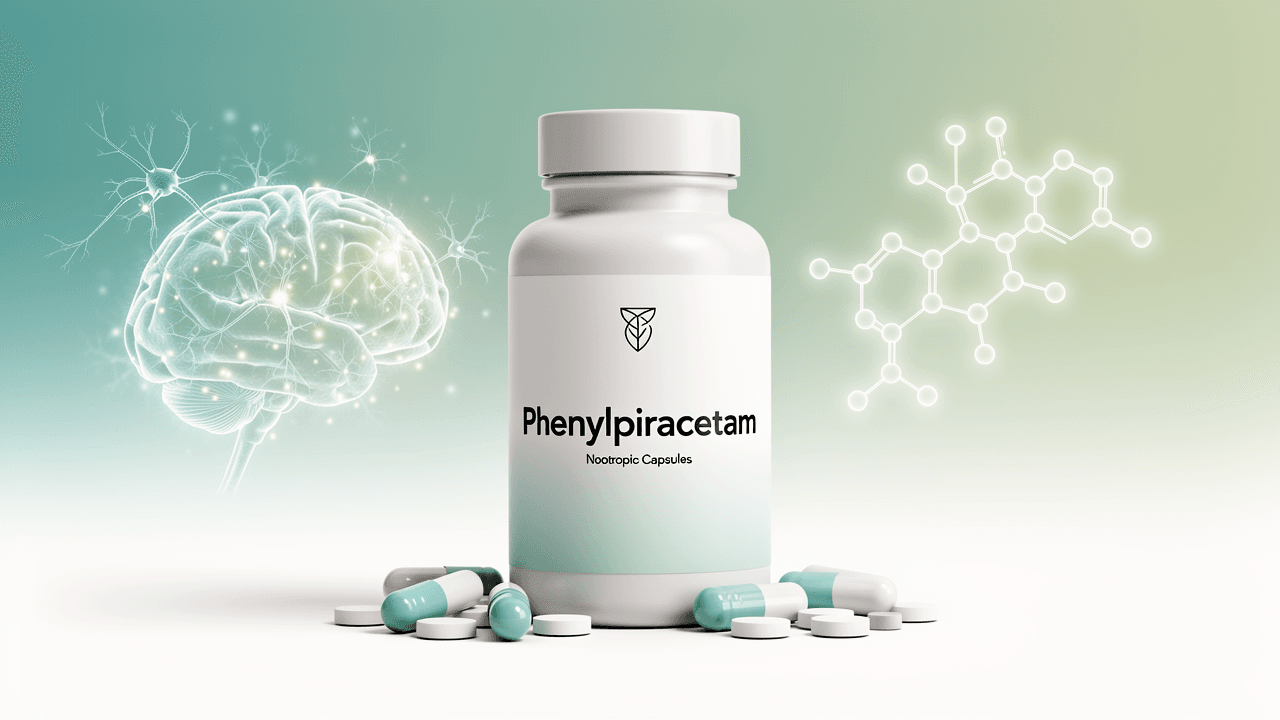
Phenylpiracetam (also known as fonturacetam, Phenotropil, or Carphedon) is a synthetic nootropic in the racetam family. It is a modified version of piracetam with an added phenyl group, which increases its potency and ability to cross the blood–brain barrier.
It was originally developed in Russia in the 1980s to help cosmonauts cope with stress, low temperatures, and cognitive demands in space. In Russia, phenylpiracetam (Phenotropil) has been used as a prescription drug for conditions such as stroke recovery, traumatic brain injury, and certain cognitive disorders. In many other countries it is sold as an unapproved research chemical or gray‑market nootropic.
Importantly, phenylpiracetam is on the World Anti-Doping Agency (WADA) prohibited list as a stimulant, meaning it is banned in most competitive sports.
How Phenylpiracetam Works in the Body
Phenylpiracetam’s exact mechanisms are not fully understood, but several pathways are supported by animal and limited human data:
Modulation of glutamate and acetylcholine
- Racetams generally modulate AMPA and NMDA glutamate receptors and enhance cholinergic transmission, especially in the hippocampus and cortex (regions critical for memory and learning).
- Animal studies suggest phenylpiracetam increases the density or sensitivity of NMDA, GABA, and nicotinic acetylcholine receptors in the brain, which may underlie its pro‑cognitive and anti‑amnesic effects.
Dopaminergic and noradrenergic activity
- The added phenyl group makes phenylpiracetam more stimulant‑like than piracetam. Preclinical research indicates it may increase dopamine and noradrenaline signaling, which can enhance motivation, psychomotor activity, and resistance to fatigue.
Neuroprotective and anti‑hypoxic effects
- Animal models show phenylpiracetam can reduce neuronal damage from ischemia (reduced blood flow) and hypoxia (low oxygen), and may improve cerebral blood flow and energy metabolism.
- It appears to stabilize neuronal membranes and improve glucose utilization in brain tissue under stress.
Effects on brain plasticity
- Some rodent studies suggest phenylpiracetam enhances long‑term potentiation (LTP), a key mechanism of learning and memory, and may support recovery after brain injury.
Overall, phenylpiracetam combines classic racetam‑like cognitive effects with mild stimulant properties, which is why users often report increased alertness, mental energy, and physical endurance.
2. Key Benefits of Phenylpiracetam
1. Cognitive Enhancement (Memory, Attention, Mental Speed)
Clinical and preclinical studies suggest phenylpiracetam can improve:
- Short‑term and long‑term memory
- Attention and concentration
- Mental processing speed and accuracy
These effects are most consistently observed in individuals with cognitive impairment (e.g., post‑stroke, brain injury, organic brain disease). Evidence in healthy individuals is more limited and mostly anecdotal.
2. Support in Neurological and Post‑Stroke Recovery
In Russian clinical practice, phenylpiracetam has been used as an adjunct treatment in:
- Ischemic stroke recovery
- Chronic cerebrovascular disease
- Traumatic brain injury
- Certain forms of epilepsy and organic brain lesions
Studies report improvements in cognitive performance, daily functioning, and sometimes mood and motor function when used alongside standard medical care.
3. Increased Physical Endurance and Resistance to Stress
Phenylpiracetam is reported to:
- Increase tolerance to cold and physical stress
- Improve physical performance and reduce fatigue
- Enhance psychomotor activity and reaction time
These stimulant‑like properties are one reason it is banned by WADA for athletes.
4. Possible Mood and Anxiety Benefits
Some clinical and observational data suggest phenylpiracetam may:
- Reduce anxiety and asthenia (pathological fatigue)
- Improve mood, motivation, and overall well‑being
However, these effects are usually reported in people with neurological or psychiatric conditions, not as a general mood enhancer in healthy users.
3. Research Findings on Phenylpiracetam
Most published data come from Russian clinical studies, many of which are not fully accessible in English and may vary in methodological quality. Still, they provide useful insights.
Cognitive and Neurological Conditions
Post‑Stroke Cognitive Impairment
- Study design: Open‑label or controlled trials (various) in Russia
- Participants: Typically 30–100+ patients with ischemic stroke or chronic cerebrovascular disease
- Dosing: Phenylpiracetam 100–200 mg/day, usually for 30–60 days
- Findings:
- Improvements in cognitive test scores (attention, memory, executive function) compared to baseline and in some cases compared to standard therapy alone.
- Enhanced activities of daily living and reduced neurological deficit scores.
- Limitations:
- Many studies are not double‑blind or placebo‑controlled.
- Publication bias and limited reporting in English make it hard to fully evaluate quality.
Organic Brain Lesions and Epilepsy
- Study example (summarized from Russian literature reviews):
- Participants: Patients with organic brain lesions and epilepsy
- Dosing: 100–200 mg/day for 1–3 months
- Outcomes: Improved cognitive performance and reduced asthenic symptoms without worsening seizure frequency in most patients.
- Note: Because epilepsy is complex and seizure thresholds can be affected by stimulants, these findings should be interpreted cautiously and never used to self‑treat epilepsy.
Cognitive Performance and Fatigue
Asthenia and Fatigue Syndromes
- Participants: Adults with chronic fatigue or asthenic syndromes (various etiologies)
- Dosing: 100–200 mg/day for 30–60 days
- Findings:
- Reduced subjective fatigue and improved performance on attention and psychomotor tests.
- Better tolerance to mental and physical stressors.
- Limitations:
- Many trials lack rigorous placebo controls and standardized diagnostic criteria.
Animal and Preclinical Studies
While not directly translatable to humans, they help clarify mechanisms and potential:
- Memory and learning: Phenylpiracetam reversed scopolamine‑induced memory deficits and improved maze learning in rodents at doses roughly equivalent to 10–50 mg/kg.
- Anti‑hypoxic effects: Rats given phenylpiracetam survived longer under hypoxic conditions and showed less neuronal damage in ischemia models.
- Motor and psychostimulant effects: Increased locomotor activity and resistance to cold stress, supporting its classification as a mild CNS stimulant.
Evidence in Healthy Humans
There is very limited high‑quality data on phenylpiracetam in healthy, cognitively normal individuals. Most information comes from:
- Uncontrolled observations in military or cosmonaut populations
- Anecdotal reports from nootropic users
Reported effects include increased alertness, motivation, and mental clarity, but without controlled trials, it’s impossible to quantify benefits or separate them from placebo effects.
4. Best Sources & Dosage
Legal and Regulatory Status
- In Russia and some Eastern European countries, phenylpiracetam (Phenotropil) has been marketed as a prescription medication.
- In the US, UK, EU, and many other regions, it is not approved as a drug or dietary supplement. It is typically sold online as a research chemical. Quality and purity can vary significantly.
- It is banned in competitive sports by WADA as a stimulant.
Always check your local regulations before purchasing or using phenylpiracetam.
Available Forms
- Tablets or capsules: Most common; usually 50 mg or 100 mg per capsule/tablet.
- Bulk powder: Sometimes available, but accurate dosing requires a milligram scale.
Given quality variability, third‑party lab testing (COA) from reputable vendors is critical where possible.
General Dosage Guidelines
Research and clinical practice typically use 100–200 mg/day, sometimes up to 300 mg/day, for limited periods. Because of its stimulant‑like nature, lower effective doses and shorter cycles are generally recommended for self‑experimenters.
1. Cognitive Support in Neurological Conditions
Note: These regimens are based on clinical studies and should only be followed under medical supervision.
- Typical clinical dose: 100–200 mg per day
- Frequency: Once daily or divided into two doses (e.g., 100 mg morning, 100 mg early afternoon)
- Duration in studies: 30–60 days, sometimes up to 3 months, followed by reassessment.
2. Off‑Label Nootropic Use in Otherwise Healthy Adults
This is not a medical recommendation but a summary of common practices reported in the literature and nootropic communities.
- Starting dose: 50–100 mg once in the morning
- Typical range: 100–200 mg/day
- Maximum commonly cited: 300 mg/day (often considered the upper limit and more likely to cause side effects)
- Timing:
- Morning or early afternoon only (to avoid insomnia)
- Take with food if you experience stomach discomfort.
Cycling
Because of possible tolerance and stimulant‑like effects, many users and some clinicians recommend:
- Short cycles: 2–4 weeks on, followed by at least 2–4 weeks off, or
- Intermittent use: 1–3 times per week for demanding days rather than daily.
Long‑term, continuous daily use has not been well studied and is not advisable without medical oversight.
Stacking and Synergy
Common combinations (based on racetam practice):
Choline sources (e.g., alpha‑GPC, CDP‑choline):
- May support acetylcholine production and potentially reduce racetam‑related headaches in some users.
- Typical choline dose: 150–300 mg alpha‑GPC or 250–500 mg CDP‑choline, taken with phenylpiracetam.
Caffeine or other stimulants:
- Often not recommended, as phenylpiracetam already has stimulant‑like properties; combining may increase jitteriness, anxiety, or cardiovascular strain.
Always introduce one compound at a time to assess individual response.
5. Safety, Side Effects, and Drug Interactions
Overall Safety Profile
In clinical use (especially in Russia), phenylpiracetam has generally been reported as well tolerated at therapeutic doses (100–200 mg/day) over short to moderate periods (1–3 months). However, rigorous long‑term safety data, especially in healthy individuals, are lacking.
Common Side Effects
Reported side effects tend to be dose‑dependent and more frequent at higher doses or with prolonged use:
- Insomnia or difficulty falling asleep (especially if taken late in the day)
- Nervousness, anxiety, or agitation
- Headaches (sometimes reported with racetams; may be related to cholinergic changes)
- Irritability or mood swings
- Gastrointestinal upset (nausea, stomach discomfort)
- Increased blood pressure or heart rate in sensitive individuals
If you experience persistent or severe side effects, discontinue use and consult a healthcare professional.
Serious or Less Common Concerns
- Cardiovascular strain: As a mild stimulant, phenylpiracetam may not be suitable for people with uncontrolled hypertension, arrhythmias, or significant cardiovascular disease.
- Seizure risk: Although some clinical data suggest safety in certain epilepsy patients under medical supervision, any stimulant‑like agent can theoretically affect seizure threshold. Self‑medication in people with seizure disorders is not recommended.
- Psychiatric effects: In susceptible individuals (e.g., bipolar disorder, psychosis), stimulants and dopaminergic agents may worsen symptoms or trigger agitation.
Drug Interactions
Robust interaction studies are lacking, but based on pharmacology, caution is advised with:
Stimulants and sympathomimetics
- Examples: amphetamines (Adderall), methylphenidate (Ritalin), modafinil/armodafinil, high‑dose caffeine, ephedrine, many pre‑workout supplements.
- Potential issues: additive increases in blood pressure, heart rate, anxiety, and insomnia.
Dopaminergic medications
- Examples: levodopa, some Parkinson’s drugs, certain antidepressants and antipsychotics.
- Potential issues: unpredictable changes in mood, motivation, or movement symptoms.
Anticonvulsants
- Because of possible effects on excitatory/inhibitory balance, phenylpiracetam could theoretically interact with seizure medications. Use only under supervision if you have epilepsy or a seizure history.
Alcohol and CNS depressants
- Limited data, but combining stimulants with alcohol can mask intoxication and increase risk‑taking.
- Best avoided, especially at higher doses.
Always discuss new supplements or nootropics with your prescribing clinician if you take any regular medications.
Dependence and Tolerance
Phenylpiracetam is not known to cause classic addiction or withdrawal in clinical use, but:
- Tolerance to stimulating and cognitive effects is commonly reported with frequent use.
- Some users feel a "crash" or fatigue when stopping after high or prolonged dosing, though controlled data are lacking.
Using the lowest effective dose, limiting duration, and taking regular breaks reduces these risks.
6. Who Should and Shouldn’t Use Phenylpiracetam
Potential Candidates (With Medical Supervision)
Phenylpiracetam is not an approved treatment in many countries, but based on available data, it has mainly been used clinically in:
- Adults recovering from ischemic stroke or traumatic brain injury
- Adults with chronic cerebrovascular insufficiency and cognitive impairment
- Patients with certain organic brain lesions and asthenic syndromes
In these contexts, it is prescribed and monitored by physicians, often as part of a broader rehabilitation program.
For otherwise healthy individuals, any use is experimental and should be approached cautiously.
Who Should Avoid Phenylpiracetam (or Use Only Under Close Medical Guidance)
Pregnant or breastfeeding women
- No adequate safety data. Avoid unless specifically recommended by a specialist (which is unlikely).
Children and adolescents
- Safety and efficacy are not established. Use in minors should be avoided outside of formal clinical settings.
People with cardiovascular disease
- Uncontrolled hypertension, arrhythmias, recent heart attack, severe heart failure, or other serious heart conditions.
- Phenylpiracetam’s stimulant‑like effects may exacerbate these conditions.
Individuals with a history of seizures or epilepsy
- Unless under specialist supervision, avoid due to potential effects on neuronal excitability.
People with severe psychiatric disorders
- Bipolar disorder, psychotic disorders, uncontrolled anxiety, or panic disorders may be destabilized by stimulant‑like compounds.
Competitive athletes subject to doping control
- Phenylpiracetam is banned by WADA as a stimulant. Use can lead to disqualification and sanctions.
Those on multiple CNS‑active medications
- Especially stimulants, antidepressants, antipsychotics, anticonvulsants, or Parkinson’s medications. Interaction risk is higher and medical oversight is essential.
Practical Takeaways
- Phenylpiracetam is a potent racetam derivative with both cognitive and stimulant‑like properties.
- Most human research comes from Russian clinical practice in patients with neurological conditions, where doses of 100–200 mg/day for 1–3 months improved various cognitive and functional outcomes.
- Evidence in healthy individuals is limited and largely anecdotal; benefits and long‑term safety remain uncertain in this group.
- Side effects are usually mild to moderate (insomnia, anxiety, headaches, GI upset) but may be more pronounced at higher doses or in sensitive individuals.
- It is not approved as a drug or dietary supplement in many countries and is prohibited in competitive sports.
- Anyone considering phenylpiracetam should consult a healthcare professional, start with low doses, avoid combining with other stimulants, and use short cycles with regular breaks.
Phenylpiracetam may offer meaningful benefits in specific clinical contexts under medical care, but for general nootropic use, it should be approached carefully, with a clear understanding of the limited evidence base and regulatory status.