1. Understanding Phenylpiracetam – What It Is and How It Works
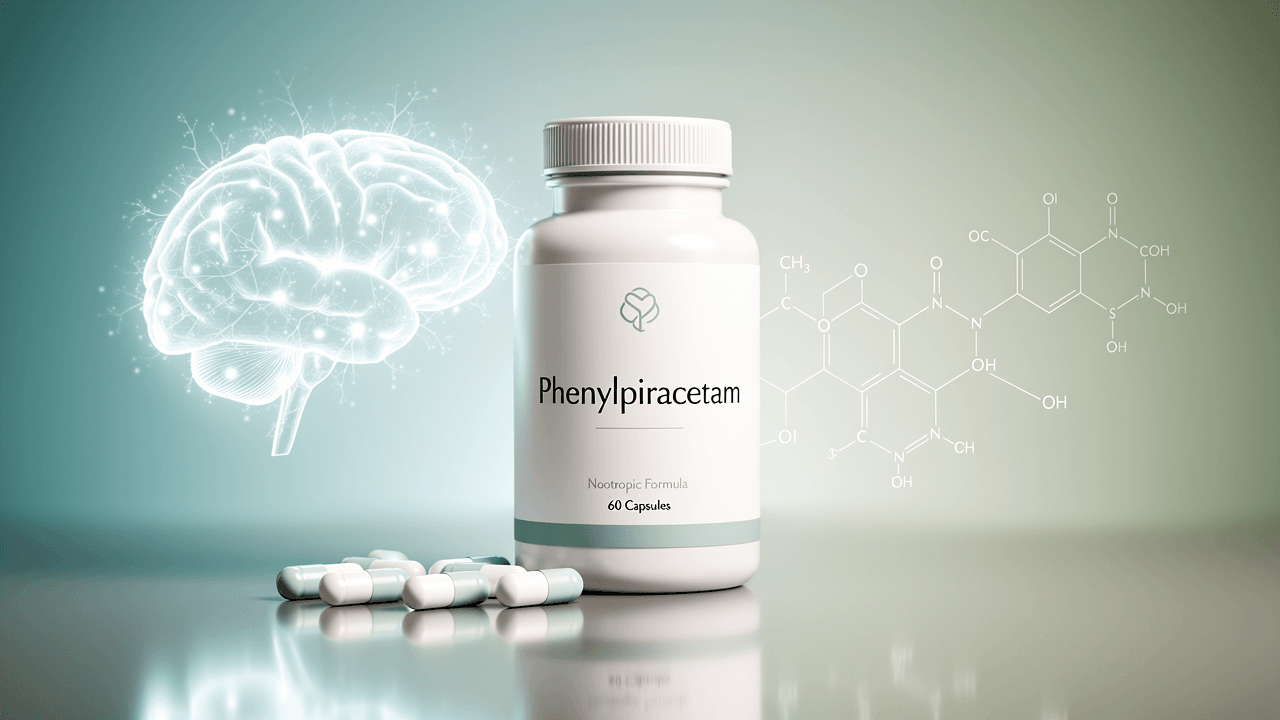
Phenylpiracetam (also known as fonturacetam, carphedon, or by the Russian brand name Phenotropil) is a synthetic nootropic in the racetam family. It was developed in Russia in the 1980s as a modified version of piracetam with an added phenyl group, which significantly increases its lipophilicity and potency.
Phenylpiracetam has been used clinically in Russia and some Eastern European countries for:
- Cognitive impairment after stroke or traumatic brain injury
- Fatigue and asthenic (low-energy) states
- Certain neurological conditions (e.g., epilepsy as an adjunct, encephalopathy)
It is not approved as a medication by the U.S. FDA or the European Medicines Agency, and in many countries it is sold only as a research chemical. It is also banned by the World Anti-Doping Agency (WADA) as a stimulant in competitive sports.
1.1 Mechanisms of Action in the Body
The exact mechanisms of phenylpiracetam in humans are not fully mapped, but animal and limited human data suggest several overlapping actions:
Modulation of glutamate and acetylcholine systems
- Like other racetams, phenylpiracetam appears to influence AMPA and NMDA glutamate receptors, which are critical for synaptic plasticity and memory formation.
- It may enhance cholinergic neurotransmission, likely by increasing acetylcholine utilization and receptor sensitivity. This is why many users combine it with a choline source (e.g., CDP-choline, alpha-GPC) to avoid headaches.
Dopaminergic and noradrenergic effects
- Animal studies indicate that phenylpiracetam can increase dopamine and norepinephrine activity, contributing to its stimulant-like, anti-fatigue, and psychomotor-activating effects.
- This dopaminergic action is a major reason for its inclusion on the WADA prohibited list.
Neuroprotective and membrane-stabilizing properties
- Preclinical research suggests protection against ischemic damage, oxidative stress, and hypoxia.
- Phenylpiracetam may enhance neuronal membrane fluidity and energy metabolism (e.g., via mitochondrial function), similar to piracetam but at lower doses.
Effects on cerebral blood flow and metabolism
- Some Russian clinical data indicate improved regional cerebral blood flow and glucose utilization in brain tissue, especially after ischemic events (e.g., stroke).
Overall, phenylpiracetam can be viewed as a cognitive stimulant with racetam-like neuroprotective and pro-cognitive properties, though the totality of evidence in healthy humans is still modest.
2. Key Benefits of Phenylpiracetam
2.1 Cognitive Function and Memory
Phenylpiracetam is primarily used as a cognitive enhancer, particularly for:
- Working memory and mental clarity
- Learning capacity and information processing
- Attention and focus under fatigue or stress
Clinical studies in patients with brain injury or cerebrovascular disease show improvements in memory, attention, and executive function. Evidence in healthy individuals is more limited but suggests potential benefits in demanding or stressful conditions (e.g., cold exposure, sleep deprivation).
2.2 Fatigue Reduction and Physical Performance
Phenylpiracetam has notable anti-fatigue and psychomotor-stimulating effects:
- Increased resistance to physical and mental fatigue
- Improved physical performance in animal models and some human studies
- Enhanced tolerance to cold and stress
These performance-enhancing effects are a key reason for its ban in competitive sports.
2.3 Mood, Motivation, and Anxiety
Some clinical and anecdotal reports suggest:
- Improved mood and reduction in apathy or anhedonia
- Increased motivation and drive
- Possible mild anxiolytic (anti-anxiety) effects in certain populations with asthenic or neurotic disorders
However, in sensitive individuals or at higher doses, the stimulating action may increase anxiety, irritability, or insomnia.
2.4 Neurological Recovery and Neuroprotection (Clinical Use)
In Russian clinical practice, phenylpiracetam has been used as part of rehabilitation protocols for:
- Ischemic stroke recovery
- Post-traumatic brain injury
- Chronic cerebrovascular insufficiency
Studies report improvements in functional recovery, cognitive status, and daily living activities, though most trials are relatively small and not always up to modern Western methodological standards.
3. Research Findings on Phenylpiracetam
Most rigorous data come from Russian and Eastern European clinical studies. Many are not easily accessible in English and vary in quality, but they provide useful signals about efficacy and safety.
3.1 Cognitive Impairment and Post-Stroke Recovery
Study 1 – Post-stroke cognitive and neurological recovery
- Design: Randomized, double-blind, placebo-controlled
- Participants: ~100 patients with ischemic stroke (exact n varies by report, typically 60–120)
- Dose & Duration: Phenylpiracetam 100–200 mg/day for 1–3 months
- Findings:
- Improved scores on cognitive tests (e.g., attention, memory, executive function) compared with placebo.
- Better recovery of motor function and activities of daily living in the phenylpiracetam group.
- Some studies reported enhanced emotional state and reduced fatigue.
- Limitations: Many trials had modest sample sizes, limited blinding details, and were conducted at single centers in Russia.
Study 2 – Chronic cerebrovascular disease
- Design: Prospective, controlled (often open-label or single-blind)
- Participants: 60–120 older adults with chronic cerebrovascular insufficiency and cognitive complaints
- Dose & Duration: 100 mg twice daily (200 mg/day) for 30–60 days
- Findings:
- Significant improvements in memory tests, attention, and psychomotor speed.
- Reduced subjective complaints of fatigue, dizziness, and emotional lability.
- Limitations: Lack of robust placebo control in some studies; difficult to generalize to healthy users.
3.2 Fatigue, Asthenia, and Mood
Study 3 – Asthenic and neurotic disorders
- Design: Randomized or controlled clinical trials (methodological details vary)
- Participants: 60–100 patients with asthenic syndrome, neurotic disorders, or fatigue after illness
- Dose & Duration: 100–200 mg/day for 30–60 days
- Findings:
- Decreased fatigue scores and improved subjective energy.
- Better performance on attention and psychomotor tasks.
- Some improvement in mood and reduction in anxiety in certain subgroups.
- Limitations: Heterogeneous populations and outcome measures; some studies lack full randomization or blinding.
3.3 Physical Performance and Cold Tolerance
Study 4 – Cold exposure and physical performance (healthy volunteers)
- Design: Controlled trial in healthy adults exposed to cold stress
- Participants: Small sample (often 20–40 subjects)
- Dose & Duration: Single or short-term dosing, 100–200 mg/day
- Findings:
- Increased tolerance to cold temperatures and improved psychomotor performance under cold stress.
- Reduced subjective fatigue and improved coordination.
- Limitations: Short duration, small sample size, and limited modern reporting of methods.
3.4 Animal and Preclinical Data
Preclinical studies in rodents show that phenylpiracetam:
- Enhances learning and memory in maze and avoidance tasks.
- Increases locomotor activity and resistance to cold and physical load.
- Shows neuroprotective effects in models of ischemia, hypoxia, and certain toxins.
These findings support its classification as a psychostimulant nootropic with neuroprotective potential, but translation to humans—especially healthy users—requires caution.
3.5 Evidence in Healthy Humans
Robust, modern randomized controlled trials in healthy young adults are scarce. Most available data point to:
- Improved performance under stressful or fatiguing conditions (e.g., cold exposure, post-illness fatigue).
- Possible gains in reaction time, vigilance, and mental endurance rather than large boosts in baseline IQ or memory in well-rested individuals.
Overall, the evidence base is promising but limited, and much of it predates current gold-standard trial methodologies.
4. Best Sources & Dosage – Forms, Dosing, Timing, and Safety
4.1 Forms and Availability
Phenylpiracetam is usually available as:
- Phenylpiracetam (carphedon) powder
- Capsules or tablets, typically 50 mg, 100 mg, or 200 mg
In Russia and some CIS countries, it is sold as a prescription or pharmacy drug (e.g., Phenotropil). In many other regions, it is marketed as a research chemical or gray-area nootropic and is not approved as a dietary supplement or medication.
Because of regulatory ambiguity and potential for adulteration, it is important to:
- Purchase only from reputable vendors that provide third-party lab testing (COA).
- Avoid products making disease-treatment claims in jurisdictions where it is not approved as a drug.
4.2 Typical Dosage Ranges
Important: There is no universally accepted, evidence-based dosing standard for healthy users. The following ranges are based on clinical data and common practice in nootropic communities.
4.2.1 Clinical Dosing (Neurological Conditions)
In Russian clinical use:
- 100–200 mg/day, usually split into 1–2 doses (e.g., 100 mg morning, 100 mg early afternoon).
- Treatment duration: 30–60 days, sometimes up to 3 months, followed by breaks.
These doses are used for post-stroke rehabilitation, cognitive impairment, and asthenic states under medical supervision.
4.2.2 Cognitive Enhancement in Healthy Adults (Off-Label)
Common off-label nootropic protocols:
- Light to moderate dose: 50–100 mg once daily in the morning.
- Higher dose: 100 mg twice daily (200 mg/day total), morning and early afternoon.
Guidelines:
- Start at the lowest effective dose (e.g., 50 mg) to assess tolerance.
- Avoid dosing late in the day to reduce the risk of insomnia.
- Many users employ intermittent use (e.g., 2–3 times per week, or short cycles of 2–4 weeks) to minimize tolerance.
4.2.3 Physical Performance / Anti-Fatigue Use
In contexts where it is legally and ethically permissible (non-competitive sports, personal use):
- 100–200 mg taken 30–60 minutes before demanding physical or mental activity.
- Avoid stacking with other strong stimulants (e.g., high-dose caffeine, amphetamines) without professional guidance.
4.3 Administration and Stacking
- With or without food: Phenylpiracetam can be taken with or without food; taking it with a small meal may reduce gastrointestinal discomfort.
- Choline co-supplementation: Some users find that combining with a choline source (e.g., 150–300 mg CDP-choline or 150–300 mg alpha-GPC) reduces headaches and supports acetylcholine-dependent cognitive effects.
- Avoid excessive stimulant stacking: Combining phenylpiracetam with high doses of caffeine, modafinil, or other stimulants can increase the risk of anxiety, tachycardia, and insomnia.
4.4 Safety, Side Effects, and Drug Interactions
4.4.1 Common Side Effects
Most clinical studies report that phenylpiracetam is generally well tolerated at therapeutic doses, but side effects can occur, especially at higher doses or in sensitive individuals:
- Insomnia or reduced sleep quality (especially if taken late in the day)
- Anxiety, irritability, or agitation
- Headache (often reported with racetams; may be mitigated with adequate hydration and choline)
- Nausea or gastrointestinal discomfort
- Increased blood pressure or heart rate in some individuals
- Restlessness or over-stimulation
Most adverse effects are dose-related and improve with dose reduction or discontinuation.
4.4.2 Serious or Long-Term Risks
- Long-term safety data in healthy individuals are limited.
- Clinical use in neurological patients (1–3 months) has not revealed major organ toxicity, but these populations differ from healthy users.
- Chronic high-dose use may theoretically contribute to dopaminergic downregulation, tolerance, or mood changes after discontinuation, though robust human data are lacking.
Because of incomplete long-term data, conservative use (lowest effective dose, limited duration, periodic breaks) is prudent.
4.4.3 Tolerance and Dependence
- Many users report tolerance to the stimulant-like effects over days to weeks of continuous use.
- There is no strong evidence of classical addiction in clinical literature, but its dopaminergic activity and performance-enhancing qualities suggest potential for psychological dependence in susceptible individuals.
- Intermittent or cyclic use is commonly recommended to limit tolerance.
4.4.4 Drug Interactions
Evidence on drug interactions is limited, but the following are plausible and warrant caution:
Stimulant medications (e.g., methylphenidate, amphetamines, modafinil):
- Potential additive effects on dopamine/norepinephrine, increasing risk of anxiety, tachycardia, hypertension, or insomnia.
Antihypertensive drugs:
- Mild increases in blood pressure or heart rate from phenylpiracetam could counteract antihypertensive therapy.
Antiepileptic drugs (AEDs):
- Some racetams (e.g., levetiracetam) are AEDs, but phenylpiracetam’s effects on seizure threshold are not fully characterized. It has been used in some epilepsy-related conditions in Russia, yet for individuals with epilepsy, only use under neurologist supervision.
Psychiatric medications (SSRIs, SNRIs, antipsychotics, MAOIs):
- Possible unpredictable interactions with dopaminergic and noradrenergic systems.
- Anyone on psychiatric medication should consult a psychiatrist before use.
Alcohol and other CNS-active substances:
- Combining with alcohol or sedatives may mask intoxication or produce unusual CNS effects. Avoid or use extreme caution.
Always discuss new nootropics with a healthcare professional, especially if you take prescription medications.
4.5 Contraindications and Who Should / Shouldn’t Use It
4.5.1 Who Might Consider Phenylpiracetam (With Medical Guidance)
- Adults with post-stroke cognitive impairment, traumatic brain injury, or chronic cerebrovascular disease, in countries where phenylpiracetam is approved and under the care of a neurologist.
- Adults experiencing significant fatigue or asthenic states after illness, when other safer and better-studied options have been considered first, and under medical supervision.
- Healthy adults who have carefully weighed the limited evidence, legal status, and safety uncertainties, and who are willing to use conservative doses and short cycles.
4.5.2 Who Should Avoid Phenylpiracetam
- Pregnant or breastfeeding women – no adequate safety data; avoid use.
- Children and adolescents – safety and developmental effects are not established.
- Individuals with a history of severe anxiety, panic disorder, bipolar disorder, psychosis, or mania, as stimulating dopaminergic agents can exacerbate symptoms.
- People with uncontrolled hypertension, serious cardiovascular disease, or arrhythmias, unless a cardiologist explicitly approves.
- Individuals with a history of substance use disorder, due to potential for psychological dependence on performance-enhancing effects.
- Competitive athletes subject to WADA or similar anti-doping rules – phenylpiracetam is banned, and use can result in sanctions.
4.5.3 Caution Advised
Use only under medical supervision if you have:
- Epilepsy or seizure disorders
- Major depressive disorder, bipolar disorder, or other serious psychiatric illnesses
- Liver or kidney impairment (metabolism and excretion may be altered)
- Concurrent use of multiple CNS-active medications
5. Practical Use Guidelines
1. Start low, go slow
- Begin with 50 mg in the morning on non-consecutive days to assess tolerance.
- Increase gradually only if needed, not exceeding 200 mg/day without medical supervision.
2. Limit duration
- Consider short cycles (e.g., 1–4 weeks) followed by at least the same duration off.
- Avoid daily, indefinite use due to uncertain long-term safety and tolerance.
3. Monitor your response
- Track sleep quality, mood, anxiety, blood pressure, and heart rate.
- Discontinue if you notice persistent insomnia, palpitations, irritability, or mood instability.
4. Do not rely solely on nootropics
- Optimize sleep, diet, exercise, stress management, and workload first.
- Phenylpiracetam may help under acute stress or fatigue but is not a substitute for foundational health habits.
5. Respect legal and ethical boundaries
- Check local regulations; in some countries, phenylpiracetam may be prescription-only or not legal for human consumption.
- Competitive athletes should avoid it due to anti-doping rules.
6. Summary
Phenylpiracetam is a potent racetam-derived nootropic with stimulant-like properties, originally developed and used clinically in Russia for cognitive impairment, fatigue, and neurological recovery. Evidence from small to medium-sized clinical studies suggests benefits for cognition, fatigue, mood, and physical performance, especially in patients with neurological conditions and in stressful environments.
However, the evidence base in healthy individuals is limited, and long-term safety data are incomplete. Side effects such as insomnia, anxiety, headaches, and cardiovascular stimulation can occur, particularly at higher doses. Phenylpiracetam also carries legal and ethical considerations, including its prohibited status in competitive sports.
For those who choose to use phenylpiracetam, a cautious, medically supervised approach is essential: start with low doses, limit duration, monitor for side effects, and avoid combining with other strong stimulants or CNS-active medications. It should not be used by pregnant or breastfeeding women, minors, individuals with serious psychiatric or cardiovascular conditions, or competitive athletes subject to anti-doping regulations.
As with all nootropics, phenylpiracetam is best viewed as a potential adjunct to, not a replacement for, fundamental lifestyle strategies that support brain health and performance.