1. Understanding L‑Tyrosine – What It Is and How It Works
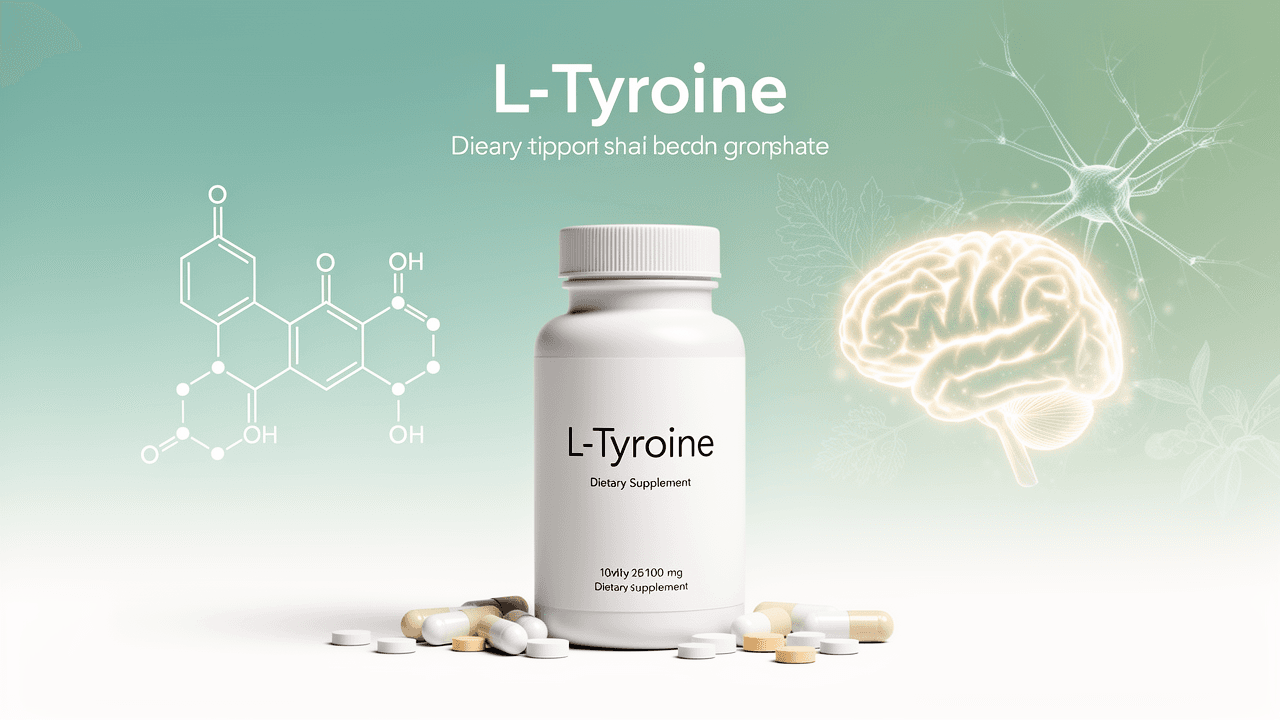
L‑tyrosine is a non‑essential amino acid that the body can produce from phenylalanine and also obtain from protein‑rich foods. It is a critical precursor for several key molecules:
- Catecholamine neurotransmitters: dopamine, norepinephrine, and epinephrine
- Thyroid hormones: thyroxine (T4) and triiodothyronine (T3)
- Melanin: the pigment in skin, hair, and eyes
Because of its role in neurotransmitter and hormone synthesis, L‑tyrosine is often used as a nootropic to support mental performance under stress, fatigue, or high cognitive demand.
How L‑Tyrosine Works in the Body
Catecholamine synthesis
- Tyrosine → L‑DOPA → Dopamine → Norepinephrine → Epinephrine
- The rate‑limiting enzyme, tyrosine hydroxylase, converts tyrosine to L‑DOPA. Under high stress or intense cognitive demand, catecholamine stores can be depleted. Extra tyrosine may help maintain synthesis when demand is high.
Stress response modulation
- Norepinephrine and epinephrine are central to the fight‑or‑flight response. By supporting their synthesis, tyrosine may help preserve cognitive performance during acute stressors such as cold, sleep deprivation, or multitasking.
Thyroid hormone production
- Tyrosine combines with iodine in the thyroid gland to form T4 and T3. While standard doses of supplemental tyrosine typically have modest impact on thyroid function in healthy people, it is biochemically essential for hormone synthesis.
Crossing the blood–brain barrier
- L‑tyrosine uses large neutral amino acid (LNAA) transporters to enter the brain, competing with other amino acids (e.g., tryptophan, phenylalanine, branched‑chain amino acids). Taken on an empty stomach, more tyrosine may reach the brain.
Overall, L‑tyrosine is best understood as a stress‑buffering amino acid that may help sustain mental performance when catecholamine systems are under pressure.
2. Key Benefits of L‑Tyrosine
2.1 Supports Cognitive Performance Under Acute Stress
The most consistent evidence for L‑tyrosine is its ability to help maintain working memory, attention, and task performance in stressful or cognitively demanding situations, such as:
- Cold exposure
- Sleep deprivation
- Multitasking or information overload
- Military or high‑pressure operational environments
2.2 May Improve Working Memory and Cognitive Flexibility
Several studies show that tyrosine can support working memory, mental flexibility, and problem‑solving, especially when tasks are challenging or when baseline performance is strained.
2.3 Potential Mood and Motivation Support
Because tyrosine is a precursor to dopamine and norepinephrine, it is sometimes used to support motivation, drive, and mood, particularly in people experiencing stress‑related fatigue. However, evidence for mood enhancement in non‑stressed, healthy individuals is mixed and not as strong as the stress‑performance data.
2.4 Possible Support in Sleep Deprivation and Fatigue
In sleep‑deprived or fatigued states, catecholamine signaling may be impaired. Some human studies suggest tyrosine can partially counteract performance declines from lack of sleep, though it does not replace sleep.
3. Research Findings
Below are key human studies illustrating what L‑tyrosine can and cannot do.
3.1 Cognitive Performance Under Cold and Stress
Banderet & Lieberman, 1989 (Military cold‑stress study)
- Design: Double‑blind, placebo‑controlled
- Participants: 21 healthy U.S. Marines
- Intervention: Single dose of L‑tyrosine (100 mg/kg; ~7 g for a 70‑kg person) vs placebo
- Conditions: Exposure to cold and high altitude, plus cognitive testing
- Findings: Tyrosine significantly improved memory and tracking performance compared with placebo under cold‑induced stress.
- Implication: Tyrosine may help preserve cognitive function in harsh environmental conditions.
Shurtleff et al., 1994 (Cognitive performance study)
- Design: Double‑blind, placebo‑controlled, crossover
- Participants: 20 healthy adults
- Intervention: 150 mg/kg L‑tyrosine (~10.5 g for 70‑kg) vs placebo, given 1 hour before testing
- Tasks: Working memory and tracking tasks under stress
- Findings: Tyrosine improved working memory and information processing compared with placebo during stressful testing conditions.
- Note: Doses in early military studies are higher than typical supplement use.
3.2 Multitasking and Information Overload
Thomas et al., 1999 / Deijen & colleagues (multitasking settings)
Several small studies (sample sizes ~16–30) have evaluated tyrosine in multitasking or information‑overload environments.
- Designs: Mostly double‑blind, placebo‑controlled, crossover
- Doses: 100–150 mg/kg (7–10.5 g for a 70‑kg adult) taken 60–90 minutes before tasks
- Findings:
- Improved working memory, vigilance, and reaction time under high cognitive load
- Benefits were most evident when tasks were demanding; minimal effects in easy tasks
- Implication: Tyrosine’s nootropic effects appear state‑dependent, becoming more relevant when the brain is under heavy demand.
3.3 Sleep Deprivation and Fatigue
Neri et al., 1995 (Sleep deprivation, military aviation)
- Design: Randomized, double‑blind, placebo‑controlled
- Participants: 20 military personnel
- Intervention: 150 mg/kg L‑tyrosine (~10.5 g for 70‑kg) vs placebo
- Condition: One night of sleep deprivation with cognitive and vigilance testing
- Findings: Tyrosine significantly improved vigilance and tracking for about 3 hours compared with placebo, partially offsetting performance decline from sleep loss.
- Important: Tyrosine did not restore performance to fully rested levels and is not a substitute for adequate sleep.
3.4 Cognitive Flexibility and Working Memory in Healthy Adults
More recent work has used lower, more practical doses and focused on cognitive flexibility.
Colzato et al., 2013 (Cognitive flexibility)
- Design: Double‑blind, placebo‑controlled, crossover
- Participants: 22 healthy young adults
- Intervention: 2 g L‑tyrosine in orange juice vs placebo
- Timing: 60 minutes before cognitive testing
- Tasks: Task‑switching paradigms measuring cognitive flexibility
- Findings: Tyrosine improved cognitive flexibility, reducing switch costs (the mental effort needed to shift between tasks).
- Interpretation: Authors suggested that boosting dopamine synthesis via tyrosine may optimize cognitive control processes when they are challenged.
Jongkees et al., 2015 (Working memory)
- Design: Double‑blind, placebo‑controlled, crossover
- Participants: 22 healthy adults
- Intervention: 2 g L‑tyrosine vs placebo
- Tasks: N‑back working memory tasks
- Findings: Tyrosine improved performance on more difficult working memory tasks, but not on easier ones.
- Implication: Again suggests benefits under higher cognitive load rather than general enhancement.
3.5 Mood and Depression
Evidence for tyrosine as an antidepressant is limited and mixed.
Gelenberg et al., 1990 (Tyrosine vs standard antidepressants)
- Design: Randomized, double‑blind, parallel‑group
- Participants: 65 patients with major depressive disorder
- Interventions:
- L‑tyrosine 100 mg/kg/day (divided doses)
- Imipramine 150 mg/day
- Placebo
- Duration: 4 weeks
- Findings:
- Imipramine showed clear antidepressant effects.
- Tyrosine did not significantly outperform placebo overall.
- Conclusion: Tyrosine alone is not a robust antidepressant for major depression, though it may have niche roles in stress‑related low mood or in individuals with specific catecholamine‑related vulnerabilities.
3.6 Thyroid Function
In healthy individuals with adequate iodine intake, typical tyrosine supplementation has modest impact on thyroid hormones. Most thyroid‑related data are biochemical or from animal/older human studies; robust modern trials are lacking.
- Some small studies and case reports suggest tyrosine may support thyroid hormone production when combined with iodine in subclinical hypothyroidism, but evidence is insufficient to recommend it as a primary thyroid treatment.
- People with thyroid disorders should not self‑treat with tyrosine without medical supervision due to the risk of over‑ or under‑treatment.
4. Best Sources & Dosage – Forms, Dosing, Timing, Safety
4.1 Dietary Sources of Tyrosine
Tyrosine is abundant in protein‑rich foods:
- Poultry (chicken, turkey)
- Fish and seafood
- Dairy (cheese, yogurt, milk)
- Eggs
- Soy products (tofu, tempeh)
- Legumes (beans, lentils)
- Nuts and seeds (pumpkin seeds, almonds, sesame)
A typical mixed diet provides 1–5 g of tyrosine per day from protein. Supplementation is primarily considered for acute performance situations rather than correcting a frank deficiency in most healthy people.
4.2 Supplemental Forms
L‑Tyrosine (free form):
- Most common form; relatively inexpensive.
- Moderately soluble; large doses can cause mild GI discomfort in some people.
N‑Acetyl‑L‑Tyrosine (NALT):
- An acetylated derivative marketed as more bioavailable.
- Human evidence is limited; some data suggest it may convert to tyrosine less efficiently than plain L‑tyrosine.
- In practice, standard L‑tyrosine is better supported by human research.
For nootropic purposes, plain L‑tyrosine is usually preferred.
4.3 Evidence‑Based Dosage Recommendations
Doses in early military studies were very high (100–150 mg/kg). Modern nootropic practice typically uses lower, more practical doses.
General Principles
- Take on an empty stomach or away from protein‑rich meals to reduce competition with other amino acids for absorption and brain transport.
- Start with the lowest effective dose and titrate up as needed.
- Avoid chronic high‑dose use without medical supervision.
4.3.1 For Acute Stress or High‑Demand Situations
Use cases: Exams, intense workdays, public speaking, acute stress, demanding training.
- Typical dose range (adult):
- 500–2,000 mg (0.5–2 g) taken 30–60 minutes before the expected stressor.
- Higher, research‑like doses:
- 100–150 mg/kg (7–10.5 g for a 70‑kg adult) have been used in military studies, but these are not recommended for routine use due to limited long‑term safety data and higher risk of side effects.
Practical approach:
- Start at 500–1,000 mg on an empty stomach.
- If well tolerated and more effect is desired, increase in 500‑mg steps up to 2,000 mg per acute dose.
4.3.2 For Cognitive Support / Daily Nootropic Use
Evidence for daily use in non‑stressed conditions is limited; most benefits are seen under acute stress. If used regularly:
- Typical daily range:
- 500–1,500 mg per day, often split into 1–2 doses.
- Consider cycling (e.g., 5 days on, 2 days off; or only on high‑demand days) to reduce the risk of tolerance or dependence on supplementation.
4.3.3 For Sleep Deprivation / Shift Work (Short‑Term)
- Based on military data, tyrosine can help temporarily support performance when sleep‑deprived.
- A conservative approach for civilians:
- 1,000–2,000 mg taken 60 minutes before a critical performance window (e.g., night shift, long drive).
- Do not use tyrosine to repeatedly push through chronic sleep deprivation; prioritize sleep and address underlying issues.
4.3.4 Weight‑Based Guideline (Upper Bound for Short‑Term Use)
For short‑term, supervised scenarios, some practitioners reference research doses:
- Up to ~100 mg/kg body weight as a single or divided dose for acute stress (e.g., 7 g for 70‑kg adult).
- Such high doses should be medical‑ or research‑supervised only and are not recommended for typical consumer use.
4.4 Safety, Side Effects, and Interactions
4.4.1 Common Side Effects
At typical nootropic doses (500–2,000 mg), L‑tyrosine is generally well tolerated in healthy adults. Possible side effects include:
- Nausea or stomach discomfort
- Heartburn
- Headache
- Restlessness or agitation
- Insomnia (especially if taken late in the day)
These are usually mild and dose‑dependent. Taking with a small amount of carbohydrate (but not a high‑protein meal) may improve GI tolerance.
4.4.2 Less Common or Theoretical Risks
- Blood pressure changes: Because tyrosine supports catecholamine synthesis, there is a theoretical risk of elevated blood pressure or heart rate, especially in people with hypertension or cardiovascular disease.
- Thyroid effects: High or chronic doses might affect thyroid hormone production in susceptible individuals, though robust evidence is limited.
- Neurochemical imbalance: Excessive catecholamine support may, in theory, worsen anxiety, agitation, or certain psychiatric conditions.
4.4.3 Drug and Supplement Interactions
1. MAO Inhibitors (MAOIs)
Examples: Phenelzine, tranylcypromine, selegiline (at higher, non‑selective doses).
- MAOIs inhibit the breakdown of catecholamines. Combined with increased precursors like tyrosine, there is a theoretical risk of hypertensive crisis or excessive catecholamine activity.
- Avoid tyrosine supplements if you are taking MAOIs unless specifically supervised by a physician.
2. Stimulant Medications
Examples: Amphetamine salts (Adderall), methylphenidate (Ritalin, Concerta), lisdexamfetamine, modafinil/armodafinil (to a lesser extent).
- These drugs increase catecholamine signaling. Tyrosine may additively increase stimulation, potentially causing jitteriness, anxiety, or elevated blood pressure/heart rate.
- If combined, this should be done only under medical supervision and starting with very low tyrosine doses.
3. Thyroid Medications
Examples: Levothyroxine (T4), liothyronine (T3), desiccated thyroid.
- Tyrosine is a substrate for thyroid hormone synthesis. In theory, high doses might potentiate thyroid hormone effects, particularly in hyperthyroid or over‑treated individuals.
- People on thyroid medication should consult their endocrinologist before using tyrosine supplements.
4. Levodopa (L‑DOPA) for Parkinson’s Disease
- Tyrosine and L‑DOPA share metabolic pathways and may compete for transport across the gut and blood–brain barrier.
- Taking high‑dose tyrosine with L‑DOPA could potentially alter L‑DOPA’s effectiveness; spacing them apart is generally advised if used at all.
5. Other Stimulant Supplements
Examples: High‑dose caffeine, synephrine, yohimbine, pre‑workout formulas.
- Combined use may amplify stimulation, anxiety, or cardiovascular side effects.
- Use caution; start with low doses and avoid stacking multiple stimulant‑like agents.
4.4.4 Special Populations and Contraindications
Phenylketonuria (PKU)
- People with PKU cannot properly metabolize phenylalanine, which is normally converted to tyrosine. They are often prescribed medical foods containing tyrosine under strict supervision.
- Do not self‑supplement with tyrosine in PKU; management must be overseen by a metabolic specialist.
Hyperthyroidism or Graves’ Disease
- Because tyrosine is a thyroid hormone precursor, there is a theoretical risk of worsening hyperthyroidism.
- People with overactive thyroid should avoid tyrosine supplements unless specifically cleared by their endocrinologist.
Melanoma History
- Melanin is synthesized from tyrosine. While clear evidence is lacking, some clinicians recommend caution with tyrosine in people with a history of melanoma due to theoretical concerns about pigment cell activity.
Pregnancy and Breastfeeding
- Robust safety data for supplemental tyrosine in pregnancy and lactation are lacking.
- Because of its neurochemical and hormonal roles, pregnant or breastfeeding individuals should avoid high‑dose tyrosine supplementation unless directed by a physician.
Children and Adolescents
- Safety data for nootropic‑style dosing in minors are limited.
- Tyrosine should not be used as a performance enhancer in children or teens without pediatric guidance.
5. Who Should and Shouldn’t Use L‑Tyrosine
5.1 Who May Benefit from L‑Tyrosine
1. Healthy Adults Facing Acute Cognitive Stress
Examples:
- Students during exams
- Professionals with high‑stakes presentations or deadlines
- Military, first responders, or shift workers facing acute stress
Potential benefits:
- Better maintenance of working memory, vigilance, and reaction time under pressure
- Slight improvement in cognitive flexibility and multitasking in demanding tasks
2. Individuals with High Mental Workload or Information Overload
- Programmers, traders, air‑traffic controllers, and others in cognitively intense jobs may find tyrosine helpful acutely during particularly demanding days.
3. Short‑Term Support During Sleep Deprivation (With Caution)
- People who must occasionally perform under sleep restriction (e.g., medical staff on call, emergency travel) may use tyrosine to temporarily bolster performance, while recognizing it does not replace sleep.
5.2 Who Should Use Caution or Avoid L‑Tyrosine
You should not use or should use only under medical supervision if you:
- Take MAOIs or have been prescribed older monoamine oxidase inhibitor antidepressants.
- Use stimulant medications (e.g., Adderall, Ritalin) or multiple stimulant supplements.
- Have uncontrolled hypertension, arrhythmias, or significant cardiovascular disease.
- Have hyperthyroidism, Graves’ disease, or are on thyroid hormone replacement.
- Have a history of melanoma, unless cleared by your oncologist/dermatologist.
- Are pregnant or breastfeeding.
- Are a child or adolescent without pediatric supervision.
You should consult a healthcare professional before using tyrosine if you:
- Have any psychiatric condition (bipolar disorder, severe anxiety, schizophrenia). Dopamine‑modulating interventions can sometimes destabilize mood or psychosis.
- Have kidney disease, since amino acid handling may be impaired.
- Are planning to combine tyrosine with other nootropics or stimulants.
6. Practical Takeaways
- L‑Tyrosine is a well‑researched amino acid that supports the synthesis of dopamine, norepinephrine, epinephrine, and thyroid hormones.
- The strongest evidence supports its use for maintaining cognitive performance under acute stress, high cognitive load, or short‑term sleep deprivation.
- Typical nootropic doses are 500–2,000 mg, taken on an empty stomach 30–60 minutes before a demanding task.
- High research doses (100–150 mg/kg) are not necessary for most users and should be reserved for supervised contexts.
- Tyrosine is not a stand‑alone antidepressant and does not replace sleep, treatment for thyroid disease, or medical management of psychiatric or cardiovascular conditions.
- Safety is generally good in healthy adults at moderate doses, but important interactions exist with MAOIs, stimulants, thyroid medications, and certain health conditions.
Used thoughtfully and in the right context, L‑tyrosine can be a targeted tool for supporting mental performance when your catecholamine systems are under strain.