1. Understanding Lion’s Mane – What It Is and How It Works
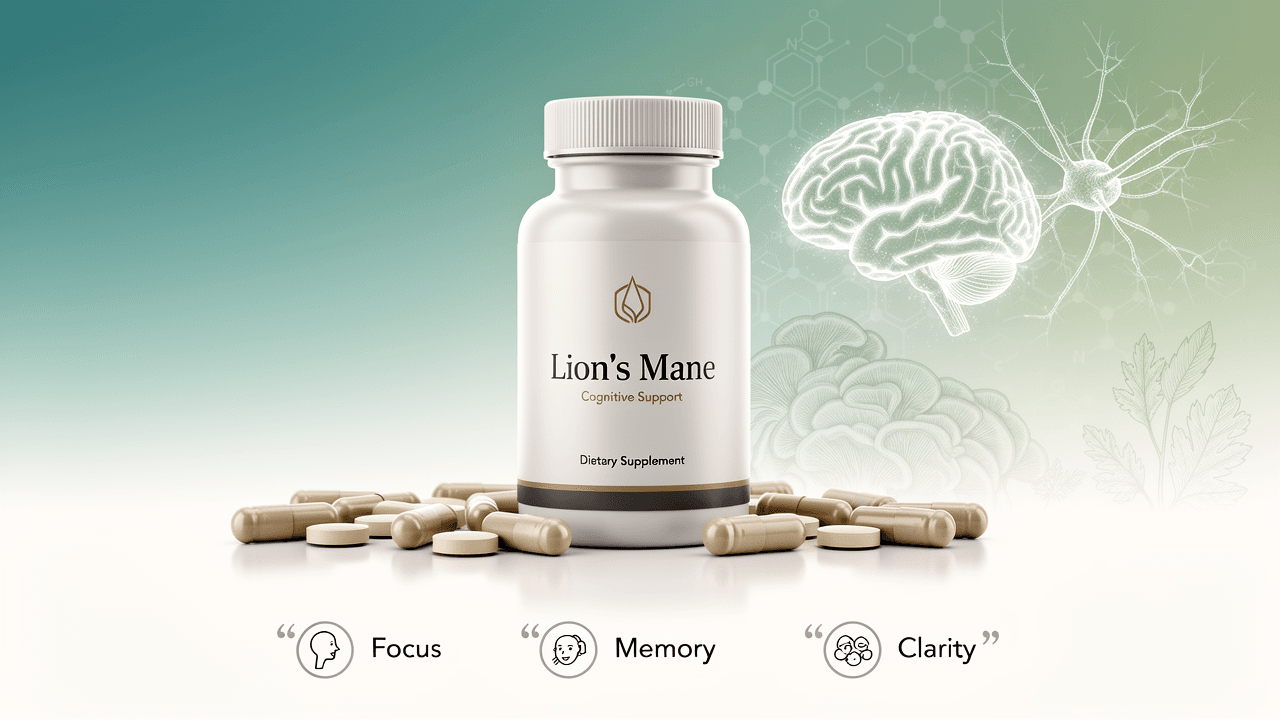
Lion’s Mane (Hericium erinaceus) is a medicinal and culinary mushroom traditionally used in East Asian medicine. It is now widely marketed as a nootropic and general health supplement.
What Lion’s Mane Contains
Key bioactive compounds include:
- Hericenones (mainly in the fruiting body)
- Erinacines (mainly in the mycelium)
- Polysaccharides (β-glucans)
- Phenolic compounds and antioxidants
These compounds are believed to underlie its neurotrophic, neuroprotective, and immunomodulatory effects.
How Lion’s Mane May Work in the Body
Nerve Growth Factor (NGF) & BDNF Modulation
- In vitro and animal studies show hericenones and erinacines can stimulate synthesis of nerve growth factor (NGF) and may influence brain-derived neurotrophic factor (BDNF).
- NGF and BDNF are critical for neuron survival, synaptic plasticity, and neurogenesis.
Neuroprotection & Anti‑inflammatory Effects
- Animal models suggest Lion’s Mane reduces markers of neuroinflammation and oxidative stress in the brain, potentially protecting neurons from damage.
- β-glucans and phenolic compounds show antioxidant and anti‑inflammatory activity.
Modulation of Neurotransmitters
- Rodent studies report changes in levels of serotonin, dopamine, and norepinephrine, which may underlie observed antidepressant- and anxiolytic-like effects.
Gut–Brain Axis Effects
- Polysaccharides may act as prebiotics, altering gut microbiota composition.
- Changes in gut bacteria can influence inflammation, mood, and cognition via the gut–brain axis, though human data are still limited.
Immune and Metabolic Effects
- β-glucans can modulate innate and adaptive immunity.
- Some human and animal data suggest improvements in lipid profiles and blood glucose, which indirectly support brain health.
Overall, the most distinctive proposed mechanism is NGF/BDNF upregulation and neuroprotection, but most mechanistic evidence comes from cell and animal studies, not yet conclusively proven in humans.
2. Key Benefits of Lion’s Mane
1. Cognitive Support (Memory, Attention, Mild Cognitive Impairment)
Human trials suggest Lion’s Mane may modestly improve cognitive function, particularly in older adults with mild cognitive impairment (MCI). Benefits appear to require continuous use and may diminish after stopping.
2. Mood and Anxiety Support
Preliminary human and animal research indicates potential anxiolytic (anti‑anxiety) and antidepressant-like effects, likely via neurotrophic and anti‑inflammatory pathways and possible effects on monoamine neurotransmitters.
3. Nerve and Neurological Health
Lion’s Mane shows promising neuroregenerative effects in animal models, including support for peripheral nerve repair and protection against neurodegenerative processes. Human evidence is still very limited but biologically plausible.
4. Metabolic and General Health Support (Preliminary)
Some small human trials and animal studies suggest benefits for:
- Blood lipid profiles (cholesterol, triglycerides)
- Blood sugar control
- Inflammatory markers
These effects may indirectly support brain health by improving vascular and metabolic status.
3. Research Findings – What the Studies Show
3.1 Cognitive Function and Mild Cognitive Impairment
Study 1: Older Adults with MCI
- Design: Randomized, double‑blind, placebo‑controlled trial
- Participants: 30 Japanese adults aged 50–80 years with mild cognitive impairment
- Intervention: 3 g/day of Lion’s Mane fruiting body powder (4 × 250 mg tablets, 3 times daily) vs placebo
- Duration: 16 weeks treatment + 4 weeks follow‑up
- Findings:
- The Lion’s Mane group showed significant improvements in cognitive function scores (using a standardized cognitive function scale) at weeks 8, 12, and 16 compared with placebo.
- Four weeks after discontinuation, cognitive scores in the Lion’s Mane group declined toward baseline, suggesting benefits are dependent on ongoing use.
- Limitations: Small sample size, single ethnicity, MCI population only, no biomarker data (e.g., NGF levels).
Implication: Lion’s Mane may modestly improve cognitive performance in older adults with MCI when taken consistently over several months.
3.2 Mood, Anxiety, and Menopausal Symptoms
Study 2: Depressive and Anxious Symptoms in Overweight/Obese Adults
- Design: Randomized, double‑blind, placebo‑controlled pilot trial
- Participants: 77 overweight or obese adults
- Intervention: Lion’s Mane mushroom supplement (dose and exact composition varied by product, often standardized extract) vs placebo
- Duration: 8 weeks
- Findings:
- Participants taking Lion’s Mane showed reductions in depression and anxiety scores compared with placebo in some analyses.
- Some metabolic parameters also improved modestly.
- Limitations: Heterogeneous population, modest effect sizes, and limited detail on extract standardization.
Study 3: Menopausal Women – Anxiety and Sleep
- Design: Randomized, double‑blind, placebo‑controlled
- Participants: 30 women in perimenopause/menopause
- Intervention: Lion’s Mane cookies (containing powdered fruiting body) vs placebo cookies
- Duration: 4 weeks
- Findings:
- Lion’s Mane group showed significant reductions in anxiety and depressive symptoms and some improvement in sleep quality compared with placebo.
- Limitations: Very small sample, short duration, functional food format rather than standardized extract.
Implication: Lion’s Mane may support mood and anxiety reduction, but current human evidence is preliminary and based on small trials.
3.3 Nerve Regeneration and Neurodegeneration (Mostly Animal Data)
Peripheral Nerve Injury Models
- Rodent studies using Lion’s Mane extracts (often containing erinacines) have shown:
- Enhanced nerve regeneration and faster functional recovery after peripheral nerve crush or transection.
- Increased expression of NGF and other neurotrophic factors in nerve tissue.
- Doses in animal studies typically range from 10–100 mg/kg of extract, which does not translate directly to human dosing.
Neurodegenerative Disease Models
- In mouse models of Alzheimer’s disease:
- Lion’s Mane extracts improved spatial memory and learning tasks.
- Reduced amyloid‑β plaque deposition and neuroinflammation were observed in some studies.
- In models of Parkinson’s disease, extracts have shown neuroprotective effects on dopaminergic neurons and motor function.
Human Data:
- To date, no large, well‑controlled human trials have conclusively shown disease‑modifying effects in Alzheimer’s or Parkinson’s disease.
- Evidence is promising but preclinical; Lion’s Mane should not be considered a stand‑alone treatment for neurodegenerative disorders.
3.4 Metabolic and General Health Outcomes
Lipid and Glucose Metabolism
- Small human trials and animal studies report:
- Decreases in total cholesterol, LDL cholesterol, and triglycerides with Lion’s Mane supplementation.
- Modest improvements in blood glucose and insulin sensitivity in some models.
- Mechanisms may involve modulation of gut microbiota, improved insulin signaling, and anti‑inflammatory effects.
Immune Function and Inflammation
- Animal and in vitro data suggest increased activity of macrophages, NK cells, and modulation of cytokine production.
- Human evidence is limited and not yet robust enough to support specific immune claims.
4. Best Sources & Dosage – Forms, Dosing, Timing, Safety
4.1 Supplement Forms
Fruiting Body Powder or Extract
- Derived from the visible mushroom.
- Rich in hericenones and polysaccharides.
- Often sold as powder, capsules, or tablets.
Mycelium-Based Extracts (Often on Grain Substrate)
- Derived from the fungal mycelium.
- May contain erinacines, which show strong NGF‑inducing activity in animal studies.
- Quality and active compound content can vary widely.
Dual Extracts (Water + Alcohol)
- Aim to capture both water‑soluble polysaccharides and alcohol‑soluble diterpenoids (hericenones/erinacines).
- Often marketed as higher‑potency nootropic extracts.
Standardized Extracts
- Some products are standardized to a specific percentage of polysaccharides (e.g., 20–40% β‑glucans).
- Very few are standardized specifically to hericenones or erinacines, but these would be ideal for consistent nootropic use.
Functional Foods
- Lion’s Mane coffee, teas, and snack bars.
- May provide lower, less consistent doses but can be useful for mild, daily support.
4.2 Evidence‑Informed Dosage Ranges
Human studies have used a variety of doses. The following ranges are general guidelines based on available research and common practice, not medical prescriptions.
For General Cognitive Support (Healthy Adults)
- Typical dose: 500–1,500 mg/day of a concentrated extract (often standardized to polysaccharides) OR 1–3 g/day of dried fruiting body powder.
- Regimen: Once or divided twice daily, with or without food (many prefer with food to reduce GI upset).
- Onset: Benefits, if any, are usually reported after 4–8 weeks of continuous use.
For Mild Cognitive Impairment (as in Research)
- Study-based dose: 3 g/day of fruiting body powder, divided into 3 doses (as in the 16‑week Japanese MCI study).
- Use: Only under medical supervision in older adults with cognitive concerns.
For Mood and Anxiety Support
- Human trials have used roughly 1–3 g/day of powdered fruiting body or equivalent in functional foods.
- A pragmatic approach:
- 1,000–2,000 mg/day of extract or 1–3 g/day of powder, taken daily for at least 4–8 weeks to assess response.
For Nerve Support (Adjunctive, Experimental)
- No standardized human dose exists.
- Practitioners sometimes use 1,000–3,000 mg/day of extract (or 2–5 g/day of powder) in divided doses as an adjunct to conventional care for peripheral nerve injury or neuropathy.
- This should be done only under medical supervision, especially when combined with other treatments.
4.3 Timing and Stacking Considerations
- Timing: Morning or early afternoon use is common. Some people report mild stimulation; others find it calming. Adjust timing based on personal response.
- With food: Often better tolerated with meals, especially at higher doses.
- Stacks: Commonly combined with:
- Bacopa monnieri or Ginkgo biloba for cognitive support.
- L‑theanine and caffeine for focus.
- Omega‑3 fatty acids for overall brain health.
- When stacking, start low with each component and increase gradually to monitor for side effects or interactions.
4.4 Safety, Side Effects, and Interactions
General Safety Profile
- Lion’s Mane is generally considered well tolerated in healthy adults at typical supplemental doses.
- Human trials up to 3 g/day of fruiting body powder for 16 weeks have not reported serious adverse events.
Common Side Effects (Usually Mild)
- Digestive issues: Bloating, soft stools, or mild nausea, especially at higher doses or when starting.
- Allergic reactions: Rare cases of skin rash, itching, or respiratory symptoms have been reported, likely in individuals with mushroom allergies.
If you experience persistent GI distress, rash, or breathing difficulty, discontinue use and seek medical care.
Potential Drug and Condition Interactions
Evidence is limited, but based on mechanisms and case reports, consider the following:
Anticoagulants / Antiplatelet Drugs
- Some mushroom extracts have mild antiplatelet or anticoagulant effects.
- Caution with warfarin, DOACs (e.g., apixaban, rivaroxaban), aspirin, clopidogrel, and high‑dose fish oil.
- Monitor for unusual bruising or bleeding; discuss with a clinician before combining.
Antidiabetic Medications
- Preliminary data suggest Lion’s Mane may modestly lower blood glucose.
- Caution when combined with insulin or oral hypoglycemics (metformin, sulfonylureas, etc.) due to potential additive effects.
- Monitor blood glucose more frequently if used together.
Immunomodulatory or Immunosuppressive Drugs
- As a β‑glucan–containing mushroom, Lion’s Mane may modulate immune activity.
- Use caution if taking immunosuppressants (e.g., post‑transplant, autoimmune biologics) or if you have autoimmune disease; consult your specialist.
Psychiatric Medications
- Due to potential effects on mood and neurotransmitters, there is a theoretical interaction with SSRIs, SNRIs, benzodiazepines, antipsychotics, and mood stabilizers.
- No major interactions are well documented, but use under medical supervision if you are on psychiatric medication.
Allergy Risk in Mushroom‑Sensitive Individuals
- People with known allergies to mushrooms or molds may have a higher risk of allergic reactions.
- Start with very low doses or avoid entirely if you have had serious fungal/mushroom reactions.
Long‑Term Safety
- Long‑term human data (beyond ~4–6 months) are sparse.
- No major toxicity has emerged in available studies, but the absence of evidence is not evidence of absence.
- For long‑term use, consider periodic breaks (e.g., 5 days on / 2 days off, or 3 months on / 1 month off) and regular check‑ins with a healthcare provider.
5. Who Should and Shouldn’t Use Lion’s Mane
5.1 Who May Consider Lion’s Mane
Lion’s Mane may be reasonable to consider (with appropriate medical guidance) for:
Healthy Adults Seeking Cognitive Support
- Students, professionals, or older adults looking for mild support for focus, memory, or mental clarity.
- Best combined with foundational habits: sleep, exercise, nutrition, and stress management.
Older Adults with Mild Cognitive Concerns
- Individuals with subjective memory complaints or diagnosed mild cognitive impairment, under supervision of a clinician.
- Should be viewed as an adjunct, not a replacement for medical evaluation or treatment.
Adults with Mild Anxiety or Low Mood (Non‑Severe)
- Those with mild, subclinical symptoms may consider Lion’s Mane as part of a broader plan including therapy, lifestyle changes, and, if indicated, medication.
- Anyone with moderate to severe depression, suicidal thoughts, or significant anxiety should seek professional help first.
Individuals Interested in Long‑Term Brain Health
- Those with family histories of neurodegenerative disease may use Lion’s Mane as part of a preventive lifestyle strategy.
- Evidence for disease prevention is not yet established; this is a risk‑reduction adjunct, not a guarantee.
5.2 Who Should Use Caution or Avoid Lion’s Mane
Pregnant or Breastfeeding Individuals
- There is insufficient safety data.
- Avoid use unless specifically recommended by a knowledgeable clinician.
Children and Adolescents
- Safety and efficacy have not been established.
- Avoid routine use outside of clinical research or specialist supervision.
People with Mushroom Allergies or Severe Asthma Triggered by Fungi
- High risk of allergic reactions.
- Generally advised to avoid Lion’s Mane supplements.
Individuals on Anticoagulants, Antiplatelets, or Antidiabetic Medications
- Use only with medical supervision and closer monitoring of INR (for warfarin) or blood glucose as appropriate.
Patients with Autoimmune Conditions or on Immunosuppressive Therapy
- Because of potential immunomodulatory effects, discuss with your rheumatologist, neurologist, or transplant team before use.
People with Active Serious Psychiatric Illness
- Major depression, bipolar disorder, psychosis, or severe anxiety disorders should be managed by a mental health professional.
- Any supplement that affects mood or cognition should be coordinated with your treatment team.
Practical Takeaways
- Lion’s Mane is a promising nootropic and neurotrophic mushroom with early human evidence for cognitive and mood support and stronger animal evidence for nerve regeneration and neuroprotection.
- Typical supplemental doses range from 500–1,500 mg/day of extract or 1–3 g/day of dried powder, with higher doses (up to 3 g/day) used in research on MCI.
- Benefits, when present, usually emerge over weeks to months and tend to fade after discontinuation.
- Side effects are usually mild (GI upset, rare allergy), but interactions with anticoagulants, antidiabetics, immunosuppressants, and psychiatric medications warrant caution.
- Lion’s Mane should be seen as a supportive adjunct to, not a replacement for, evidence‑based medical care, especially in neurodegenerative or psychiatric conditions.
Always consult a qualified healthcare professional before starting Lion’s Mane, particularly if you have chronic medical conditions, take prescription medications, are pregnant or breastfeeding, or are considering it for significant cognitive or mood symptoms.