1. Understanding Lion’s Mane – What It Is and How It Works
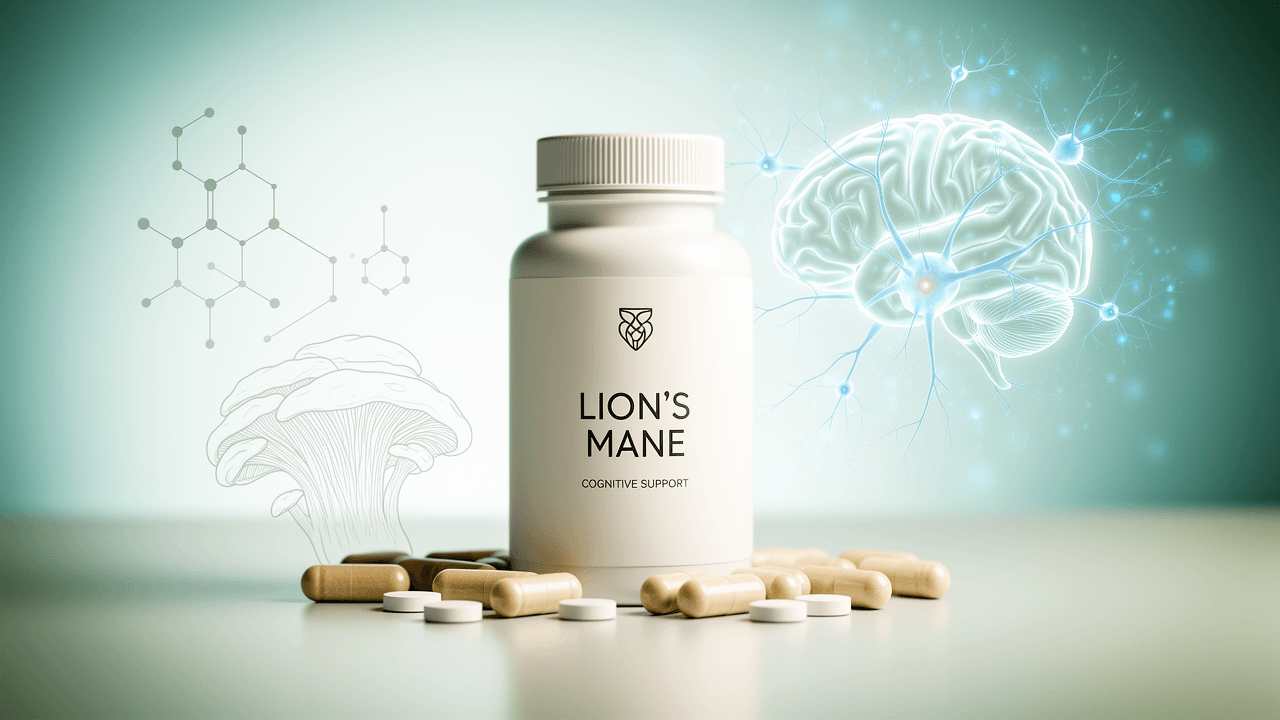
Lion’s Mane (Hericium erinaceus) is a medicinal and culinary mushroom traditionally used in East Asian medicine. As a dietary supplement, it is marketed primarily as a nootropic (cognitive enhancer) and neuro-supportive compound.
1.1 What Lion’s Mane Is
- Species: Hericium erinaceus, a tooth fungus with long white spines resembling a lion’s mane
- Parts used: Fruit body (the visible mushroom), mycelium (the root-like network), or both
- Supplement forms: Capsules, tablets, powders, liquid extracts, and functional beverages
Lion’s Mane contains several bioactive compounds, notably:
- Hericenones – mainly from the fruiting body
- Erinacines – mainly from the mycelium
- Polysaccharides (β-glucans), sterols, and phenolic compounds
These compounds are thought to underlie its neurotrophic, anti-inflammatory, and antioxidant effects.
1.2 How Lion’s Mane Works in the Body
Current evidence suggests several primary mechanisms:
1.2.1 Stimulation of Nerve Growth Factor (NGF) and BDNF
In cell and animal studies:
- Hericenones and erinacines stimulate Nerve Growth Factor (NGF) synthesis in the brain.
- Some extracts may also influence Brain-Derived Neurotrophic Factor (BDNF).
NGF and BDNF are neurotrophins involved in:
- Neuron survival and differentiation
- Synaptic plasticity (the brain’s ability to adapt and form new connections)
- Learning and memory processes
This NGF/BDNF modulation is a key rationale for Lion’s Mane as a nootropic and neuroprotective supplement.
1.2.2 Neuroprotection and Anti-Inflammatory Effects
Preclinical studies show that Lion’s Mane components:
- Reduce oxidative stress in neural tissue
- Decrease pro-inflammatory cytokines in the brain
- May limit amyloid-β–induced neurotoxicity (relevant to Alzheimer’s models)
These effects may help protect neurons from age-related or disease-related damage.
1.2.3 Modulation of Gut–Brain Axis
Lion’s Mane polysaccharides can act as prebiotics, influencing gut microbiota composition in animal models. Because the gut–brain axis affects mood and cognition, microbiome modulation is another possible pathway for its cognitive and mood effects.
1.2.4 Nerve Regeneration and Myelination
In rodent models, Lion’s Mane extracts:
- Promote nerve regeneration after peripheral nerve injury
- Support myelination (the insulating layer around nerves)
This is why it is sometimes used in protocols aimed at nerve repair, though human evidence is still limited.
2. Key Benefits of Lion’s Mane
2.1 Cognitive Function and Memory
Human and animal data suggest Lion’s Mane may:
- Support mild cognitive impairment (MCI)
- Improve aspects of memory and focus
- Enhance learning in some models
The most consistent human data are in older adults with MCI; data in healthy young adults are more limited and mixed.
2.2 Mood, Anxiety, and Psychological Well-Being
Several small human trials indicate Lion’s Mane may:
- Reduce anxiety and depressive symptoms
- Improve subjective well-being and sleep quality in some individuals
Mechanisms may involve neurotrophic support, anti-inflammatory effects, and gut–brain modulation.
2.3 Nerve Health and Neurological Support
Preclinical studies show:
- Enhanced peripheral nerve regeneration after injury
- Protection against neurodegenerative processes in animal models of Alzheimer’s and Parkinson’s disease
Human data are preliminary but suggest possible benefit in conditions involving nerve damage.
2.4 Metabolic and General Health Effects (Emerging)
Early evidence suggests Lion’s Mane may:
- Improve lipid profiles and blood glucose in animal models and small human studies
- Provide immune-modulating and anti-inflammatory effects via β-glucans
These findings are promising but not yet strong enough to recommend Lion’s Mane as a primary treatment for metabolic disorders.
3. Research Findings on Lion’s Mane
Below are key human and relevant animal studies, with emphasis on design, sample size, and outcomes.
3.1 Cognitive Function and Mild Cognitive Impairment (MCI)
Study 1 – Older adults with MCI
- Design: Randomized, double-blind, placebo-controlled
- Sample: 30 Japanese adults aged 50–80 with mild cognitive impairment
- Intervention: 3 g/day Lion’s Mane (4 × 250 mg tablets, 3 times daily) vs placebo
- Duration: 16 weeks, followed by 4-week washout
- Findings:
- The Lion’s Mane group showed significant improvement on cognitive function scales (e.g., Revised Hasegawa Dementia Scale) compared with placebo after 16 weeks.
- Cognitive scores declined after discontinuation during the 4-week follow-up, suggesting ongoing intake may be needed to maintain benefits.
- No serious adverse events reported.
This study is frequently cited as evidence that Lion’s Mane may support cognition in older adults with MCI, but it is small and limited to one population.
3.2 Mood, Anxiety, and Menopausal Symptoms
Study 2 – Menopausal women with mood complaints
- Design: Randomized, double-blind, placebo-controlled pilot trial
- Sample: 30 women (ages ~40–60) with complaints of menopausal symptoms, sleep issues, or mood disturbance
- Intervention: Lion’s Mane-enriched cookies (containing fruiting body powder; 4 cookies/day) vs placebo cookies
- Duration: 4 weeks
- Findings:
- Lion’s Mane group showed significant reductions in scores of anxiety and depression (e.g., using validated rating scales) compared with placebo.
- Some improvement in sleep quality and concentration was reported.
- No serious side effects were observed.
While promising, this was a small, short-term study, and the specific dose of active compounds (hericenones/erinacines) was not standardized.
3.3 Nerve Injury and Neurological Conditions (Preclinical and Early Human Data)
Peripheral nerve regeneration – animal models
- Design: Multiple rodent studies with induced peripheral nerve injury (e.g., sciatic nerve crush)
- Intervention: Oral or injected Lion’s Mane extract or isolated erinacines
- Findings:
- Accelerated nerve regeneration and improved functional recovery (e.g., walking track analysis, nerve conduction).
- Increased NGF expression and enhanced myelination in injured nerves.
Neuropathic pain and nerve damage – case-level and early clinical data
- Limited human data exist, including case reports and small uncontrolled series, suggesting potential symptom improvement (e.g., neuropathic pain, certain neuropathies) when Lion’s Mane is used adjunctively. However, these are not robust enough to draw firm conclusions.
3.4 Neurodegenerative Disease Models
Alzheimer’s disease models – animals
- Design: Mouse models of Alzheimer’s disease (e.g., APP/PS1 transgenic mice)
- Intervention: Oral Lion’s Mane extract for several weeks to months
- Findings:
- Improved spatial memory and learning in maze tests.
- Reduced amyloid-β plaque deposition and neuroinflammation in some studies.
- Increased NGF and BDNF expression in the hippocampus.
These findings suggest potential disease-modifying effects, but no large, high-quality human trials have yet confirmed benefits in Alzheimer’s or Parkinson’s disease.
3.5 Metabolic and Cardiovascular Markers
Pilot studies in humans and animals have reported:
- Improved blood lipid profiles (e.g., reduced total cholesterol, LDL) in some small human trials using Lion’s Mane-containing products.
- Better glycemic control and reduced oxidative stress in diabetic rodent models.
However, these studies often use multi-ingredient formulas or non-standardized extracts, making it difficult to attribute effects solely to Lion’s Mane or to define optimal dosing.
4. Best Sources & Dosage – Forms, Dosing, Timing, Safety
4.1 Supplement Forms and Quality Considerations
Lion’s Mane supplements vary widely. Key distinctions:
Fruiting Body vs Mycelium
- Fruiting body: Richer in hericenones and β-glucans; more traditional use and more human data.
- Mycelium: Often grown on grain; rich in erinacines (especially erinacine A) in some preparations; may contain residual starch from substrate.
- Some products use fruiting body only, others mycelium on grain, and some dual extracts.
Extraction Method
- Hot water extract: Emphasizes polysaccharides (β-glucans); common in traditional preparations.
- Alcohol or dual (water + alcohol) extract: Aims to capture both polysaccharides and more lipophilic compounds (e.g., some hericenones/erinacines).
Standardization
- Higher-quality products may specify:
- % β-glucans (often 15–30% or more)
- Identification of hericenones/erinacines (less common in consumer products)
- Avoid products that only list “polysaccharides” without specifying β-glucans, as this can include inactive starches.
- Higher-quality products may specify:
Mushroom vs Mycelium Labeling
- Look for clear labeling: “100% fruiting body” or “mycelium on grain” and third-party testing.
4.2 Typical Dosage Ranges
Human trials have used a variety of doses. General practical ranges for adults:
4.2.1 General Cognitive Support / Nootropic Use (Healthy Adults)
- Standardized extract (fruiting body or dual extract):
- 500–1,000 mg, 1–2 times daily (total 500–2,000 mg/day) is common.
- Whole mushroom powder (less concentrated):
- 1–3 g/day divided into 1–3 doses.
Start at the lower end (e.g., 500 mg/day) and titrate up over 1–2 weeks based on tolerance and response.
4.2.2 Mild Cognitive Impairment / Older Adults
Based on the 16-week MCI study:
- 3 g/day of Lion’s Mane fruiting body powder, divided into 3 doses (e.g., 1 g three times daily) has been used.
Clinical supervision is strongly recommended for people with cognitive impairment or suspected neurodegenerative disease.
4.2.3 Mood Support (Anxiety/Depressive Symptoms)
Evidence is limited, but pilot data and common practice suggest:
- 500–1,500 mg/day of standardized extract, or
- 1–3 g/day whole mushroom powder.
Mood-related effects, when they occur, are often reported within 2–4 weeks, but robust evidence is lacking.
4.2.4 Nerve Support / Recovery (Adjunctive)
Human dosing is not standardized; practitioners often use:
- 1,000–3,000 mg/day of extract (or 2–5 g/day whole powder), sometimes alongside other nerve-supportive nutrients (e.g., B vitamins, ALA).
Because this is an experimental use, it should be done under medical guidance, particularly when nerve injury or neuropathy is present.
4.3 Timing and Administration
- With or without food: Can be taken either way; some people report better tolerance with food.
- Once vs divided doses: Dividing into 2–3 doses/day may maintain more stable levels and minimize GI discomfort.
- Duration: Most cognitive and mood studies run 4–16 weeks. For neuro-supportive effects, longer-term use is often considered, but long-term safety data beyond 6–12 months are limited.
4.4 Safety, Side Effects, and Interactions
Lion’s Mane is generally well-tolerated in human studies, but not risk-free.
4.4.1 Common Side Effects
Most reported side effects are mild and infrequent:
- Gastrointestinal: Nausea, bloating, soft stools, or diarrhea
- Allergic reactions: Skin rash, itching, or respiratory symptoms in those allergic to mushrooms
- Headache or mild dizziness: Occasionally reported anecdotally
If side effects occur:
- Reduce dose or discontinue.
- Take with food to minimize GI upset.
4.4.2 Allergies and Hypersensitivity
- Individuals with known mushroom allergies should avoid Lion’s Mane.
- Rare case reports describe asthma-like symptoms or allergic contact dermatitis related to occupational exposure to Lion’s Mane.
Signs of an allergic reaction (e.g., rash, swelling, difficulty breathing) require immediate medical attention.
4.4.3 Potential Drug Interactions
Formal interaction studies are sparse. Theoretical or observed considerations:
Anticoagulants / Antiplatelet Drugs
- Some mushrooms have mild antiplatelet effects; Lion’s Mane may modestly influence platelet aggregation in vitro.
- Caution with: warfarin, DOACs (e.g., apixaban), aspirin, clopidogrel, and other blood thinners.
- Monitor for bleeding or bruising and discuss with a clinician before use.
Antidiabetic Medications
- Animal studies suggest Lion’s Mane may lower blood glucose.
- In people on insulin or oral hypoglycemics, this could theoretically increase risk of hypoglycemia.
- If used, monitor blood sugar closely and coordinate with a healthcare provider.
Immunomodulatory / Immunosuppressive Drugs
- β-glucans can modulate immune function.
- In those on immunosuppressants (e.g., post-transplant, autoimmune biologics), theoretical concern exists that immune-modulating supplements could interfere with therapy.
- Use only under specialist guidance.
Other CNS-Active Agents
- No strong evidence of harmful interactions with antidepressants, anxiolytics, or stimulants, but additive effects on mood or cognition are possible.
- Start low and monitor for changes in sleep, mood, or anxiety.
4.4.4 Special Populations
Pregnancy and Breastfeeding
- There are no well-controlled human studies on Lion’s Mane in pregnancy or lactation.
- Because of limited safety data, most conservative guidelines recommend avoiding use during pregnancy and breastfeeding unless prescribed by a clinician familiar with the case.
Children and Adolescents
- Very limited data; no robust pediatric trials.
- Use in minors should only occur under the guidance of a pediatrician or pediatric neurologist.
Autoimmune Diseases
- Because of immune-modulating effects, Lion’s Mane could theoretically exacerbate or modulate autoimmune activity (e.g., MS, lupus, RA), though direct evidence is scarce.
- Use cautiously and under medical supervision.
Bleeding Disorders or Upcoming Surgery
- Given possible mild effects on platelet function, it is prudent to stop Lion’s Mane 1–2 weeks before surgery and avoid in individuals with significant bleeding disorders unless cleared by a physician.
4.5 Who Should and Shouldn’t Use Lion’s Mane
4.5.1 People Who May Consider Lion’s Mane (With Appropriate Guidance)
- Adults with mild cognitive complaints or age-related forgetfulness looking for adjunctive support, alongside lifestyle measures (sleep, exercise, diet, cognitive training).
- Adults under high cognitive demand (students, knowledge workers) seeking a generally safe nootropic to support focus and mental clarity.
- Individuals with mood or stress-related complaints who are already under care and want to add a potentially mood-supportive supplement, with clinician approval.
- People recovering from nerve injury or neuropathy, under the supervision of a neurologist or pain specialist, as a possible adjunct—not a replacement—for standard treatment.
4.5.2 People Who Should Avoid or Use Only Under Medical Supervision
Avoid or exercise strong caution if you:
- Have a known allergy to mushrooms or a prior reaction to Lion’s Mane.
- Are pregnant or breastfeeding (insufficient safety data).
- Have a bleeding disorder or take anticoagulant/antiplatelet medications.
- Take insulin or oral diabetes medications and have unstable blood sugar control.
- Are on immunosuppressive therapy (e.g., post-transplant, certain biologics).
- Have a serious psychiatric or neurological condition (e.g., major depression, bipolar disorder, epilepsy, neurodegenerative disease) and are not under regular medical care.
In these cases, discuss Lion’s Mane with your healthcare provider before starting, and ensure close monitoring if you proceed.
5. Practical Takeaways
- Lion’s Mane is a promising nootropic and neuro-supportive mushroom with evidence for supporting cognition and mood, particularly in older adults with mild cognitive impairment.
- Mechanisms likely involve NGF/BDNF upregulation, neuroprotection, and anti-inflammatory and gut–brain effects.
- Effective doses in studies typically range from 1–3 g/day of whole fruiting body powder or 500–2,000 mg/day of extract, taken for 4–16 weeks.
- It is generally well-tolerated, but allergic reactions, GI upset, and potential interactions (especially with blood thinners, diabetes drugs, and immunosuppressants) must be considered.
- Lion’s Mane should be viewed as an adjunct, not a replacement, for evidence-based medical care and lifestyle interventions.
Always consult a qualified healthcare professional before starting Lion’s Mane, especially if you have medical conditions, take prescription medications, or belong to a higher-risk group.