1. Understanding Lion’s Mane – What It Is and How It Works
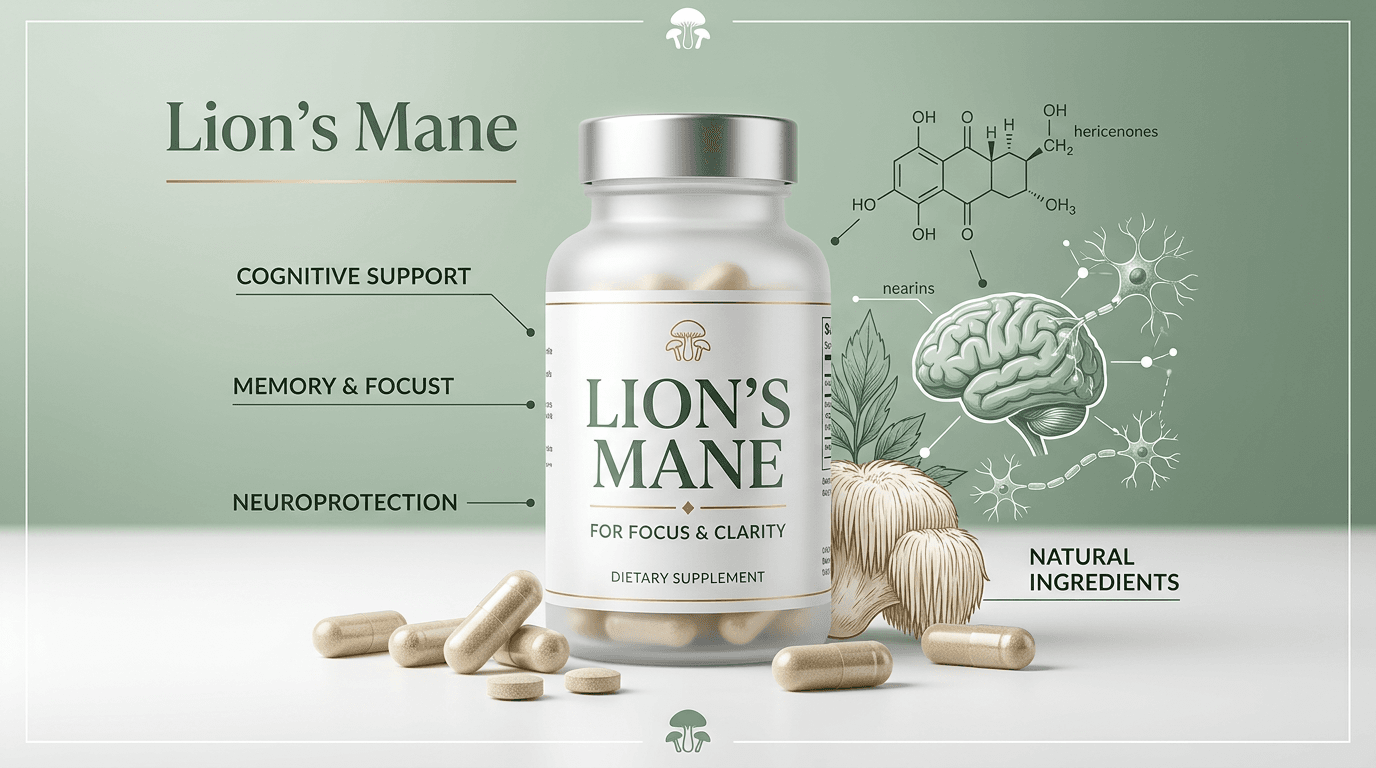
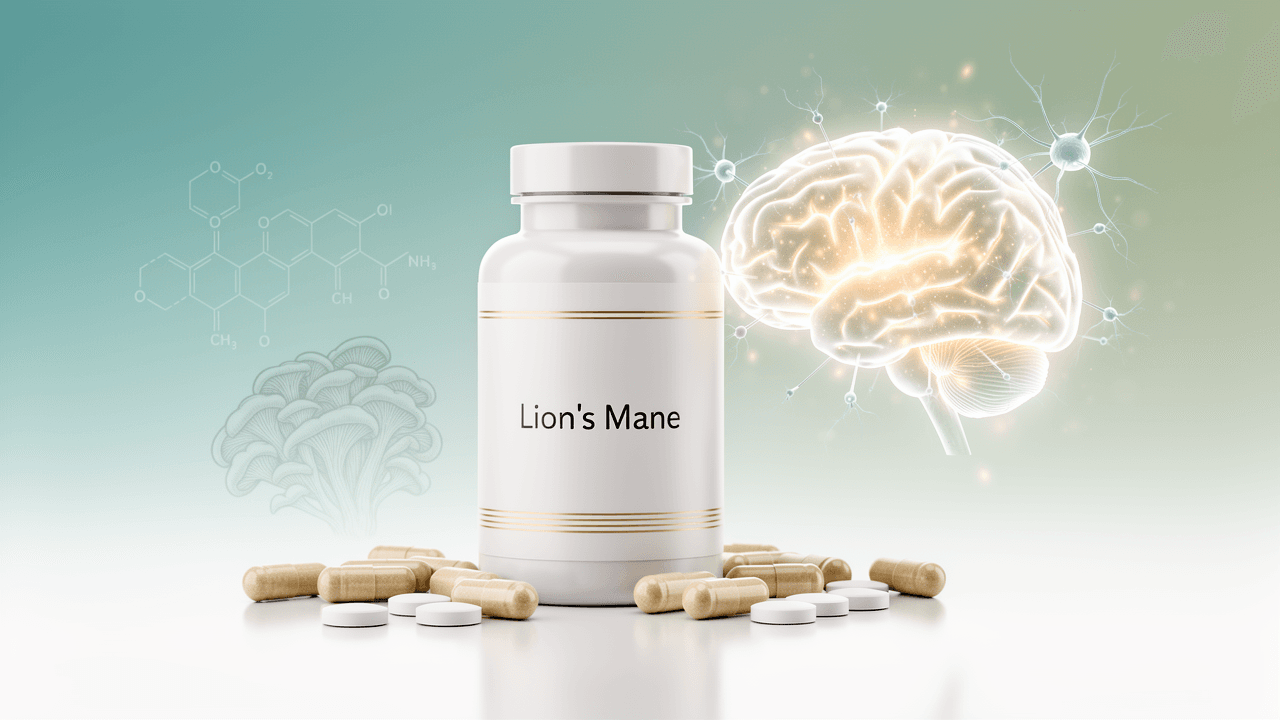
Lion’s Mane (Hericium erinaceus) is a culinary and medicinal mushroom traditionally used in East Asian medicine. As a dietary supplement, it is marketed primarily for cognitive support, mood, and nerve health.
What Lion’s Mane Contains
Lion’s Mane fruiting bodies and mycelium contain several bioactive compounds:
- Hericenones (mainly from the fruiting body)
- Erinacines (mainly from the mycelium)
- Polysaccharides (including β-glucans)
- Phenolic compounds and antioxidants
The hericenones and erinacines are thought to be the main neuroactive components.
How Lion’s Mane May Work in the Body
1. Nerve growth factor (NGF) modulation
- NGF is a neurotrophin essential for growth, maintenance, and survival of certain neurons.
- In vitro and animal studies show Lion’s Mane extracts can stimulate NGF synthesis in brain cells.
- Hericenones and erinacines appear to cross the blood–brain barrier in animals and promote NGF expression in the hippocampus and other brain regions.
2. Neuroplasticity and neuroprotection
- By upregulating NGF and possibly other neurotrophins, Lion’s Mane may support neuronal growth, synaptic plasticity, and myelination.
- Animal models suggest protection against β-amyloid–induced neurotoxicity, oxidative stress, and excitotoxic damage.
3. Anti-inflammatory and antioxidant activity
- Polysaccharides and phenolics in Lion’s Mane exhibit anti-inflammatory effects in microglial cells and reduce pro‑inflammatory cytokines (e.g., TNF‑α, IL‑1β) in animal models.
- Antioxidant activity may help reduce oxidative stress in the brain and peripheral nerves, a factor in neurodegenerative and mood disorders.
4. Gut–brain axis effects
- Preclinical studies show Lion’s Mane polysaccharides can modulate gut microbiota, increasing beneficial bacteria.
- Through the gut–brain axis, this may influence mood, cognition, and immune function, though human data are still limited.
5. Nerve regeneration
- Animal models of peripheral nerve injury show improved nerve regeneration and functional recovery when treated with Lion’s Mane extracts.
- Mechanisms likely involve NGF signaling, remyelination, and reduced inflammation.
Overall, Lion’s Mane appears to act primarily as a neurotrophic and neuroprotective agent, with additional anti-inflammatory and antioxidant actions.
2. Key Benefits of Lion’s Mane as a Nootropic & Supplement
1. Cognitive Support (Memory, Focus, Mild Cognitive Impairment)
Human trials suggest Lion’s Mane can modestly improve cognitive function, especially in older adults with mild cognitive impairment (MCI). Benefits appear to build over weeks of continuous use and may reverse after discontinuation.
2. Mood and Anxiety Support
Preliminary human data and animal studies indicate potential anxiolytic and antidepressant-like effects, possibly via neurotrophic mechanisms, anti-inflammatory actions, and modulation of monoamine neurotransmitters.
3. Nerve Health and Regeneration
Animal and early clinical data (e.g., neuropathy, nerve injury models) suggest Lion’s Mane may support peripheral nerve regeneration and reduce neuropathic symptoms.
4. Metabolic and Immune Support (Emerging Evidence)
Some small human and animal studies indicate possible benefits for metabolic health (lipids, blood sugar) and immune modulation, though these are secondary compared to its nootropic profile and require more research.
3. Research Findings – What the Evidence Shows
Human data on Lion’s Mane are still limited, often with small sample sizes and short durations. Nonetheless, several controlled trials provide useful insight.
3.1 Cognitive Function and Mild Cognitive Impairment (MCI)
Older adults with MCI
- Study design: Randomized, double-blind, placebo-controlled trial in Japan.
- Participants: 30 adults aged 50–80 with MCI.
- Intervention: 3 g/day powdered Lion’s Mane (fruiting body) in tablets vs placebo for 16 weeks, followed by a 4-week washout.
- Outcomes: Cognitive function assessed using a standardized cognitive scale.
Results:
- The Lion’s Mane group showed significant improvements in cognitive scores compared with placebo at weeks 8, 12, and 16.
- After stopping supplementation, cognitive scores declined toward baseline during the 4-week washout, suggesting effects require ongoing use.
- No serious adverse effects were reported.
Implications: Lion’s Mane may moderately improve cognitive performance in MCI when taken consistently, but effects may be reversible after discontinuation.
3.2 Mood, Anxiety, and Menopausal Symptoms
Postmenopausal women with mood complaints
- Study design: Randomized, double-blind, placebo-controlled pilot study.
- Participants: 30 women (postmenopausal) with mild mood and sleep complaints.
- Intervention: Cookies containing Lion’s Mane powder vs placebo cookies for 4 weeks.
- Outcomes: Measures of depression, anxiety, sleep quality, and menopausal symptoms.
Results:
- The Lion’s Mane group showed significantly reduced scores for irritation and anxiety compared with placebo.
- Some improvement in concentration and overall well-being was also reported.
- No serious adverse events were noted.
Implications: Short-term supplementation may help reduce anxiety and irritability in middle-aged women, but larger, more diverse trials are needed.
3.3 Nerve Regeneration and Neuropathy (Preclinical & Early Clinical)
Peripheral nerve injury (animal models)
- Rodent studies using Lion’s Mane extracts (often erinacine-enriched) after sciatic nerve crush or transection injuries show:
- Faster nerve regeneration and remyelination
- Improved motor and sensory function recovery
- Increased expression of NGF and other neurotrophic factors
Diabetic neuropathy and neuropathic pain (preclinical)
- In diabetic rodent models, Lion’s Mane polysaccharides and erinacine-containing extracts:
- Reduced neuropathic pain behaviors
- Improved nerve conduction velocity
- Decreased oxidative stress and inflammatory markers in nerve tissue
Human evidence:
- Human data are very limited. Some small, non-randomized or open-label studies and case reports suggest potential improvement in neuropathic symptoms (e.g., burning, tingling), but these are not yet high-quality RCTs.
Implications: Evidence for nerve regeneration is strong in animals but preliminary in humans. Lion’s Mane may be promising as an adjunct for neuropathic conditions, but it should not replace standard medical care.
3.4 Metabolic Effects and General Health
Metabolic markers (small human studies)
- Some trials using Lion’s Mane or Hericium-containing extracts in adults with metabolic syndrome or risk factors have reported:
- Modest reductions in triglycerides and LDL cholesterol
- Mild improvements in fasting blood glucose and oxidative stress markers
- Sample sizes are typically small (<50 participants) and often use multi-herb formulas, making it hard to isolate Lion’s Mane’s effect.
Immune modulation (preclinical and small clinical)
- Lion’s Mane polysaccharides have been shown to:
- Enhance macrophage and NK cell activity in animals
- Modulate cytokine profiles (e.g., increased IL‑10, reduced pro-inflammatory cytokines)
- Limited human data suggest possible immune-supportive effects, but clinical relevance is not yet clear.
3.5 Limitations of the Current Evidence
- Most human studies:
- Have small sample sizes (often 20–50 people)
- Are short-term (4–16 weeks)
- Use varying preparations (fruiting body vs mycelium, different extraction methods)
- Few large-scale, long-term RCTs exist.
Therefore, while results are encouraging—especially for cognition and mood—Lion’s Mane should be viewed as a promising but not definitively proven nootropic.
4. Best Sources & Dosage – Forms, Dosing, Timing, Safety
4.1 Supplement Forms
Fruiting body extracts
- Made from the visible mushroom body.
- Rich in hericenones and β-glucans.
- Often standardized to polysaccharide or β-glucan content (e.g., 20–30%).
Mycelium-based products
- Made from the fungal mycelium grown on grain (e.g., rice, oats).
- Typically contain erinacines, though concentrations vary widely.
- May have more starch from the grain substrate.
Dual extracts (water + alcohol)
- Aim to capture both water-soluble polysaccharides and alcohol-soluble terpenoids (hericenones/erinacines).
- Often marketed as more “complete” extracts.
Whole powder (non-extract)
- Dried and powdered fruiting body or mycelium.
- Lower concentration of actives; doses need to be higher to match extract potency.
Quality considerations:
- Look for third‑party testing for heavy metals, microbial contamination, and potency.
- Prefer products that specify:
- Part of mushroom used (fruiting body vs mycelium)
- Extraction method (hot water, alcohol, dual)
- Standardization (e.g., ≥20% β-glucans, erinacine or hericenone content when available)
4.2 Dosage Recommendations
There is no universally established clinical dose, but we can infer from human trials and common practice.
General Cognitive Support & Mild Cognitive Impairment
- Form: Fruiting body powder or extract.
- Typical human trial dose: 3 g/day of powdered fruiting body (non-extract) divided into 3 doses.
- Common supplement practice:
- 500–1000 mg of standardized extract (e.g., 10:1) 1–3 times daily.
- This usually equates to roughly 1–3 g/day of fruiting body equivalent.
Suggested range (adults):
- 1–3 g/day of fruiting body equivalent, taken with meals.
- Start at the low end (e.g., 500–1000 mg/day) for 1–2 weeks to assess tolerance, then titrate up.
Mood and Anxiety Support
- Human data used similar doses to cognitive studies.
- Suggested range:
- 1–3 g/day fruiting body equivalent (powder or extract), divided once or twice daily.
- Effects on mood may appear within 2–4 weeks of consistent use.
Nerve Health & Neuropathy (Adjunctive Use)
- Human evidence is limited; most guidance is extrapolated from preclinical work and general nootropic dosing.
- Suggested range (cautious, adjunctive):
- 2–3 g/day fruiting body equivalent, preferably as a standardized extract, divided into 2–3 doses.
- Always used in addition to, not instead of, standard medical care for neuropathy.
General Wellness / Preventive Use
- Many people use lower doses for general brain health.
- Suggested range:
- 500–1500 mg/day of standardized extract (≈1–2 g/day fruiting body equivalent).
4.3 Timing and Duration
Timing:
- Can be taken with meals to reduce any potential GI discomfort.
- Some users prefer morning and midday dosing to avoid the small possibility of stimulation near bedtime, though most do not find it overtly energizing.
Onset:
- Cognitive and mood benefits often reported after 2–8 weeks of continuous use.
Duration:
- Human trials typically lasted 4–16 weeks.
- Long-term safety data beyond 6–12 months are limited, though culinary use in Asia has been longstanding.
- Many practitioners recommend periodic breaks (e.g., 5 days on / 2 days off, or 3 months on / 2–4 weeks off) to reassess benefit and minimize unknown long-term risks.
4.4 Safety, Side Effects, and Drug Interactions
General Safety Profile
- Lion’s Mane is generally considered well tolerated in human studies.
- Clinical trials with doses up to 3 g/day of powdered fruiting body for 16 weeks reported no serious adverse events.
Common, Usually Mild Side Effects
Reported infrequently and typically mild:
- Gastrointestinal upset: nausea, bloating, soft stools, or diarrhea
- Skin reactions: itching, rash (rare)
- Headache or mild dizziness (uncommon)
These often improve with dose reduction or taking with food. Discontinue if symptoms persist or worsen.
Allergic Reactions
- As a mushroom, Lion’s Mane can rarely cause allergic reactions, especially in individuals with existing mushroom allergies.
- Symptoms may include:
- Rash, itching, hives
- Swelling of lips, tongue, or face
- Wheezing, difficulty breathing (medical emergency)
Anyone with a known mushroom allergy should avoid Lion’s Mane.
Potential Drug Interactions (Theoretical and Limited Data)
Robust interaction studies are lacking, so caution is prudent, especially with:
Anticoagulants / Antiplatelets (e.g., warfarin, apixaban, clopidogrel, aspirin)
- Some medicinal mushrooms may have mild antiplatelet or anticoagulant effects; evidence for Lion’s Mane specifically is limited but possible.
- Risk: Increased bleeding tendency, especially at higher doses or with multiple agents.
- Recommendation: Use cautiously; consult a healthcare provider and monitor for unusual bruising or bleeding.
Antidiabetic medications (e.g., metformin, insulin, sulfonylureas)
- Preclinical data suggest potential blood glucose–lowering effects.
- Risk: Additive hypoglycemia.
- Recommendation: Diabetics should monitor blood glucose more closely when starting Lion’s Mane and coordinate with their clinician.
Immunomodulatory or immunosuppressive drugs
- Lion’s Mane may have immune-modulating effects.
- Risk: Theoretical alteration of immune response in those on immunosuppressants (e.g., after organ transplant, autoimmune conditions).
- Recommendation: Use only under medical supervision.
CNS-active drugs (antidepressants, anxiolytics)
- Because Lion’s Mane may influence mood, neurotrophins, and possibly monoamine systems, there is a theoretical potential for additive CNS effects.
- No strong clinical evidence of harmful interactions, but caution is warranted.
- Recommendation: If taking SSRIs, SNRIs, benzodiazepines, or other psychiatric meds, discuss with your prescriber before adding any nootropic.
4.5 Who Should Use Lion’s Mane?
Potentially good candidates (with medical guidance as needed):
- Adults seeking mild cognitive support (focus, memory) or age-related brain health support.
- Older adults with mild cognitive impairment as an adjunct to lifestyle changes (exercise, sleep, diet, cognitive training).
- Individuals with mild anxiety or low mood who are already under care and want an adjunctive, low-risk option.
- People interested in preventive brain health or long-term neuroprotection, recognizing evidence is still emerging.
4.6 Who Should Avoid or Use Extra Caution
1. Known mushroom allergy
- Anyone with a history of allergy to mushrooms or previous reaction to Lion’s Mane should avoid it.
2. Pregnant or breastfeeding individuals
- Human safety data in pregnancy and lactation are insufficient.
- Because of limited evidence, it is generally recommended to avoid Lion’s Mane during pregnancy and breastfeeding unless specifically advised by a knowledgeable clinician.
3. Children and adolescents
- There is no robust pediatric safety data.
- Use in minors should be avoided or only considered under supervision of a pediatric specialist.
4. People on anticoagulants, antiplatelets, or with bleeding disorders
- Due to a theoretical risk of increased bleeding, these individuals should:
- Consult their healthcare provider before use.
- Avoid high doses and monitor for signs of bleeding.
5. People on immunosuppressive therapy or with autoimmune conditions
- Because Lion’s Mane may modulate immune function, it could theoretically interfere with immunosuppressive drugs or alter autoimmune disease activity.
- Use only with approval and monitoring by the treating specialist.
6. Individuals with uncontrolled diabetes or on multiple glucose-lowering medications
- Due to potential additive glucose-lowering effects, these individuals should only use Lion’s Mane with close glucose monitoring and clinician oversight.
Practical Takeaways
- Lion’s Mane is a promising nootropic mushroom with evidence for supporting cognition and mood, particularly in older adults with mild cognitive issues.
- Mechanistically, it appears to promote NGF, support neuroplasticity, and provide anti-inflammatory and antioxidant benefits.
- Typical supplemental doses range from 1–3 g/day of fruiting body equivalent, often via standardized extracts, taken for at least 4–8 weeks to evaluate effect.
- Safety profile is generally favorable, with mainly mild GI side effects, but caution is warranted in people with mushroom allergy, pregnancy, bleeding risk, immune suppression, or diabetes.
- Current evidence is encouraging but not definitive; Lion’s Mane should be used as an adjunct to, not a replacement for, established medical treatments and healthy lifestyle practices.
As with any nootropic or supplement, discuss Lion’s Mane with a qualified healthcare professional—especially if you have chronic conditions or take prescription medications—before adding it to your regimen.