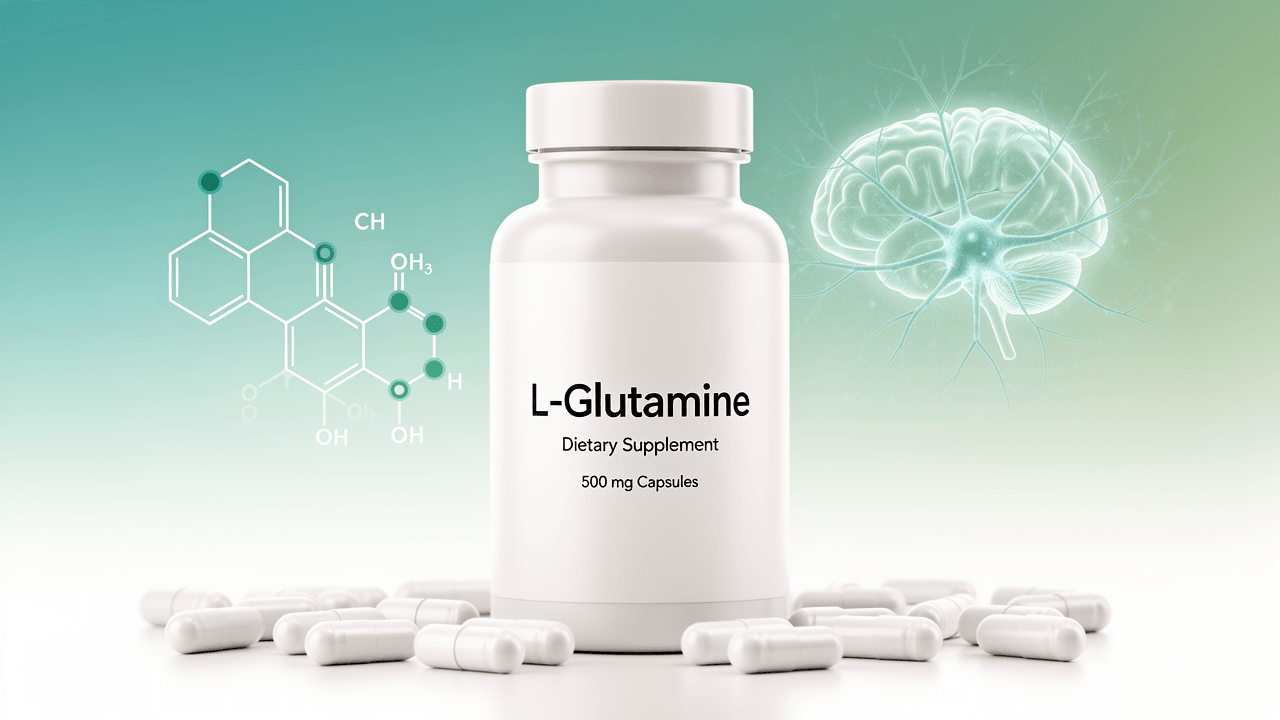
1. Understanding L-Glutamine – What It Is and How It Works
L‑glutamine is the most abundant free amino acid in human blood and tissues. It is considered conditionally essential: under normal conditions the body can synthesize enough, but during stress, illness, trauma, or intense training, demand can exceed production.
What L‑Glutamine Does in the Body
L‑glutamine plays several key physiological roles:
- Nitrogen and carbon shuttle: Transports nitrogen and carbon between tissues, supporting protein synthesis and metabolic processes.
- Fuel for rapidly dividing cells: Primary fuel source for intestinal epithelial cells and immune cells (lymphocytes, macrophages).
- Acid–base balance: In the kidneys, glutamine is involved in ammonium production, helping regulate blood pH.
- Glutamate/GABA precursor in the brain: In the central nervous system, glutamine is part of the glutamine–glutamate–GABA cycle, influencing excitatory (glutamate) and inhibitory (GABA) neurotransmission.
- Glutathione precursor: Contributes to synthesis of glutathione, a major intracellular antioxidant, via its glutamate component.
How It May Relate to Nootropic Effects
L‑glutamine itself is not a classic stimulant nootropic, but it can influence brain function indirectly:
- As a precursor to glutamate and GABA, it participates in neurotransmitter balance.
- By supporting gut barrier integrity and immune function, it may reduce systemic inflammation that can affect cognition (the "gut–brain axis").
- By helping maintain glucose homeostasis and reducing muscle catabolism, it may indirectly support energy levels and mental performance during stress or illness.
However, direct cognitive-enhancing effects in healthy individuals are not well established in high-quality trials.
2. Key Benefits of L-Glutamine
2.1 Gut Health & Intestinal Barrier Support
- Enterocytes (intestinal lining cells) use glutamine as a primary energy source.
- Glutamine supports tight junction proteins that maintain gut barrier integrity and may reduce intestinal permeability ("leaky gut").
- It may ease symptoms in some irritable bowel syndrome (IBS) and inflammatory bowel disease (IBD) patients as part of a broader treatment plan, although results are mixed.
2.2 Immune Function & Recovery from Stress
- Immune cells consume large amounts of glutamine during infection, surgery, trauma, or heavy exercise.
- Supplementation can help maintain lymphocyte and macrophage function when endogenous production is insufficient.
- In clinical settings (e.g., ICU, post‑surgery), glutamine has been used to support recovery and reduce infection risk, though recent large trials show mixed or neutral outcomes.
2.3 Exercise Recovery & Muscle Preservation
- During intense exercise, plasma glutamine levels often decline, which has been linked to transient immune suppression.
- Glutamine may:
- Reduce exercise‑induced muscle soreness in some contexts
- Support glycogen resynthesis post‑exercise
- Help preserve lean body mass during calorie restriction or illness
Effects are generally modest in healthy athletes and more relevant in catabolic states (e.g., severe illness, prolonged caloric deficit).
2.4 Blood Sugar & Metabolic Effects
- Glutamine influences insulin secretion and glucose metabolism.
- Some studies suggest it may:
- Improve postprandial glycemic control when taken with carbohydrate
- Support weight management by modulating glucose handling and satiety in certain populations
These effects are not strong enough to replace standard diabetes or weight‑loss treatments but may complement them in some cases under medical supervision.
2.5 Potential Cognitive & Mood Effects (Limited Evidence)
- Because it is a precursor to glutamate and GABA, glutamine has theoretical relevance for mood and cognition.
- Some small or older studies suggest possible benefits for fatigue, mood, or alcohol withdrawal, but the evidence is inconsistent and often methodologically weak.
- There is no robust evidence that glutamine reliably enhances memory, focus, or overall cognition in healthy adults.
3. Research Findings
3.1 Gut Barrier & GI Conditions
Critical illness / gut permeability
- A randomized controlled trial (RCT) in 84 critically ill patients receiving enteral nutrition found that 0.3 g/kg/day of glutamine for 7 days improved markers of intestinal permeability (lactulose/mannitol ratio) compared with standard formula, suggesting better gut barrier function.
Chemotherapy‑induced mucositis
- In a double‑blind RCT of 129 cancer patients receiving chemotherapy, oral glutamine (30 g/day) reduced the severity and duration of oral mucositis versus placebo, though not all trials replicate this magnitude of benefit.
IBS and functional GI symptoms
- A small double‑blind RCT in 45 patients with post‑infectious IBS used 5 g glutamine three times daily (15 g/day) for 8 weeks. The glutamine group showed significant improvement in IBS symptom severity scores and reduced intestinal permeability compared with placebo.
- However, other IBD/IBS studies have found no significant benefit, so evidence remains mixed and condition‑specific.
3.2 Immune Function & Critical Care
Surgical and ICU patients
- Earlier meta‑analyses (e.g., >20 RCTs, thousands of patients) suggested that parenteral or enteral glutamine in critically ill patients could reduce infection rates, length of hospital stay, and sometimes mortality.
- More recent large, high‑quality RCTs (e.g., the REDOXS trial with ~1,200 ICU patients) using high‑dose glutamine in multi‑organ failure showed no mortality benefit and possible harm at very high doses in severely ill patients with organ dysfunction.
Takeaway: In clinical nutrition, glutamine is now used more selectively. In individuals with normal organ function using oral doses in typical supplement ranges, this risk profile does not directly apply, but it underscores that more is not always better, especially in severe illness.
3.3 Exercise Recovery & Performance
Immune function after intense exercise
- In a classic study of 151 marathon runners, those given 5 g glutamine immediately post‑race and again 2 hours later had a lower incidence of self‑reported infections in the 7 days after the race (19% vs 51% in placebo). However, this relied on self‑reported symptoms and did not include laboratory confirmation.
Muscle soreness and recovery
- A small RCT in 16 resistance‑trained men found that 0.3 g/kg glutamine taken post‑exercise for 3 days reduced markers of muscle damage and subjective soreness compared with placebo. Sample size was small and findings require replication.
Body composition
- Multiple trials combining glutamine with resistance training show little to no additional muscle mass gain beyond what is achieved with adequate protein intake alone. Glutamine is not a powerful standalone anabolic agent in healthy, well‑nourished athletes.
3.4 Blood Sugar and Metabolic Effects
Postprandial glucose control
- In a crossover study of 15 individuals with type 2 diabetes, 30 g of glutamine taken with a glucose load reduced postprandial glucose excursions and increased GLP‑1 secretion compared with glucose alone.
- Another trial in overweight/obese individuals (n ≈ 20–30 per group) using 30 g/day for 4 weeks reported modest improvements in fasting glucose and insulin sensitivity markers.
These studies are small and short‑term. Glutamine should not be used as a primary treatment for diabetes, but may have adjunctive potential under medical supervision.
3.5 Cognitive and Mood Outcomes
Robust RCT data on cognition in healthy adults are lacking.
- Some older, small studies explored glutamine in alcohol withdrawal and fatigue, with mixed and often inconclusive results.
- No large, modern, placebo‑controlled trials demonstrate consistent nootropic benefits such as improved memory, attention, or executive function.
Overall: L‑glutamine is best viewed as a metabolic and gut/immune support nutrient, not a primary cognitive enhancer.
4. Best Sources & Dosage
4.1 Dietary Sources
Most people obtain substantial glutamine from dietary protein. High‑protein foods are rich in glutamine:
- Meat and poultry
- Fish
- Eggs
- Dairy products (milk, yogurt, cheese)
- Legumes (beans, lentils)
- Some vegetables (e.g., cabbage, spinach) contain smaller amounts
For healthy individuals with adequate protein intake, baseline glutamine needs are usually met by diet.
4.2 Supplement Forms
Common supplemental forms include:
- L‑Glutamine powder or capsules
- Most widely used; typically 1–5 g per serving
- Flavorless or slightly sweet, easily mixed in water or shakes
- Glutamine peptides
- Glutamine bound to peptides (often from wheat or whey); may have better stability and absorption but evidence of superiority is limited.
- Parenteral (IV) glutamine
- Used in clinical settings only; not relevant for over‑the‑counter supplementation.
4.3 Evidence‑Informed Dosage Ranges
These ranges are based on clinical and sports nutrition studies. Individual needs vary.
General Health / Gut Support
- Typical oral dose: 5–10 g/day, divided into 1–2 doses.
- Some GI studies used up to 15–30 g/day, often in divided doses, under medical supervision.
- Start at 2–5 g/day and titrate up if tolerated and clinically indicated.
Exercise Recovery & Immune Support in Athletes
- 5 g post‑workout, sometimes repeated 1–2 times per day (total 5–15 g/day).
- For endurance events: 5 g immediately after and again a few hours later, as in some marathon studies.
Clinical / Catabolic States (under medical supervision)
- In hospitalized patients, doses of 0.2–0.5 g/kg/day (often 15–30 g/day orally) have been used.
- These higher doses should only be used under healthcare supervision, especially in the presence of organ dysfunction.
Potential Cognitive or Mood Support
- There is no standardized nootropic dose due to limited evidence.
- If used as part of a broader protocol (e.g., gut support for brain–gut axis), typical doses are 5–10 g/day.
4.4 Timing & Administration
- Empty stomach vs with food: Often taken on an empty stomach to maximize absorption, but it can be taken with food if it causes GI discomfort.
- Post‑exercise: Commonly taken immediately after training.
- Divided doses: Larger daily intakes (≥10 g) are best split into 2–3 doses to improve tolerance.
4.5 Safety, Side Effects & Interactions
General Safety Profile
- In healthy adults with normal kidney and liver function, oral doses up to 30 g/day for short periods are generally well tolerated.
- Most common side effects (usually mild and dose‑dependent):
- GI discomfort (bloating, gas)
- Nausea
- Abdominal pain or cramping
Reducing the dose or splitting it into smaller servings usually resolves these issues.
Long‑Term Use
- Long‑term safety data in high doses (>20–30 g/day) are limited.
- At low to moderate doses (5–10 g/day), long‑term use appears relatively safe in healthy individuals, but periodic breaks and monitoring are prudent.
Kidney and Liver Function
- Because glutamine metabolism involves ammonia production and renal excretion, people with kidney or liver disease may have impaired handling of nitrogen.
- High doses in such individuals could theoretically contribute to hyperammonemia and encephalopathy.
- Those with renal insufficiency, hepatic failure, or cirrhosis should avoid self‑supplementation and use glutamine only under specialist supervision, if at all.
Neurological Conditions Involving Glutamate
Glutamine is a precursor to glutamate, the primary excitatory neurotransmitter. While oral glutamine does not directly translate to massive brain glutamate spikes, caution is advised in:
- Epilepsy or seizure disorders
- History of excitotoxic brain injury
- Certain neurodegenerative conditions where glutamate toxicity is a concern
In these groups, use only with medical guidance.
Potential Drug Interactions
Evidence of strong, direct drug interactions is limited, but theoretical or indirect interactions include:
- Antiepileptic drugs (AEDs): Because of glutamine–glutamate–GABA dynamics, use cautiously in people on AEDs; monitor for any change in seizure control.
- Chemotherapy & radiation: Glutamine is sometimes used to reduce mucositis, but there is theoretical concern about supporting rapidly dividing tumor cells. Data are mixed.
- Use only under oncologist supervision.
- Antidiabetic medications: Glutamine may modestly affect insulin and GLP‑1; monitor blood glucose closely if you have diabetes and are on medications.
- Lactulose and ammonia‑lowering agents: In hepatic encephalopathy, glutamine could theoretically increase nitrogen load; avoid unless directed by a hepatologist.
Always inform your healthcare provider about all supplements you take.
4.6 Who Should Consider L‑Glutamine?
May benefit from supervised use:
Individuals with increased catabolic stress
- Recovering from major surgery, trauma, burns, or severe infections (under medical care)
- Those with significant caloric restriction or prolonged intense training
Athletes under heavy training loads
- Endurance athletes with frequent upper respiratory infections
- Strength athletes seeking marginal improvements in recovery and gut comfort
People with specific gut issues
- Some cases of post‑infectious IBS or increased intestinal permeability, as part of a broader gut‑healing protocol
- Patients with chemotherapy‑induced mucositis, under oncologist guidance
Individuals with suboptimal protein intake
- Those struggling to meet protein needs due to poor appetite, illness, or dietary restrictions (though a complete protein supplement is often preferable).
4.7 Who Should Avoid or Use With Caution
You should not use L‑glutamine without medical supervision if you:
- Have moderate to severe kidney disease
- Have moderate to severe liver disease, cirrhosis, or a history of hepatic encephalopathy
- Are in multi‑organ failure or critically ill in an ICU setting (dosing must be clinician‑directed)
- Have a known hypersensitivity to glutamine products
Use extra caution and seek medical advice before using if you:
- Have a seizure disorder or are on antiepileptic medications
- Have active cancer or are undergoing chemotherapy or radiation
- Have type 1 or type 2 diabetes and are on glucose‑lowering medications
- Are pregnant or breastfeeding (data on high‑dose supplementation are limited; normal dietary intake is safe, but supplemental doses should be discussed with a clinician)
- Are taking multiple medications where nitrogen metabolism or acid–base balance is a concern
Practical Summary
- L‑glutamine is a conditionally essential amino acid central to gut integrity, immune function, nitrogen transport, and antioxidant support.
- Evidence is strongest for supporting gut barrier function, reducing some forms of mucositis, and providing immune and metabolic support under stress, with more modest and context‑dependent effects on exercise recovery and metabolism.
- It is not a proven nootropic in healthy individuals, though it may indirectly support brain health via gut and metabolic mechanisms.
- Typical supplemental doses range from 5–10 g/day for general support, up to 15–30 g/day short‑term under medical supervision.
- In healthy people with normal organ function, glutamine is generally well tolerated, but those with kidney, liver, seizure, or serious systemic disease require caution and professional oversight.
As with any supplement, L‑glutamine should complement—not replace—evidence‑based medical care, adequate nutrition, sleep, and lifestyle practices that form the foundation of gut, immune, and brain health.