1. Understanding Glycine – What It Is and How It Works
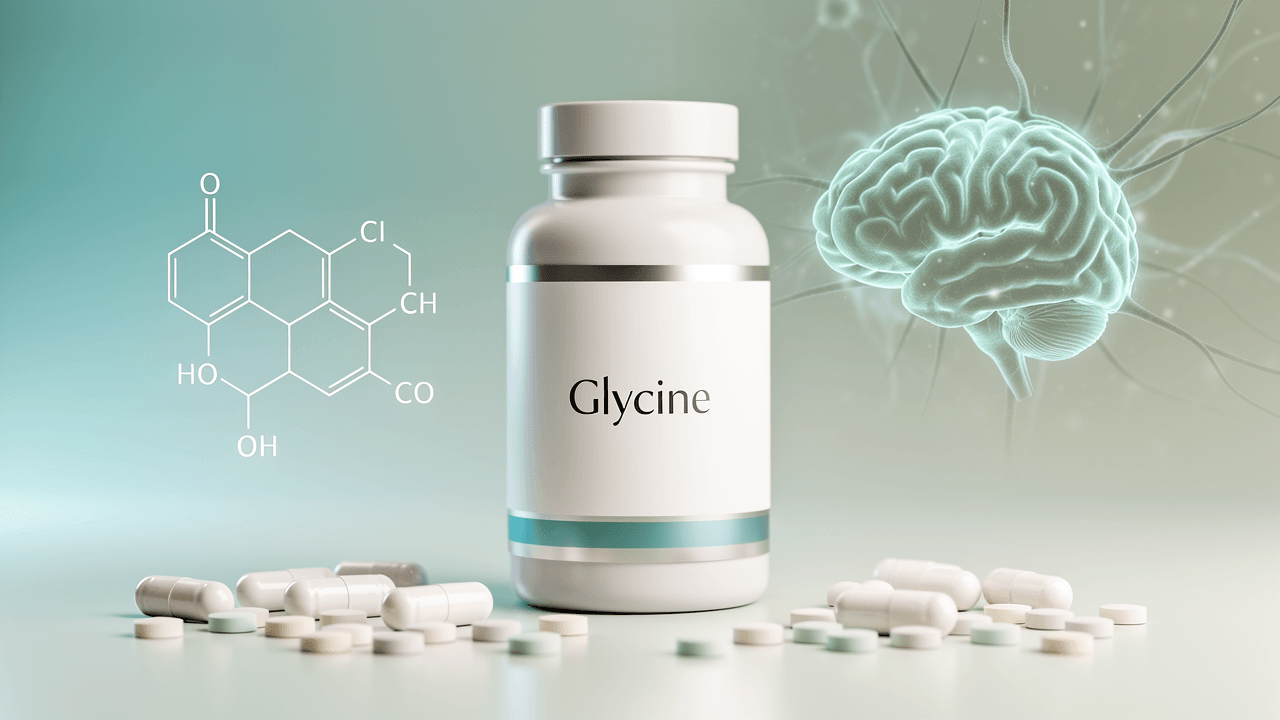
Glycine is the simplest amino acid and is considered conditionally essential: the body can synthesize it, but under certain conditions (e.g., illness, high metabolic demand) internal production may not meet needs.
It plays several key roles:
- Structural role: major component of collagen (about one-third of collagen’s amino acids are glycine), important for skin, joints, bones, and connective tissue.
- Neurotransmitter: acts as both an inhibitory neurotransmitter (like GABA) in the spinal cord and brainstem and as a co-agonist at NMDA receptors in the brain, which are critical for learning and memory.
- Metabolic and detoxification support: involved in glutathione synthesis (a major antioxidant), creatine synthesis, and phase II liver detoxification (conjugation pathways).
- Glucose and lipid metabolism: influences insulin secretion and sensitivity, and may modulate inflammation and oxidative stress.
How Glycine Works in the Nervous System
Glycine has a dual role in the central nervous system:
Inhibitory neurotransmitter
- In the spinal cord and brainstem, glycine binds to glycine receptors (GlyRs), chloride channels that, when activated, hyperpolarize neurons and reduce neuronal excitability.
- This is associated with muscle relaxation, reduced motor neuron overactivity, and a general calming effect.
Co‑agonist at NMDA receptors
- In the cortex and hippocampus, glycine binds to the glycine site on NMDA (N‑methyl‑D‑aspartate) receptors, alongside glutamate.
- Adequate glycine is required for proper NMDA receptor activation, which is important for synaptic plasticity, memory formation, and cognitive function.
These dual actions mean glycine can be both calming (via inhibitory receptors) and cognitively supportive (via NMDA receptors), depending on location and context in the brain.
Other Physiological Roles
- Collagen and connective tissue: Glycine is essential for collagen triple-helix stability, supporting skin elasticity, joint health, and wound healing.
- Glutathione production: As one of three amino acids in glutathione (with cysteine and glutamate), glycine availability can limit glutathione synthesis, influencing antioxidant capacity.
- Creatine synthesis: Glycine combines with arginine to form guanidinoacetate, a precursor to creatine, which supports energy metabolism, especially in muscle and brain.
- Thermoregulation and sleep: Oral glycine can promote peripheral vasodilation (more blood flow to extremities), which helps reduce core body temperature—an important signal for sleep onset.
2. Key Benefits of Glycine as a Supplement
2.1 Improved Sleep Quality and Sleep Onset
Glycine is one of the more evidence-supported amino acids for sleep quality, particularly in people with sleep complaints.
- It appears to shorten sleep onset latency, improve subjective sleep quality, and reduce next‑day fatigue.
- Mechanisms likely include lowering core body temperature, mild sedative effects via inhibitory neurotransmission, and possible normalization of circadian rhythms.
2.2 Cognitive Function and Next‑Day Performance
By improving sleep quality and acting at NMDA receptors, glycine may support:
- Attention and working memory (especially after poor sleep)
- Reduced daytime sleepiness and fatigue
- Potential adjunctive benefits in certain neuropsychiatric conditions (e.g., schizophrenia) when used at high doses under medical supervision
2.3 Metabolic and Cardiometabolic Support
Low glycine levels have been associated with insulin resistance, type 2 diabetes, obesity, and non‑alcoholic fatty liver disease (NAFLD) in observational studies.
Supplementation may:
- Improve certain markers of glucose control and insulin sensitivity
- Support lipid metabolism and reduce oxidative stress
- Help modulate inflammation via increased glutathione and other pathways
2.4 Joint, Skin, and Connective Tissue Support
As a major collagen component, glycine is relevant for:
- Joint health and cartilage maintenance (often in combination with collagen or gelatin)
- Skin structure and wound healing
- Potential supportive role in osteoarthritis and tendon recovery (data mostly indirect, via collagen studies)
3. Research Findings – What the Science Shows
3.1 Glycine for Sleep Quality and Daytime Function
Study: Inagawa et al., 2006 (Japan)
- Design: Randomized, double‑blind, crossover trial
- Participants: 11 healthy adults with mild sleep complaints
- Intervention: 3 g glycine or placebo, taken 30 minutes before bedtime for 3 days, with washout
- Outcomes:
- Polysomnography showed reduced sleep onset latency and a tendency toward increased slow‑wave sleep (deep sleep)
- Subjective questionnaires indicated improved sleep quality and reduced daytime sleepiness and fatigue
- Conclusion: Low‑dose bedtime glycine improved both objective and subjective sleep parameters over a short period.
Study: Yamadera et al., 2007
- Design: Randomized, double‑blind, single‑blind placebo‑controlled crossover
- Participants: 10 healthy adults with sleep complaints
- Intervention: 3 g glycine vs placebo before bed
- Outcomes:
- Improved sleep efficiency and decreased sleep latency
- Better next‑day performance on psychomotor vigilance and working memory tasks
- Reduced reports of fatigue and daytime sleepiness
3.2 Glycine and Cognitive/Neuropsychiatric Outcomes
Adjunctive treatment in schizophrenia
Several small to moderate-sized trials have examined high‑dose glycine as an adjunct to antipsychotics, targeting NMDA receptor hypofunction.
Example: Javitt et al., 1994; Heresco-Levy et al., 1999–2004 (multiple RCTs)
- Design: Randomized, double‑blind, placebo‑controlled
- Participants: Typically 20–60 outpatients with chronic schizophrenia
- Intervention: Glycine 0.8 g/kg/day (often 30–60 g/day), added to stable antipsychotic therapy, for 6–12 weeks
- Outcomes:
- Some studies showed modest improvements in negative symptoms and cognitive measures
- Effects were more pronounced when combined with typical antipsychotics; less clear benefit with clozapine
- Important: Doses used are far higher than typical over‑the‑counter use and should only be used under medical supervision.
3.3 Glycine and Metabolic Health
Study: Cruz et al., 2008–2011 (Mexico)
- Design: Randomized, double‑blind, placebo‑controlled
- Participants: ~60 patients with metabolic syndrome or type 2 diabetes
- Intervention: Glycine 5 g/day vs placebo for 3–6 months
- Outcomes (across related trials):
- Improved oxidative stress markers (increased glutathione, reduced lipid peroxidation)
- Reduction in inflammatory markers (e.g., TNF‑α, IL‑6) in some trials
- Modest improvements in fasting glucose and HbA1c in certain subgroups
Study: Wang et al., 2013 (China) – NAFLD model
- Primarily animal and mechanistic work, but suggests glycine may:
- Reduce hepatic fat accumulation
- Improve insulin sensitivity
- Decrease oxidative stress in liver tissue
Human data for NAFLD specifically remain limited, but the mechanistic rationale and early findings are promising.
3.4 Glycine, Collagen, and Joint Health
Direct trials of glycine alone for joint pain are scarce; most use collagen or gelatin, which are rich in glycine.
Study: Clark et al., 2008 (USA) – Collagen hydrolysate
- Design: Randomized, double‑blind, placebo‑controlled
- Participants: 147 athletes with joint pain
- Intervention: 10 g collagen hydrolysate daily for 24 weeks
- Outcomes:
- Reduced joint pain at rest and during activity compared with placebo
Because collagen hydrolysate is ~20–25% glycine, benefits are likely due to combined effects of glycine and other collagen peptides. Still, it reinforces glycine’s importance in connective tissue maintenance.
3.5 Longevity and General Health (Preclinical)
Animal studies suggest glycine supplementation may extend lifespan and improve metabolic health in rodents.
- Miller et al., 2019 (Interventions Testing Program)
- Model: Mice given glycine in drinking water (~8% of diet)
- Outcomes: Increased median lifespan in both male and female mice, with improved metabolic markers
These results are intriguing but cannot be directly extrapolated to humans. Human longevity data are not yet available.
4. Best Sources & Dosage – Forms, Dosing, Timing, Safety
4.1 Dietary Sources of Glycine
Glycine is found in most protein-containing foods, with particularly high levels in collagen‑rich animal parts:
- Bone broth and connective tissue (skin, cartilage)
- Collagen and gelatin (e.g., from bone broth, gelatin desserts, collagen powders)
- Meat, poultry, fish, eggs, dairy
- Plant proteins (legumes, soy, some seeds) contain glycine but generally at lower concentrations than collagenous animal tissues.
Most diets provide ~1.5–3 g/day of glycine, while estimated physiologic needs for optimal collagen and glutathione synthesis may be higher (some estimates ~10 g/day total from diet + synthesis). This gap is one rationale for supplementation.
4.2 Supplemental Forms
Common supplemental forms include:
- Pure glycine powder
- Most cost‑effective; slightly sweet taste; dissolves easily in water.
- Capsules/tablets
- Usually 500–1000 mg per capsule; convenient but less cost‑effective for higher doses.
- Glycine included in formulas
- Sleep blends (with magnesium, GABA, theanine)
- Collagen powders (glycine‑rich but not pure glycine)
Look for products that are:
- Labeled L‑glycine (the natural isomer)
- Third‑party tested (e.g., NSF, USP, Informed Choice) when possible
4.3 Evidence‑Based Dosage Guidelines
Below are typical ranges used in studies and clinical practice. Individual needs and tolerances vary.
For Sleep and Next‑Day Performance
- Dose: 3 g (3000 mg)
- Timing: 30–60 minutes before bedtime
- Form: Powder mixed in water or capsules
- Duration: Studies used 3–14 days; many people use it chronically. Long‑term safety at this dose appears good in healthy adults.
For General Relaxation / Mild Anxiolytic Support
- Dose: 1–3 g, once or twice daily
- Timing: Evening or divided doses (e.g., 1 g 2–3x/day)
- Evidence here is more anecdotal and mechanistic; robust RCT data for anxiety alone are limited.
For Metabolic and Cardiometabolic Support
- Dose: 3–5 g/day
- Timing: With meals or divided doses
- Duration: 3–6 months in available trials
- Should be used as an adjunct to diet, exercise, and prescribed medications, not a replacement.
For Collagen/Joint Support (Indirect via Collagen)
- Collagen dose: 10 g/day collagen peptides provides ~2–3 g glycine
- Timing: Any time; often taken with vitamin C to support collagen synthesis
- For pure glycine targeting collagen support, 3–5 g/day is reasonable, though direct evidence is limited.
High‑Dose Adjunctive Use in Schizophrenia (Medical Supervision Only)
- Dose: 0.4–0.8 g/kg/day (often 30–60 g/day)
- Important: These are pharmacologic doses used in clinical trials and should not be attempted without specialist supervision due to potential interactions and side effects.
4.4 How to Take Glycine
- With or without food: Can be taken either way. For sleep, best taken on an empty or lightly filled stomach ~30–60 min before bed.
- Powder tips: Mix in water or herbal tea; glycine is mildly sweet and generally palatable.
- Stacking:
- For sleep: Often combined with magnesium, L‑theanine, GABA, or melatonin.
- For joint/skin: Combined with collagen peptides and vitamin C.
5. Safety, Side Effects, and Drug Interactions
5.1 General Safety Profile
At typical supplemental doses (up to ~10 g/day), glycine is generally considered safe in healthy adults.
- Human trials using 3–5 g/day for several months report good tolerability.
- High‑dose trials (30–60 g/day) in schizophrenia patients report more side effects but still acceptable safety under medical supervision.
5.2 Common Side Effects
Most side effects are dose‑dependent and usually mild:
- Gastrointestinal: nausea, soft stools or diarrhea, abdominal discomfort (more common >10 g/day)
- Sedation or drowsiness: especially if taken in high doses or combined with other sedatives
- Headache or lightheadedness: occasionally reported
If side effects occur:
- Reduce dose (e.g., from 3 g to 1–2 g)
- Split into smaller doses throughout the day
- Take with food if GI upset occurs (except when specifically using for sleep onset)
5.3 Potential Drug Interactions
Although glycine is relatively low‑risk, some important cautions apply:
Clozapine and other antipsychotics
- High‑dose glycine can interact pharmacodynamically with NMDA receptor function and may alter antipsychotic response.
- Some trials suggest glycine may reduce clozapine’s effectiveness, while enhancing response to typical antipsychotics.
- Anyone on antipsychotic medication should not use high‑dose glycine without a psychiatrist’s supervision.
Sedatives and CNS depressants
- Benzodiazepines, Z‑drugs (zolpidem, zopiclone), barbiturates, sedating antihistamines, opioids, alcohol.
- Glycine’s inhibitory and sleep‑promoting effects could add to sedation, increasing risk of excessive drowsiness or impaired coordination.
- Use cautiously; start with lower doses and avoid combining with alcohol.
Other NMDA‑modulating substances
- D‑cycloserine, ketamine, dextromethorphan, and some experimental compounds affect NMDA receptors.
- Combined use may have unpredictable effects on mood, cognition, or perception.
Chemotherapy agents
- Because glycine supports glutathione and detoxification pathways, in theory it could alter the pharmacokinetics or effectiveness of certain chemotherapy drugs.
- Cancer patients should only use glycine under guidance from their oncology team.
5.4 Special Populations
Pregnancy and Breastfeeding
- Human data on supplemental glycine in pregnancy or lactation are very limited.
- Dietary intake from food is normal and safe, but additional supplementation (especially >3 g/day) lacks robust safety data.
- Recommendation: Pregnant or breastfeeding individuals should avoid high‑dose glycine unless specifically recommended by a healthcare professional.
Children and Adolescents
- Glycine is naturally present in the diet, and small amounts in food are safe.
- Supplementation for sleep or behavior in children has not been well studied.
- Recommendation: Do not give glycine supplements to children without pediatric guidance.
Kidney or Liver Disease
- Glycine is metabolized primarily in the liver and excreted via the kidneys.
- In advanced kidney or liver impairment, amino acid handling may be altered.
- Recommendation: Use cautiously and only under medical supervision in these populations.
Neurological Disorders
- Conditions such as hyperekplexia (startle disease), certain glycine transporter mutations, or disorders of glycine metabolism may be affected by supplemental glycine.
- Individuals with known inborn errors of metabolism should only use glycine under specialist care.
6. Who Should and Shouldn’t Use Glycine
6.1 Who May Benefit from Glycine Supplementation
Adults with mild to moderate sleep difficulties
- Trouble falling asleep, non‑restorative sleep, or next‑day fatigue
- Especially those who want a non‑habit‑forming option before trying prescription sleep medications
Individuals seeking gentle cognitive and daytime performance support via better sleep
- Students, professionals, or shift workers experiencing sleep‑related cognitive dullness
People with metabolic risk factors (with medical oversight)
- Overweight/obese individuals, prediabetes, or type 2 diabetes
- As an adjunct to lifestyle changes and prescribed medications
Those supporting joint, skin, or connective tissue health
- Often through collagen peptides (glycine‑rich) rather than glycine alone
Individuals with high oxidative stress or toxin exposure (under guidance)
- Because of glycine’s role in glutathione and detoxification pathways, it may complement broader antioxidant strategies.
6.2 Who Should Use Glycine with Caution or Avoid It
People on antipsychotic medications (especially clozapine)
- Risk of altering drug response; high‑dose glycine should only be used in clinical trial or specialist settings.
Those regularly using sedatives or CNS depressants
- Benzodiazepines, Z‑drugs, opioids, alcohol, strong antihistamines
- Risk of excessive sedation; if used, start at low doses (e.g., 1 g) and monitor closely.
Pregnant or breastfeeding individuals
- Lack of safety data for doses above normal dietary intake.
People with significant kidney or liver disease
- Altered amino acid metabolism and excretion; require medical supervision.
Individuals with rare glycine metabolism disorders
- Such as non‑ketotic hyperglycinemia or glycine transporter defects; glycine may worsen symptoms.
Children and adolescents
- Routine supplementation for sleep or cognition is not well studied; avoid unless directed by a pediatrician.
7. Practical Takeaways
- What it is: Glycine is a simple amino acid with key roles in collagen structure, neurotransmission, detoxification, and metabolism.
- Main benefits (at typical doses of 3–5 g/day):
- Improved sleep onset and subjective sleep quality
- Better next‑day alertness and cognitive performance (via better sleep)
- Potential support for metabolic health and oxidative stress (emerging but promising data)
- Indirect support for joint and skin health, especially when consumed as part of collagen.
- How to use:
- For sleep: 3 g 30–60 minutes before bed
- For general/metabolic support: 3–5 g/day, often divided with meals
- Start low (1–2 g) and increase as tolerated.
- Safety: Generally well tolerated in healthy adults at doses up to ~10 g/day, with GI upset and mild sedation as the most common side effects.
- Cautions: Interactions with antipsychotics and sedatives, and limited data in pregnancy, breastfeeding, children, and serious kidney/liver disease.
As with any supplement, glycine should complement—not replace—foundational measures such as sleep hygiene, nutrition, exercise, and appropriate medical care. If you have chronic conditions or take prescription medications, discuss glycine use with your healthcare provider before starting.