Understanding Ginkgo Biloba
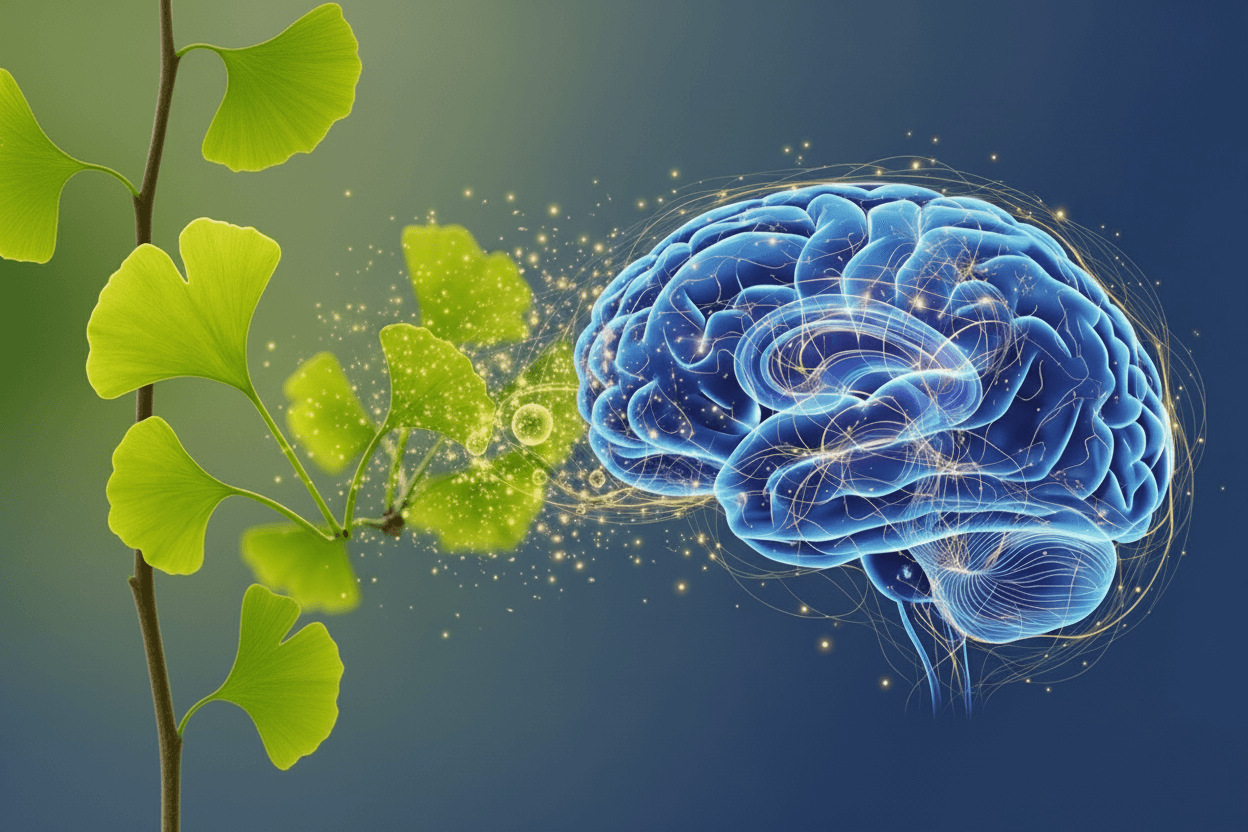
Ginkgo biloba is one of the world’s oldest tree species, sometimes called a “living fossil” because it has survived for over 200 million years. Medicinal use of ginkgo leaves can be traced back to traditional Chinese medicine, where they were employed for lung and circulatory health. Today, ginkgo biloba is primarily consumed in the form of standardized leaf extracts, which are among the most widely used herbal supplements in Europe and North America.
The leaves contain bioactive compounds grouped into two main categories: flavonoids and terpenoids. Flavonoids such as quercetin and kaempferol are powerful antioxidants that neutralize free radicals, molecules that damage cells if left unchecked. Terpenoids, especially ginkgolides and bilobalide, improve blood flow by dilating blood vessels and reducing platelet stickiness. Together, these compounds influence brain function by supporting circulation, protecting neurons from oxidative stress, and modulating neurotransmitter systems involved in memory and attention.
Humans do not produce flavonoids or terpenoids, and these compounds are not commonly obtained in significant amounts from everyday diets. This explains why standardized ginkgo extracts—typically standardized to contain 24% flavone glycosides and 6% terpene lactones—are the focus of modern clinical research. Unlike raw leaves or teas, standardized extracts ensure consistent levels of active compounds, making it possible to study their effects in a controlled way.
Key Benefits
Cognitive support – Ginkgo biloba improves aspects of memory, focus, and processing speed in older adults and those with mild cognitive decline.
Circulatory health – Extracts enhance blood flow in small vessels, supporting peripheral circulation and overall vascular function.
Antioxidant defense – The flavonoids and terpenoids in ginkgo deliver antioxidant protection that reduces oxidative stress linked to aging and cellular damage.
Research Findings
Evidence for ginkgo biloba is mixed, with some studies showing benefits and others reporting no significant effects. Variability depends on the population studied, the duration of supplementation, and the outcomes measured.
In a 24-week randomized controlled trial (n=202 older adults with mild cognitive impairment), ginkgo biloba extract improved memory test scores compared with placebo.
In a large 12-month RCT (n=3,072 adults aged 70 and older), ginkgo biloba supplementation did not reduce the incidence of dementia compared with placebo, indicating limited protective effects against Alzheimer’s disease.
In a 6-week double-blind RCT (n=52 healthy young adults), ginkgo biloba supplementation improved working memory and reaction time compared with placebo. While statistically significant, the improvements were modest.
Other trials have examined circulation. In a 12-week RCT (n=156 adults with peripheral arterial disease), ginkgo biloba improved pain-free walking distance, pointing to vascular benefits. However, not all trials confirm this effect, highlighting the need for longer-term research.
Overall, findings show that ginkgo biloba delivers small but measurable improvements in cognitive and circulatory function in certain groups, but it is not a preventive treatment for dementia.
Best Sources & Dosage
The best-studied form of ginkgo biloba is the standardized leaf extract known as EGb 761. This preparation ensures a consistent content of active compounds: 24% flavone glycosides and 6% terpene lactones. Standardization is critical, as raw ginkgo leaves and teas vary widely in potency and do not deliver therapeutic levels of active compounds.
Typical adult dosages studied range between 120–240 mg per day, divided into two or three doses. Clinical trials usually recommend continued supplementation for at least 8–12 weeks before evaluating effects, as benefits appear gradually. Taking ginkgo with meals reduces gastrointestinal discomfort, the most commonly reported side effect.
Safety is generally favorable when ginkgo is used in the studied dosage range, but there are important caveats. Because ginkgo thins the blood, it interacts with anticoagulant and antiplatelet medications, increasing bleeding risk. People scheduled for surgery, or those already taking blood-thinning drugs, should avoid supplementation unless cleared by a healthcare provider. Pregnant and breastfeeding women are advised to avoid ginkgo due to limited safety data.
Whole ginkgo seeds should never be consumed, as they contain toxins that can cause seizures and are considered unsafe.
Putting It All Together
Ginkgo biloba is one of the most researched herbal supplements for brain and circulatory health. Its effects are not dramatic, but consistent evidence demonstrates small improvements in cognitive performance in older adults and vascular function in some clinical groups. At the same time, large-scale trials confirm that ginkgo is not a preventive treatment for dementia and does not act as a broad-spectrum enhancer for young, healthy individuals.
The most accurate way to view ginkgo biloba is as a supplement that delivers modest, evidence-based support in specific contexts, not as a cure or guaranteed enhancer. For adults considering its use, standardized extracts in the 120–240 mg daily range represent the safest and most studied option. As with any supplement, individual responses differ, and drug interactions mean medical guidance is essential for people with preexisting health conditions.