1. Understanding Eleuthero – What It Is and How It Works
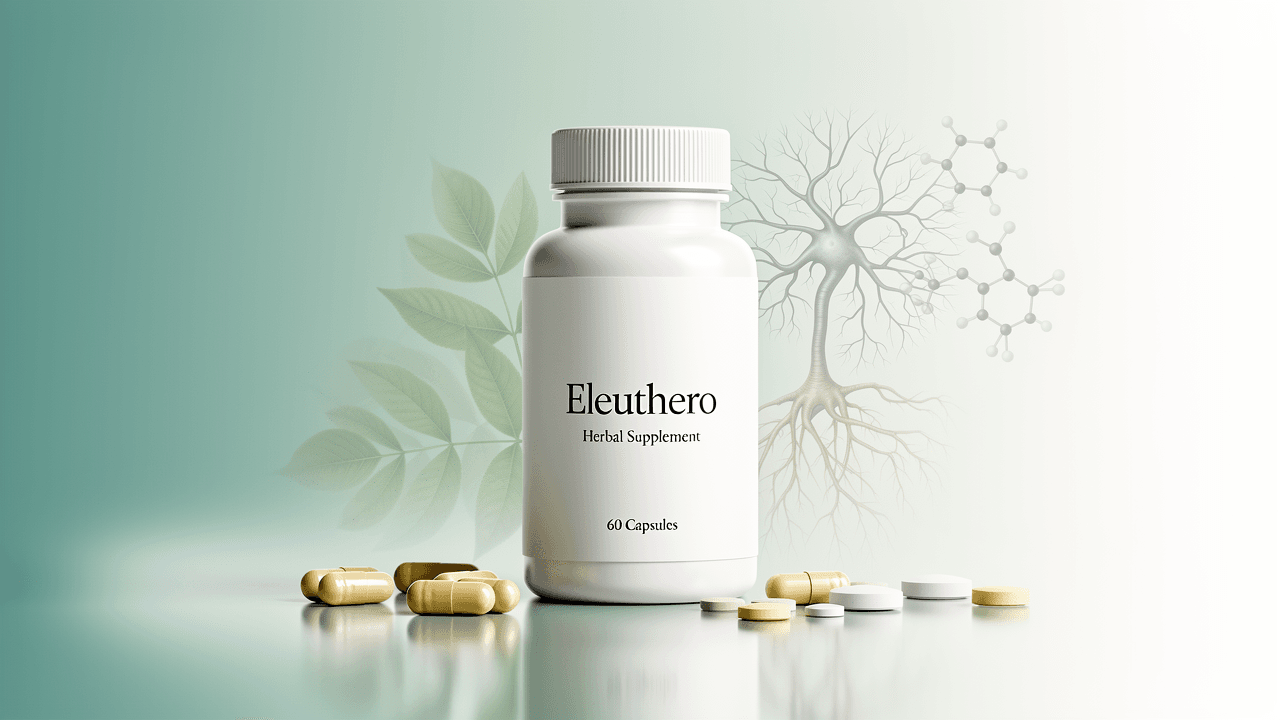
Eleuthero (Eleutherococcus senticosus), often called Siberian ginseng, is a woody shrub native to Northeast Asia. It is not a true ginseng botanically (those are Panax species), but it is grouped with them because of its adaptogenic properties—herbs that help the body adapt to physical and psychological stress.
What is in Eleuthero?
The primary active compounds in eleuthero are:
- Eleutherosides (A–M) – glycosides thought to drive many of its adaptogenic and immune-modulating effects
- Lignans and phenolic compounds – with antioxidant and possible neuroprotective effects
- Polysaccharides – implicated in immune function
Commercial preparations typically standardize to 0.8–1.2% eleutherosides (often labeled as eleutheroside B and E).
How Eleuthero Works in the Body
Eleuthero’s mechanisms are not fully clarified, but several pathways are supported by experimental and early clinical data:
HPA axis modulation (stress response)
- Animal and in vitro data suggest eleuthero influences the hypothalamic–pituitary–adrenal (HPA) axis, which regulates cortisol and other stress hormones.
- It may help normalize stress-induced changes in cortisol and catecholamines (e.g., adrenaline, noradrenaline), contributing to a more balanced stress response.
Immune modulation
- Eleuthero extracts have been shown to enhance activity of natural killer (NK) cells, macrophages, and other immune cells in both animal and human studies.
- Polysaccharides and eleutherosides appear to modulate cytokine production and immune cell proliferation.
Neuroprotective and cognitive effects
- Preclinical research suggests antioxidant and anti-inflammatory effects in the brain, with possible protection against oxidative stress–induced neuronal damage.
- Some data indicate modulation of dopamine and serotonin pathways and improved synaptic plasticity in animal models.
Metabolic and physical performance effects
- Eleuthero may improve glucose utilization and energy metabolism under stress.
- It has been studied for enhancing endurance, reducing perceived exertion, and supporting recovery after physical stress, though results in humans are mixed.
Overall, eleuthero is best described as a broad adaptogen with mild-to-moderate effects on stress tolerance, immune function, and fatigue, rather than a strong, acute stimulant.
2. Key Benefits of Eleuthero
1. Reduced Fatigue and Improved Stress Resilience
Eleuthero is most commonly used for fatigue, low energy, and stress-related exhaustion. Clinical trials suggest it may:
- Reduce subjective fatigue in people with mild, chronic fatigue or stress
- Improve mental performance under stress (e.g., attention, accuracy)
- Support recovery from overwork or prolonged stress
2. Immune Support
Several human and animal studies indicate that eleuthero can:
- Increase NK cell activity and other immune markers
- Reduce the incidence or duration of common respiratory infections in some populations
These effects are modest and best seen as supportive, not as a stand-alone treatment for infections.
3. Cognitive and Mood Support (Mild)
Evidence (mainly in stressed or fatigued individuals) indicates eleuthero may:
- Improve attention, accuracy, and mental performance during demanding tasks
- Reduce perceived stress and improve overall sense of well-being
It is not a strong nootropic compared to prescription agents, but can be a gentle adjunct for stress-related cognitive fatigue.
4. Physical Performance and Endurance (Mixed Evidence)
Some early Soviet-era and later studies suggested eleuthero can:
- Improve endurance performance and work capacity
- Reduce perceived exertion and speed recovery
However, modern trials show inconsistent results, and benefits, if present, are likely modest and context-dependent (e.g., untrained vs trained athletes, dose, and duration).
3. Research Findings on Eleuthero
Below are representative human and preclinical studies; the evidence base is moderate but not definitive.
3.1 Fatigue and Stress
Chronic fatigue and stress-related symptoms
- Study: Double-blind, placebo-controlled trial, 96 patients with unexplained chronic fatigue (Russia)
- Design: 2-month treatment with eleuthero extract vs placebo
- Dose: Typically around 2–4 mL tincture or ~400 mg/day extract (standardized), though exact standardization in older trials is sometimes unclear
- Findings: Eleuthero significantly improved subjective fatigue and well-being compared with placebo, especially in those with moderate (not severe) fatigue. Effects tended to appear after several weeks of use.
- Limitations: Older study, limited reporting of methodology by modern standards, and unclear extract standardization.
Mental performance under stress
- Study: Randomized, double-blind, placebo-controlled trial in healthy volunteers (n≈30–40; details vary by report)
- Design: Short-term administration of eleuthero vs placebo with cognitive testing under stress (e.g., mental arithmetic, vigilance tasks)
- Findings: Eleuthero improved speed and accuracy on some tasks and reduced subjective stress compared with placebo.
- Limitations: Small sample size, short duration, and heterogeneous extracts.
3.2 Immune Function
NK cell activity in healthy adults
- Study: Randomized, placebo-controlled trial, 36 healthy volunteers
- Design: 4-week supplementation with eleuthero extract vs placebo
- Dose: ~500–1,200 mg/day of standardized extract in divided doses
- Findings: Significant increase in NK cell activity in the eleuthero group vs placebo, suggesting enhanced innate immune function.
- Limitations: Small sample; clinical relevance (e.g., fewer infections) not directly assessed.
Respiratory infection risk
- Some combination products containing eleuthero (often with other herbs like Andrographis) have shown reduced duration and severity of colds and upper respiratory infections in randomized trials. However, because these are multi-herb formulas, the specific contribution of eleuthero cannot be isolated with confidence.
3.3 Cognitive and Mood Effects
Stress-related cognitive function
- Several small trials in Russia and Eastern Europe reported that eleuthero improved cognitive performance, particularly under stress or sleep deprivation, in students, soldiers, and workers.
- Reported benefits included better concentration, accuracy, and reaction time.
- Limitations: Many of these studies are older, not easily accessible in English, and do not always meet current rigorous standards for trial reporting.
Animal and in vitro studies
- Eleuthero extracts have shown neuroprotective effects in rodent models of oxidative stress and ischemia, including reduced neuronal damage and improved cognitive performance in maze tasks.
- Mechanisms may involve antioxidant activity, modulation of BDNF (brain-derived neurotrophic factor), and protection against glutamate-induced toxicity.
3.4 Physical Performance
Endurance and work capacity
- Early Soviet research (often not fully randomized or blinded) suggested that eleuthero improved work capacity, endurance, and adaptation to extreme conditions (cold, high altitude).
- More recent controlled trials in athletes have yielded mixed results: some show modest improvements in time to exhaustion or VO₂ max, while others show no significant benefit compared with placebo.
- Overall, current evidence suggests that any ergogenic effect is modest at best and may depend on baseline fitness, dosing, and duration.
4. Best Sources & Dosage – Forms, Dosing, Timing, Safety
4.1 Common Forms of Eleuthero
Standardized extract (capsules or tablets)
- Typically standardized to 0.8–1.2% eleutherosides (often B and E).
- Most research uses extracts in this range.
Tincture (liquid extract)
- Hydroalcoholic extracts, often labeled as 1:2 to 1:5 herb-to-solvent ratio.
- Doses usually expressed in mL.
Dried root (tea or decoction)
- Less standardized; potency can vary.
- Often used in traditional herbal medicine systems.
When possible, choose products from reputable manufacturers that provide standardization data and third-party testing for purity and contaminants.
4.2 Evidence-Informed Dosage Guidelines
These ranges are based on clinical and traditional use; always individualize and start low, especially if you are sensitive to stimulants.
General Adaptogen / Daily Stress Support
- Standardized extract:
- Typical dose: 300–400 mg, 1–2 times daily (total 300–800 mg/day), standardized to ~0.8–1.2% eleutherosides.
- Many studies use ~400–800 mg/day in divided doses.
- Tincture (1:2–1:5):
- 2–4 mL, 2–3 times daily, often with meals.
- Duration:
- Commonly used for 6–12 weeks, followed by a 1–2 week break to reassess. Long-term continuous use up to 3–6 months has been reported, but safety data beyond this are limited.
Fatigue and Mild Chronic Fatigue
- Standardized extract:
- 400–800 mg/day, divided into 2 doses (morning and early afternoon).
- Start at the lower end (e.g., 200 mg twice daily) and titrate up over 1–2 weeks.
- Timing:
- Take earlier in the day to reduce the risk of insomnia in sensitive individuals.
Cognitive Support / Mental Performance Under Stress
- Standardized extract:
- 300–600 mg/day, divided into 1–2 doses.
- Timing:
- Morning dose, and optionally early afternoon. Avoid late-evening dosing if you notice stimulation.
Physical Performance / Training Support
- Standardized extract:
- 400–800 mg/day, divided into 1–2 doses.
- Timing:
- Morning and/or 60–90 minutes before exercise.
- Note: Evidence for performance enhancement is mixed; consider a 4–8 week trial and discontinue if no clear benefit.
4.3 Safety, Side Effects, and Interactions
Eleuthero is generally considered well tolerated when used at standard doses for up to 2–3 months in healthy adults. However, it is not risk-free.
Common Side Effects (Usually Mild)
- Insomnia or restlessness (especially at higher doses or with late-day dosing)
- Nervousness or irritability
- Headache
- Mild gastrointestinal upset (nausea, diarrhea, or stomach discomfort)
- Increased heart rate or palpitations in sensitive individuals
These often improve with dose reduction or taking the supplement earlier in the day.
Less Common / Theoretical Risks
Blood pressure changes:
- Some reports suggest eleuthero may increase blood pressure in people with uncontrolled hypertension, while other data suggest possible normalization in stress-related hypotension.
- People with cardiovascular disease should use with medical supervision.
Hormonal effects:
- As an adaptogen influencing the HPA axis, eleuthero may subtly affect cortisol and other hormones.
- Data on effects in thyroid disorders or hormone-sensitive conditions are limited.
Drug Interactions
Evidence is limited but several potential interactions are important to consider:
Anticoagulants / Antiplatelet drugs
- There are case reports of interactions between eleuthero and warfarin, possibly affecting INR.
- Caution with: warfarin, apixaban, rivaroxaban, dabigatran, heparin, clopidogrel, aspirin, and similar drugs.
- If use is considered, it should be medically supervised with closer monitoring.
Antihypertensive medications
- Eleuthero may raise or lower blood pressure in some individuals, potentially interacting with: beta-blockers, ACE inhibitors, ARBs, calcium-channel blockers, diuretics.
- Monitor blood pressure closely; avoid unsupervised use in people on multiple antihypertensives.
Stimulants and sympathomimetics
- Possible additive effects with: caffeine, amphetamines, ADHD medications, decongestants (pseudoephedrine), and other stimulating herbs (e.g., guarana, high-dose ginseng).
- Can increase risk of insomnia, palpitations, anxiety.
Hypoglycemic agents (diabetes medications)
- Limited data suggest eleuthero may affect blood sugar regulation.
- Theoretical interaction with insulin, metformin, sulfonylureas, and other antidiabetic drugs.
- People with diabetes should monitor glucose closely and consult their clinician.
CYP450 interactions (theoretical)
- Some in vitro data suggest modulation of certain liver enzymes (CYP450), but robust human data are lacking.
- As a precaution, use caution with narrow therapeutic index drugs (e.g., warfarin, digoxin, certain antiepileptics) and consult a healthcare provider.
4.4 Who Should and Should Not Use Eleuthero
Potentially Good Candidates (With Medical Guidance as Needed)
- Adults with mild to moderate fatigue related to stress or overwork
- Individuals under high mental or occupational stress seeking gentle adaptogenic support
- People with recurrent mild infections who are otherwise healthy and want adjunctive immune support
- Those interested in a mild adaptogen to complement lifestyle changes (sleep, diet, exercise), not replace them
People Who Should Avoid Eleuthero (Unless Specifically Cleared by a Clinician)
Pregnant or breastfeeding women
- Safety data are insufficient; generally not recommended.
Children and adolescents
- Limited safety and efficacy data; use only under professional supervision if at all.
Uncontrolled hypertension or serious cardiovascular disease
- Risk of blood pressure changes, palpitations, or arrhythmias.
- Avoid unless carefully monitored by a cardiologist or knowledgeable clinician.
Severe psychiatric disorders
- People with bipolar disorder, psychosis, or severe anxiety disorders may be sensitive to stimulating effects.
- Use only under psychiatric supervision, if at all.
Autoimmune diseases
- Because eleuthero can stimulate immune activity, there is a theoretical risk of exacerbating autoimmune conditions (e.g., lupus, rheumatoid arthritis, multiple sclerosis).
- Use only under the guidance of a rheumatologist or relevant specialist.
People on multiple prescription medications
- Especially those taking anticoagulants, antiplatelet agents, antihypertensives, antiarrhythmics, antidiabetics, or CNS stimulants.
- Risk of interactions warrants professional review.
4.5 Practical Use Tips
- Start low, go slow: Begin with half the typical dose (e.g., 150–200 mg/day of standardized extract) and increase gradually over 1–2 weeks while monitoring response.
- Morning dosing: Take primarily in the morning, and optionally at midday, to minimize sleep disruption.
- Cycle use: Consider 6–12 weeks on, 1–2 weeks off to reassess need and reduce the risk of tolerance or subtle side effects.
- Combine with lifestyle strategies: Eleuthero is best used alongside adequate sleep, balanced nutrition, stress management, and regular exercise, not as a substitute.
- Monitor key parameters: If you have any cardiovascular or metabolic concerns, track blood pressure, heart rate, and blood glucose during the first weeks of use.
Bottom Line
Eleuthero (Siberian ginseng) is a well-known adaptogenic herb with a long history of use for fatigue, stress resilience, and immune support. Modern research—while not uniformly rigorous—supports modest benefits for fatigue reduction, improved stress tolerance, and some aspects of cognitive and immune function, especially in stressed or mildly fatigued individuals.
It is generally well tolerated at typical doses (300–800 mg/day of standardized extract), but it can cause insomnia, nervousness, or cardiovascular effects in some people and may interact with blood thinners, blood pressure medications, stimulants, and diabetes drugs. It is not recommended for pregnant or breastfeeding women, young children, or people with uncontrolled hypertension or serious cardiovascular disease without medical supervision.
Used thoughtfully—at appropriate doses, with attention to safety and interactions—eleuthero can be a useful, mild adaptogen and supportive nootropic for managing everyday stress and fatigue.