1. Understanding Eleuthero – What It Is and How It Works
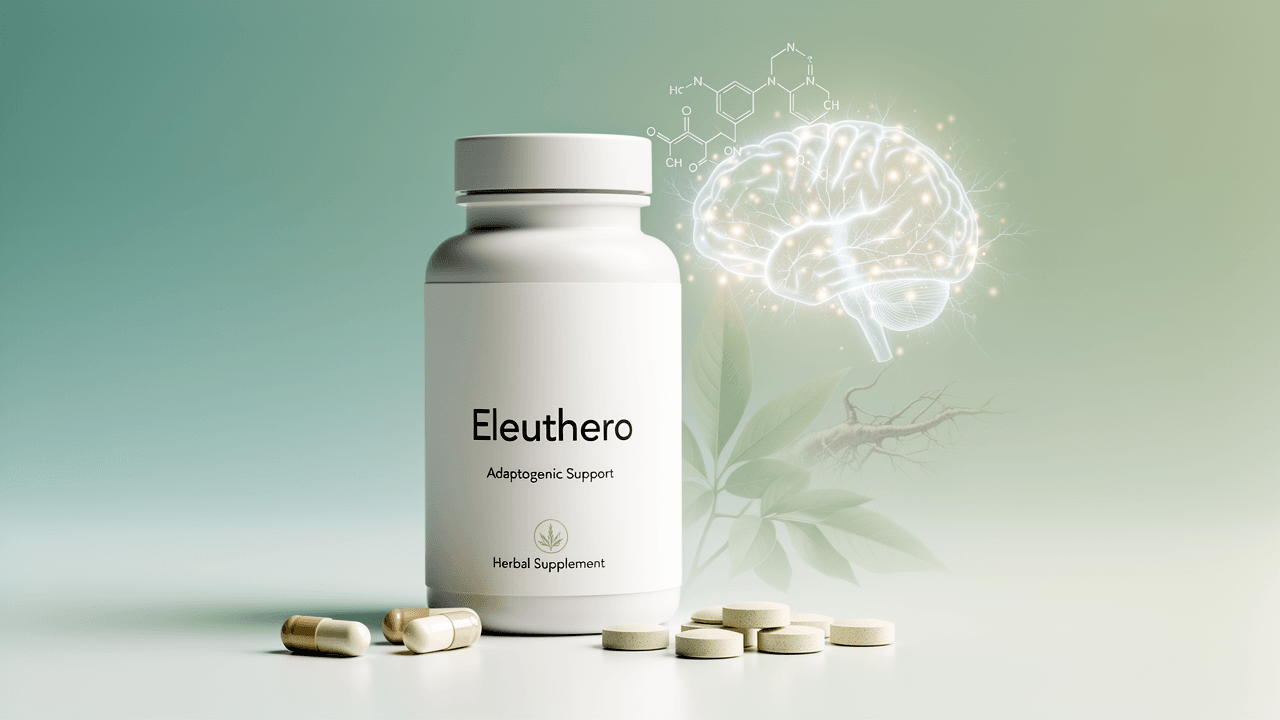
Eleuthero (Eleutherococcus senticosus), often called Siberian ginseng, is a woody shrub native to Russia, China, Korea, and Japan. It is not a true ginseng (Panax species), but it is grouped with adaptogens—herbs believed to enhance the body’s resistance to physical, mental, and environmental stress.
What is in Eleuthero?
The main active compounds are:
- Eleutherosides (A–M) – glycosides considered the primary bioactive constituents
- Lignans, phenolic compounds, and polysaccharides – contribute to antioxidant, immune, and metabolic effects
Standardized extracts are typically labeled for eleutheroside B and E content (often 0.8–1.2%).
How Eleuthero Works in the Body
Research suggests several mechanisms:
HPA axis modulation (stress response)
- Eleuthero appears to influence the hypothalamic–pituitary–adrenal (HPA) axis, which controls cortisol and stress hormone output.
- Animal studies show eleuthero can normalize stress-induced changes in corticosterone and improve stress tolerance.
Neuroprotective and cognitive effects
- Eleutherosides and phenolic compounds exhibit antioxidant properties, helping reduce oxidative stress in the brain.
- Preclinical work suggests modulation of dopamine, serotonin, and acetylcholine systems, which may underlie effects on mood, motivation, and cognition.
Energy metabolism and anti-fatigue actions
- Some human and animal studies suggest eleuthero may enhance aerobic performance, increase glycogen storage, and reduce accumulation of fatigue-related metabolites (e.g., lactate).
- This is likely related to improved mitochondrial efficiency and better utilization of fatty acids and glucose.
Immune modulation
- Eleuthero extracts can stimulate aspects of innate and adaptive immunity, including increased activity of natural killer (NK) cells and modulation of cytokines in some trials.
Overall, eleuthero is best described as a broad adaptogen with modest, multi-system effects rather than a strong single-target nootropic.
2. Key Benefits of Eleuthero
1. Support for Stress Resilience and Fatigue
Eleuthero is traditionally used to improve resistance to stress and fatigue. Modern studies suggest it may:
- Reduce subjective feelings of fatigue in mentally or physically demanding situations
- Help maintain performance under stress (e.g., shift work, intense training)
However, effects are generally mild to moderate and may depend on dose, extract quality, and duration.
2. Cognitive Performance and Mental Clarity
As a nootropic, eleuthero may:
- Support attention and mental performance under fatigue or stress
- Help maintain accuracy and speed in cognitive tasks during demanding work schedules
Evidence indicates benefits are more pronounced under stressful or fatiguing conditions, rather than in fully rested, healthy individuals.
3. Immune Support (Especially Under Stress)
Eleuthero has been investigated for:
- Enhancing NK cell activity and some immune markers
- Possibly reducing incidence or duration of common colds when combined with other herbs
Findings are mixed, and many immune studies use combination formulas, making it hard to isolate eleuthero’s specific contribution.
4. Physical Endurance and Exercise Capacity
Some trials (especially older Soviet-era research) report improvements in:
- Endurance performance (time to exhaustion)
- Recovery from intense physical work
More recent, rigorous trials show small or inconsistent benefits, suggesting eleuthero is not a strong ergogenic aid but may offer subtle anti-fatigue support.
3. Research Findings on Eleuthero
Below are key human studies, with details on design, sample size, and outcomes.
3.1 Fatigue and Mental Performance
Study: Night-shift workers and mental performance
- Design: Randomized, double-blind, placebo-controlled
- Participants: 76 night-shift workers
- Intervention: Eleuthero extract (standardized; ~400 mg/day) vs placebo for 8 weeks
- Outcomes: Cognitive tests, subjective fatigue
Findings:
- Eleuthero group showed improved mental performance (attention and speed) and reduced subjective fatigue compared with placebo, particularly in those with higher baseline fatigue.
- Effects were modest but statistically significant in some measures.
Limitations:
- Specific extract composition and eleutheroside content not always fully disclosed.
- Benefits were more pronounced in those under higher stress; generalizability to low-stress populations is uncertain.
3.2 Cognitive Function and Stress
Study: Cognitive performance under stress
- Design: Randomized, double-blind, placebo-controlled, crossover
- Participants: 20–30 healthy adults (small sample)
- Intervention: Single doses of eleuthero extract (e.g., 800–1200 mg) vs placebo before cognitive stress tasks
- Outcomes: Reaction time, accuracy, mental fatigue ratings
Findings:
- Eleuthero showed small improvements in accuracy and reaction time in some tasks, particularly under fatigue or time pressure.
- Subjective mental fatigue scores were slightly reduced.
Limitations:
- Small sample size and single-dose design.
- Short-term data; no conclusions on long-term cognitive enhancement.
3.3 Physical Endurance and Exercise
Study: Endurance in recreational athletes
- Design: Randomized, double-blind, placebo-controlled
- Participants: ~45 recreational male athletes
- Intervention: Eleuthero extract (e.g., 800–1200 mg/day) vs placebo for 8 weeks
- Outcomes: VO₂max, time to exhaustion, heart rate, lactate
Findings:
- Some improvements in time to exhaustion and lower heart rate at submaximal workloads in the eleuthero group.
- VO₂max changes were small and sometimes not statistically significant.
Limitations:
- Modest sample size.
- Benefits were not large; results vary across different studies and extracts.
3.4 Immune Function and Infections
Study: Immune markers in healthy adults
- Design: Randomized, double-blind, placebo-controlled
- Participants: ~40–50 healthy adults
- Intervention: Eleuthero extract (standardized; ~400 mg/day) vs placebo for 4–6 weeks
- Outcomes: NK cell activity, lymphocyte counts, cytokines
Findings:
- Some trials show increased NK cell activity and modest changes in certain immune markers compared to placebo.
- Clinical relevance (e.g., fewer infections) is not consistently demonstrated.
Cold/flu studies:
- Often use combination products (e.g., eleuthero + Andrographis or other herbs).
- Some show reduced duration and severity of colds, but it is impossible to attribute benefits solely to eleuthero.
3.5 Blood Sugar and Metabolic Effects
Evidence in humans is limited, but:
- Small trials and animal studies suggest mild improvements in glucose tolerance and possible enhancement of insulin sensitivity.
- These effects are not strong enough to consider eleuthero a primary treatment for diabetes.
Overall Quality of Evidence
- Many eleuthero studies are small, short-term, and use varying extracts and doses.
- There is some evidence for fatigue reduction, stress resilience, and modest cognitive/physical performance support, particularly in stressed or fatigued individuals.
- Evidence for strong nootropic effects in healthy, rested adults is limited.
- More large, standardized, long-term trials are needed.
4. Best Sources & Dosage – Forms, Dosing, Timing, Safety
4.1 Forms of Eleuthero
Standardized Extracts (most common for supplements)
- Typically standardized to 0.8–1.2% eleutherosides (B and E).
- Available in capsules, tablets, or liquid extracts/tinctures.
Dried Root (tea or decoction)
- Less precise dosing; active constituent content can vary.
- Often used traditionally, but not ideal for targeted, consistent nootropic use.
Combination Formulas
- Often combined with other adaptogens (e.g., Rhodiola, Schisandra, Panax ginseng) or immune herbs.
- Can have synergistic effects but complicate safety and interaction profiles.
When using eleuthero for specific goals (stress, cognition, performance), standardized extracts are preferable for predictable dosing.
4.2 Evidence-Informed Dosage Guidelines
General note: Individual responses vary. Start at the low end of ranges, especially if sensitive to stimulants or herbs.
1. For General Stress Resilience & Adaptogenic Support
- Dose: 300–600 mg/day of standardized extract (0.8–1.2% eleutherosides), typically divided into 1–2 doses.
- Timing: Morning and early afternoon; avoid late evening if it feels stimulating.
- Duration: 6–12 weeks, followed by a 1–2 week break is a common herbal practice (not strictly evidence-based but used to reduce tolerance and monitor effects).
2. For Fatigue and Mental Performance Under Stress
- Dose: 400–800 mg/day of standardized extract, divided into 1–2 doses.
- Use case: Shift workers, students in exam periods, high-workload periods.
- Onset: May see some benefit within 1–2 weeks, with full effects often assessed at 4–8 weeks.
3. For Physical Endurance and Training Support
- Dose: 800–1200 mg/day of standardized extract, often split into 2 doses.
- Timing: Morning and 30–60 minutes before training, or simply morning + midday.
- Duration: 6–8 weeks cycles used in many studies.
4. For Immune Support (Adjunctive)
- Dose: 300–600 mg/day of standardized extract.
- Timing: Morning; can be taken with food.
- Duration: 4–8 weeks during high-stress or high-exposure periods.
These ranges are based on doses commonly used in clinical trials and traditional practice. There is no universally agreed “optimal” dose.
4.3 How to Take Eleuthero
- With or without food: Can be taken either way; taking with food may reduce any mild stomach upset.
- Cycling: Many herbalists recommend 6–12 weeks on, 1–2 weeks off, especially at higher doses.
- Stacking with other nootropics:
- Often combined with Rhodiola, L-theanine, or B vitamins for stress and cognition.
- Use caution when stacking with stimulants (caffeine, modafinil, amphetamines) due to potential additive effects on heart rate and blood pressure.
4.4 Safety, Side Effects, and Drug Interactions
Overall, eleuthero is generally well tolerated when used at standard doses for short to moderate durations (up to ~3 months). However, it is not risk-free.
Common Side Effects (Usually Mild)
- Insomnia or sleep disturbance (more likely if taken late in the day or at higher doses)
- Nervousness, irritability, or restlessness in sensitive individuals
- Headache
- Mild gastrointestinal discomfort (nausea, stomach upset)
These effects often resolve with dose reduction or taking earlier in the day.
Less Common / Reported Effects
- Increased blood pressure in some individuals, particularly at high doses or in those with pre-existing hypertension.
- Palpitations or rapid heartbeat (rare, usually in combination with other stimulants).
If you notice sustained increases in blood pressure or heart rate, discontinue and consult a clinician.
4.5 Drug Interactions
Data on interactions are limited, but several theoretical and case-based concerns exist:
Antihypertensive medications (blood pressure drugs)
- Eleuthero may raise or lower blood pressure in some people.
- It could potentially reduce the effectiveness of blood pressure medications or add variability.
- Monitor blood pressure closely; consult your clinician before combining.
Stimulant medications
- Examples: amphetamine salts (Adderall), methylphenidate (Ritalin/Concerta), modafinil, high-dose caffeine.
- Possible additive stimulatory effects on heart rate, blood pressure, and anxiety.
- Use cautiously, start with low eleuthero doses, and monitor cardiovascular and anxiety symptoms.
Sedatives and CNS depressants
- Because eleuthero may have mild stimulating properties, it could partially counteract sedative medications or supplements.
Antidiabetic medications
- Mild blood sugar–lowering effects have been reported in some studies.
- In theory, eleuthero could enhance hypoglycemic effects, increasing risk of low blood sugar when combined with insulin or oral antidiabetics.
- Diabetics should monitor glucose more frequently when starting or changing dose.
Anticoagulants / Antiplatelet drugs
- Limited data specifically on eleuthero, but some adaptogens and herbal extracts can affect platelet function or drug metabolism.
- Use caution if on warfarin, DOACs, or antiplatelets; consult a healthcare professional.
CYP450 interactions (theoretical)
- Some in vitro data suggest eleuthero may influence certain CYP450 enzymes, potentially affecting metabolism of various drugs.
- Clinical significance is unclear; caution is warranted with narrow-therapeutic-index drugs (e.g., warfarin, anti-seizure medications, some antiarrhythmics).
Because herbal-drug interactions are under-researched, it is wise to involve your prescriber if you are on chronic medications.
4.6 Who Should and Shouldn’t Use Eleuthero
Likely Good Candidates (With Medical Guidance as Needed)
Healthy adults experiencing:
- Chronic psychological stress
- Mental or physical fatigue from work, study, or training
- Need for mild support for focus and performance under stress
Athletes or active individuals seeking subtle support for endurance and recovery (not as a primary performance enhancer).
Adults under high stress who want an adaptogenic herb and are not on complex medication regimens.
Use Only With Caution and Medical Supervision
- People with controlled hypertension or other cardiovascular conditions.
- People with diabetes or impaired glucose tolerance.
- Individuals on multiple prescription medications, especially:
- Blood pressure drugs
- Stimulants
- Anticoagulants
- Antidiabetics
- Narrow-therapeutic-index drugs
People Who Should Generally Avoid Eleuthero (Unless Specifically Advised by a Clinician)
Pregnant or breastfeeding women
- Safety data are insufficient; most guidelines recommend avoiding.
Children and adolescents
- Limited safety and efficacy data; avoid unless under pediatric specialist supervision.
Individuals with uncontrolled hypertension or significant cardiovascular disease
- Potential for increased blood pressure or heart rate.
People with bipolar disorder or severe anxiety disorders
- Any stimulating adaptogen may, in theory, worsen agitation, insomnia, or trigger mood swings in susceptible individuals.
Individuals with known allergy or hypersensitivity to eleuthero or closely related plants.
Practical Summary
- Role: Eleuthero is a classic adaptogen with modest evidence for supporting stress resilience, fatigue reduction, and performance under strain, with possible mild nootropic effects.
- Best use cases: Stressed or fatigued adults seeking gentle support rather than strong stimulation; adjunct to lifestyle interventions like sleep optimization, exercise, and nutrition.
- Typical dose: 300–800 mg/day of standardized extract (0.8–1.2% eleutherosides), taken in the morning and early afternoon for 6–12 weeks.
- Safety: Generally well tolerated, but may affect blood pressure, heart rate, and blood sugar; interactions with medications are possible.
- Not a replacement for medical treatment: Especially in hypertension, diabetes, mood disorders, or serious fatigue syndromes, eleuthero should be viewed as adjunctive, not primary therapy.
Anyone considering eleuthero—particularly those with medical conditions or on prescription medications—should discuss it with a qualified healthcare professional to individualize dose, monitor for interactions, and ensure safe use.