1. Understanding Cordyceps – What It Is and How It Works
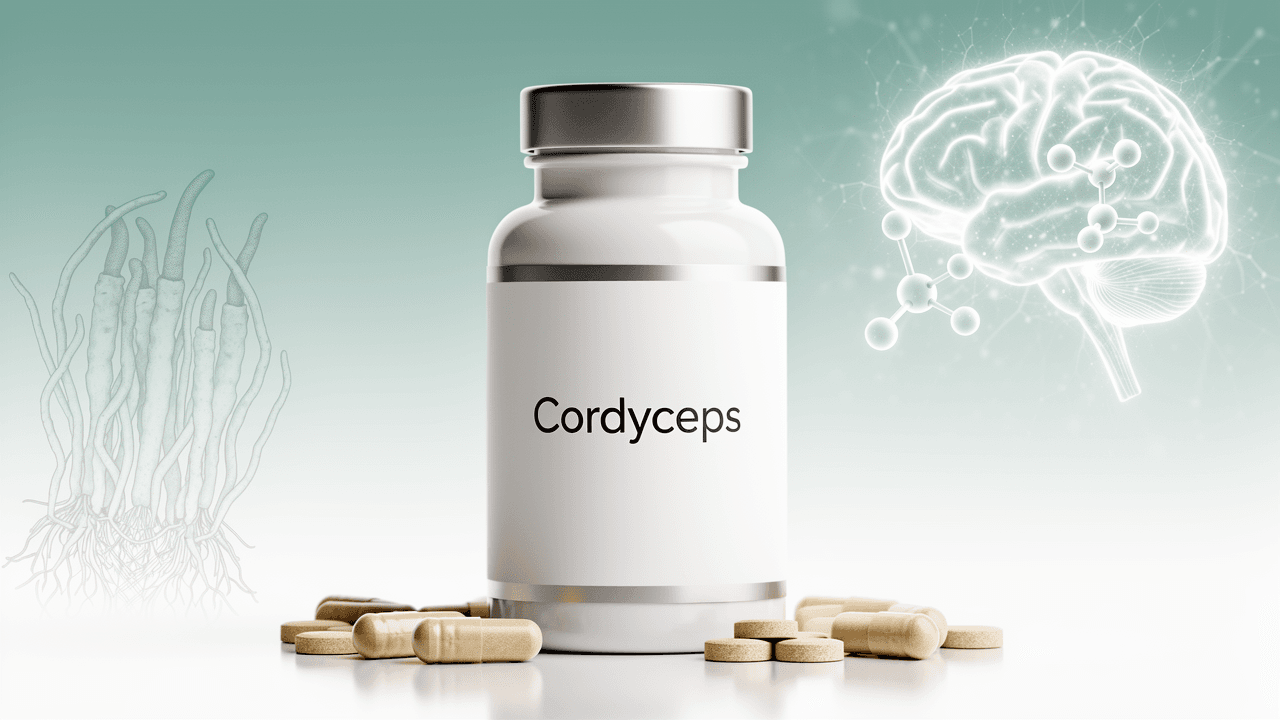
Cordyceps refers to a group of parasitic fungi, traditionally known from species that grow on insect larvae (notably Cordyceps sinensis). Modern supplements, however, are usually made from:
- Cordyceps militaris (fruiting body or mycelium)
- CS-4 (Paecilomyces hepiali) – a cultured mycelial strain developed in China as a substitute for wild C. sinensis
These cultivated forms are used because wild C. sinensis is extremely rare, often contaminated, and prohibitively expensive.
Key Active Compounds
Cordyceps contains several bioactive constituents thought to drive its effects:
- Cordycepin (3'-deoxyadenosine) – a nucleoside analog structurally similar to adenosine, implicated in energy metabolism, anti-inflammatory, and neuroprotective effects.
- Adenosine and related nucleosides – may influence ATP production and vasodilation.
- Polysaccharides (β-glucans) – immune-modulating and antioxidant effects.
- Sterols (e.g., ergosterol) – potential cholesterol-modulating and anti-inflammatory actions.
- Peptides and small molecules – additional antioxidant and mitochondrial effects (mostly shown in preclinical research).
How Cordyceps May Work in the Body
1. Mitochondrial and Energy Metabolism Support
Preclinical studies suggest cordyceps can:
- Enhance ATP production in mitochondria
- Improve oxygen utilization in muscle tissue
- Reduce oxidative damage to mitochondrial membranes
This may underlie reported benefits for stamina, fatigue, and exercise performance.
2. Modulation of Inflammation and Oxidative Stress
Cordycepin and polysaccharides:
- Downregulate pro‑inflammatory pathways (e.g., NF‑κB, TNF‑α, IL‑1β) in cell and animal models
- Increase endogenous antioxidant enzymes (SOD, catalase, glutathione peroxidase)
These effects may support vascular health, neuroprotection, and recovery from physical stress.
3. Immune Modulation
Cordyceps polysaccharides can:
- Modulate innate and adaptive immunity (e.g., macrophage activity, NK cells, T cells) in animal and in vitro research
- Show both immunostimulatory and immunoregulatory effects depending on context
Human data are more limited but suggest potential benefits in certain immune-related conditions.
4. Neuroprotective and Nootropic Mechanisms (Primarily Preclinical)
Animal and cell studies indicate cordyceps may:
- Reduce neuronal oxidative stress
- Support synaptic plasticity and neurotrophic factors (e.g., BDNF in some models)
- Improve learning and memory in rodent models of cognitive impairment
Human data on cognition are still sparse, so cordyceps should be viewed as a promising but not well-proven nootropic.
2. Key Benefits of Cordyceps as a Supplement
1. Exercise Performance and Reduced Fatigue
Cordyceps is best known for its potential to:
- Improve aerobic capacity (VO₂ max)
- Delay time to exhaustion
- Reduce subjective fatigue
Effects appear more consistent in less-trained individuals and may be modest in well-trained athletes.
2. Support for Healthy Aging and Vitality
Traditionally used in Chinese medicine for “kidney yang deficiency” (low vitality, libido, fatigue), modern studies suggest potential benefits for:
- Perceived energy and reduced fatigue in older adults
- Sexual function and libido in men (limited data)
- Metabolic health markers (lipids, blood sugar) in some populations
3. Immune and Respiratory Support
Cordyceps has been used historically for:
- Chronic cough and respiratory weakness
- General immune resilience
Modern research suggests:
- Modest improvements in respiratory function in certain clinical settings
- Immune-modulating effects that might be supportive but are not a substitute for medical treatment
4. Potential Cognitive and Mood Support (Emerging)
Animal and preliminary human data suggest possible:
- Improvements in mental energy and reduced fatigue
- Neuroprotective effects that could, in theory, support cognition
However, robust human trials specifically on memory, focus, or mood are lacking. Cordyceps should not be considered a primary treatment for depression, anxiety, or cognitive disorders.
3. Research Findings – What the Evidence Shows
3.1 Exercise Performance and Fatigue
VO₂ max and Endurance in Healthy Adults
Study: 20 healthy older adults (mean age ~65), double-blind, placebo-controlled, 12 weeks
Intervention: 333 mg cordyceps CS-4, 3×/day (≈ 1,000 mg/day)
Findings: Significant increase in VO₂ max and ventilatory threshold vs. placebo; participants reported improved exercise tolerance.
Limitations: Small sample, older adults only, CS-4 mycelial product (not fruiting body).
Study: 30 young adults (18–35), randomized, double-blind, 3 weeks
Intervention: 4 g/day cordyceps CS-4 vs. placebo
Findings: In less active participants, VO₂ max increased modestly vs. placebo; highly trained individuals showed minimal or no benefit.
Limitations: Short duration; sample included both trained and untrained, making subgroup interpretation important.
Perceived Fatigue and Physical Performance in Older Adults
- Study: 50 older adults, randomized, double-blind, 6 weeks
- Intervention: 1 g/day CS-4 vs. placebo
- Findings: Improved 6-minute walk distance and reduced self-reported fatigue vs. placebo.
- Limitations: Modest sample, single dose level, CS-4 only.
Takeaway: Evidence supports a small to moderate improvement in aerobic capacity and fatigue, especially in older or less-trained individuals. Effects in elite athletes are weaker.
3.2 Metabolic and Cardiovascular Markers
Type 2 Diabetes and Glucose Control
- Study: 95 patients with type 2 diabetes, randomized, double-blind, 90 days
- Intervention: 3 g/day cordyceps CS-4 vs. placebo
- Findings: Modest reductions in fasting blood glucose and HbA1c, and slight improvements in total cholesterol and triglycerides compared with placebo.
- Limitations: Single formulation and dose; not all studies replicate these effects.
Hyperlipidemia
- Several small Chinese trials (n=40–100 each, 1–3 months) using 1–3 g/day CS-4 reported:
- Decreases in total cholesterol and LDL
- Mild increases in HDL
However, many of these studies have limited methodological detail and may be subject to publication bias.
Takeaway: Cordyceps may offer adjunctive support for glucose and lipid management, but it should not replace standard care. Effects are generally modest.
3.3 Kidney and Liver Support (Clinical Settings)
Chronic Kidney Disease (CKD)
- Multiple Chinese trials (often n=30–120, 1–6 months) have used cordyceps (1–3 g/day) alongside conventional therapy in CKD.
- Some report improvements in:
- Serum creatinine and BUN
- Proteinuria
- eGFR trajectories
However, many studies have design limitations (e.g., open-label, lack of proper blinding, variable formulations).
Liver Function
- Small clinical studies in hepatitis and liver injury populations have shown:
- Mild improvements in ALT/AST levels
- Possible enhancement of antioxidant status
Again, these are mostly adjunctive and not stand-alone treatments.
Takeaway: There is suggestive but not definitive evidence that cordyceps may support kidney and liver function when used with standard care. Patients with organ disease should only use cordyceps under medical supervision.
3.4 Immune and Respiratory Health
Chronic Bronchitis and Respiratory Symptoms
- Older Chinese studies in chronic bronchitis (n=50–150, 1–3 months) using 1–3 g/day cordyceps reported:
- Decreased cough frequency and sputum
- Improved exercise tolerance and subjective breathing ease
These studies often lack modern methodological rigor but align with historical use for respiratory weakness.
Immune Modulation
- Human data are limited. Some small trials in individuals with low immune function report:
- Increased NK cell activity
- Improved T-cell counts
However, sample sizes are small and often lack robust controls.
Takeaway: Cordyceps may offer mild immune and respiratory support, but evidence is not strong enough to rely on it as a primary treatment for respiratory disease or immune disorders.
3.5 Cognitive and Mood Outcomes
Human trials directly assessing cognition are scarce.
- Study (Pilot): Small open-label or poorly controlled studies (n≈20–40) in older adults have reported improvements in subjective mental energy and fatigue, but not always objective cognitive tests.
Preclinical studies in rodents show:
- Improved learning and memory in models of aging or chemically induced cognitive impairment
- Reduced neuroinflammation and oxidative stress in the brain
Takeaway: Cordyceps is promising but unproven as a nootropic. Most evidence for cognitive benefits is preclinical or subjective.
4. Best Sources & Dosage – Forms, Dosing, Timing, Safety
4.1 Forms of Cordyceps Supplements
Cordyceps militaris (fruiting body)
- Often standardized for cordycepin and polysaccharides
- Usually grown on grain or other substrates
- Considered a good, sustainable, and potent source
Cordyceps CS-4 (mycelial extract)
- Cultured mycelium (Paecilomyces hepiali) grown in liquid fermentation
- Used in many Chinese clinical studies
- Often standardized for polysaccharide content (e.g., 7–10%)
Mycelium on grain (MOG)
- Mycelium grown directly on grain, then dried and milled
- Can contain a high proportion of grain starch; bioactive content may be lower
- Look for products that disclose beta-glucan and alpha-glucan content
Wild Cordyceps sinensis
- Rare, extremely expensive, and often contaminated or adulterated
- Not necessary for benefits; cultivated forms are preferred for safety and consistency
4.2 General Dosage Guidelines
Note: These are typical supplemental ranges used in studies and practice, not personalized medical advice. Start at the lower end and titrate as tolerated.
a) For General Health and Vitality
- Cordyceps extract (CS-4 or C. militaris):
- 500–1,000 mg per day, standardized extract (often 7–10% polysaccharides)
- Commonly taken in 1–2 divided doses
b) For Exercise Performance and Fatigue
- Typical study doses:
- 1,000–3,000 mg/day of CS-4 extract
- 1,000–2,000 mg/day of C. militaris extract
- Practical range:
- 1,000–2,000 mg/day, taken 30–60 minutes before exercise or divided morning and early afternoon
c) For Metabolic and Cardiovascular Support (Adjunctive)
- Common research doses:
- 2,000–3,000 mg/day CS-4 extract, often in divided doses
- Practical range (with medical guidance):
- 1,000–3,000 mg/day, divided 2–3 times daily with meals
d) For Potential Cognitive / Mental Energy Support
- No standardized dose; often follows general vitality range:
- 500–1,500 mg/day of standardized extract, typically in the morning and early afternoon
4.3 Timing and Stacking Considerations
Timing:
- Morning and early afternoon are preferred; avoid late-evening dosing if you find it stimulating.
- For exercise, take a dose 30–60 minutes before training.
With or without food:
- Can be taken with or without food; taking with food may reduce any mild GI discomfort.
Common combinations (stacks):
- For performance: Cordyceps + beta-alanine + creatine + caffeine (note: monitor total stimulant load)
- For stress/energy: Cordyceps + rhodiola + panax ginseng (be cautious in those with hypertension or anxiety)
- For immune support: Cordyceps + reishi + turkey tail (monitor for immune-related conditions)
4.4 Safety, Side Effects, and Interactions
Overall Safety Profile
In clinical studies up to 3 g/day for several months, cordyceps has generally been well tolerated.
Common, usually mild side effects:
- Gastrointestinal upset (nausea, diarrhea, dry mouth)
- Mild insomnia or restlessness (in sensitive individuals)
- Transient headache
These effects are usually dose-dependent and improve with dose reduction or taking with food.
Potential Drug Interactions
Anticoagulants / Antiplatelet Drugs
- Cordyceps may have mild antiplatelet effects in vitro.
- Caution with:
- Warfarin
- Direct oral anticoagulants (e.g., apixaban, rivaroxaban)
- Antiplatelets (e.g., aspirin, clopidogrel)
- Monitor for bleeding or bruising; consult a clinician before use.
Hypoglycemic Agents (Diabetes Medications)
- Because cordyceps can modestly lower blood glucose, it may have additive effects with:
- Insulin
- Metformin
- Sulfonylureas
- GLP‑1 agonists, SGLT2 inhibitors, etc.
- Risk: Hypoglycemia if combined without monitoring.
- Recommendation: Use only with medical supervision, with closer glucose monitoring.
- Because cordyceps can modestly lower blood glucose, it may have additive effects with:
Immunosuppressant Drugs
- Cordyceps has immune-modulating properties.
- Potential interaction with:
- Corticosteroids
- Calcineurin inhibitors (e.g., cyclosporine, tacrolimus)
- Biologics for autoimmune conditions or transplant rejection
- Risk: Theoretical interference with immunosuppression.
- Transplant patients and those on significant immunosuppression should avoid cordyceps unless specifically cleared by their specialist.
Stimulants and Blood Pressure Medications
- Some individuals experience increased energy or mild stimulation.
- Caution when combining with:
- Strong stimulants (e.g., high-dose caffeine, ADHD medications)
- Hypertension medications (the net effect on BP can vary)
- Monitor blood pressure and heart rate if you have cardiovascular disease.
Special Populations and Contraindications
Pregnancy and Breastfeeding
- Human safety data are insufficient.
- Animal data are limited and not conclusive.
- Recommendation: Avoid cordyceps during pregnancy and breastfeeding unless prescribed by a qualified clinician.
Autoimmune Diseases
- Because cordyceps can modulate immune activity, it could potentially exacerbate conditions like:
- Multiple sclerosis
- Rheumatoid arthritis
- Lupus (SLE)
- Inflammatory bowel disease
- Evidence is limited, but caution is warranted.
- Recommendation: Use only under supervision of a rheumatologist or relevant specialist.
- Because cordyceps can modulate immune activity, it could potentially exacerbate conditions like:
Bleeding Disorders
- Due to possible antiplatelet effects, individuals with:
- Hemophilia
- Thrombocytopenia
- Other bleeding disorders
- Should avoid cordyceps unless cleared by a hematologist.
- Due to possible antiplatelet effects, individuals with:
Severe Kidney or Liver Disease
- Although some studies suggest benefits in these populations, such patients are medically complex.
- Recommendation: Use only within a structured clinical protocol or under direct medical supervision.
Allergy and Sensitivity
- Rare allergic reactions (rash, itching, breathing difficulty) have been reported.
- Discontinue immediately and seek medical care if allergic symptoms occur.
4.5 Quality and Product Selection
To maximize safety and efficacy:
Choose standardized extracts
- Look for labels specifying:
- Species: Cordyceps militaris or CS-4 (Paecilomyces hepiali)
- Standardization: e.g., ≥ 20–30% polysaccharides, or declared cordycepin content
- Look for labels specifying:
Check for third‑party testing
- Certifications (e.g., NSF, USP, Informed-Choice) or lab reports for:
- Heavy metals (lead, arsenic, cadmium, mercury)
- Microbial contamination
- Pesticides
- Certifications (e.g., NSF, USP, Informed-Choice) or lab reports for:
Avoid unclear blends
- Beware of proprietary blends that do not specify:
- Exact mg of cordyceps
- Whether it is fruiting body or mycelium on grain
- Beware of proprietary blends that do not specify:
Verify origin and cultivation method
- Reputable brands typically disclose whether the product is:
- Organically grown
- Fruiting body vs. mycelium
- Tested for active compounds
- Reputable brands typically disclose whether the product is:
5. Who Should and Shouldn’t Use Cordyceps
5.1 Who May Benefit from Cordyceps
Cordyceps may be a reasonable option (with appropriate medical oversight when needed) for:
Healthy adults seeking mild performance enhancement
- Recreational exercisers or older adults looking to improve aerobic capacity and reduce fatigue.
Individuals with high physical or occupational demands
- Those experiencing physical fatigue or reduced stamina, after ruling out underlying medical conditions.
Adults interested in general vitality and healthy aging
- Particularly older adults wanting support for energy, respiratory function, and metabolic health, alongside lifestyle measures.
Biohackers and nootropic users
- Those looking for a low-to-moderate risk, modest-effect supplement for energy and resilience, understanding that cognitive benefits are not firmly established.
5.2 Who Should Use Cordyceps Only With Medical Supervision
- People with type 1 or type 2 diabetes on medication
- Individuals with cardiovascular disease (especially on multiple medications)
- Those with chronic kidney or liver disease
- Patients with chronic respiratory diseases (e.g., COPD, severe asthma)
- Individuals taking anticoagulants, antiplatelets, or immunosuppressants
In these cases, cordyceps should be considered an adjunct, not a replacement for standard medical care.
5.3 Who Should Probably Avoid Cordyceps
- Pregnant or breastfeeding women (due to lack of safety data)
- Transplant recipients or those on strong immunosuppressive therapy
- Individuals with autoimmune diseases unless their specialist agrees
- People with bleeding disorders or very high bleeding risk
- Anyone with a known allergy to mushrooms or molds should proceed with caution or avoid entirely
Practical Summary
- Cordyceps is a medicinal mushroom-derived supplement with the strongest evidence for improving exercise performance and reducing fatigue, especially in older or less-trained individuals.
- Evidence also suggests modest benefits for metabolic markers, respiratory function, and subjective vitality, while nootropic effects remain largely preclinical.
- Typical supplemental doses range from 500–2,000 mg/day of standardized extract for general use, and up to 3,000 mg/day in some clinical contexts.
- Cordyceps is generally well tolerated, but caution is needed in people on blood thinners, diabetes medications, immunosuppressants, and those with autoimmune or bleeding disorders.
- It is best used as part of a broader lifestyle strategy (nutrition, sleep, exercise), not as a stand‑alone solution.
Always discuss cordyceps use with a qualified healthcare professional, especially if you have underlying medical conditions or take prescription medications.