1. Understanding Chaga – What It Is and How It Works
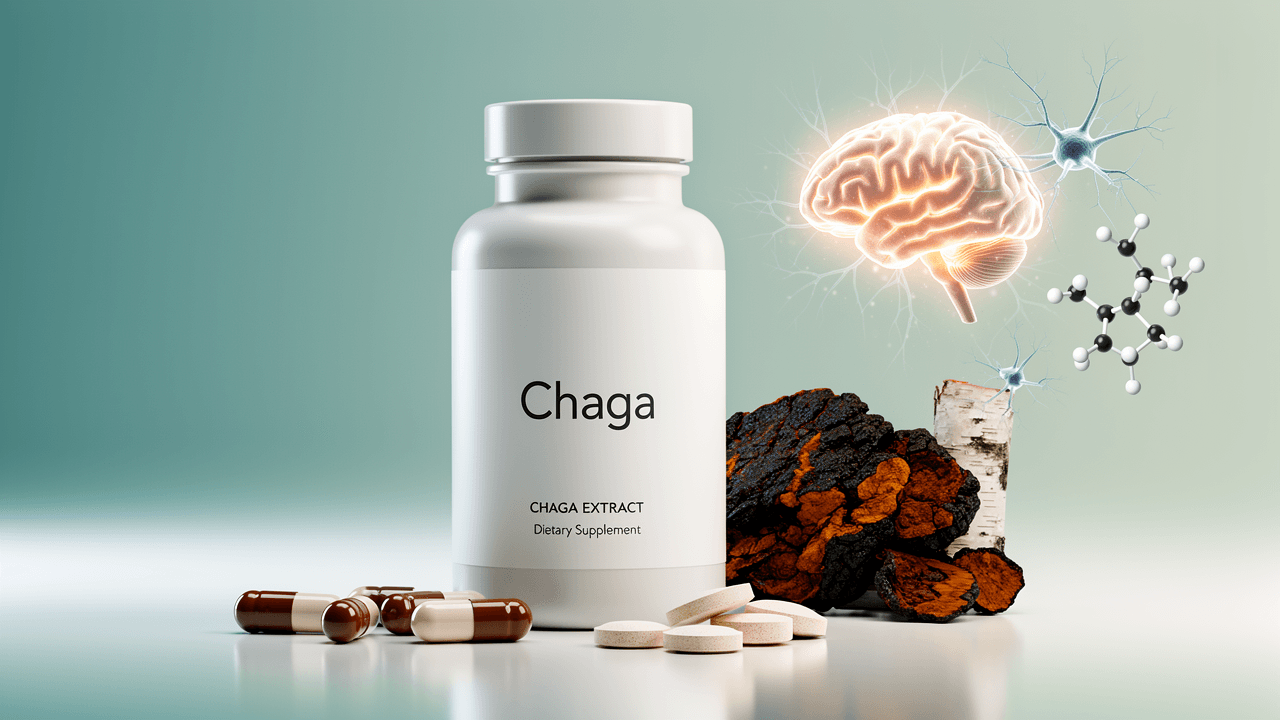
Chaga (Inonotus obliquus) is a parasitic fungus that primarily grows on birch trees in cold climates (Siberia, Northern Europe, North America). Unlike typical mushrooms with caps and stems, Chaga forms a hard, black, charcoal-like mass (a sterile conk) on the tree bark.
Traditionally, Chaga has been used in Russian, Baltic, and other Northern folk medicine as a tea for immune support, gastrointestinal complaints, and general vitality. Today it is sold as powders, capsules, tinctures, and teas, often marketed for immune health, antioxidant support, and general wellness.
1.1 Key Active Compounds
Chaga contains a variety of bioactive constituents:
- Polysaccharides (especially β-glucans) – associated with immune-modulating and potential anti-tumor effects
- Polyphenols and flavonoids – contribute to antioxidant activity
- Melanin-like pigments – strong radical-scavenging capacity, may support skin and DNA protection
- Triterpenoids (e.g., betulin, betulinic acid, inotodiol) – derived from birch bark; studied for anti-inflammatory and anti-proliferative properties
- Sterols (e.g., ergosterol) – may contribute to antioxidant and immune effects
1.2 How Chaga Works in the Body (Proposed Mechanisms)
Most data come from in vitro (cell) and animal studies. Human evidence is still limited.
1. Immune modulation
- Chaga polysaccharides, particularly β-glucans, appear to interact with immune cells (macrophages, natural killer cells, T cells).
- In cell and animal models, Chaga extracts can:
- Increase production of cytokines such as IL-6, TNF-α, IFN-γ (context-dependent)
- Enhance activity of natural killer (NK) cells and macrophages
- This suggests a modulating rather than simply “boosting” effect, though human confirmation is sparse.
2. Antioxidant and anti-inflammatory activity
- Chaga is rich in polyphenols and melanin-like pigments that scavenge reactive oxygen species (ROS).
- In experimental systems, Chaga extracts:
- Reduce markers of oxidative stress (e.g., lipid peroxidation)
- Upregulate endogenous antioxidant enzymes (e.g., superoxide dismutase, catalase, glutathione peroxidase)
- Triterpenoids show COX-2 and NF-κB modulation in cell models, suggesting anti-inflammatory potential.
3. Metabolic and blood sugar effects
- In rodent models of diabetes and metabolic syndrome, Chaga extracts improved insulin sensitivity and reduced blood glucose.
- Mechanisms may involve modulation of AMPK, improved hepatic glucose metabolism, and reduced oxidative stress.
4. Potential neuroprotective and nootropic relevance
- Chaga’s antioxidant and anti-inflammatory actions may indirectly support brain health by:
- Reducing oxidative damage in neurons
- Modulating inflammatory pathways involved in neurodegeneration
- Some animal studies suggest improved learning and memory performance under oxidative stress conditions, but direct human data on cognition are lacking.
2. Key Benefits – What Chaga May Help With
Based on current evidence, these are the most plausible benefits, with the caveat that human clinical trials are limited.
2.1 Antioxidant Support
Chaga is consistently shown to have high antioxidant capacity in vitro. This may help reduce oxidative stress, which is implicated in aging, cardiovascular disease, and neurodegeneration.
- Extracts demonstrate strong DPPH and ABTS radical scavenging activity in lab assays.
- Animal studies show reduced lipid peroxidation and improved endogenous antioxidant enzyme levels.
Practical implication: Chaga may be useful as part of an antioxidant-supportive regimen, but it should not replace a diet rich in fruits, vegetables, and other whole-food antioxidants.
2.2 Immune System Modulation
Chaga appears to modulate immune responses rather than simply “boost” them.
- Polysaccharides can enhance certain immune cell functions in experimental models.
- Animal data suggest enhanced resistance to some infections and tumor growth inhibition.
Practical implication: Chaga may support general immune health, but there is insufficient human evidence to recommend it as a treatment for infections, cancer, or autoimmune conditions.
2.3 Blood Sugar and Metabolic Support (Preclinical)
In diabetic and obese rodent models, Chaga extracts have:
- Reduced fasting blood glucose
- Improved insulin sensitivity
- Lowered triglycerides and total cholesterol
Practical implication: These findings are promising but cannot be assumed to translate directly to humans. Chaga should not replace prescribed medications for diabetes or hyperlipidemia.
2.4 Potential Neuroprotective Effects (Indirect)
Through antioxidant and anti-inflammatory effects, Chaga may offer indirect neuroprotection:
- Reduced oxidative damage in neuronal cell models
- Protection against experimentally induced cognitive impairment in animals
Practical implication: Chaga is sometimes marketed as a nootropic, but direct evidence for cognitive enhancement in healthy humans is currently insufficient. Its role is better described as systemic antioxidant and immune support that may secondarily benefit brain health.
3. Research Findings – What Studies Show
Human data on Chaga are sparse; most evidence is from in vitro and animal research.
3.1 Antioxidant and DNA Protection
In vitro DNA protection study
- Design: Human lymphocyte cells exposed to oxidative stress with or without Chaga extract
- Finding: Chaga extract reduced DNA damage markers and chromosomal aberrations induced by hydrogen peroxide.
- Implication: Suggests potential for DNA-protective effects under oxidative stress, but this is a cell-based model, not a human clinical outcome.
3.2 Immune and Anti-Tumor Activity (Preclinical)
Mouse tumor model (polysaccharide fraction)
- Sample: Mice implanted with sarcoma cells
- Intervention: Chaga polysaccharide extract administered intraperitoneally for several days (doses often in the range of 5–10 mg/kg in various studies)
- Outcomes:
- Inhibition of tumor growth compared to control
- Increased activity of NK cells and macrophages
- Limitations:
- Animal model with injected extract (not oral supplement)
- Doses and delivery route do not directly map to human supplement use
3.3 Blood Sugar and Metabolic Effects
Diabetic mouse study
- Sample: Mice with streptozotocin-induced diabetes
- Intervention: Oral Chaga extract (e.g., 100–200 mg/kg/day) for 6–8 weeks
- Findings:
- Lower fasting blood glucose
- Improved glucose tolerance
- Reduced oxidative markers in pancreatic tissue
- Implication: Supports potential for glycemic control and pancreatic protection in diabetes models.
High-fat diet mouse model
- Sample: Mice fed a high-fat diet to induce obesity and metabolic syndrome
- Intervention: Oral Chaga extract (dose similar range, ~100 mg/kg/day) for 6–8 weeks
- Outcomes:
- Reduced total cholesterol and triglycerides
- Improved insulin sensitivity
- Decreased inflammatory markers
- Limitations: Preclinical only; human trials are needed.
3.4 Neuroprotective/Anti-Fatigue Effects (Animal Data)
Cognitive and fatigue models in rodents (multiple small studies)
- Chaga extracts given orally for several weeks have been reported to:
- Improve performance in maze tests under oxidative stress conditions
- Increase time to exhaustion in forced-swim tests
- Reduce markers of oxidative damage in brain tissue
These results suggest potential neuroprotective and anti-fatigue properties, but again, no robust human trials confirm these effects.
3.5 Human Evidence
As of the latest available data, well-controlled human clinical trials on Chaga are extremely limited or absent. Most human references are:
- Traditional use reports
- Case reports
- Extrapolations from broader “medicinal mushroom” research (e.g., β-glucans from other species)
Therefore, all claimed benefits for humans should be viewed as preliminary and largely hypothesis-generating.
4. Best Sources & Dosage – Forms, Dosing, Timing, Safety
4.1 Common Supplement Forms
Hot-water extracts (tea or standardized extract)
- Focus on polysaccharides and some polyphenols
- Typically used for immune and general wellness support
Dual extracts (water + alcohol)
- Aim to capture both polysaccharides (water-soluble) and triterpenoids (alcohol-soluble)
- Often positioned as more “complete” extracts
Powdered raw Chaga (ground conk)
- Less standardized; composition depends on source and processing
- Typically brewed as tea; extraction efficiency varies
Tinctures
- Alcohol-based extracts, often emphasizing triterpenoids
- Sometimes combined with hot-water extraction steps
4.2 Evidence-Informed Dosage Ranges
Because high-quality human trials are lacking, dosage guidelines are based on traditional use, manufacturer standards, and extrapolation from animal data. Always follow the specific product’s instructions and consult a healthcare professional.
General wellness / antioxidant support
- Standardized extract (10:1 or similar):
- 250–500 mg once or twice daily (total 250–1,000 mg/day)
- Tea from dried Chaga chunks or powder:
- 2–4 g dried Chaga simmered in water for 15–60 minutes, consumed 1–2 times per day
Immune support (short-term, e.g., during higher stress periods)
- Standardized extract:
- 500–1,000 mg, 1–2 times daily (total 500–2,000 mg/day) for several weeks
- Use higher end of range only under professional supervision, especially if you take medications or have chronic conditions.
Metabolic support (experimental, adjunct only)
- Human-equivalent doses extrapolated from rodent studies typically fall around:
- 500–1,500 mg/day of extract in divided doses
- Should be considered adjunctive to diet, exercise, and prescribed medication—not a replacement.
Nootropic / brain health support (indirect)
- No specific proven cognitive dose. Typical ranges:
- 500–1,000 mg/day of dual extract, or 1–2 cups of Chaga tea daily
4.3 Timing
- Can be taken with or without food, though some people find it gentler with food.
- For potential energy/anti-fatigue effects, morning or early afternoon is common.
- For general immune/antioxidant support, splitting the dose (morning and evening) may help maintain more stable exposure.
4.4 Quality Considerations
- Look for products that:
- Specify Inonotus obliquus (fruiting body/conk) rather than mycelium on grain
- Provide standardization (e.g., ≥20–30% polysaccharides, or specific β-glucan content)
- Are third-party tested for heavy metals, pesticides, and microbial contamination
- Wild-harvested Chaga can accumulate heavy metals from the environment; testing is important.
4.5 Safety, Side Effects, and Interactions
Overall safety profile:
Chaga is generally well tolerated in traditional use and short-term supplementation, but long-term safety and high-dose safety are not well established.
4.5.1 Possible Side Effects
Most reported effects are mild and infrequent:
- Gastrointestinal discomfort (nausea, bloating, diarrhea, or constipation)
- Dry mouth or changes in taste
- Headache or mild dizziness in sensitive individuals
- Allergic reactions (rare): rash, itching, or respiratory symptoms
If you experience persistent or severe side effects, discontinue use and consult a healthcare provider.
4.5.2 Potential Drug Interactions
1. Anticoagulants and antiplatelet drugs
- Chaga may have antiplatelet or mild anticoagulant properties based on in vitro data.
- Possible increased bleeding risk when combined with:
- Warfarin
- Direct oral anticoagulants (e.g., apixaban, rivaroxaban)
- Aspirin, clopidogrel, NSAIDs
2. Hypoglycemic agents (diabetes medications)
- Because animal studies show glucose-lowering effects, Chaga could theoretically enhance the effect of insulin or oral hypoglycemics, increasing risk of hypoglycemia.
- Use caution with:
- Insulin
- Metformin
- Sulfonylureas (e.g., glipizide, glyburide)
- Other glucose-lowering drugs
3. Immunosuppressants
- Due to immune-modulating activity, Chaga may interfere with:
- Corticosteroids (at immunosuppressive doses)
- Calcineurin inhibitors (e.g., cyclosporine, tacrolimus)
- Biologic agents used for autoimmune diseases or after organ transplantation
- This could theoretically reduce the effectiveness of immunosuppressive therapy.
4. Chemotherapy and radiotherapy
- Preclinical data show both anti-tumor and immune-modulating effects, but interactions with cancer treatments are poorly understood.
- There is concern that strong antioxidants may sometimes interfere with certain chemo/radiation mechanisms, though data are mixed and context-dependent.
- Cancer patients should only use Chaga under oncology supervision.
4.5.3 Special Safety Concerns
Oxalate content and kidney risk
- Some analyses have found very high oxalate levels in Chaga.
- A published case report described oxalate nephropathy (kidney damage) in an individual consuming large quantities of Chaga tea daily over a prolonged period.
- Individuals with a history of kidney stones, chronic kidney disease, or hyperoxaluria should avoid or strictly limit Chaga.
Autoimmune conditions
- Because Chaga modulates immune activity, it may theoretically exacerbate autoimmune conditions (e.g., lupus, rheumatoid arthritis, multiple sclerosis) in some individuals.
- People with autoimmune diseases should consult a rheumatologist or relevant specialist before use.
4.6 Who Should and Shouldn’t Use Chaga
4.6.1 Likely Appropriate Candidates (with medical guidance)
- Adults seeking general antioxidant and immune support as part of a broader lifestyle program
- Individuals interested in traditional medicinal mushrooms for wellness, who:
- Have no major chronic kidney disease
- Are not on anticoagulants, immunosuppressants, or intensive diabetes therapy
- Are not pregnant or breastfeeding
Chaga should be framed as a supportive supplement, not a primary treatment.
4.6.2 People Who Should Avoid Chaga (or Use Only Under Close Supervision)
Pregnant or breastfeeding women
- Insufficient safety data; generally recommended to avoid.
Children and adolescents
- Lack of pediatric safety data; avoid unless specifically advised by a pediatric specialist.
Individuals with kidney disease or history of kidney stones
- Due to high oxalate content and reported cases of oxalate nephropathy.
Patients on anticoagulant or antiplatelet therapy
- Warfarin, DOACs, aspirin, clopidogrel, high-dose NSAIDs – risk of increased bleeding.
People on insulin or multiple glucose-lowering medications
- Risk of hypoglycemia; if used at all, must be closely monitored and supervised.
Organ transplant recipients or those on immunosuppressive therapy
- Potential interference with immunosuppression.
Individuals with active cancer undergoing chemotherapy or radiotherapy
- Only consider under direct guidance from an oncologist due to uncertain interactions.
People with known mushroom allergies
- Risk of cross-reactivity; avoid.
5. Practical Summary
- Chaga (Inonotus obliquus) is a birch-growing fungus rich in polysaccharides, polyphenols, melanin-like pigments, and triterpenoids.
- Evidence from cell and animal studies supports antioxidant, immune-modulating, and metabolic effects; robust human clinical data are lacking.
- Typical supplemental doses range from 250–1,000 mg/day of standardized extract, or 1–2 cups of tea daily, with higher doses reserved for short-term use under professional supervision.
- Safety concerns include possible drug interactions, high oxalate content (kidney risk), and uncertain effects in autoimmune disease, pregnancy, and cancer therapy.
- Chaga may be reasonable as a supportive wellness supplement for some adults, but it should not replace evidence-based treatments, and medical consultation is recommended—especially if you take medications or have chronic health conditions.