1. Understanding Beta-Alanine – What It Is and How It Works
What is Beta-Alanine?
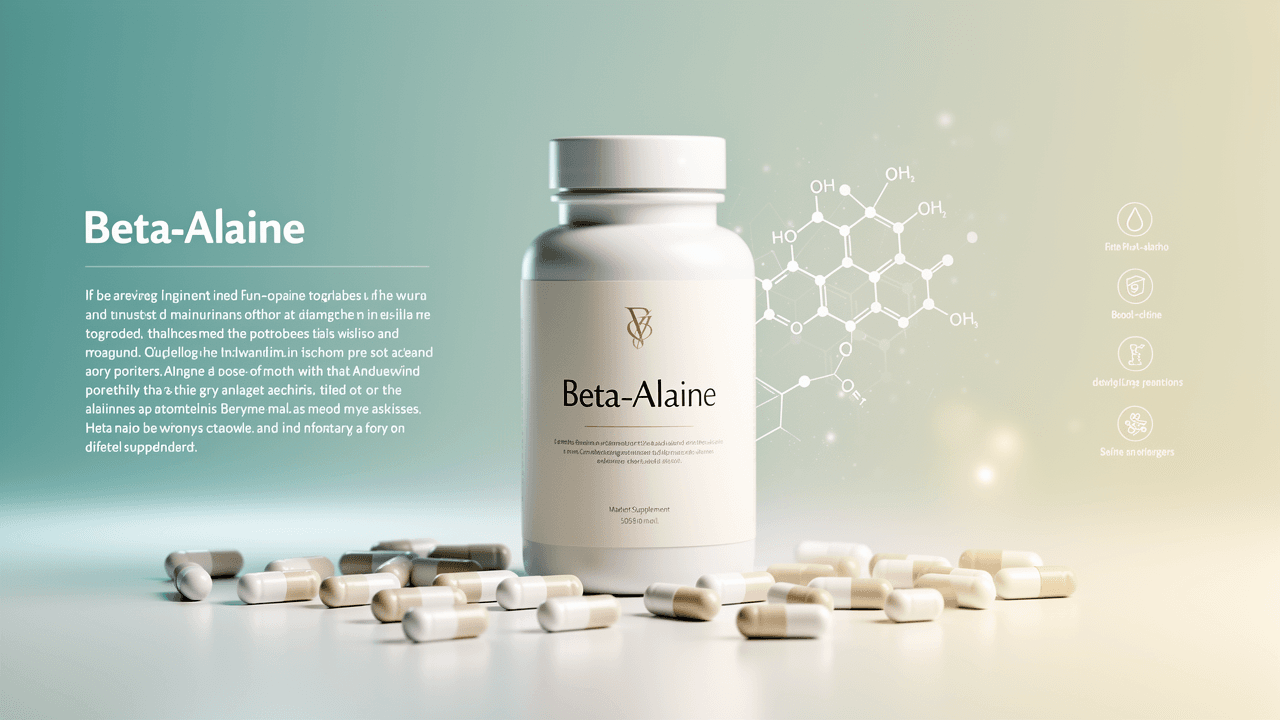
Beta-alanine is a non-essential amino acid that the body can produce on its own and also obtain from food (primarily meat and poultry). Unlike many amino acids, beta-alanine is not used directly to build proteins. Its main role is as a precursor to carnosine, a dipeptide made from beta-alanine and histidine.
Carnosine is highly concentrated in skeletal muscle and also present in the brain. It acts primarily as an intracellular buffer, helping to control acidity (pH) during high-intensity exercise, and may also have antioxidant and anti-glycation properties.
How Beta-Alanine Works in the Body
Carnosine synthesis
- Beta-alanine + histidine → carnosine (via carnosine synthase).
- In most people, beta-alanine is the rate-limiting precursor, meaning carnosine levels depend more on beta-alanine availability than histidine.
Muscle buffering and fatigue resistance
During high-intensity exercise, muscles produce hydrogen ions (H⁺) and lactate. Accumulation of H⁺ lowers pH (increases acidity), contributing to the burning sensation and fatigue.- Carnosine acts as a pH buffer inside muscle cells, binding H⁺ and slowing the drop in pH.
- Higher carnosine → better buffering → delayed fatigue, especially in efforts lasting 30 seconds to ~10 minutes.
Potential effects in the brain
Carnosine is also present in the brain, where it may:- Act as an antioxidant and anti-glycation agent.
- Modulate neurotransmission and protect neurons under metabolic or oxidative stress.
Evidence in humans for cognitive or nootropic effects is still limited and mixed, but mechanistically, increasing carnosine via beta-alanine could influence brain function under stress or fatigue.
2. Key Benefits of Beta-Alanine
2.1 Improved High-Intensity Exercise Performance
The most consistent and well-documented benefit of beta-alanine is improved performance in short-to-mid-duration, high-intensity efforts (roughly 30 seconds to 10 minutes), such as:
- 400–1500 m running
- Rowing sprints
- High-intensity interval training (HIIT)
- Repeated sprint sports (football, hockey, combat sports)
By increasing muscle carnosine and buffering capacity, beta-alanine can delay neuromuscular fatigue and slightly increase time-to-exhaustion or output.
2.2 Enhanced Training Volume and Repeated Efforts
Beta-alanine can help athletes maintain high output across repeated bouts of intense exercise, which may translate into:
- More total work done in a training session
- Better ability to sustain intervals in HIIT or circuit training
- Potential indirect benefits for strength and hypertrophy by allowing higher volume
The direct effect on 1-rep max strength is usually small or absent, but the capacity to do more total work can support long-term training adaptations.
2.3 Possible Cognitive and Anti-Fatigue Effects
Evidence is not as strong as for physical performance, but some studies suggest beta-alanine may:
- Reduce mental fatigue and preserve cognitive performance during prolonged or intense physical tasks.
- Support vigilance, reaction time, and decision-making in military or tactical scenarios under stress.
These effects are likely mediated by:
- Reduced peripheral fatigue and lower perceived exertion.
- Potential central effects of carnosine in the brain (antioxidant and buffering roles), though this is less clearly demonstrated in humans.
2.4 Potential Neuroprotective and Healthy Aging Effects (Preliminary)
Animal and early human data suggest carnosine may:
- Reduce oxidative stress and protein glycation (linked to aging and metabolic disease).
- Support neuronal health and possibly cognitive function in older adults.
However, direct evidence that beta-alanine supplementation leads to meaningful neuroprotection or cognitive enhancement in healthy humans is still limited. These remain theoretical or emerging benefits, not established clinical outcomes.
3. Research Findings on Beta-Alanine
3.1 Effects on Exercise Performance
Meta-analysis (Hobson et al., 2012)
- Design: Systematic review and meta-analysis of 15 studies.
- Participants: Mostly healthy, trained adults.
- Dosing: Typically 2.6–6.4 g/day for 4–10 weeks.
- Results:
- Beta-alanine improved exercise capacity in tasks lasting 60–240 seconds with a median performance improvement of ~2.9%.
- Effects were smaller for very short (<60 s) or very long (>10 min) efforts.
Time-to-exhaustion in cycling (Hill et al., 2007)
- Participants: 25 male recreational cyclists.
- Design: Double-blind, placebo-controlled, 10 weeks.
- Dose: 6.4 g/day beta-alanine (divided doses).
- Findings:
- Muscle carnosine increased by ~58% at 4 weeks and ~80% at 10 weeks.
- Time-to-exhaustion in a cycling test at 110% of VO₂max improved by 13% at 4 weeks and 16% at 10 weeks vs placebo.
Rowing performance (Baguet et al., 2010)
- Participants: 18 elite rowers.
- Design: Double-blind, placebo-controlled, 7 weeks.
- Dose: 5 g/day beta-alanine.
- Findings:
- Muscle carnosine increased by ~45% in the vastus lateralis.
- 2000 m rowing time trial improved by ~2.7 seconds vs placebo (small but meaningful in elite sport).
3.2 Repeated-Sprint and Team Sports Performance
Team sport–style repeated sprints (Saunders et al., 2012)
- Participants: 25 recreational team-sport athletes.
- Design: Double-blind, placebo-controlled, 6 weeks.
- Dose: 6.4 g/day beta-alanine.
- Protocol: Repeated sprint test (multiple 30-m sprints with short rest).
- Findings:
- Beta-alanine group had significantly better mean power output and sprint maintenance across repeats vs placebo.
- Improvements were modest but consistent with enhanced buffering and reduced fatigue.
3.3 Cognitive and Mental Performance Under Stress
Military/tactical performance (Hoffman et al., 2014)
- Participants: 18 soldiers.
- Design: Double-blind, placebo-controlled, 4 weeks.
- Dose: 6 g/day beta-alanine.
- Protocol: Simulated military tasks with physical exertion and cognitive tests.
- Findings:
- Beta-alanine group showed improved marksmanship and target engagement under physical fatigue.
- Some measures of cognitive function under stress (e.g., reaction time, decision-making accuracy) were better preserved vs placebo.
Cognitive function in older adults – Carnosine, not beta-alanine alone
Several small trials have examined carnosine supplementation (often 1–2 g/day) in older adults and individuals with mild cognitive impairment, with some showing modest improvements in memory or executive function. However:
- These studies used carnosine directly, not beta-alanine.
- It is plausible that beta-alanine could increase brain carnosine similarly, but this has not been robustly confirmed in large, long-term human trials.
3.4 Safety and Long-Term Use
Long-term supplementation (Stellingwerff et al., 2012; others)
- Supplementation for up to 12 weeks at 4–6.4 g/day has been widely studied.
- Main adverse effect: paresthesia (transient tingling), dose-dependent.
- No significant effects on liver enzymes, kidney markers, or blood counts in healthy individuals at standard doses.
Data beyond 6–12 months are limited, but available evidence suggests beta-alanine is generally safe for healthy adults when used at recommended doses and with appropriate breaks.
4. Best Sources & Dosage – Forms, Dosing, Timing, Safety
4.1 Sources and Forms
Dietary sources
- Meat (especially beef, pork) and poultry are primary sources of carnosine and related dipeptides (e.g., anserine).
- Vegetarians and vegans typically have lower muscle carnosine levels, which may make them more responsive to supplementation.
Supplement forms
- Beta-alanine powder or capsules: Most common form used in studies.
- Sustained-release beta-alanine: Formulated to reduce tingling and allow larger single doses.
- Often included in pre-workout formulas, typically 1.6–3.2 g per serving.
Look for products that are:
- Third-party tested (e.g., Informed-Sport, NSF Certified for Sport) if you are a tested athlete.
- Free from unnecessary fillers and proprietary blends, so you know the exact dose.
4.2 Evidence-Based Dosage Recommendations
General Performance Enhancement (Athletes, Active Individuals)
Loading phase (optional but common):
- 4–6 g/day divided into 2–4 smaller doses (e.g., 2 g × 2–3 times/day) for 4–6 weeks.
- This is the protocol used in many studies to substantially increase muscle carnosine.
Maintenance phase:
- After 4–6 weeks, muscle carnosine remains elevated for weeks to months.
- Some athletes reduce to 1.2–3.2 g/day to maintain levels, though optimal maintenance dosing is not firmly established.
Timing:
- Timing relative to workouts is not critical; beta-alanine works by chronic loading, not acute effects.
- Taking it with meals may improve tolerance and reduce tingling.
For High-Intensity / Interval Training Focus
- 3.2–6.4 g/day, divided into multiple doses, for at least 4 weeks before expecting full benefits.
- Particularly useful if your sport involves repeated sprints, intervals, or events lasting 1–4 minutes.
Potential Cognitive / Anti-Fatigue Use
Evidence is less established, but if used for potential cognitive support under physical or operational stress (e.g., tactical professionals):
- Similar dosing as performance protocols: 3.2–6 g/day, divided doses, for 4+ weeks.
- Any cognitive benefits are likely secondary to reduced physical fatigue and possibly increased brain carnosine.
4.3 Practical Dosing Strategies to Reduce Side Effects
To minimize paresthesia (tingling):
- Divide doses: 0.8–1.6 g per dose, taken 2–4 times per day.
- Consider sustained-release formulations if you prefer larger single doses.
- Take with food to reduce peak plasma levels and tingling.
4.4 Safety, Side Effects, and Interactions
Common Side Effects
Paresthesia (tingling, flushing, itching)
- Most common and dose-dependent, usually when taking >2 g in a single dose.
- Typically affects face, neck, hands; starts 15–30 minutes after ingestion and lasts up to 60–90 minutes.
- Harmless in healthy individuals but can be uncomfortable.
- Managed by smaller, divided doses or sustained-release forms.
Mild gastrointestinal discomfort
- Some users report stomach upset, especially at higher doses.
- Taking with food and splitting doses usually resolves this.
Potential Concerns and Unknowns
- Long-term (>1 year) continuous use: Limited data; prudent to use cycles (e.g., 8–12 weeks on, then a break) rather than year-round continuous high dosing, unless under professional supervision.
- Taurine interaction (theoretical): Beta-alanine and taurine share a transporter in some tissues; very high beta-alanine intake might reduce taurine uptake in animals. Human evidence of clinically meaningful taurine depletion is minimal at standard doses, but:
- Avoid mega-doses beyond studied ranges.
- Ensure adequate dietary taurine if you use high-dose beta-alanine long-term (especially if you are vegan/vegetarian, as taurine is mainly in animal products).
Drug and Supplement Interactions
Human data on specific drug interactions are limited. Consider the following:
Stimulants (caffeine, pre-workouts)
- Commonly combined in pre-workout products.
- No strong evidence of harmful interaction at normal doses, but combining can amplify subjective sensations (jitteriness, tingling, flushing).
- If sensitive to stimulants, start with lower doses and separate timing.
Antihypertensives / cardiovascular drugs
- Beta-alanine does not have a known strong effect on blood pressure or heart rate at normal doses, but pre-workouts that contain it often include stimulants.
- Individuals on blood pressure or heart medications should be cautious with multi-ingredient pre-workouts and consult a clinician.
Neurological or psychiatric medications
- No well-documented direct interactions, but because paresthesia can be alarming, individuals with anxiety, panic disorders, or neuropathic conditions should be aware and start low.
Pregnancy and breastfeeding
- Insufficient safety data.
- Beta-alanine supplements are generally not recommended during pregnancy or breastfeeding unless specifically advised by a healthcare professional.
Always discuss new supplements with a healthcare provider if you:
- Take prescription medications.
- Have chronic medical conditions.
- Are pregnant, planning pregnancy, or breastfeeding.
4.5 Who Should and Shouldn’t Use Beta-Alanine
Who May Benefit Most
Athletes in high-intensity sports
- Sprinters, middle-distance runners (400–1500 m).
- Rowers, swimmers, cyclists in events lasting 1–10 minutes.
- Team sport athletes (soccer, hockey, rugby, basketball) with repeated sprints.
- Combat sport athletes (boxing, MMA, wrestling) with high-intensity bursts.
Individuals doing regular HIIT or CrossFit-style training
- Those seeking to improve performance in intervals, circuits, and repeated efforts.
Vegetarians and vegans
- Often have lower baseline muscle carnosine, so they may experience a larger relative increase and potentially greater performance benefit from supplementation.
Tactical and military personnel
- May benefit from improved physical performance and maintenance of cognitive function under fatigue and stress.
Who Should Use With Caution or Avoid
Pregnant or breastfeeding individuals
- Lack of robust safety data → generally avoid unless medically supervised.
Individuals with kidney or liver disease
- While beta-alanine itself has not been clearly linked to organ toxicity at normal doses, any supplement that alters amino acid balance should be used cautiously.
- Consult a nephrologist/hepatologist before use.
Individuals with neurological or neuropathic disorders
- Paresthesia could be confusing or distressing, and theoretical concerns exist about altered neuronal excitability.
- Only use under medical guidance.
People with a history of severe allergic or idiosyncratic reactions to amino acid supplements
- Start with very low doses or avoid if advised by a physician.
Children and adolescents
- Limited safety data; performance benefits are not well studied in youth.
- Generally not recommended without sports medicine or pediatric oversight.
Summary
- What it is: Beta-alanine is a non-essential amino acid that increases muscle and possibly brain carnosine, enhancing buffering capacity against acidity during intense exercise.
- Main proven benefit: Improved performance and fatigue resistance in high-intensity efforts lasting 30 seconds to ~10 minutes, and better maintenance of performance across repeated sprints or intervals.
- Emerging/possible benefits: Support of cognitive performance under physical stress and potential long-term neuroprotective effects through increased carnosine, though human evidence is still limited.
- Typical dose: 3.2–6.4 g/day, divided into smaller doses (0.8–1.6 g) over the day for 4–6 weeks to load muscle carnosine. Timing relative to workouts is not critical.
- Safety: Generally well tolerated in healthy adults; main side effect is transient tingling (paresthesia) at higher single doses. Long-term continuous use beyond 6–12 months is less studied, so cycling and medical oversight are prudent.
- Who benefits most: High-intensity athletes, HIIT trainees, and those with low baseline carnosine (e.g., vegetarians/vegans).
- Who should be cautious or avoid: Pregnant/breastfeeding individuals, people with kidney/liver or neurological disease, children, and anyone on complex medication regimens without medical guidance.
Used appropriately, beta-alanine is one of the better-supported ergogenic aids for high-intensity performance, with promising but still developing evidence for broader roles in fatigue resistance and brain health.