1. Understanding Beetroot Extract – What It Is and How It Works
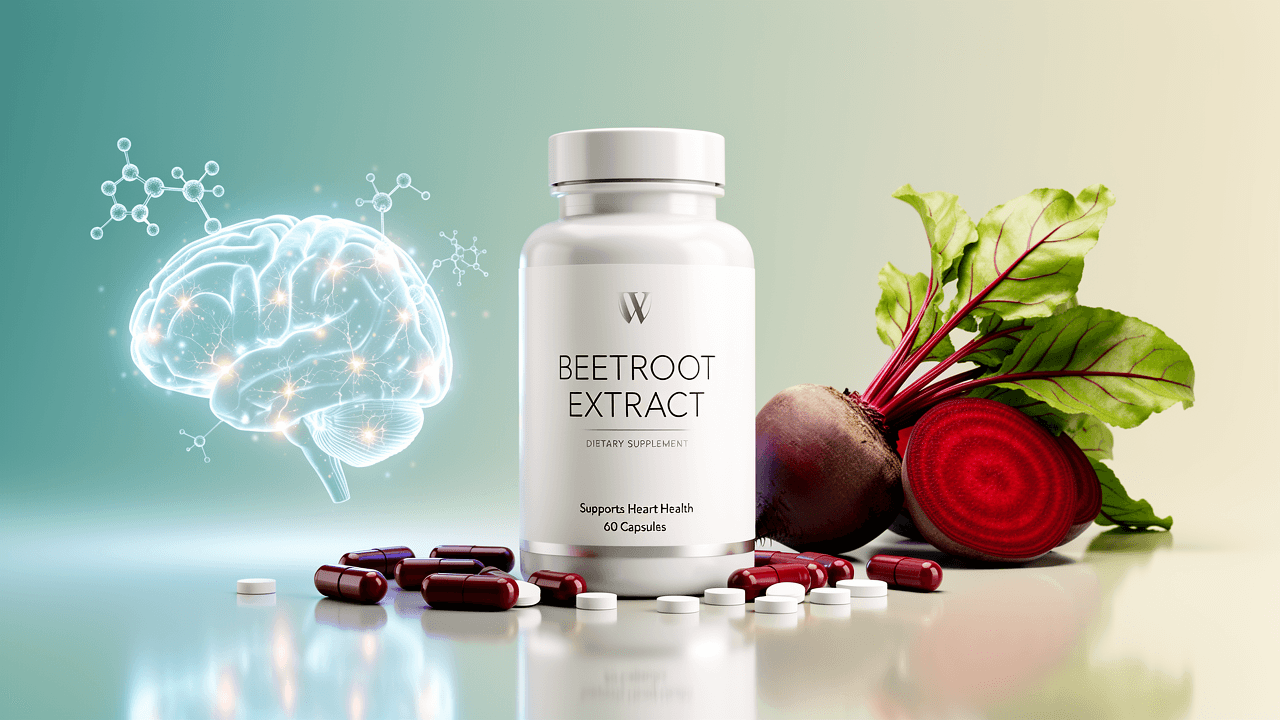
Beetroot extract is a concentrated form of Beta vulgaris (red beet) typically standardized for dietary nitrates and/or betalain pigments. It is used as a supplement for cardiovascular health, exercise performance, and increasingly as a potential nootropic due to its effects on blood flow and endothelial function.
Key Active Components
- Inorganic nitrate (NO₃⁻) – the primary bioactive component in most performance and cardiovascular studies
- Nitrite (NO₂⁻) – formed from nitrate by oral bacteria
- Nitric oxide (NO) – the final product that exerts many of the physiological effects
- Betalains (betanin, vulgaxanthin) – antioxidant and anti‑inflammatory pigments
- Polyphenols and flavonoids – additional antioxidant compounds
How Beetroot Extract Works in the Body
Nitrate → Nitrite → Nitric Oxide Pathway
- After ingestion, nitrate is absorbed in the gut and a portion is concentrated in saliva.
- Oral bacteria on the tongue convert nitrate to nitrite.
- In the stomach and peripheral tissues (especially under low oxygen/acidic conditions), nitrite is reduced to nitric oxide (NO).
- NO causes vasodilation (widening of blood vessels), improving blood flow and reducing blood pressure.
Improved Mitochondrial Efficiency
- Nitrate-derived NO can improve mitochondrial efficiency, reducing the oxygen cost of exercise.
- Some studies suggest enhanced ATP production and reduced oxidative stress in muscle.
Cerebral Blood Flow and Nootropic Angle
- The same vasodilatory effects occur in cerebral vessels, potentially:
- Increasing cerebral blood flow
- Supporting neurovascular coupling (matching blood flow to neuronal activity)
- Modestly supporting cognitive function, especially under hypoxia or in older adults
- The same vasodilatory effects occur in cerebral vessels, potentially:
Antioxidant and Anti‑Inflammatory Effects
- Betalains and polyphenols in beetroot have free‑radical scavenging properties.
- They may help modulate inflammation and oxidative stress, which are relevant to cardiovascular and brain health.
2. Key Benefits of Beetroot Extract
1. Blood Pressure and Vascular Health
Beetroot extract is best known for its blood pressure–lowering and endothelial function–supporting effects.
- Nitrate-derived NO relaxes blood vessels, improving vascular compliance.
- May modestly reduce systolic and diastolic blood pressure, especially in those with elevated baseline values.
2. Exercise Performance and Endurance
Beetroot extract is widely used as an ergogenic aid:
- Can reduce the oxygen cost of submaximal exercise.
- May improve time-to-exhaustion and time-trial performance, particularly in endurance sports.
- Effects are more consistent in recreationally active or moderately trained individuals than in elite athletes.
3. Cognitive Function and Brain Blood Flow
While not a classic stimulant nootropic, beetroot extract may support cognition indirectly:
- Increases cerebral blood flow, particularly in the frontal lobes.
- May help maintain cognitive performance under fatigue or hypoxia.
- Potentially beneficial in older adults or those with vascular risk factors.
4. Metabolic and Cardiometabolic Support (Emerging)
Preliminary data suggest possible benefits for:
- Endothelial function and arterial stiffness
- Insulin sensitivity and glucose handling (data are mixed)
- Inflammatory markers and oxidative stress
These areas are promising but not yet as well-established as blood pressure and exercise performance.
3. Research Findings – What the Evidence Shows
3.1 Blood Pressure and Vascular Health
Acute BP reduction in hypertensive adults
- Study: Kapil et al., 2015 (Hypertension)
- Design: Double-blind, randomized, placebo-controlled, parallel-group trial
- Participants: 68 adults with hypertension (mean age ~64)
- Intervention: 250 mL/day beetroot juice (~6.4 mmol nitrate ≈ 400 mg) vs nitrate-depleted placebo for 4 weeks
- Results:
- Clinic blood pressure reduced by ~7.7 mmHg systolic and ~2.4 mmHg diastolic vs placebo.
- 24-hour ambulatory BP also decreased.
- Improvements in endothelial function and arterial stiffness.
Dietary nitrate in treated hypertensives
- Study: Ghosh et al., 2013 (Hypertension)
- Design: Randomized, double-blind, crossover
- Participants: 15 hypertensive subjects on antihypertensive medication
- Intervention: 250 mL beetroot juice (~6.4 mmol nitrate) vs placebo
- Duration: Single dose; followed over 24 hours
- Results:
- Systolic BP reduced by ~8 mmHg at 6 hours post-ingestion.
- Effect persisted, though attenuated, at 24 hours.
Takeaway: Repeated daily intake of nitrate-rich beetroot products can produce clinically meaningful reductions in blood pressure, particularly in those with elevated baseline values.
3.2 Exercise Performance and Endurance
Improved time-trial performance in cyclists
- Study: Lansley et al., 2011 (Medicine & Science in Sports & Exercise)
- Design: Double-blind, randomized, crossover
- Participants: 9 well-trained male cyclists
- Intervention: 500 mL/day beetroot juice (~6.2 mmol nitrate) vs nitrate-depleted placebo
- Duration: 6 days
- Outcomes: 4 km and 16.1 km cycling time trials
- Results:
- 4 km time trial improved by ~2.8%.
- 16.1 km time trial improved by ~2.7%.
- Reduced oxygen cost of submaximal cycling.
Time-to-exhaustion in recreational athletes
- Study: Bailey et al., 2009 (Journal of Applied Physiology)
- Design: Double-blind, randomized, crossover
- Participants: 8 healthy men (recreationally active)
- Intervention: 500 mL/day beetroot juice (~5.2 mmol nitrate) vs blackcurrant cordial (control)
- Duration: 6 days
- Results:
- Time-to-exhaustion during severe-intensity exercise increased by 16%.
- Oxygen cost of moderate-intensity exercise decreased by ~19%.
Elite athletes – smaller or inconsistent benefits
- Study: Boorsma et al., 2014; others
- In highly trained or elite endurance athletes, performance improvements are smaller or sometimes absent, likely because their baseline nitric oxide and mitochondrial efficiency are already optimized.
Takeaway: Beetroot-derived nitrate reliably enhances endurance performance in many recreational and sub-elite athletes, especially for events lasting 5–30 minutes. Effects in elite athletes are less consistent.
3.3 Cognitive Function and Cerebral Blood Flow
Cerebral blood flow in older adults
- Study: Presley et al., 2011 (Nitric Oxide)
- Design: Randomized, crossover, dietary intervention
- Participants: 14 older adults (mean age ~75)
- Intervention: High-nitrate diet including beetroot juice vs low-nitrate diet
- Duration: 2 days per condition
- Measures: Cerebral blood flow via MRI
- Results:
- Increased regional cerebral blood flow in the frontal lobe, particularly the white matter of the frontal cortex.
- Regions affected are associated with executive function.
Cognitive performance in type 2 diabetes
- Study: Gilchrist et al., 2014 (Nitric Oxide)
- Design: Randomized, double-blind, crossover
- Participants: 14 adults with type 2 diabetes
- Intervention: 250 mL beetroot juice (~7.5 mmol nitrate) vs nitrate-depleted placebo
- Duration: Single dose
- Results:
- Improved simple reaction time and certain aspects of cognitive function.
- Reduced blood pressure.
Cognition under hypoxia
- Several small trials have shown that nitrate-rich beetroot juice can help maintain cognitive performance and reaction time under conditions of reduced oxygen (e.g., simulated altitude), likely by improving cerebral oxygen delivery.
Takeaway: Evidence for beetroot as a nootropic is preliminary but promising, especially in older adults, those with vascular impairment, or under hypoxic/physically demanding conditions. It should be viewed as a vascular-support nootropic, not a stimulant.
3.4 Metabolic and Cardiometabolic Outcomes (Emerging Evidence)
Endothelial function and insulin sensitivity
- Some small RCTs report improved flow-mediated dilation (FMD) and modest changes in insulin sensitivity with chronic beetroot/nitrate intake.
- Sample sizes are typically 10–40 participants, and durations range from 1–6 weeks.
Lipid and inflammatory markers
- Mixed results: some studies show reductions in oxidized LDL and inflammatory markers (e.g., TNF-α, CRP), others show no significant change.
Takeaway: Early data suggest beneficial effects on vascular function and possibly insulin sensitivity, but more large, long-term trials are needed.
4. Best Sources & Dosage – Forms, Dosing, Timing, and Safety
4.1 Common Supplemental Forms
Beetroot Juice (Liquid)
- Often standardized for nitrate content (~4–8 mmol per 250–500 mL; ~250–500 mg nitrate).
- Used in most exercise and blood pressure trials.
Beetroot Extract Capsules/Powder
- Doses typically provide 300–600 mg nitrate per serving when standardized (check label).
- Also contain betalains and polyphenols.
Beetroot Powder (Non-standardized)
- Nitrate content can vary widely depending on growing and processing conditions.
- Often used for general wellness rather than precise dosing.
Nitrate-Standardized Sports Shots
- Concentrated beetroot shots (e.g., 60–70 mL) with 5–8 mmol nitrate.
- Designed for pre-exercise use.
4.2 Evidence-Based Dosage Recommendations
Important: Most benefits are linked to nitrate dose, not just grams of beetroot. Look for products that specify nitrate content.
1. For Blood Pressure and Vascular Health
- Typical effective dose:
- 4–8 mmol nitrate/day (≈ 250–500 mg nitrate) from beetroot products.
- Forms:
- 250–500 mL beetroot juice, or
- Standardized capsules/powder providing 300–500 mg nitrate.
- Timing:
- Once daily, preferably at the same time each day.
- Effects on BP may appear within 2–3 hours and stabilize with daily use over 1–4 weeks.
2. For Exercise Performance
- Acute pre-workout dosing:
- 6–8 mmol nitrate (≈ 370–500 mg nitrate) taken 2–3 hours before exercise.
- Common protocol: 140–280 mL concentrated beetroot shot or 400–500 mL regular beetroot juice.
- Chronic loading (for repeated events):
- 4–8 mmol nitrate/day for 3–7 days leading up to an event, with a final pre-event dose 2–3 hours before.
- Best for:
- Endurance efforts lasting 5–30 minutes; may still help longer events by reducing perceived exertion.
3. For Cognitive / Nootropic Support
Evidence is less standardized, but based on vascular and cerebral blood flow data:
- General brain blood flow / older adults:
- 4–8 mmol nitrate/day via beetroot juice or extract, similar to BP protocols.
- Acute cognitive support (e.g., demanding tasks, hypoxia):
- 4–7.5 mmol nitrate (≈ 250–465 mg nitrate) taken 2–3 hours before the cognitive challenge.
Because no large-scale, long-term nootropic trials exist yet, beetroot should be considered an adjunct to general cardiovascular and cognitive health measures, not a standalone cognitive enhancer.
4.3 Practical Use and Timing Tips
Avoid antibacterial mouthwash around dosing:
- Antiseptic mouthwashes and some strong antibacterial toothpastes can disrupt oral bacteria that convert nitrate to nitrite, blunting the effects.
- Avoid them for at least 1–2 hours before and after taking beetroot.
Take with or without food:
- Beetroot products can be taken with meals; absorption is generally good.
- Very large doses on an empty stomach may increase risk of mild GI discomfort in some people.
Hydration:
- If using concentrated shots, ensure adequate hydration, especially before endurance exercise.
4.4 Safety, Side Effects, and Drug Interactions
Common, Usually Harmless Effects
- Beeturia: Red or pink urine; occurs in 10–14% of people. Benign.
- Red stool: Can look alarming but is simply pigment excretion.
- Mild GI upset: Bloating, gas, or loose stools in sensitive individuals, particularly at high doses or with concentrated shots.
Potential Risks and Precautions
Low Blood Pressure (Hypotension)
- Because beetroot can lower BP, it may cause dizziness, lightheadedness, or fainting in:
- People with already low blood pressure
- Those on multiple antihypertensive medications
- Monitor BP when starting, especially if you are on BP-lowering drugs.
- Because beetroot can lower BP, it may cause dizziness, lightheadedness, or fainting in:
Kidney Issues and Oxalates
- Beetroot is relatively high in oxalates.
- Those with a history of calcium oxalate kidney stones or severe kidney disease should exercise caution and consult a clinician.
Nitrate/Nitrite and Methemoglobinemia (Theoretical at Supplement Doses)
- At typical dietary/supplement doses, risk is very low in healthy adults.
- Extremely high nitrate/nitrite intake could, in theory, increase risk of methemoglobinemia, especially in infants or individuals with specific enzyme deficiencies.
- Beetroot supplements are not recommended for infants.
Allergic Reactions (Rare)
- Very rare cases of beet allergy or intolerance have been reported (rash, itching, swelling, or GI distress).
- Discontinue and seek medical advice if allergic symptoms occur.
Drug and Supplement Interactions
Antihypertensive Medications
- ACE inhibitors, ARBs, beta-blockers, calcium channel blockers, diuretics.
- Additive blood pressure lowering may occur.
- Monitor BP closely; dose adjustments may be needed under medical supervision.
Nitrates and Nitric Oxide Donors
- Nitroglycerin, isosorbide mononitrate/dinitrate.
- Potential for excessive vasodilation and hypotension.
- Use only under physician guidance if on nitrate medications.
PDE-5 Inhibitors (e.g., Sildenafil, Tadalafil)
- Used for erectile dysfunction and sometimes pulmonary hypertension.
- Combined with nitrate-rich supplements, they may excessively lower blood pressure.
- Caution and medical consultation advised.
Antiplatelet/Anticoagulant Drugs (Theoretical)
- Aspirin, clopidogrel, warfarin, DOACs.
- Beetroot is not a strong blood thinner, but there is a theoretical concern about minor additive effects on bleeding risk.
- Generally considered low risk, but inform your clinician if you are on these medications.
Proton Pump Inhibitors (PPIs)
- Omeprazole, esomeprazole, etc.
- By reducing stomach acidity, PPIs may impair conversion of nitrite to NO, potentially blunting effects.
- This is more of an efficacy issue than a safety problem.
4.5 Who Should and Shouldn’t Use Beetroot Extract
Likely Good Candidates
- Adults with mildly elevated blood pressure (prehypertension or stage 1 hypertension), under medical supervision.
- Recreational and sub-elite endurance athletes seeking legal performance enhancement.
- Older adults interested in vascular and brain blood flow support.
- Individuals with sedentary lifestyles starting exercise programs, to potentially improve exercise tolerance.
Use With Caution (Consult a Healthcare Professional)
- People on antihypertensive medications or with low baseline blood pressure.
- Those taking nitrate medications or PDE-5 inhibitors.
- Individuals with a history of kidney stones or chronic kidney disease.
- People with significant cardiovascular disease, especially if unstable.
- Pregnant or breastfeeding women (limited specific safety data; dietary intake from food is generally safe, but concentrated supplements should be discussed with a clinician).
Generally Should Avoid or Only Use Under Strict Medical Supervision
- Infants and very young children – due to higher susceptibility to nitrate-related issues.
- Individuals with rare methemoglobin reductase deficiencies or known problems handling nitrates/nitrites.
- People with known beet allergy.
Summary
Beetroot extract is a nitrate-rich supplement with solid evidence for lowering blood pressure and enhancing endurance performance, and emerging evidence for supporting cerebral blood flow and cognitive performance, particularly in older adults or under conditions of physiological stress.
Most benefits are tied to nitrate doses of 4–8 mmol/day (≈ 250–500 mg nitrate), typically achieved with 250–500 mL beetroot juice or standardized extracts. It is generally safe for healthy adults, but can lower blood pressure and may interact with antihypertensives, nitrate drugs, and PDE-5 inhibitors, warranting medical guidance in these cases.
As a nootropic, beetroot extract should be viewed as a vascular and metabolic support agent rather than a direct stimulant or cognitive enhancer. When combined with lifestyle measures—exercise, sleep, diet—it can be a useful adjunct for cardiovascular and brain health.