Understanding Zinc
Zinc is an essential trace mineral required for the activity of more than 300 enzymes and the stability of thousands of proteins. These enzymes influence DNA synthesis, cell division, immune responses, and repair of tissues after injury. Although zinc is needed in small amounts, the body cannot synthesize it or store more than minimal reserves; losses occur daily through skin shedding, intestinal secretions, and, to a lesser degree, sweat and urine.
Dietary zinc comes in two main categories: animal-based sources, where it is bound to proteins and readily absorbed, and plant-based sources, where phytates can inhibit absorption. In supplements and fortified foods, zinc is often provided as zinc gluconate, zinc sulfate, zinc acetate, or zinc picolinate—forms that differ in absorption and gastrointestinal tolerance but deliver the same elemental zinc once absorbed.
In the body, zinc functions as a cofactor in antioxidant defense (e.g., via superoxide dismutase), hormone regulation (including insulin and thyroid hormones), and sensory perception of taste and smell. Its influence spans both structural roles (stabilizing cell membranes) and catalytic roles (enabling enzyme activity), making it indispensable for normal physiology.
Key Benefits
Supports immune function – Helps immune cells mature and function effectively, aiding the body’s ability to respond to pathogens.
Promotes wound healing – Facilitates cell proliferation and collagen synthesis essential for tissue repair.
Maintains normal sense of taste and smell – Contributes to nerve function and receptor activity involved in sensory perception.
Research Findings
In a 12-week randomized controlled trial (RCT) involving 78 older adults, daily zinc gluconate supplementation was linked to a modest reduction in the number of common cold episodes compared to placebo.
A 6-month RCT of 209 school-aged children with marginal zinc status found that zinc sulfate improved height-for-age scores and reduced the number of days absent due to infection.
In a 3-month trial (n=60 adults) with taste disorders of non-infectious origin, zinc acetate supplementation improved taste sensitivity in a significant proportion of participants versus controls.
A 2014 double-blind RCT (n=50 patients with diabetic foot ulcers) found that oral zinc sulfate for 12 weeks led to greater ulcer size reduction compared with placebo, suggesting a supportive role in tissue repair in populations with increased oxidative stress.
A meta-analysis of 17 RCTs on zinc lozenges for common cold symptoms reported a modest reduction in duration—around 33% shorter illness—when used within 24 hours of symptom onset, though study designs and zinc forms varied.
Best Sources & Dosage
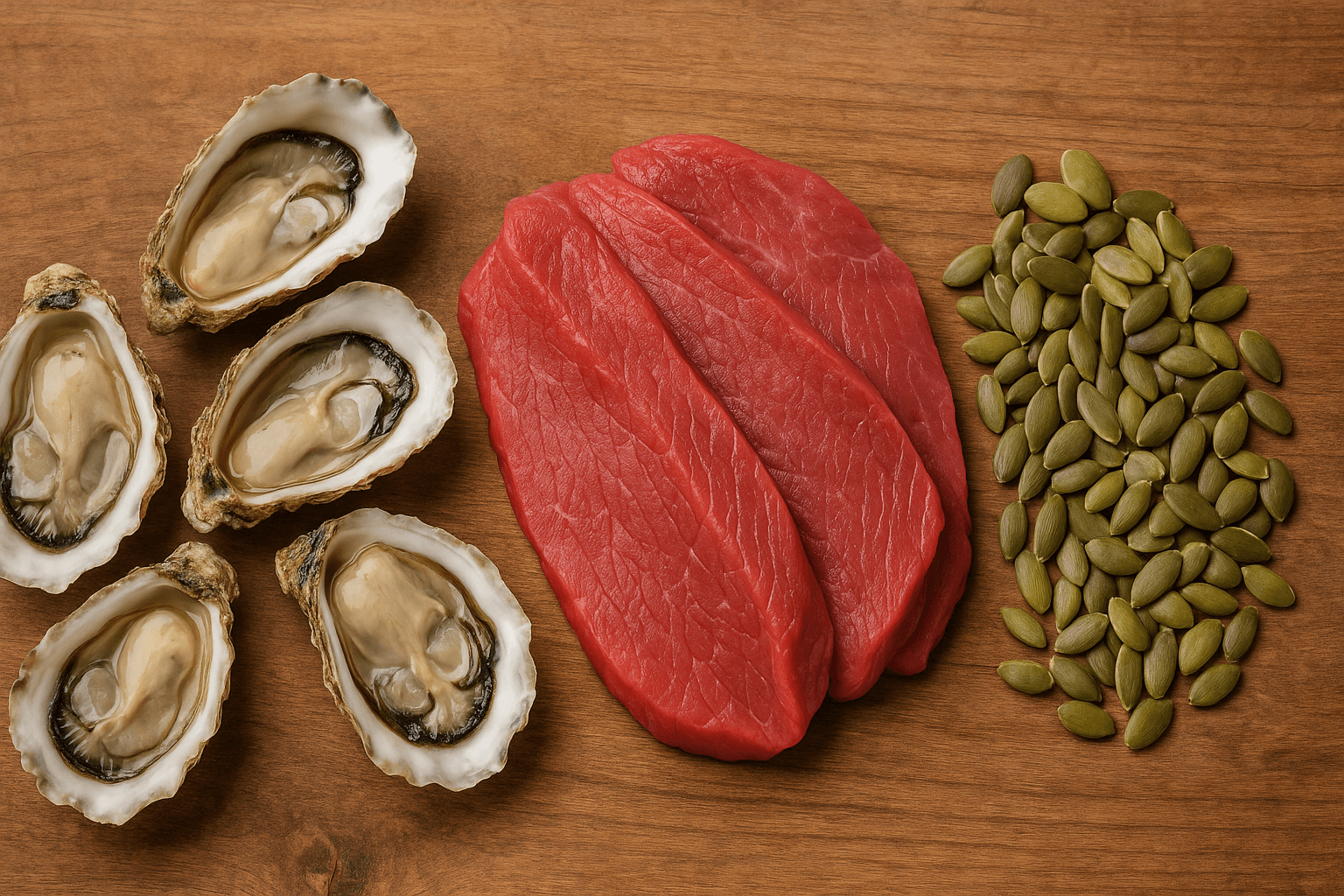
Top natural sources include oysters (the highest per serving), beef, lamb, crab, lobster, poultry, pumpkin seeds, cashews, and fortified breakfast cereals. Animal-based foods provide zinc in a more bioavailable form because the mineral is bound to proteins that are readily digested, whereas plant-based foods may require higher intake due to phytate binding.
Supplemental forms vary in absorption and tolerance:
Zinc picolinate – Often noted for high absorption.
Zinc gluconate – Commonly used in over-the-counter cold remedies and general supplements.
Zinc citrate – Well-absorbed and may be gentler on the stomach than sulfate.
For healthy adults, the Recommended Dietary Allowance (RDA) is 11 mg/day for men and 8 mg/day for women, from food and supplements combined. The tolerable upper intake level is 40 mg/day; sustained intakes above this can interfere with copper absorption, leading to deficiency, and may suppress immune function over time.
Zinc is absorbed best on an empty stomach, but if it causes nausea, taking it with a small amount of food can help. Certain compounds—such as iron supplements, calcium carbonate, and high-phytate foods (e.g., unsoaked legumes, whole grains)—can reduce zinc absorption if taken at the same time.
Caution is advised for:
Long-term high-dose use – May lead to copper deficiency and anemia.
Pregnancy and lactation – Zinc is important, but supplementation beyond the RDA should be guided by a clinician.
Medication interactions – Zinc can bind to and reduce absorption of certain antibiotics (quinolones, tetracyclines) and should be taken at a separate time of day.