Understanding Turmeric Curcumin
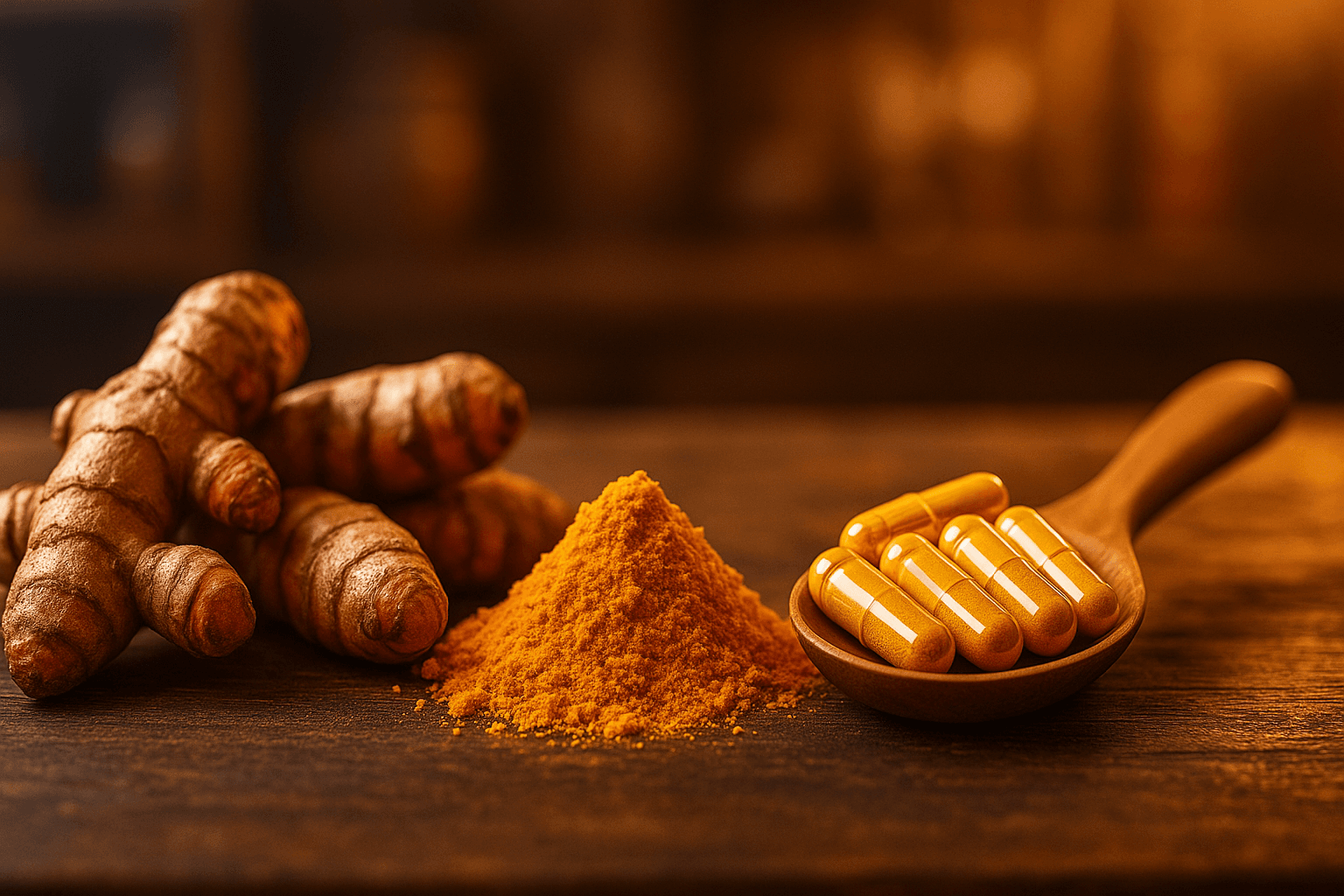
Turmeric is a bright yellow spice derived from the root of Curcuma longa, a flowering plant in the ginger family. For centuries, turmeric has been used in South Asian cooking and traditional medicine. The compound of greatest scientific interest within turmeric is curcumin, a natural polyphenol responsible for its golden color and much of its studied biological activity.
Curcumin makes up only about 2–5% of turmeric root by weight. That means sprinkling turmeric powder into food provides flavor and color, but relatively little curcumin. To achieve higher, research-relevant doses, people often turn to standardized curcumin extracts in supplement form.
One challenge is that curcumin is poorly absorbed when consumed alone. The compound is rapidly metabolized in the liver and intestines, resulting in limited bioavailability. To address this, supplement makers often combine curcumin with piperine, an extract from black pepper shown to increase absorption several-fold. Other delivery methods, such as phytosome complexes, micelles, and nanoparticles, have also been developed to enhance uptake.
Biologically, curcumin interacts with multiple cellular pathways. It influences transcription factors like NF-κB (involved in immune signaling), modulates oxidative stress, and affects enzymes linked to inflammation. These wide-ranging actions have made curcumin a subject of intense research in the context of inflammation, joint health, and metabolic function.
Key Benefits
Supports healthy inflammation balance – Curcumin regulates inflammatory pathways, easing everyday aches and supporting long-term wellness.
Promotes joint comfort and mobility – Clinical trials show curcumin supplementation reduces stiffness and improves physical function.
Improves metabolic and cardiovascular health – Human studies demonstrate improvements in lipid levels, insulin sensitivity, and markers of oxidative stress.
Research Findings
Curcumin has been studied in multiple human clinical trials, often in populations dealing with inflammation-related discomfort or metabolic concerns. The findings consistently show modest but meaningful benefits.
Joint Health – In a 12-week randomized controlled trial (n=120) of adults with knee discomfort, curcumin supplementation reduced pain scores and improved mobility compared with placebo, with effects comparable to standard care.
Metabolic Health – A 16-week double-blind study (n=117) in participants with metabolic syndrome found curcumin supplementation improved waist circumference, fasting blood glucose, and triglyceride levels compared with placebo.
Cardiovascular Markers – In a 9-month RCT (n=240) of middle-aged adults, curcumin plus piperine supplementation improved blood lipid profiles (increased HDL, reduced LDL) and reduced oxidative stress markers relative to placebo.
Quality of Life – In a 6-month trial (n=160) involving older adults, curcumin extract supplementation improved self-reported energy and reduced fatigue, though changes in physical performance measures were less pronounced.
Overall, evidence confirms that curcumin contributes to improvements in comfort, metabolic balance, and inflammatory status, especially when used consistently in bioavailable forms.
Best Sources & Dosage
Turmeric root, whether fresh or dried, remains the most natural source of curcumin. However, given its low concentration, achieving research-level intakes through diet alone is unrealistic. This is why most studies use standardized curcumin extracts.
Supplemental forms:
Curcumin–piperine blends – widely available and cost-effective, though piperine interacts with certain medications.
Phytosome curcumin (e.g., Meriva®) – bound to phospholipids for enhanced absorption.
Micellar/nanoparticle curcumin – newer delivery systems designed for maximal bioavailability.
Dosage:
Most clinical trials use 500–1,500 mg/day of standardized curcumin extract, typically divided into two or three doses. Doses are best taken with food, ideally containing fat, to further improve absorption.
Safety notes:
- Generally well-tolerated at studied doses.
- Higher intakes cause mild gastrointestinal upset in some individuals.
- Curcumin interacts with anticoagulants, antiplatelet agents, and some diabetes medications.
- Pregnant and breastfeeding individuals should avoid high-dose supplementation unless specifically advised by a healthcare provider.
Because of these considerations, curcumin supplementation is best approached with professional guidance for those on prescription medications or with chronic health conditions.