
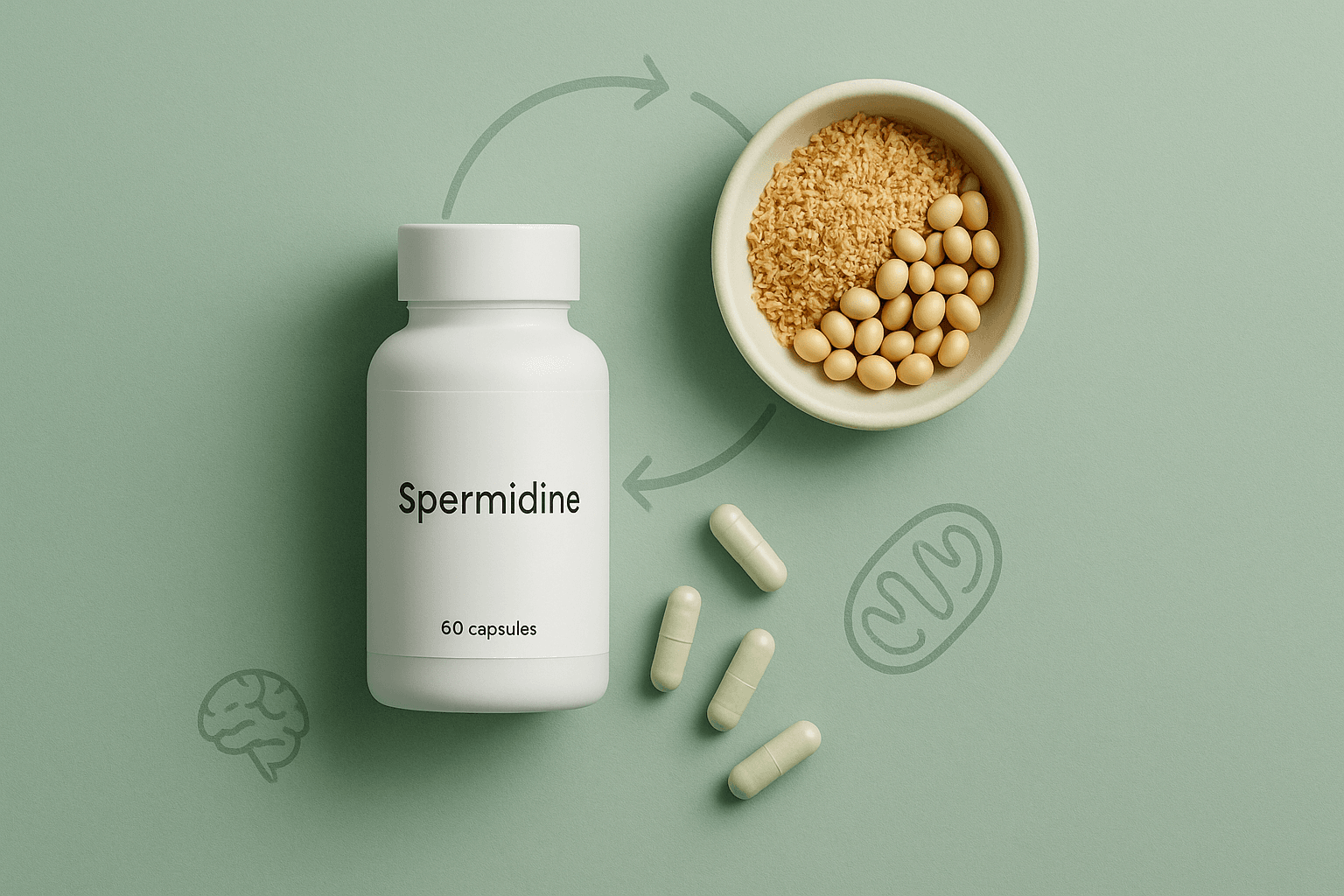
Cell Clean-Up, Sharper Aging: Understanding Spermidine
Spermidine is a naturally occurring polyamine found in every cell and in foods like wheat germ, soy, legumes, mushrooms, and aged cheeses. Its wellness appeal comes from the way it nudges the body’s own cellular housekeeping (autophagy)—the recycle/renew process that clears damaged proteins and organelles so cells run cleaner as we age.
Mechanistically, spermidine promotes autophagy in part by inhibiting EP300 (p300), an acetyltransferase that normally suppresses autophagy. Dialing down EP300 removes a biochemical “brake,” allowing clean-up pathways to proceed—one reason spermidine has been explored for healthy aging, brain performance, and cardiometabolic support. :contentReference[oaicite:0]{index=0}
Why supplement if it’s in food? Diet is a great foundation, but amounts vary widely and depend on storage, processing, and the specific food. Standardized capsules (often from wheat-germ extract or purified spermidine) offer predictable, trial-like dosing you can time with meals and pair with sleep, movement, and protein-forward nutrition.
How spermidine may help—kept practical:
Cellular renewal: supports autophagy and mitophagy, aiding turnover of worn-out cell parts so tissues stay more resilient under everyday stress.
Brain aging support: by improving cellular housekeeping and membrane dynamics, it may help preserve memory circuits and synaptic plasticity as we age.
Cardiometabolic tone: observational data link higher spermidine intake with lower mortality, plausibly via vascular, immune, and metabolic pathways—an association, not proof of causation.
Wellness takeaway: If your goals are cleaner cellular function, aging-smart brain support, and metabolic steadiness, spermidine can be a thoughtful, time-boxed add-on to a fiber-rich diet, daily walking, and solid sleep.
Key Benefits
Cellular autophagy support. By relieving EP300’s “brake,” spermidine encourages cell clean-up, which underpins healthy aging across tissues.
Memory aging (older adults). Early human data show memory improvements with spermidine-rich wheat-germ extract in older adults at risk of cognitive decline; longer trials at 0.9 mg/day did not meet the primary endpoint, though exploratory signals appeared.
Cardiometabolic longevity (associational). Higher dietary spermidine intake has been linked to lower all-cause mortality in a community cohort. Association ≠ causation, but it’s encouraging.
Reality check: Think foundational support, not an instant boost. Cognitive and metabolic changes accrue slowly and hinge on your routines (sleep, steps, protein, plants).
Research Findings
Time to benefit: Expect subtle changes in 8–12 weeks; cognition studies range 3–12 months and emphasize consistency.
Older adults with subjective cognitive decline (pilot RCT): 3-month, randomized, placebo-controlled study (n≈30) using spermidine-rich wheat-germ extract reported improved memory performance vs placebo.
Older adults with subjective cognitive decline (phase IIb RCT): 12-month, randomized, double-masked trial (n=100) using 0.9 mg/day spermidine from wheat-germ extract found no significant benefit on the primary memory outcome vs placebo; exploratory analyses hinted at verbal-memory and inflammation improvements; safety was similar to placebo.
Dietary intake & survival (prospective cohort): 20-year follow-up (n=829) linked higher dietary spermidine with lower all-cause mortality after adjustment for confounders, supporting a food-first pattern enriched in spermidine-containing foods.
Mechanism—autophagy (cell/animal data): Spermidine induces autophagy via EP300 inhibition, a conserved pathway relevant to brain and heart aging biology.
Human safety (high-purity): 28-day, double-blind RCT in older men using 40 mg/day purified spermidine found good tolerability and minimal effects on circulating polyamines—useful safety context for higher-dose products.
Best Sources & Dosage
What to buy (and what to avoid)
Choose spermidine from wheat-germ extract (declared mg per serving) or purified spermidine with third-party testing (identity, potency, contaminants).
Transparency matters: look for actual spermidine mg, not just “wheat-germ complex.”
Avoid proprietary blends that hide dose—you can’t match research or titrate your response without numbers.
Food sources to fold in
- Wheat germ and whole grains, soy/legumes (lentils, chickpeas), mushrooms, green peas, aged cheeses, and certain seeds/nuts contribute dietary spermidine. Treat these as daily staples within a balanced pattern.
Evidence-aligned adult ranges
Aging-smart daily support (most common): 1–2 mg/day spermidine with a meal for 12 weeks, then reassess. (Human cognition trials used ~0.9 mg/day from wheat-germ extract; some real-world products provide 1–3 mg.)
Cognitive aging program: ~1 mg/day (wheat-germ extract) for 3–12 months, paired with sleep/movement and a Mediterranean-style diet; recognize mixed RCT results at this dose.
Higher-dose products (purified): Safety data exist at 40 mg/day for 28 days in older men, but efficacy at high doses is unproven; most wellness protocols stay in the 1–3 mg/day range.
Timing & tips
Take with meals for comfort.
Combine with protein-forward, plant-rich meals and 10–15-minute walks after eating to compound metabolic benefits.
For brain goals, track simple KPIs for 12 weeks: word-recall list, focus blocks completed, sleep quality, and energy.
Safety, interactions & who should avoid it
Generally well tolerated; occasional GI upset, bloating, or headache can occur early.
Cancer care: because polyamine metabolism interacts with cell growth pathways (some oncology drugs target polyamines), avoid self-supplementation during active cancer treatment unless your oncology team approves.
Pregnancy/lactation: insufficient data—avoid unless your clinician advises.
Medications: no well-established drug interactions at typical wellness doses, but use caution with narrow-therapeutic-window meds and discuss new supplements with your clinician.
Stop and reassess if you notice persistent GI symptoms, unusual fatigue, or new/worsening medical issues.
Label literacy—fast checks
- “Spermidine” with mg per serving (e.g., 1–2 mg) clearly shown.
- Batch COA or third-party certification available.
- Realistic capsule count for a 12-week trial.
Dosage Quick-Reference
Cellular autophagy support: 1–2 mg/day • With a meal, 12 weeks • Outcome: cellular clean-up signals ↑ (foundational).
Cognitive aging (adjunct): ~1 mg/day wheat-germ extract • 3–12 months • Outcome: memory measures →/↑ (mixed trial results).
Higher-dose products (purified): Up to 40 mg/day for 28 days shown safe in older men; efficacy unproven—most users stay at 1–3 mg/day.
Safety note: coordinate with your clinician if in active oncology care or pregnant/lactating; prioritize food-first plus lifestyle.