Understanding Saw Palmetto
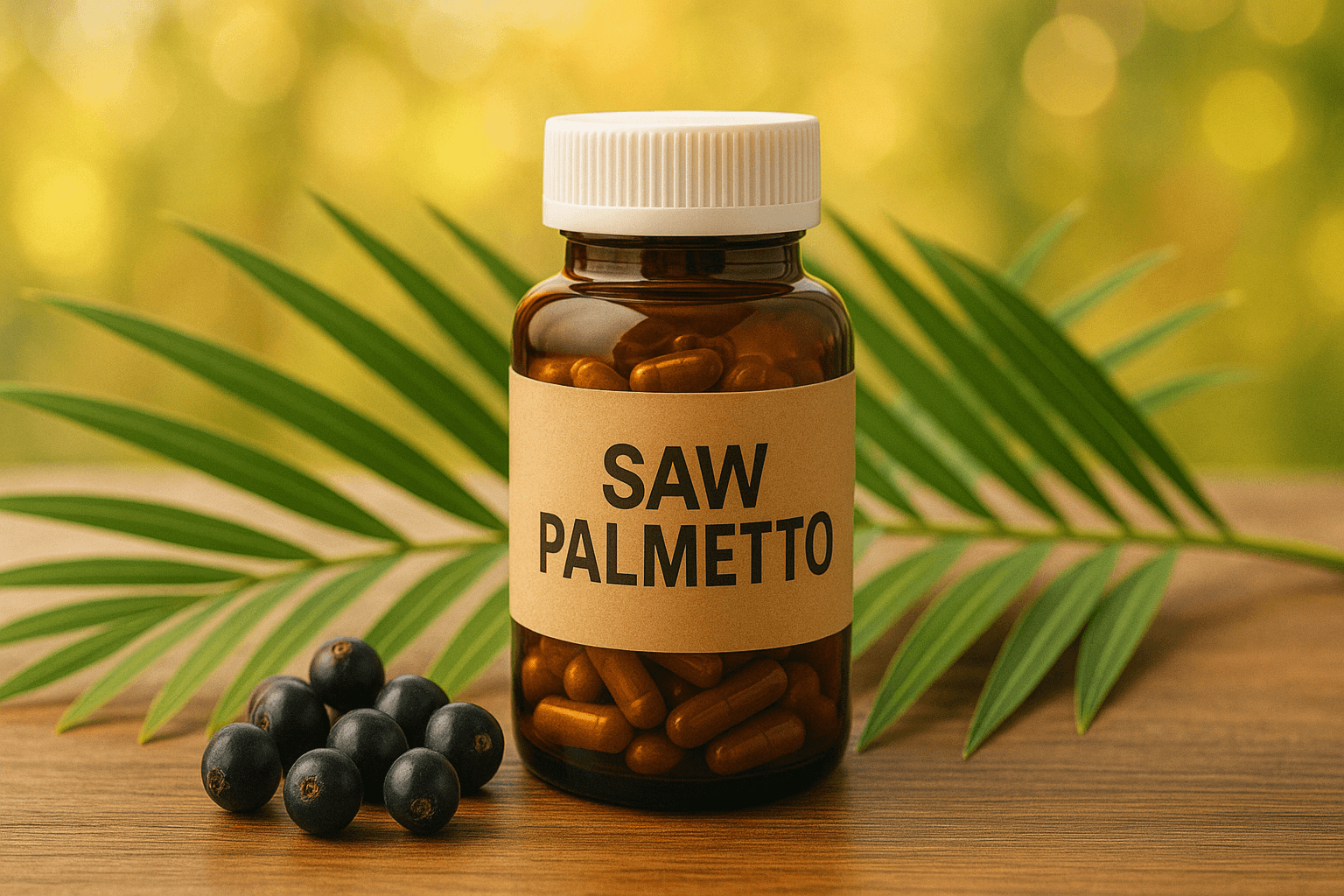
Saw palmetto (Serenoa repens) is a small palm tree native to the southeastern United States, especially Florida and South Carolina. Its dark purple berries have been used for centuries by Indigenous peoples for urinary and reproductive health. In modern times, saw palmetto extract has become one of the most widely studied botanical supplements for men’s health, particularly in relation to prostate function and hair loss.
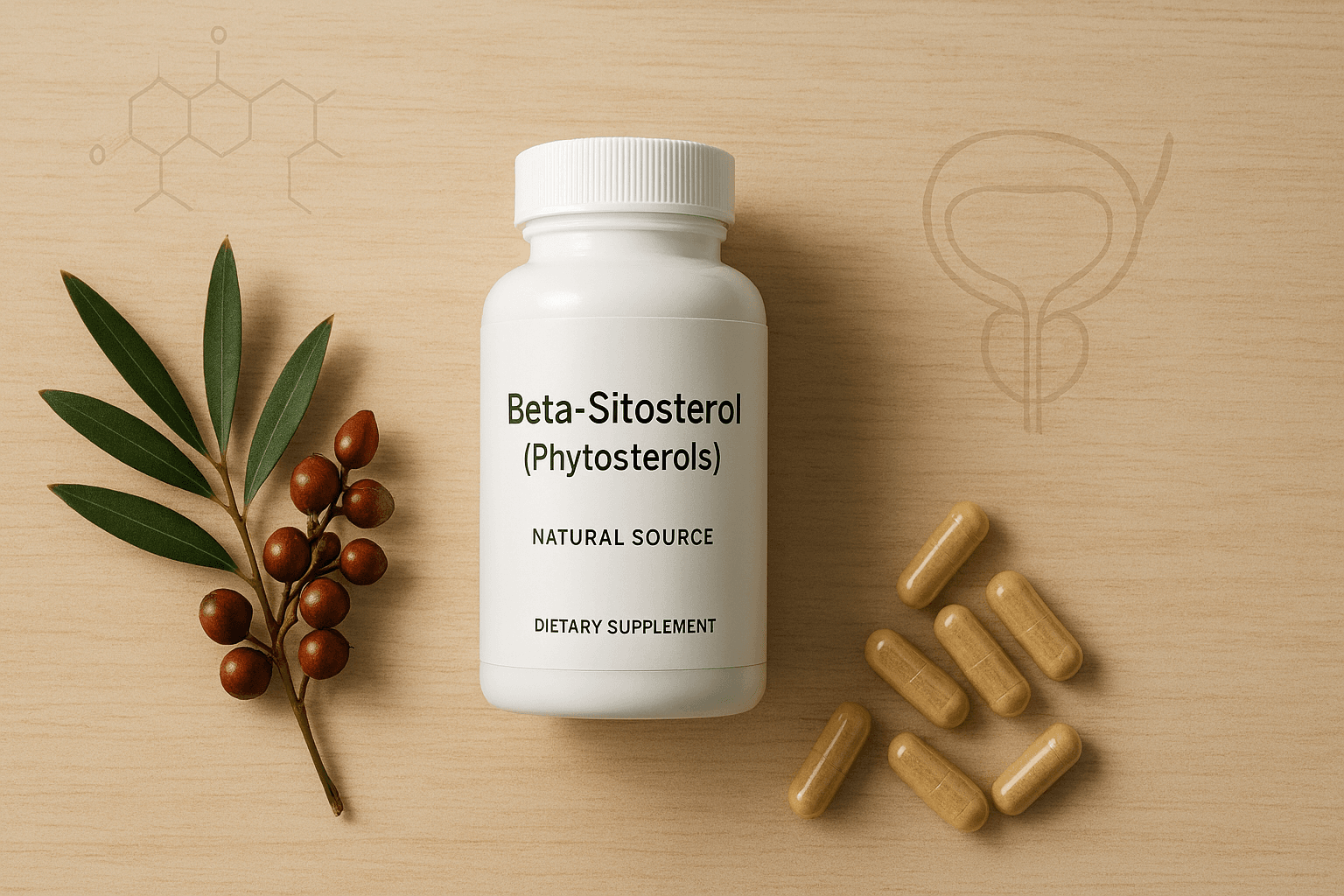
The bioactive compounds in saw palmetto are primarily fatty acids (lauric, oleic, myristic, palmitic) and phytosterols such as beta-sitosterol. These compounds are thought to act synergistically, influencing both hormone pathways and inflammatory processes.
The central mechanism involves inhibition of the enzyme 5-alpha-reductase, which is responsible for converting testosterone into dihydrotestosterone (DHT). Elevated DHT levels are strongly linked to benign prostatic hyperplasia (BPH), a noncancerous enlargement of the prostate, and androgenic alopecia (male-pattern hair loss). By decreasing DHT activity, saw palmetto may reduce urinary symptoms of BPH and slow hair thinning.
Another proposed mechanism is saw palmetto’s anti-inflammatory effect within prostate tissue. Chronic, low-grade inflammation is thought to contribute to prostate enlargement and urinary discomfort. The phytosterols in saw palmetto may reduce pro-inflammatory signaling, offering an additional avenue of support.
While the body naturally regulates DHT and inflammation, typical diets provide little to no concentrated source of these specific fatty acids and phytosterols in therapeutic amounts. A standardized supplement ensures a consistent dose of the active compounds, which cannot be easily replicated by diet alone.
Key Benefits
Supports prostate health – Saw palmetto reduces urinary frequency, nighttime urination, and weak urine flow associated with BPH.
Promotes hair health – By inhibiting DHT activity at the follicle, saw palmetto may slow androgen-related hair thinning and support hair density.
Balances hormone activity – Saw palmetto modulates androgen signaling, potentially improving urinary and reproductive function in men with mild symptoms.
Expanding on these benefits:
Prostate health is the area with the strongest evidence. Men with BPH often struggle with lower urinary tract symptoms (LUTS) such as urgency, frequent nighttime urination, incomplete bladder emptying, and weak urinary flow. While pharmaceutical drugs such as finasteride (Proscar) and tamsulosin (Flomax) are prescribed for BPH, they can have side effects including sexual dysfunction. Saw palmetto offers a natural alternative with a milder effect, but often with better tolerability.
Hair health is another application that has drawn significant interest. DHT plays a central role in shrinking hair follicles in androgenic alopecia. By lowering DHT activity locally, saw palmetto may protect follicles from miniaturization. The effect appears modest compared to pharmaceutical treatments, but studies suggest it can support hair density and reduce shedding in men with mild to moderate thinning.
Finally, hormone balance is a broader but important aspect. Saw palmetto does not block testosterone production, but rather alters the way testosterone is metabolized. This subtle modulation can reduce excess DHT without lowering overall androgen levels. Some preliminary evidence suggests benefits for sexual function and general urinary comfort, though findings are mixed and depend on dosage and extract type.
Research Findings
Clinical research on saw palmetto has been extensive, though findings vary depending on the extract type, dosage, and study design.
In a 12-month randomized controlled trial (n=369 men with BPH), a daily dose of 320 mg standardized saw palmetto extract resulted in a modest reduction in urinary symptom scores compared to placebo. While less effective than finasteride, participants experienced fewer side effects.
In a 24-week randomized trial (n=100 men with mild to moderate hair loss), 200 mg/day saw palmetto extract produced a small but statistically significant improvement in hair density relative to placebo, suggesting a role in slowing androgenic alopecia.
In a 12-month prospective cohort study (n=82 men with BPH), 320 mg/day liposterolic extract of saw palmetto improved urinary flow and quality-of-life scores. However, when directly compared to finasteride in similar studies, the improvements were generally less pronounced.
Other smaller trials have produced mixed results. Some have found little to no difference between saw palmetto and placebo for urinary symptoms, while others demonstrated notable improvements. Differences in extract standardization and patient populations likely account for these variations. Importantly, meta-analyses conclude that saw palmetto offers at least a mild benefit for BPH symptoms, with excellent tolerability compared to pharmaceutical drugs.
Best Sources & Dosage
The most reliable supplemental form is a liposterolic (fatty acid-rich) extract of saw palmetto berries, standardized to 85–95% fatty acids and sterols. This ensures potency and consistency across doses. Whole berry powders are available but tend to be less effective due to lower concentrations of active compounds.
Evidence-based dosage:
320 mg/day of standardized extract is the most frequently studied dose for prostate health and urinary function.
This can be taken as a single daily dose or split into 160 mg twice daily for improved absorption.
Since the active compounds are fatty acids, taking saw palmetto with food—particularly with dietary fat—enhances bioavailability.
Safety & interactions:
Saw palmetto is generally safe and well tolerated. The most common side effects are mild digestive upset, nausea, or headache. It is not known to significantly alter testosterone levels in healthy men, making it a gentler option than prescription 5-alpha-reductase inhibitors.
However, certain precautions apply:
Anticoagulants/antiplatelets: Saw palmetto may have mild blood-thinning effects and should be used cautiously with warfarin, aspirin, or similar drugs.
Hormonal therapies: Because of its effect on DHT, interactions with hormone-related medications are possible.
Pregnancy and breastfeeding: Not recommended due to insufficient safety data.
Dosage Quick-Reference (Human Studies)
Prostate health (BPH): 320 mg/day for 6–12 months — modest symptom reduction and improved urinary flow.
Hair loss (androgenic alopecia): 200–320 mg/day for 24 weeks — small increase in hair density and reduction in shedding.
Urinary function: 320 mg/day for 12 months — improved bladder emptying and quality of life.
Hormonal balance (experimental): 160–320 mg/day for 3–6 months — mixed effects on DHT modulation, with no major testosterone changes.