
Calmer nerves & fewer flare-ups: Understanding Palmitoylethanolamide (PEA)
Palmitoylethanolamide (PEA) is an endocannabinoid-like lipid produced in the body and found in small amounts in egg yolk, soy, and peanuts. Most supplements provide micronized or ultramicronized PEA to improve dispersion and absorption. PEA modulates neuroinflammation rather than “numbing” nerves outright: it downshifts overactive mast cells and glial cells, dampens pro-inflammatory signaling (e.g., NF-κB), and engages the PPAR-α receptor—mechanisms that can translate into less nerve pain, fewer burning/tingling flares, and steadier sleep.
Wellness takeaway: PEA is a non-sedating, well-tolerated option to support neuropathic pain and inflammatory flares; use a micronized product, trial 8–12 weeks, then reassess.
Key Benefits
Neuropathic pain relief: Supports reductions in burning, tingling, and shooting pain (e.g., sciatica, carpal tunnel, post-surgical nerve pain) when used consistently.
Inflammation modulation: Calms mast-cell– and glia-driven neuroinflammation without classic NSAID GI risks; pairs well with multimodal pain plans.
Sleep & function: By easing flares, PEA can improve sleep continuity and daytime function in chronic pain cohorts.
Reality check: PEA is not an immediate anesthetic; benefits typically build over 2–8+ weeks and are best when combined with physical therapy, movement, and good sleep hygiene.
Research Findings
Time to benefit: Early changes in 2–4 weeks, clearer benefits by 8–12 weeks; some trials run 8–16 weeks for maximal signal.
Sciatic/low-back neuropathic pain: Multiple randomized or controlled studies report clinically meaningful reductions in pain scores with 600–1200 mg/day PEA over 3–8 weeks, often with improved quality-of-life indices.
Carpal tunnel syndrome: Adjunctive PEA 300–600 mg twice daily for 8–12 weeks reduced paresthesia and nocturnal pain and improved nerve conduction parameters versus standard care alone.
Fibromyalgia & widespread pain (exploratory): Open-label and small controlled studies using 1200 mg/day for 8–12 weeks show decreases in tender point counts and fatigue, with good tolerability.
Post-operative and dental pain (adjunct): Short courses around procedures (e.g., 600 mg BID for 1–2 weeks) have reduced rescue analgesic use in several small trials.
Tolerability: PEA is generally very well tolerated—even at 1200 mg/day—with occasional reports of mild GI upset, nausea, or headache. No known risk of dependence or sedation; it does not appear to impair cognition or reaction time.
Best Sources & Dosage
What to buy:
Micronized or ultramicronized PEA, 98–100% purity, ideally with a certificate of analysis (COA) for identity, purity, and contaminants.
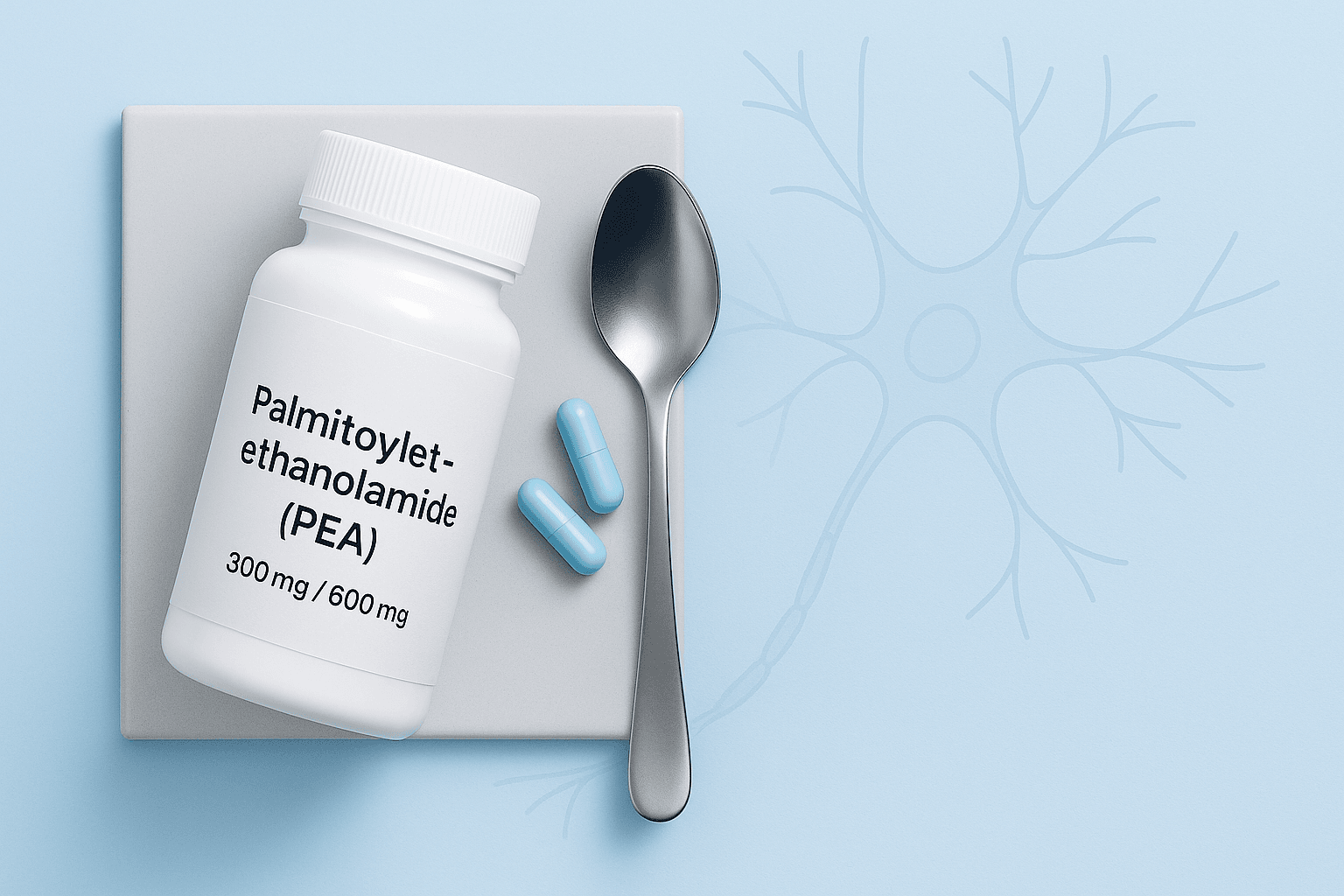
Capsule strengths commonly 300 mg or 600 mg. Powders exist but are less convenient for precise dosing.
Avoid “PEA blends” that underdose (≤150 mg/capsule) or combine with too many actives that complicate self-tracking.
Evidence-aligned ranges (by use case):
Neuropathic pain (sciatica, radiculopathy, CTS, post-herpetic):
Start: 300 mg twice daily with food for 1 week.
Build: Increase to 600 mg twice daily (1200 mg/day) from week 2 onward if needed.
Duration: 8–12 weeks, then continue the lowest effective dose or taper to 300–600 mg/day maintenance.
Inflammatory flares (TMJ, pelvic pain, endometriosis-related pain):
- 600–1200 mg/day in divided doses for 8–12 weeks, then reassess.
Sleep support in pain contexts:
- Include one dose in the evening (e.g., 300–600 mg) to target nocturnal flares; maintain total daily intake within the ranges above.
Timing & tips:
Take with meals to minimize GI upset and aid consistency.
Stacking, one change at a time: Common pairs are alpha-lipoic acid (ALA 300–600 mg BID) for diabetic neuropathy or magnesium glycinate (200–400 mg/day) for muscle tension and sleep; introduce sequentially to see what helps.
Track outcomes: Daily pain NRS (0–10), sleep continuity (awakenings/night), and a weekly function score (e.g., standing/walking tolerance). Reassess at 8–12 weeks.
Safety, interactions & exclusions:
Overall safety: No known serious interaction profile at typical doses. Because PEA acts via PPAR-α and glial/mast-cell pathways, it is non-psychoactive and non-euphoric (unlike THC).
Medication considerations: Can be combined with standard analgesics (acetaminophen, NSAIDs, gabapentinoids, SNRIs, TCAs, topical lidocaine/capsaicin). If you’re on multiple CNS-active meds, add under clinician guidance and monitor sedation, even though PEA itself isn’t sedating.
Allergies: Although PEA occurs in peanuts and soy, supplemental PEA is typically synthesized; people with severe peanut/soy allergy should still choose allergen-controlled products and check excipients.
Pregnancy/lactation: Human data are limited—avoid unless your clinician advises otherwise.
Pediatric/elderly: Used in studies with good tolerability; dose adjustments should be individualized.
Surgery: No anticoagulant effect is known; nonetheless, inform your surgical team about all supplements.
Safety flag: If pain worsens, new weakness/numbness appears, or bladder/bowel changes occur, seek medical care promptly—those are red-flag symptoms beyond supplement scope.
Dosage Quick-Reference
Neuropathic pain: PEA 600 mg BID (target 1200 mg/day), 8–12 wks → ↓burning/tingling, ↑function (↑).
Carpal tunnel/post-surgical nerve pain (adjunct): PEA 300–600 mg BID, 8–12 wks → ↓night pain/paresthesia (↑).
Maintenance after response: PEA 300–600 mg/day, ongoing → symptom control with fewer flares (→/↑).
Safety note: Use micronized PEA with COA; add to—but not in place of—your clinician-guided pain plan; avoid in pregnancy/lactation unless supervised.