
Clearer Metabolism & HPV Support: Understanding Indole-3-Carbinol (I3C)
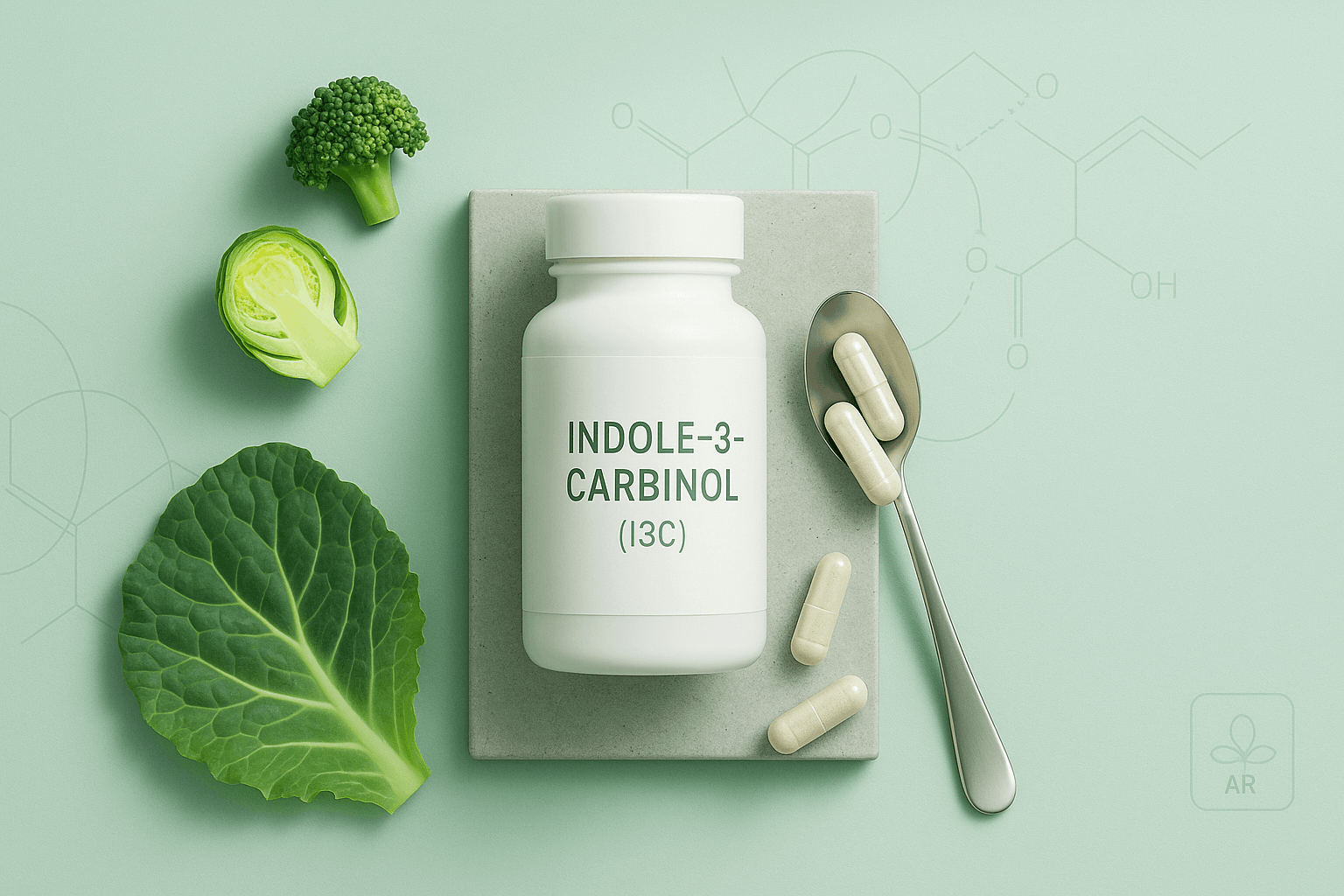
Indole-3-carbinol is an indole compound formed when you chop or chew cruciferous vegetables (broccoli, Brussels sprouts, cabbage). In the acidic stomach it rapidly converts into actives like diindolylmethane (DIM) and other oligomers that signal through the aryl hydrocarbon receptor (AhR) and upregulate detox enzymes (e.g., CYP1A family, phase II). Those shifts can tilt estrogen metabolism toward “cleaner” 2-hydroxylation, influence estrogen-responsive genes, and may support conditions linked to HPV.
Wellness takeaway: I3C is food-derived support for estrogen metabolism and cellular detox pathways; if used, trial for 8–12 weeks with clinician oversight, then reassess.
Key Benefits
Estrogen metabolism support: In human studies, I3C increases urinary 2-hydroxy estrogens and the 2-OHE1:16α-OHE1 ratio.
Adjunct for HPV-related dysplasia (exploratory): A 12-week placebo-controlled trial (n=30) showed higher CIN2/3 regression with 200–400 mg/day vs placebo.
Liver detox enzyme induction: Modulates biotransformation enzymes (phase I/II) that process hormones, drugs, and toxins.
Reality check: Evidence is preliminary for disease outcomes; benefits are best framed as biomarker changes (e.g., estrogen metabolites) rather than proven risk reductions.
Research Findings
Time to benefit: Metabolite shifts can appear within 1–8 weeks; clinical dysplasia outcomes were evaluated at 12 weeks.
CIN2/3 regression (HPV-related): Randomized, placebo-controlled trial; 30 women received placebo, 200 mg/day, or 400 mg/day I3C for 12 weeks. Complete regression: 0/10 (placebo), 4/8 (200 mg), 4/9 (400 mg); dose-responsive increase in 2:16-OHE1 ratio; well tolerated.
Estrogen metabolism in humans:
• JNCI report: 500 mg/day for 1 week increased estradiol 2-hydroxylation from29%→46% (p<0.001).• Follow-up human work (1–8 weeks; men and women) showed increased urinary C-2 estrogens and higher 2-OHE1:16α-OHE1 ratio.
Pharmacokinetics/tolerability: I3C itself is not detected in plasma; DIM peaks ~2 h post-dose; doses up to 1,000–1,200 mg studied in phase I PK; clinical use typically far lower (200–400 mg/day).
Tolerability: Short-term studies up to 12 weeks generally report good tolerance (occasionally GI upset or rash). Long-term safety is not established; animal data show context-dependent tumor promotion or inhibition.
Best Sources & Dosage
What to buy:
I3C capsules (not DIM) when the goal is to test upstream I3C effects; 100–200 mg per capsule is typical.
Third-party tested (USP, NSF, Informed Choice) with a certificate of analysis (COA).
Avoid proprietary blends without disclosed I3C mg; avoid pairing with very high-dose DIM unless clinician-directed.
Evidence-aligned ranges (by use case):
Estrogen metabolism support: 200–400 mg/day with food for 8–12 weeks; monitor symptoms and, if clinically appropriate, urinary 2:16-OHE1 ratio.
HPV-related cervical dysplasia (adjunct to standard care; research stage): 200–400 mg/day for 12 weeks under gynecologic supervision.
Recurrent respiratory papillomatosis (case series): up to 400 mg/day used adjunctively; specialist oversight required.
Timing & tips:
Take with meals (gastric acidity aids conversion to active oligomers). Acid-suppressing drugs (PPIs/H2 blockers/antacids) may blunt formation of DIM/ICZ.
Pair with cruciferous vegetables and adequate fiber to support estrogen metabolite elimination.
Track: cyclical breast tenderness, PMS changes, and (if ordered by a clinician) urinary estrogen metabolite ratios.
Safety, interactions & exclusions:
Common AEs: mild GI upset, headache, skin rash.
Drug interactions: may induce CYP1A2 and related enzymes—use caution with substrates like caffeine, clozapine, theophylline, tizanidine; discuss with your prescriber.
Avoid in pregnancy/lactation (insufficient human data; context-dependent effects seen in animals).
Hormone-dependent cancers: involve your oncology team; human data for treatment are insufficient; benefits/risk are uncertain.
Safety flag: Do not self-treat dysplasia or HPV-related conditions with I3C; use only as an adjunct under clinician supervision.
Dosage Quick-Reference
Estrogen metabolism (PMS/cyclic breast tenderness): 200–400 mg/day, 8–12 weeks → ↑2-hydroxylation / ↑2:16-OHE1 ratio.
Cervical intraepithelial neoplasia (adjunct): 200–400 mg/day, 12 weeks → ↑regression signal vs placebo (small RCT).
Recurrent respiratory papillomatosis (adjunct): ≤400 mg/day, specialist-guided trial → ↓recurrence frequency (case series; uncertain).
Safety note: Long-term safety is unknown; review meds for CYP interactions; avoid if pregnant/breastfeeding.