
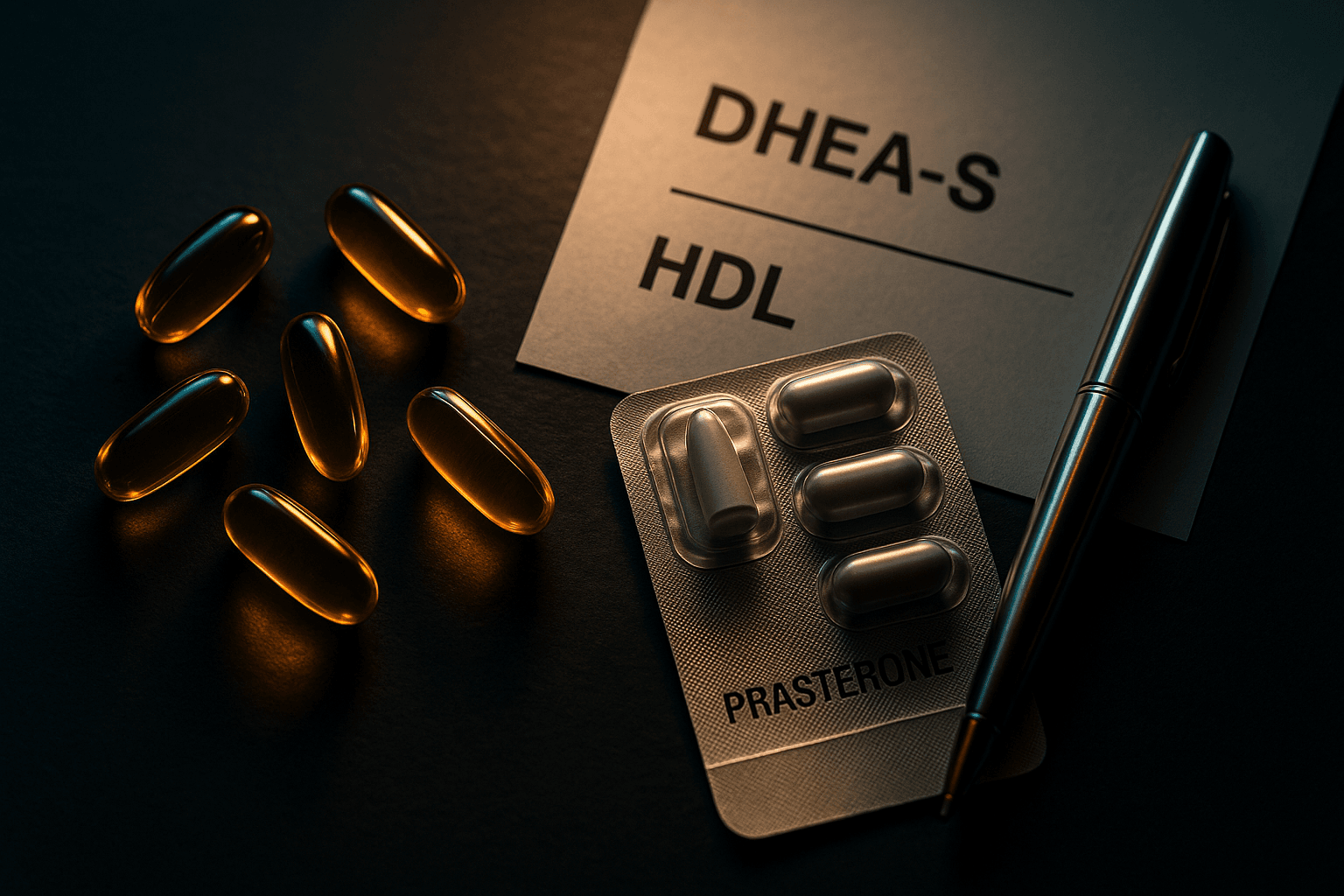
Understanding DHEA (Dehydroepiandrosterone)
DHEA is an adrenal steroid your body converts locally into small amounts of estrogens and androgens (via “intracrine” enzymes) in many tissues, including brain, bone, skin, and the genitourinary tract. Circulating levels of its storage form, DHEA-S, peak in early adulthood and steadily fall with age; by the 70s–80s many people carry only a fraction of youthful levels. Because typical foods don’t provide meaningful DHEA and the body’s own production declines markedly, supplementation or prescription forms are sometimes used to restore physiologic ranges for specific goals.
What you’ll actually find on shelves: over-the-counter, micronized oral DHEA (often 10–50 mg/capsule) and 7-keto-DHEA (a downstream metabolite that does not convert to sex steroids). A prescription, intravaginal form of DHEA called prasterone (6.5 mg) is used locally for postmenopausal dyspareunia (pain with intercourse). Oral DHEA is systemic; intravaginal prasterone is primarily local. Quality matters—look for third-party testing and brands that disclose ingredient identity and potency.
How it works, in plain terms. DHEA itself is weakly active; the body converts it, cell-by-cell, into small amounts of testosterone or estradiol as needed. That local conversion helps explain why effects can be tissue-specific (for example, vaginal comfort without high systemic estrogen from intravaginal use). In bone and muscle, modest androgenic/estrogenic signaling plus IGF-1 shifts may support bone turnover dynamics; in brain, DHEA/DHEA-S also act as neurosteroids with mild, pleiotropic effects on neurotransmission and stress circuits. None of this makes DHEA an “anti-aging pill,” but it frames where measurable benefits have shown up in human studies.
Why normal diet or generic “wild yam” extracts don’t substitute. Diosgenin in yams is a laboratory starting material for manufacturing; humans do not convert it to DHEA in vivo. For targeted, evidence-aligned outcomes (e.g., vaginal comfort or bone density signals), trials used specific doses and forms—usually standardized oral capsules or prasterone inserts—not culinary sources or non-standardized botanicals.
Key Benefits
Genitourinary comfort after menopause.
Intravaginal prasterone (6.5 mg nightly) improves pain with intercourse and normalizes vaginal cytology/pH in postmenopausal women over 12 weeks.Mood support in midlife depression (adjunct/alternative).
Small, rigorously controlled trials in adults with midlife-onset depressive symptoms reported greater score reductions with oral DHEA versus placebo across 6 weeks.Bone density (selective, modest effect in women).
A year of 50 mg/day oral DHEA increased lumbar spine bone mineral density in older women (not men) in randomized trials; effects at hip/whole body were minimal.
Research Findings
12 weeks, randomized double-blind placebo-controlled, two trials (n=255 and n=558, postmenopausal women with moderate–severe dyspareunia): Intravaginal prasterone 6.5 mg nightly improved dyspareunia score and vaginal cytology (↑ superficial cells, ↓ parabasal cells) and lowered vaginal pH versus placebo; most common adverse effect was benign vaginal discharge.
6 weeks, n=46, randomized double-blind crossover (midlife-onset major/minor depression): Oral DHEA 90 mg/day for 3 weeks then 450 mg/day for 3 weeks yielded larger reductions in standardized depression scales than placebo; overall tolerability acceptable, with expected androgenic effects at higher dosing.
12 months, n=225, randomized placebo-controlled (older adults 55–85 years): Oral DHEA 50 mg/day increased DHEA-S to youthful ranges and produced a modest lumbar spine BMD increase in women only; no benefit at hip/total body and no meaningful body-composition changes.
Interpretation: Evidence is strongest for local, intravaginal prasterone in genitourinary syndrome of menopause. Oral DHEA shows small, condition-specific signals—antidepressant-like effects in carefully selected midlife cohorts and modest lumbar-spine BMD gains in postmenopausal women—while broader “anti-aging” claims remain unsupported.
Best Sources & Dosage
Food and supplement sources
Food: negligible; there are no meaningful dietary sources of DHEA.
Supplements: micronized oral DHEA (10–50 mg capsules), sometimes extended-release; 7-keto-DHEA (non-hormonal metabolite); compounded transdermals (variable absorption).
Prescription local therapy: prasterone 6.5 mg intravaginal insert (once nightly) for dyspareunia due to menopause.
Evidence-aligned oral dosing (adults)
Adrenal insufficiency (women, symptom-driven use): 25–50 mg each morning; titrate to mid-normal age-adjusted DHEA-S and clinical response; monitor for androgenic effects.
Midlife depressive symptoms (specialist-supervised): 90 mg/day for 3 weeks then 450 mg/day for 3 weeks used in RCTs; consider lower starts and careful screening for bipolar spectrum or hormone-sensitive conditions.
Bone health signal (postmenopausal women): 50 mg/day for 12 months yielded modest lumbar spine gains; ensure adequate calcium/vitamin D and weight-bearing exercise.
IVF adjunct in diminished ovarian reserve (clinic-directed): commonly 25 mg three times daily for 8–12+ weeks before stimulation; protocols vary and evidence is mixed.
Intravaginal dosing (prescription prasterone)
- 6.5 mg insert nightly at bedtime for moderate–severe dyspareunia; reassess response after 12 weeks; benefits often persist with continued use.
Timing & practical tips
Take oral DHEA in the morning to align with endogenous rhythms and minimize sleep disruption.
Start low—especially in women—and reassess labs (DHEA-S, sometimes testosterone/estradiol) and symptoms after 6–8 weeks.
Safety, interactions & cautions
Common dose-related androgenic effects: acne/oily skin, increased facial/body hair in women, scalp hair shedding, voice changes (rare but may be irreversible), menstrual changes.
Lipids: oral DHEA can reduce HDL-cholesterol in postmenopausal women; monitor lipids when used chronically.
Hormone-sensitive conditions: avoid oral DHEA in active or prior estrogen-/androgen-sensitive cancers unless your oncology team agrees; intravaginal prasterone carries label cautions for breast cancer history.
Psychiatric: activating/hypomanic reactions are possible at higher doses or in bipolar spectrum.
Drug testing: prasterone (DHEA) is classified under anabolic-androgenic steroids and is prohibited in sport at all times.
Pregnancy/lactation: not recommended.
Choose reputable brands (USP/NSF/ConsumerLab) to reduce variability and contamination risk.
Dosage Quick-Reference
Postmenopausal dyspareunia (local therapy): Prasterone 6.5 mg intravaginal nightly • 12 weeks • ↓ pain with intercourse; improved vaginal cytology/pH.
Midlife depression (select patients): 90 mg/day → 450 mg/day oral over 6 weeks • greater symptom reduction vs placebo; monitor mood/androgenic effects.
Bone density (women): 50 mg/day oral • 12 months • small ↑ lumbar spine BMD; little/no change at hip/total body.
Adrenal insufficiency (women, symptom-targeted): 25–50 mg/day oral in morning • 8–16+ weeks • modest improvements in well-being/libido in some trials; evidence mixed.
IVF adjunct (diminished ovarian reserve): 25 mg oral three times daily • 8–12+ weeks pre-stimulation • variable outcomes; clinic protocol required.