
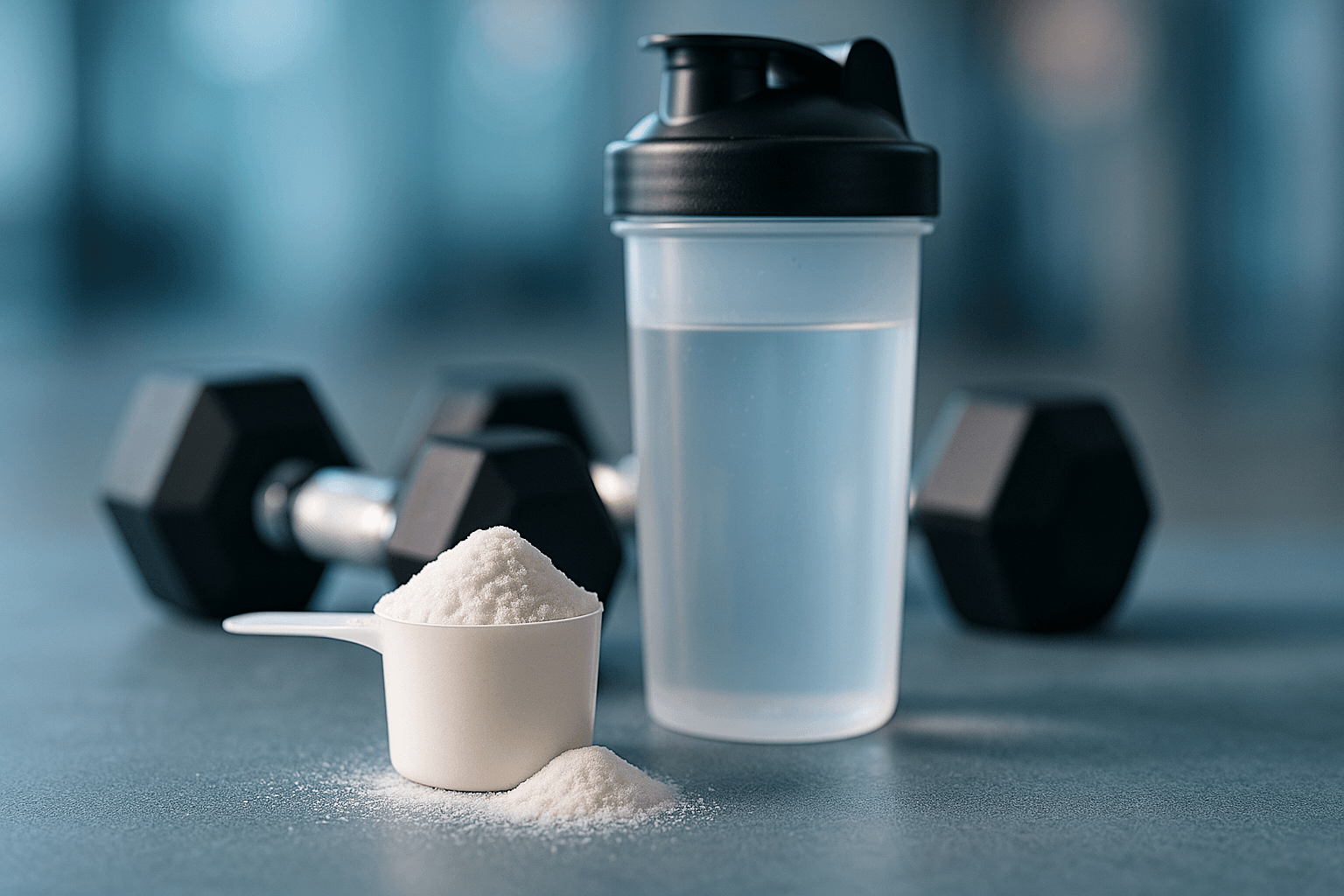
Understanding Creatine Monohydrate
Creatine is a naturally occurring compound synthesized in the liver and kidneys from amino acids—primarily arginine, glycine, and methionine. It is stored in skeletal muscle as phosphocreatine, where it serves as a rapid energy reserve to regenerate adenosine triphosphate (ATP), the molecule cells use for immediate energy. Although the body produces roughly 1–2 g of creatine daily and typical diets supply another 1–2 g (mainly from red meat and fish), this amount is not enough to fully saturate muscle creatine stores. Supplementation with creatine monohydrate increases intramuscular creatine content by 10–40%, depending on baseline levels, which can enhance energy availability during high-intensity, short-duration activity.
Creatine monohydrate is the most widely studied form of creatine and remains the gold standard for supplementation. Other marketed forms—such as creatine ethyl ester, buffered creatine, and liquid creatine—have not consistently demonstrated superior absorption or outcomes in human trials. Once ingested, creatine monohydrate is absorbed through the intestine, taken up into the blood, and transported into muscle tissue via the creatine transporter (CreaT1). Because muscle creatine turnover is relatively slow, building up to saturation requires consistent intake over several days to weeks, but once achieved, maintenance doses are sufficient to sustain high stores.
Although creatine is often associated with bodybuilding and athletic performance, it also plays roles in neuromuscular health, energy metabolism, and possibly cognition. Research suggests creatine may support brain energy availability under conditions of high demand or metabolic stress, though findings outside of athletic populations are mixed. For most healthy adults, dietary and endogenous production cover baseline needs, but supplementation provides a clear advantage when maximal muscle creatine levels are desired.
Key Benefits
- Improved high-intensity performance – Supplementation enhances strength, sprinting ability, and repeated high-intensity exercise capacity.
- Increased lean muscle mass – Consistent use, paired with resistance training, promotes modest but reliable increases in fat-free mass.
- Enhanced recovery and adaptation – May reduce markers of muscle damage and support greater training volume over time.
Research Findings
In a 12-week RCT (n=19 men) involving resistance training, creatine monohydrate (25 g/day for 1 week, then 5 g/day) produced significantly greater increases in lean body mass and bench press strength versus placebo (1999 RCT).
In a 6-week RCT (n=20 women), creatine supplementation (20 g/day for 4 days, then 5 g/day) during resistance training led to greater improvements in fat-free mass and squat strength compared with placebo (2000 RCT).
In a meta-analysis of 22 RCTs (n≈700 athletes), creatine supplementation consistently improved maximal strength (1RM bench press and squat) and performance in repeated high-intensity sprints, with moderate effect sizes (2017 review).
Collectively, evidence shows creatine monohydrate reliably increases strength and lean mass in resistance-trained and recreationally active individuals. Findings for endurance or purely aerobic performance are less consistent, as creatine’s mechanism is specific to short-duration, high-intensity energy demands.
Best Sources & Dosage
Food sources:
Red meat (beef, pork, lamb) and fish (herring, salmon, tuna) provide 0.5–2 g creatine per pound of raw meat. However, cooking reduces creatine content, and achieving ergogenic doses from food alone would require impractically high intake.
Supplement form:
Creatine monohydrate powder is the standard, cost-effective, and best-validated form. Micronized creatine (smaller particle size) may dissolve more easily but offers no additional efficacy. Other forms marketed for stability or absorption (e.g., hydrochloride, buffered) lack consistent evidence of superiority.
Evidence-based dosage ranges:
Loading phase (optional): 20 g/day (split into 4 × 5 g doses) for 5–7 days to rapidly saturate muscle stores.
Maintenance: 3–5 g/day thereafter maintains saturation. For larger individuals (>100 kg), up to 5–10 g/day may be appropriate.
Without a loading phase: 3–5 g/day consistently achieves full saturation in 3–4 weeks.
Timing: Creatine can be taken at any time of day. Some evidence suggests taking creatine alongside carbohydrate and/or protein post-exercise may modestly enhance uptake due to insulin’s effect on creatine transport. Consistency matters more than timing.
Safety and caveats:
Safety profile: Creatine monohydrate is one of the most extensively studied supplements. Long-term studies (up to 5 years) show no harmful effects in healthy individuals.
Hydration: Creatine draws water into muscle cells. Maintain adequate fluid intake to minimize risk of cramps or GI upset.
Kidney health: In healthy people, creatine does not impair kidney function. Those with preexisting kidney disease should avoid supplementation unless supervised by a physician.
Weight gain: Typically 1–2 kg from increased water retention during the first weeks of use, followed by lean mass increases over months.
Adolescents: Data are more limited, but creatine is sometimes used under professional guidance for competitive athletes ≥16 years old.
Other populations: Emerging but mixed evidence suggests potential benefits for older adults (muscle preservation), vegetarians (lower baseline creatine levels), and certain neurological conditions. However, these uses remain under investigation.