
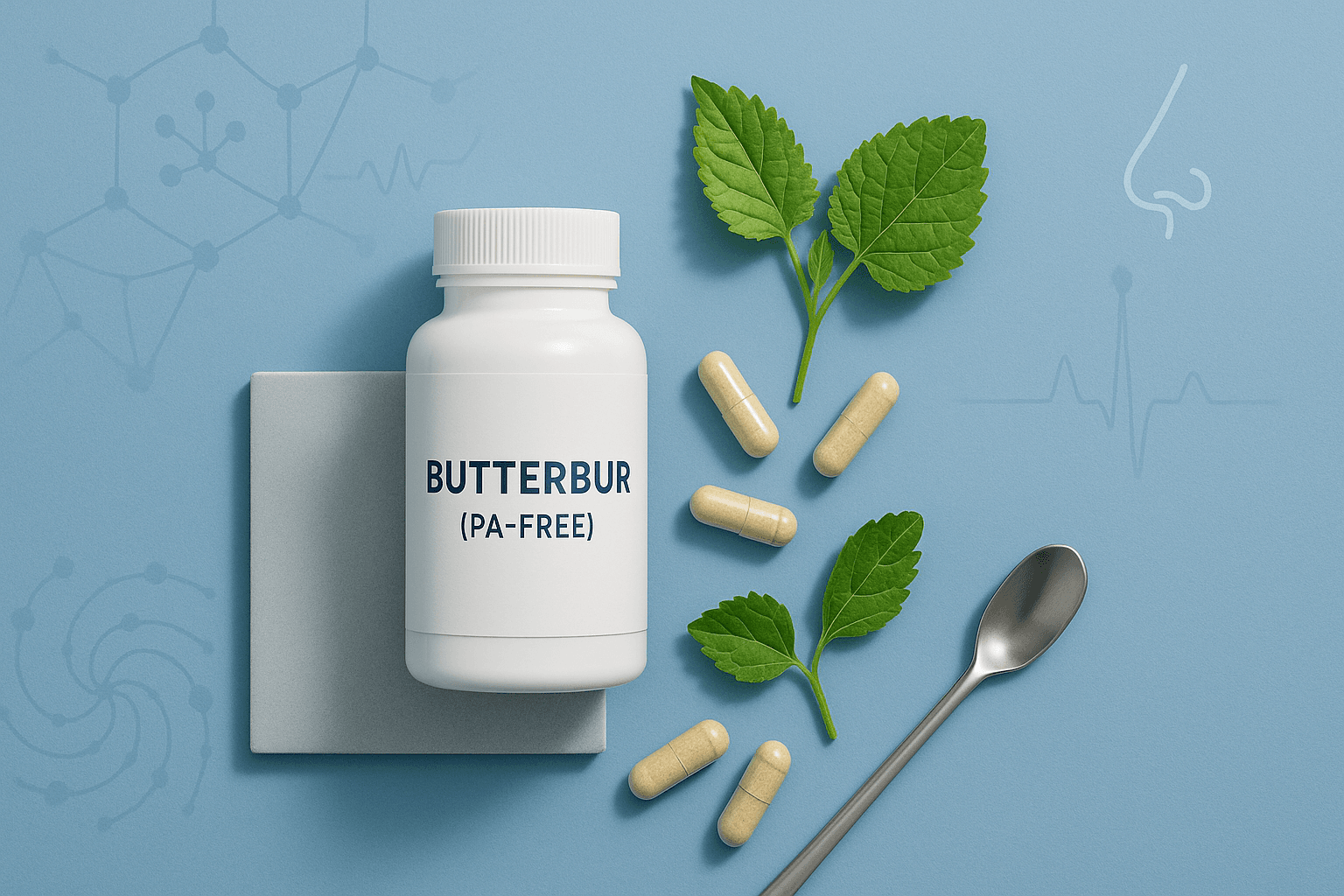
Fewer Migraines, Calmer Sinuses: Understanding Butterbur
Butterbur extract comes from Petasites hybridus leaves or rhizomes and is standardized for petasins (petasin, isopetasin)—the compounds credited with its soothing effects on neurovascular tone and nasal reactivity. The best products are PA-free CO₂ extracts, meaning the naturally occurring pyrrolizidine alkaloids (PAs)—which can harm the liver—are removed to below detectable limits. Butterbur isn’t a culinary herb, and crude teas or powders aren’t safe; standardized PA-free extracts give you predictable petasin dosing that aligns with clinical protocols.
How it likely helps—kept simple:
- Neurovascular calm (migraine): petasins modulate calcium channels and leukotrienes, helping quiet trigeminal-driven inflammation and abnormal vessel reactivity.
- Allergy ease (rhinitis/sinus): in nasal mucosa, petasins downshift leukotriene/histamine signaling, which can translate to less sneezing, itch, and congestion during high-pollen weeks.
Wellness takeaway: If you’re aiming for fewer migraine days or calmer allergy seasons, a short, time-boxed trial with a PA-free, standardized butterbur extract is a practical, low-sedation option to test.
Key Benefits
Migraine prevention. Standardized PA-free butterbur has reduced monthly migraine attacks in trials, helping many adults use less rescue medication over time.
Seasonal allergy relief. During high-pollen windows, short courses have matched popular antihistamines in some studies—without daytime drowsiness.
Sinus and airway comfort. By dialing down leukotrienes, butterbur can ease pressure and reactivity in the nasal passages when dust or pollen flare.
Reality check: Think preventive and seasonal—fewer attacks across weeks, steadier allergy days—rather than instant relief for an active migraine or heavy sinus infection.
Research Findings
Time to benefit: Expect first changes in ~4 weeks, with clearer gains by 12–16 weeks when used consistently.
Migraine prevention (adults): Randomized, double-blind trials using PA-free CO₂ extracts reported fewer monthly migraine attacks versus placebo after 12–16 weeks. Typical protocols: 50–75 mg twice daily of a petasin-standardized extract; benefits often appear after the first month and build by month three.
Pediatric migraine (select cases): Small studies in children/adolescents suggest reduced attack frequency with weight-appropriate, PA-free dosing over 2–4 months; pediatric use should be clinician-guided.
Allergic rhinitis: Head-to-head trials over 1–2 weeks of high pollen exposure found comparable symptom relief to certain non-sedating antihistamines for sneezing, itchy eyes, and congestion—with fewer reports of drowsiness. Effects typically emerge within 3–5 days and persist while dosing continues.
Tolerability: PA-free extracts are generally well tolerated; common effects are belching, mild GI upset, or fatigue. The real-world safety hinge is verified PA-free status to avoid hepatotoxic alkaloids.
Best Sources & Dosage
What to buy (and avoid)
- Choose PA-free, CO₂-extracted butterbur standardized to petasins. Look for a batch COA confirming “pyrrolizidine alkaloids: not detected” or quantified below strict limits.
- Avoid teas, tinctures, and powders that don’t state PA-free. Skip “whole herb” internal products.
Evidence-aligned adult ranges
Migraine prevention: 50–75 mg twice daily (PA-free, petasin-standardized) for 12–16 weeks, then reassess. Responders may trial maintenance (e.g., 50–75 mg once daily) with clinician input.
Seasonal allergic rhinitis: Per label to provide ~8–16 mg petasins 2–3×/day for 1–2 weeks during peak pollen; taper as the season eases.
Sinus-reactivity days: Use rhinitis dosing for short stints tied to triggers (yardwork, travel, dust).
Timing & tips
Take with meals to minimize belching or GI upset.
Keep a simple symptom log (attack days, intensity, rescue meds) to see trends across 4–12 weeks.
Choose standardized, third-party tested PA-free—it’s non-negotiable for safety.
Safety, interactions & who should avoid it
Do not use any butterbur that is not clearly PA-free—PAs can injure the liver and, rarely, the lungs (veno-occlusive disease).
Liver disease, heavy alcohol use, or hepatotoxic medications: avoid or use only with clinician oversight and periodic liver tests.
Pregnancy/lactation: avoid (insufficient safety data).
Allergy: butterbur is in Asteraceae (ragweed family); if ragweed-sensitive, proceed cautiously or consider alternatives.
Possible additive effects with antihistamines or leukotriene modifiers—coordinate your plan to avoid duplicating therapy.
Usual minor effects: belching, mild GI upset, fatigue; stop and seek care for jaundice, dark urine, or unusual fatigue.
Final safety reminder: Use only PA-free, CO₂ extracts.
Dosage Quick-Reference
Migraine prevention (adult): 50–75 mg PA-free extract BID • 12–16 weeks • Outcome: monthly attacks ↓; rescue use ↓.
Seasonal allergies: per label to deliver ~8–16 mg petasins 2–3×/day • 1–2 weeks (seasonal window) • Outcome: sneezing/itching/congestion ↓; low sedation.
Maintenance (responders): 50–75 mg once daily • After initial 12–16 weeks • Outcome: benefits maintained with fewer pills (individualize).
Safety note: Use only PA-free, CO₂ extracts; avoid in pregnancy/lactation and liver disease.