Understanding Biotin
Biotin, also called vitamin B7 or vitamin H, is a water-soluble B vitamin that functions as a critical coenzyme in energy metabolism. It supports five key carboxylase enzymes, which help the body break down carbohydrates, fats, and proteins and synthesize essential compounds such as fatty acids and glucose. Without sufficient biotin, these pathways do not function properly, leading to metabolic disturbances and symptoms affecting the skin, hair, and nervous system.
Because the body cannot synthesize enough biotin on its own, it must be obtained from dietary sources. Fortunately, biotin is present in many common foods, including eggs, nuts, seeds, fish, legumes, and whole grains. Gut bacteria also produce small amounts of biotin, but this contribution is generally considered minor. Biotin deficiency is uncommon in healthy populations but can occur due to certain medical conditions, long-term use of specific medications (such as anticonvulsants or antibiotics), or high intake of raw egg whites, which contain avidin, a protein that binds to biotin and blocks its absorption.
Biotin’s reputation as the “beauty vitamin” comes from its marketed role in hair, skin, and nail health. While evidence supports supplementation for individuals with deficiency-related hair loss or brittle nails, data in healthy populations are less convincing. Still, biotin continues to be widely used in cosmetic nutrition formulations, often in doses far above daily requirements.
Key Benefits
- Supports energy metabolism – Biotin-dependent enzymes are essential for energy production from carbohydrates, fats, and proteins.
- Contributes to hair and nail strength – Supplementation may improve brittle nails and deficiency-related hair loss.
- Supports healthy skin – Adequate levels help maintain skin integrity and reduce deficiency-related rashes.
Research Findings
In a small clinical trial (n=45 women with brittle nails), daily supplementation with 2.5 mg of biotin for 6–9 months significantly increased nail thickness and reduced splitting, suggesting a structural benefit.
In multiple case reports and small studies of patients with biotin deficiency—whether genetic (biotinidase deficiency) or acquired—supplementation improved hair growth and resolved skin rashes, demonstrating biotin’s essential role in these tissues.
In a systematic review of clinical trials on biotin for hair loss in otherwise healthy individuals, researchers concluded that evidence was insufficient to support widespread supplementation, as most benefits were seen only in deficiency cases.
Together, these findings suggest that biotin supplementation is most effective when correcting deficiency, while benefits for cosmetic use in well-nourished individuals remain uncertain.
Best Sources & Dosage
Biotin is available in both dietary sources and supplements. Food sources include:
- Eggs (cooked): Raw egg whites should be avoided, as avidin prevents biotin absorption.
- Nuts and seeds: Almonds, walnuts, peanuts, and sunflower seeds.
- Legumes: Soybeans, peanuts, lentils.
- Fish and meat: Salmon, liver, and other organ meats.
- Whole grains and dairy products.
The recommended daily intake (adequate intake) for adults is 30 mcg per day, which is typically achievable with a balanced diet. Biotin is water-soluble, and excess amounts are excreted in urine, which is why toxicity is rare.
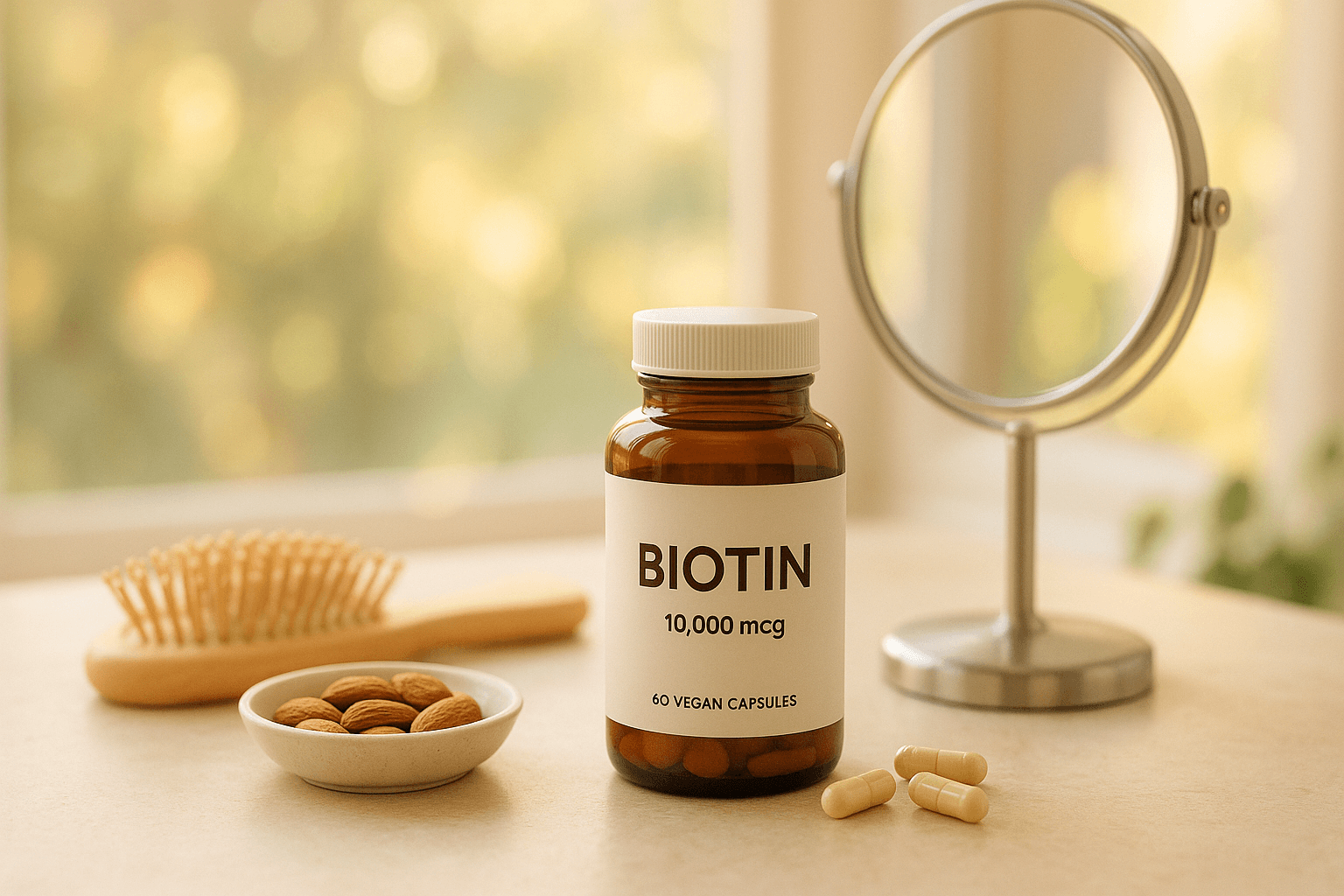
Supplements are widely available in tablets, capsules, and gummies. Products marketed for hair, skin, and nail health often provide 2,500–10,000 mcg (2.5–10 mg)—up to several hundred times the daily requirement. These doses appear safe for most people but are not backed by strong evidence for additional benefits in those without deficiency.
Safety Considerations
Biotin is considered safe, even at high doses, but there are important caveats:
- Lab test interference: High-dose biotin can interfere with certain laboratory tests, particularly thyroid hormone panels and cardiac troponin assays used in emergency medicine to diagnose heart attacks. This interference can lead to false readings and potentially serious clinical consequences. For this reason, the U.S. FDA has issued warnings about high-dose biotin supplements. Patients should inform healthcare providers of biotin use before lab testing.
- Pregnancy and lactation: Biotin needs may increase slightly during pregnancy, but current recommendations suggest standard dietary intake is sufficient. High-dose supplements are not routinely recommended.
- Drug interactions: Long-term use of anticonvulsants such as carbamazepine and phenobarbital may reduce biotin levels, increasing risk of deficiency.
Broader Perspectives
Beyond hair, skin, and nails, biotin plays a central role in metabolism and overall cellular function. Deficiency can lead to neurological symptoms such as depression, tingling in the extremities, or coordination problems, though these are rare. In infants, biotin deficiency may cause developmental delays and skin rashes, which is why genetic screening for biotinidase deficiency is performed in many countries.
Interest in biotin supplementation for cosmetic purposes has outpaced the science, with many consumers taking high doses despite limited evidence in healthy populations. For those with brittle nails or hair loss linked to deficiency, biotin may provide meaningful benefits. For the general population, however, ensuring an adequate but not excessive intake through a balanced diet or modest supplementation is the most evidence-aligned approach.
Biotin should be seen not as a miracle beauty nutrient but as an essential vitamin for metabolism that also happens to play a visible role in skin, hair, and nail health when deficiency occurs. Given its safety profile and role in energy production, modest supplementation is reasonable, but individuals should be mindful of the risks of lab test interference at very high doses.
In summary, biotin is an essential nutrient with well-documented roles in metabolism and deficiency correction. Its popular use in beauty supplements is less supported by science, but its safety and role in correcting deficiency-related problems make it a valid, if sometimes overhyped, addition to modern nutrition practices.