
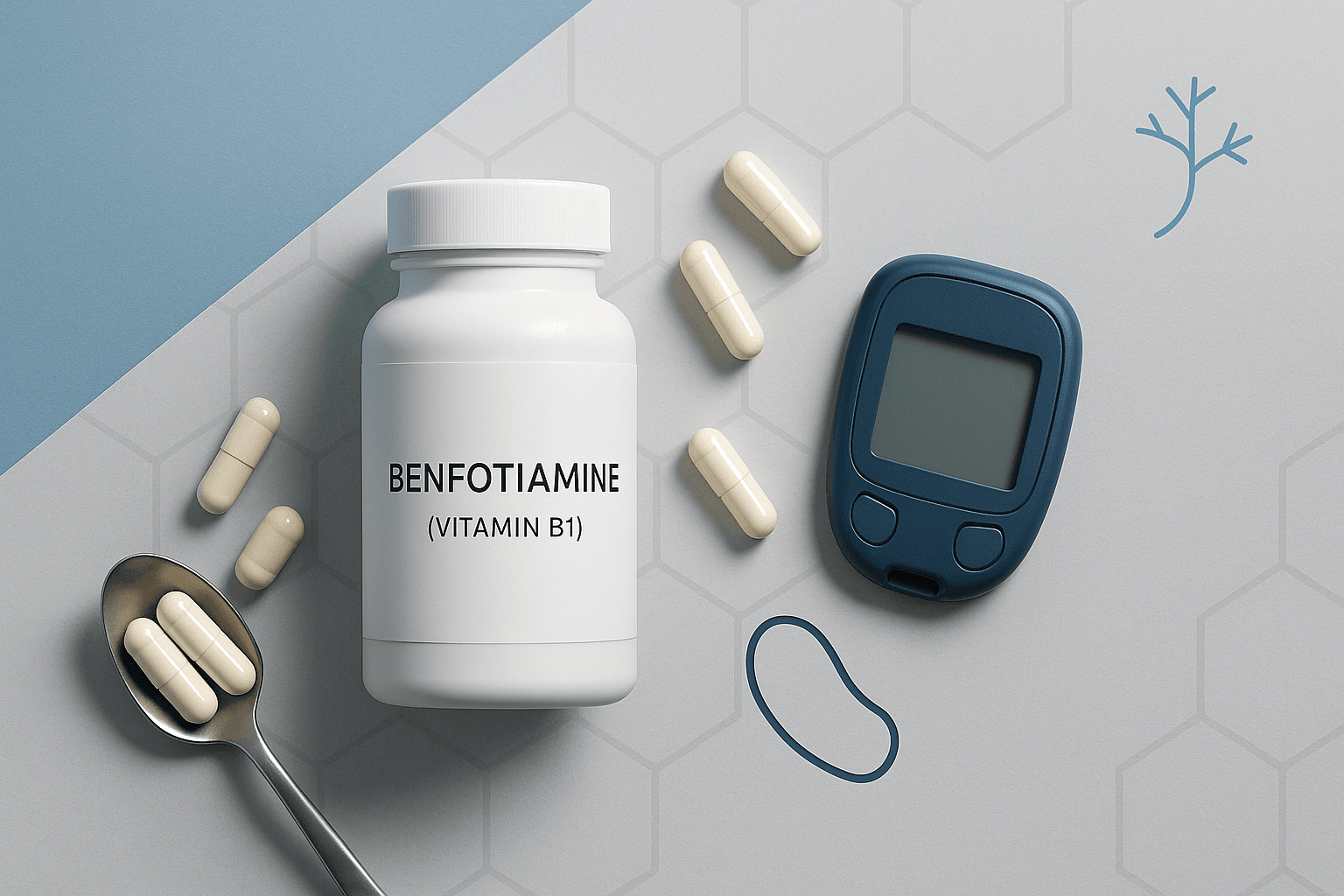
Calmer Nerves, Lower Glycation: Understanding Benfotiamine
Benfotiamine is a fat-soluble derivative of thiamine (vitamin B1) designed to raise thiamine activity in tissues more efficiently than standard B1. After absorption it converts to thiamine and then to thiamine pyrophosphate (TPP)—the cofactor that powers transketolase, an enzyme that diverts excess glycolytic byproducts into safer pathways. In plain terms, benfotiamine helps clear the “sugar traffic jam,” which can ease nerve irritation and slow formation of advanced glycation end products (AGEs) that stiffen tissues and stress small blood vessels.
Why supplement instead of relying on food B1? Thiamine from whole grains, legumes, and pork is water-soluble and tightly regulated in absorption. Under metabolic stress—longstanding high-carb intake, alcohol use, certain medications, or diabetes—tissue demand can outrun delivery. Benfotiamine’s lipid-soluble design improves uptake into nerves and microvasculature, where glycation stress is highest.
How it may help—kept practical:
Transketolase ↑ → toxic triose-phosphate intermediates ↓ → oxidative/inflammatory nerve signaling quiets.
Glycation pathways downshift, curbing AGE build-up that can burden eyes, kidneys, and peripheral nerves.
Not a glucose-lowering drug, but a damage-control support alongside diet, movement, and prescribed therapy.
Key Benefits
Neuropathy symptom relief. Short courses (6–12 weeks) often report less burning, tingling, and numbness, with best results in painful, length-dependent patterns.
Glycation & microvascular support. By curbing AGE formation, benfotiamine supports small-vessel health relevant to eyes, kidneys, and peripheral nerves.
Everyday comfort during metabolic stress. Users frequently notice steadier foot and hand comfort—especially when combined with walking and nutrition basics.
Reality check: Benfotiamine does not replace glucose control. Expect gradual symptom easing over weeks—pair it with blood-sugar habits for durable results.
Research Findings
Time to benefit: First changes often appear in 2–4 weeks, with clearer gains by 8–12 weeks when dosing is consistent.
Painful diabetic polyneuropathy (adults): 12-week, randomized, double-blind trials using 300–600 mg/day benfotiamine reported significant reductions in neuropathy symptom scores and pain versus placebo, with good tolerability; higher doses tended to yield larger effects.
Vascular response to AGE-rich meals (type 2 diabetes): Short crossover studies (3–7 days; ~1,050 mg/day) showed benfotiamine prevented post-meal endothelial dysfunction and oxidative stress after heat-processed “AGE-rich” meals compared with placebo.
Retinopathy-relevant markers (adults with diabetes): 6–12-week add-on trials reported decreases in serum AGEs and improved nerve conduction parameters in subsets, aligning with benfotiamine’s glycation-control mechanism; clinical eye outcomes require longer study.
Tolerability across studies was favorable; mild GI upset, headache, or fatigue were the most common complaints.
Best Sources & Dosage
What to buy (and avoid)
Choose benfotiamine (not generic “vitamin B1”) with a clear mg per capsule and third-party testing. Products often pair it with B-complex—helpful, but make sure vitamin B6 stays ≤50–100 mg/day to avoid B6-induced neuropathy risk.
Avoid proprietary blends that hide benfotiamine mg; you can’t match research doses without numbers.
Evidence-aligned adult ranges
Neuropathy symptom support (primary): 300–600 mg/day benfotiamine, split 150–300 mg twice daily, with meals, for 8–12 weeks, then reassess.
Glycation/vascular support (short stints): 600–1,050 mg/day for 1–4 weeks during higher-risk periods (e.g., holiday eating), then return to a base of 300–600 mg/day if desired.
Maintenance (responders): 150–300 mg/day for ongoing support, paired with diet and activity.
Timing & tips
Take with meals for comfort and steady absorption.
Keep a simple symptom log (burning, tingling, numbness 0–10; sleep impact; walking time) to see 2–4-week trends.
Pair with foot care, walking after meals, and fiber-forward meals to tackle root drivers.
Safety, interactions & who should avoid it
Generally well tolerated; occasional GI upset, headache, fatigue, or itching may occur.
Medications: no strong drug–drug interactions are established; continue to monitor if on complex regimens for diabetes or neuropathic pain.
Alcohol use disorder, diuretics, dialysis: thiamine needs can be higher—coordinate with your clinician for dose and duration.
Pregnancy/lactation: limited targeted data—food-first B vitamins preferred unless your clinician advises otherwise.
Label literacy—fast checks
- “Benfotiamine” named explicitly; mg per serving listed.
- Reasonable capsule plan (e.g., 150–300 mg per cap).
- If in a B-complex, check B6 to keep daily totals ≤100 mg.
Dosage Quick-Reference
Neuropathy symptoms: 300–600 mg/day benfotiamine • Split BID with meals, 8–12 weeks • Outcome: burning/tingling ↓, comfort ↑.
Glycation/vascular stress (short term): 600–1,050 mg/day • 1–4 weeks • Outcome: post-meal endothelial stress ↓; AGE formation ↓ (markers).
Maintenance (responders): 150–300 mg/day • Ongoing • Outcome: symptom control maintained alongside lifestyle.